• KGS/USD = 0.01144 0%
  • KZT/USD = 0.00212 0%
  • TJS/USD = 0.10456 0.19%
  • UZS/USD = 0.00008 0%
  • TMT/USD = 0.28490 0%
  • KGS/USD = 0.01144 0%
  • KZT/USD = 0.00212 0%
  • TJS/USD = 0.10456 0.19%
  • UZS/USD = 0.00008 0%
  • TMT/USD = 0.28490 0%
  • KGS/USD = 0.01144 0%
  • KZT/USD = 0.00212 0%
  • TJS/USD = 0.10456 0.19%
  • UZS/USD = 0.00008 0%
  • TMT/USD = 0.28490 0%
  • KGS/USD = 0.01144 0%
  • KZT/USD = 0.00212 0%
  • TJS/USD = 0.10456 0.19%
  • UZS/USD = 0.00008 0%
  • TMT/USD = 0.28490 0%
  • KGS/USD = 0.01144 0%
  • KZT/USD = 0.00212 0%
  • TJS/USD = 0.10456 0.19%
  • UZS/USD = 0.00008 0%
  • TMT/USD = 0.28490 0%
  • KGS/USD = 0.01144 0%
  • KZT/USD = 0.00212 0%
  • TJS/USD = 0.10456 0.19%
  • UZS/USD = 0.00008 0%
  • TMT/USD = 0.28490 0%
  • KGS/USD = 0.01144 0%
  • KZT/USD = 0.00212 0%
  • TJS/USD = 0.10456 0.19%
  • UZS/USD = 0.00008 0%
  • TMT/USD = 0.28490 0%
  • KGS/USD = 0.01144 0%
  • KZT/USD = 0.00212 0%
  • TJS/USD = 0.10456 0.19%
  • UZS/USD = 0.00008 0%
  • TMT/USD = 0.28490 0%

Pandemic Hangover Continues to Affect Mental Health

According to the latest Sapien Labs Mental State of the World Report, Uzbekistan ranked last among 71 countries, including all other Central Asian countries (Turkmenistan was not included in the ranking). The ranking is based on the mood of residents and their outlook on life in 2023. Kazakhstan, Uzbekistan, Tajikistan and Kyrgyzstan are included for the first time. The Dominican Republic tops the list, followed by Sri Lanka, Tanzania, Panama, and Malaysia. The United Kingdom occupies the penultimate place ahead of Uzbekistan.

Some poor countries in Africa and Latin America have overtaken the developed countries of Europe and the Americas on a number of indicators. Researchers have noted a trend towards depressed moods since the Covid-19 pandemic – a trend which is still going strong after more than four years. They believe that low rates of mental wellbeing in rich countries are linked to multiple factors, including smartphone addiction, fast-food consumption, the breakdown of friendships and family relationships, and the rising isolation due to working from home. Furthermore, GDP per capita figures are inversely correlated with average mental wellbeing, once again confirming the old adage that “money can’t buy happiness.”

In 2022, the results of a study on adolescent mental health were published in Uzbekistan for the first time. UNICEF, together with partner organizations, surveyed 22,854 students in 299 schools from all 14 regions to better understand the needs of adolescents and to identify school-related factors affecting their mental health and psycho-social wellbeing. The study found that more than 10% of students do not feel socially connected to their school and feel isolated. Also, a significant number of students – 15.4% – suffer from anxiety, and another 9.8% experienced depression. Based on this data, UNICEF experts recommended improving family and friendship connections, expanding social ties, and creating a comfortable school environment for adolescents.

Scientists have noted that indicators of mental wellbeing have especially decreased among young people, who are most dependent on modern technology. Meanwhile, people aged 65 and older have not seen a strong deterioration in scores since 2010.

Another conclusion reached was that the level of mental wellbeing depends on the frequency in which processed foods are consumed, which affects the onset of depression and reduced emotional wellbeing.

An important factor was also the disruption of intra-family relationships. According to research, 10% of young people between the ages of 18 and 24 do not get along with anyone in their family and prefer not to see them, while the analogous figure among the older generation is only three%. Weak family ties, scientists say, quadruple the likelihood of mental-health problems in adulthood.

Kyrgyzstan’s Toktogul Reservoir May Hit “Dead” Level; Blackouts Possible

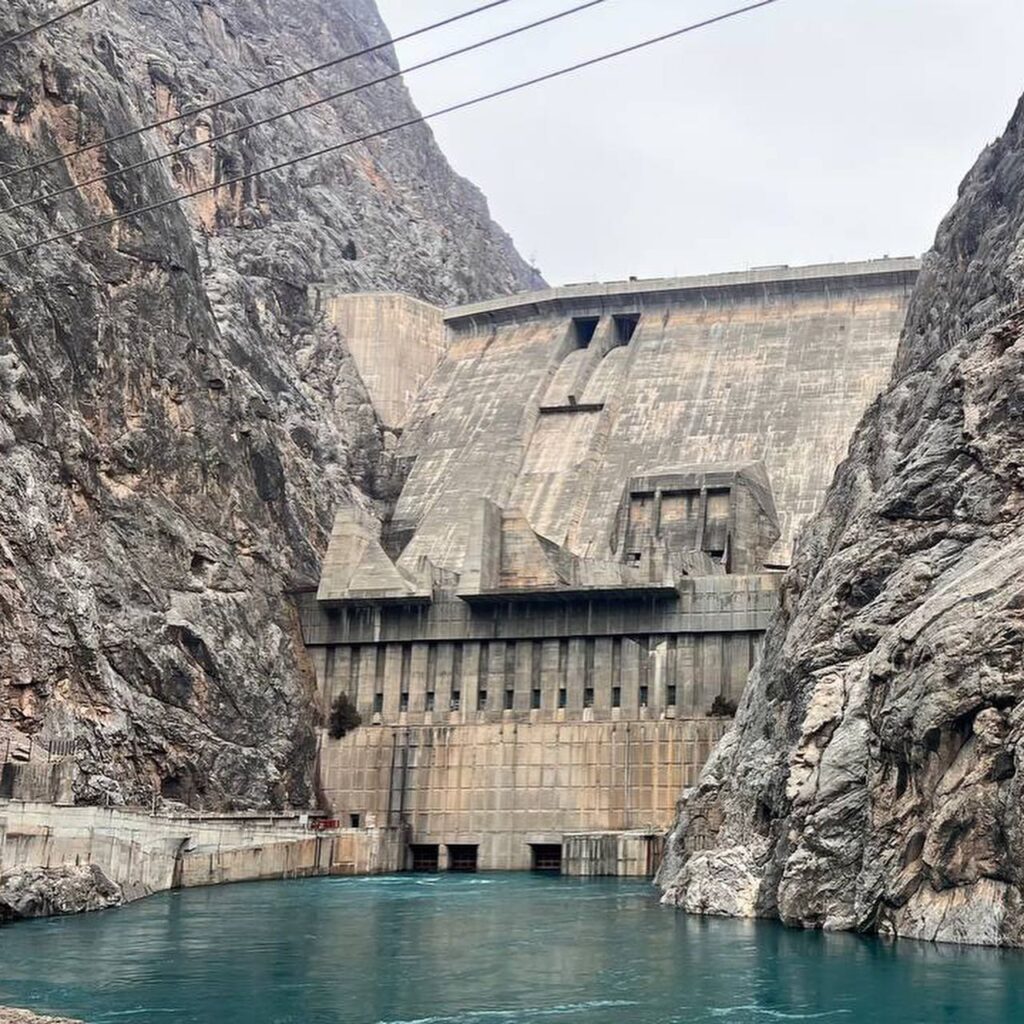
Kyrgyzstan’s Energy Ministry has said it will limit electricity consumption “by force” as water in the country’s main reservoir becomes increasingly scarce. In addition, major overhauls of the country’s main energy facilities are planned for this year, which will also affect power output and consumption.

According to official data, the volume of water in the Toktogul Reservoir currently stands at 7.7 billion cubic meters, versus a normal level of 17.3 billion cubic meters. If the water volume decreases by another two billion cubic meters, the Toktogul Hydroelectric Power Plant (HPP) will cease to produce power.

“This is a deteriorating indicator. Because of high consumption, the system automation of load limitation is working. This year, due to [demand] imbalance, it is working in the evening peak hours. Therefore, in some areas there may be blackouts. The norm for March is 54 million kilowatt-hours per day, but we are already exceeding this mark. If this rate continues, there is a threat that we will reach the level of “dead water” in the Toktogul Reservoir,” said Deputy Energy Minister Talaibek Baigaziyev.

The Toktogul HPP cascade includes two hydroelectric power plants: the 1,200 megawatt (MW) Toktogul HPP and the 800MW Kurpsay HPP. Toktogul HPP is the largest plant in Kyrgyzstan, generating 40% of the country’s electricity.

Starting from March 5th, one of the units of the Toktogul HPP and one units of the Uch-Korgon HPP, located on the Naryn River, will be sent for repair and refurbishment. The Uch-Korgon HPP was commissioned in 1962, and has not had an equipment update since then. According to the Ministry of Energy, the equipment and hydraulic structures of this station are thoroughly outdated and in poor condition. “In such a situation, Kyrgyzstan’s energy system will face a power shortage of 290 MW,” the Energy Ministry said.

Kyrgyzstan is being assisted in repairing the hydropower plants by the Asian Development Bank, which has allocated more than $157 million in loans and grants. It’s expected that both hydroelectric units will be repaired by the end of 2024.

Just last month an accident occurred at the main thermal power plant of Bishkek, which is also one of the most powerful generating facilities in the country. While the breakdown was remedied reasonably quickly, generation of electricity at the combined heat-power plant (CHPP) was severely curtailed.

The authorities have scheduled a major overhaul of the Bishkek CHPP for May-June this year. Regarding the work, engineers released a statement urging consumers to “be careful with electricity and not to turn on several energy-intensive appliances at the same time, especially during peak hours from 06:00 to 09:00 in the morning, as well as from 18:00 to 21:00 in the evening.”

Due to extremely cold weather and the accident at the CHPP, many people are using more electricity to heat their homes, resulting in increased consumption to 70 million kilowatt-hours per day from a previous level of 54 million.

United States Doubles Length of Visas for Kyrgyz Citizens

From 4 March 2024 the U.S. embassy in Bishkek will issue tourist and business visas to Kyrgyz citizens for a period of 10 years, doubling the previously issued terms of five years. Citizens of Kyrgyzstan will also no longer have to pay a $20 application fee, according to the embassy’s website.

The U.S. diplomatic mission has commented that the lengthening of visa terms is one way to demonstrate the importance the U.S. places on facilitating travel, as well as deepening ties between the American and Kyrgyz peoples. In his video message, U.S. ambassador to the Kyrgyz Republic Lesslie Viguerie expressed his hope that thousands of Kyrgyz travelers will benefit from these changes. “These changes are all about improving services for the Kyrgyz people, making travel between our countries easier, and strengthening our ties,” he emphasized.

The updated terms do not apply to previously issued visas
.
According to the U.S. diplomatic mission, most applications from Kyrgyz citizens are for tourist and work visas, followed by applications for immigration and student visas. The refusal rate for people from Kyrgyzstan, according to public data for 2023, stood at 41.5%.

Kazakhstan and Russia to Harness Transit Potential

Kazakhstan’s Prime Minister Olzhas Bektenov travelled to Moscow to attend a meeting on March 4th with the Prime Minister of the Russian Federation, Mikhail Mishustin.

High on the agenda, was the North-South international transport corridor and in particular, the section of railway interlinking Russia, Kazakhstan, Turkmenistan, and Iran.

Russia and Kazakhstan are connected by the longest land border in the world spanning over 7,500 km. Noting that “the most important transit routes in Eurasia run through our countries”, the Russian prime minister highlighted the huge potential for cooperation in transport and logistics.

Late in February, Kazakhstan’s Deputy Minister of Transport, Maksat Kaliakparov reported on plans by the railway administrations of Kazakhstan, Russia, and Turkmenistan to launch a joint venture to improve services and reduce cargo delivery time along the North–South Transport Corridor.

In 2023 the volume of cargo transported via this route amounted to 2.1 million tons; an increase of 4% compared to 2022. By 2027, the transport potential of the entire corridor rise to between 6 – 10 million tons per year. Mr Bektenov furthermore stated that Kazakh and Russian business entities are currently implementing 135 projects worth $26.5 billion.

To maintain progress and facilitate transit between the two countries, the Kazakh prime minister stressed the need to speed up work on checkpoints on the Kazakh-Russian border. According to plans, 29 of the 30 checkpoints are due to be modernized by 2027.

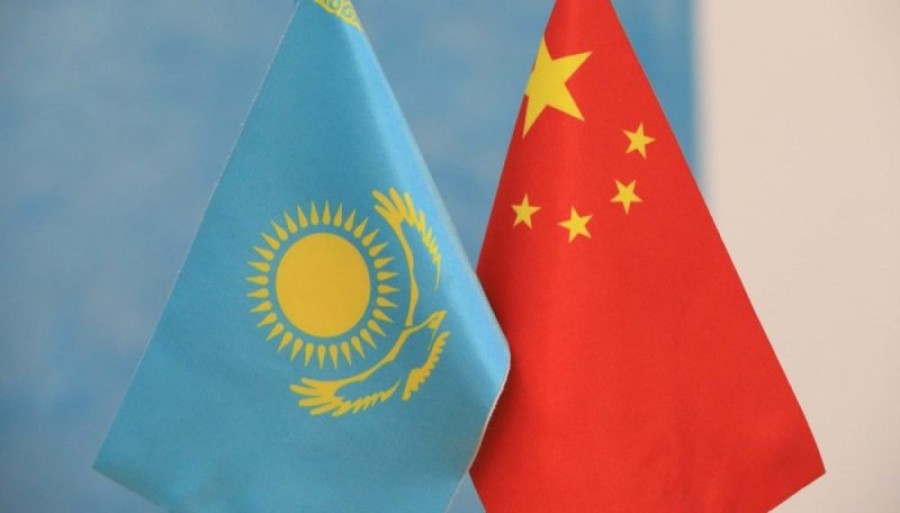
China Poised to Increase Imports of Agricultural Produce from Kazakhstan

In recent years, Kazakhstan has seen a steady growth in China’s demand for its organic and environmentally friendly agricultural produce.

As reported at a meeting on March 4th between Kazakhstan’s Minister of Agriculture, Aidarbek Saparov and Chinese Ambassador to Kazakhstan Zhang Xiao, in 2023, exports almost doubled to $1.01 billion.

The Kazakh Ministry of Agriculture relayed the ambassador’s assurance that the importation of meat, grain, and other agricultural products from Kazakhstan is set to continue.

The minister stated that Kazakhstan has the potential to increase its export of grain to China to two million tons per annum and asked the ambassador for assistance in accelerating the signing of bilateral agreements on the export of a wider range of agricultural products including chilled meat, poultry, offal, beet pulp, and potatoes.

Saparov also requested assistance in accrediting new Kazakh enterprises to export livestock produce to China.

In early February China lifted restrictions, imposed since 2005, on the import of poultry Kazakhstan. A ban on the import of meat, resulting from concerns over foot-and-mouth disease and in place since 2022, was similarly overturned.

The lifting of the restrictions allows exports of frozen beef and pork from the south-eastern regions of Kazakhstan to resume.

Turkmenistan and Afghanistan Discuss Collaborative Projects

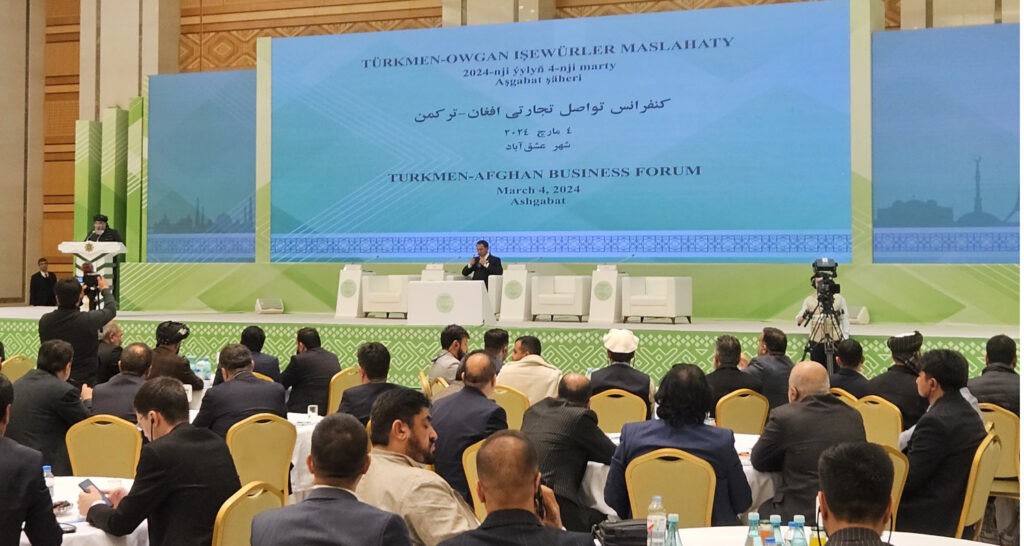
On March 4th, a large Afghan delegation led by Nooruddin Azizi, Minister of Industry and Trade of Afghanistan, participated in a Turkmen-Afghan business forum and exhibition of Afghan goods in Ashgabat.

Issues discussed included Turkmen-Afghan partnerships in trade, industry, agriculture, transport, communications, and electricity supply. Also on the agenda were oil and gas which alongside textiles, comprise Turkmenistan’s main exports to Afghanistan.

As reported by the Turkmen Foreign Ministry, special attention was paid to the construction of the Turkmenistan-Afghanistan-Pakistan-India (TAPI) gas pipeline and the Turkmenistan-Afghanistan-Pakistan (TAP) high-voltage power transmission line. The group also focused on the establishment of transport routes and in particular, railways from Turkmenistan to Afghanistan.

Azizi emphasized the desire of the Afghan business sector to further increase trade with Turkmenistan, develop Afghanistan’s infrastructure, and exploit the transit potential of both countries.

Afghan TOLOnews, quoting Mergen Gurdov, head of the Chamber of Commerce and Industry of Turkmenistan, reported that in 2023, trade between Turkmenistan and Afghanistan generated $457 million and this January alone, $46 million.

The agro-industrial sector was cited as a promising field for Turkmen-Afghan cooperation, with the Turkmen Foreign Ministry raising the issue of transboundary water resources.
Turkmenistan insists that the use of water involves cooperation with neighboring countries, conducted in accordance with international law, and based on principles of mutual respect and in the spirit of traditional good neighborliness.

Afghan Minister Azizi pledged that regarding the use of transboundary water resources and construction of water facilities to further the prosperity of his people, Kabul will honour principles of mutual consent and respect for neighboring countries, especially Turkmenistan, with whom Afghanistan has long maintained an amicable relationship.

The issue came to the fore last month following Afghanistan’s announcement that construction has begun on the second phase of the Qosh Tepa Canal; a project prioritized by the Taliban- led government since early 2022.

By diverting water from the Amu Darya River, the canal will convert 550,000 hectares of desert into farmland in northern Afghanistan, but could also have an adverse effect on agriculture in downstream Uzbekistan and Turkmenistan.