The summit between the leaders of the United States and the five countries of Central Asia was the primary focus of Kazakh President Kassym-Jomart Tokayev’s visit to Washington. But even before the summit began, the Kazakh delegation secured a series of high-level meetings with U.S. political leaders and business executives, culminating in the signing of 29 bilateral agreements, valued at approximately $17 billion.
Tokayev’s program in Washington began with meetings with Secretary of State Marco Rubio, Secretary of Commerce Howard Lutnick, and U.S. Special Representative for South and Central Asia Sergio Gor.
Kazakhstan, Tokayev noted, maintains active political ties with the United States at multiple levels, and remains committed to a constructive dialogue to deepen its multifaceted cooperation with Washington.
During the meeting, Kazakhstan and the United States signed a memorandum of understanding on cooperation in the field of critical minerals. The document was signed by Kazakhstan’s Minister of Industry and Construction, Yersayin Nagaspayev, and U.S. Secretary of Commerce Howard Lutnick.
The agreement took immediate shape: Tau-Ken Samruk, a subsidiary of the sovereign wealth fund Samruk-Kazyna, and U.S. based Cove Capital agreed to jointly develop tungsten deposits in Kazakhstan’s Karaganda region. The investment is expected to total around $1.1 billion. Preparatory work on a final feasibility study for one of the projects is already underway.
Kazakhstan’s tungsten reserves, estimated at 410,000 tons, are among the largest in the world.
Tokayev later met with U.S. Representatives Jimmy Panetta, Carol Miller, Bill Huizenga, and Sydney Kamlager-Dove. Tokayev highlighted the role of the U.S. – Kazakhstan Friendship Group, chaired by Panetta, in deepening political dialogue, boosting economic ties, and strengthening bilateral relations.
During the meeting, it was noted that the U.S. is one of Kazakhstan’s largest economic partners, accounting for $100 billion in cumulative investment, roughly 80% of all investment in Central Asia.
Tokayev invited U.S. lawmakers to visit Kazakhstan to foster further cooperation. A similar invitation was extended to Senator Steve Daines, whom Tokayev described as “a true friend of Kazakhstan.” The senator is set to receive the Order of Dostyk (Friendship), First Class, for his contributions to bilateral relations.
The Kazakh president also met with Chevron Chair and CEO Michael Wirth and Chaboy Leiko, President for the CIS and Central Asia at John Deere.
Tokayev praised Chevron’s long-standing role in Kazakhstan’s oil and gas sector, including its projects at the Tengiz and Karachaganak fields. He confirmed Kazakhstan’s commitment to ongoing cooperation.
John Deere was also lauded for its decision to localize production of agricultural machinery through a partnership with AgromashHolding KZ. Since production began in May, over 290 units have been assembled, with another 100 expected by year’s end.
John Deere has signed a $2.5 billion strategic partnership agreement with Kazakhstan to produce at least 3,000 agricultural machines over five years. The agreement includes plans to establish at least three service centers and develop a workforce training system.
Separately, Kazakhstan’s national carrier, Air Astana, signed a contract with Boeing for the purchase of up to 15 Boeing 787-9 Dreamliner aircraft. According to Kazakhstan’s Civil Aviation Committee, the order includes five confirmed aircraft, five options, and five purchase rights, making it the largest order in the airline’s history. The order complements a prior agreement for three Dreamliners scheduled for delivery in 2026-2027, bringing the total to 18 aircraft with a combined catalog value of $7 billion.
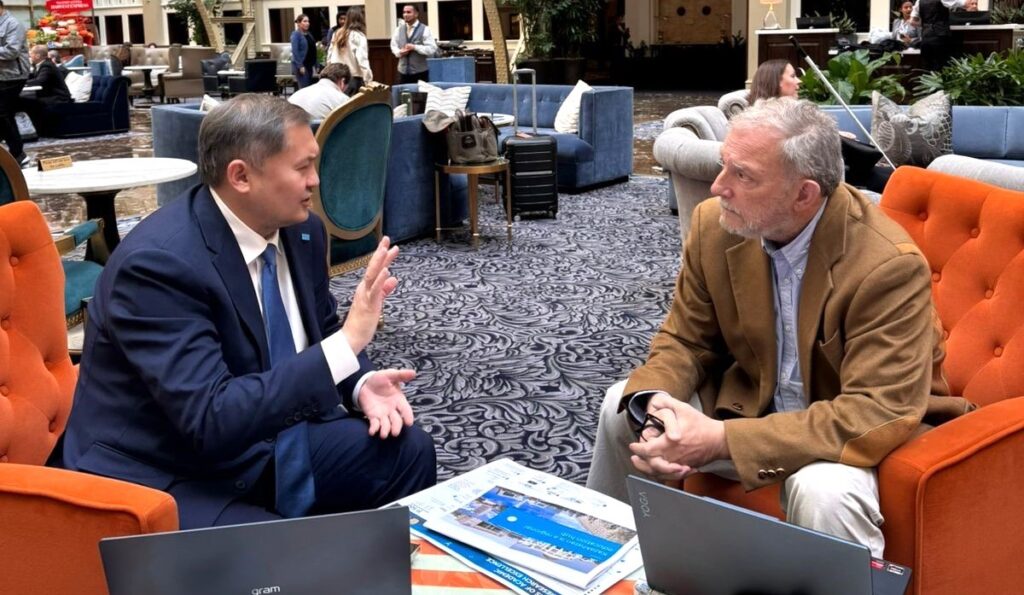
During his visit, Tokayev also gave interviews to prominent U.S. outlets, including The Washington Post and The New York Times. Topics included U.S.- Kazakh relations, President Donald Trump’s policy agenda, global geopolitics, and the situation in Ukraine.
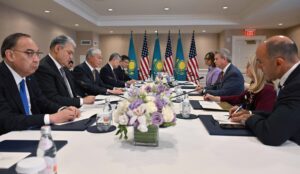
@Aqorda
Ahead of the Central Asia-U.S. summit, Tokayev held a one-on-one meeting with Trump. He expressed Kazakhstan’s support for the Trump Route for International Peace and Prosperity (TRIPP) initiative, which Tokayev said could bolster global development.
Trump reaffirmed U.S. support for a broad, strategic partnership with Kazakhstan. The presidents also discussed key international issues, followed by a joint phone call with Israeli Prime Minister Benjamin Netanyahu from the Oval Office.
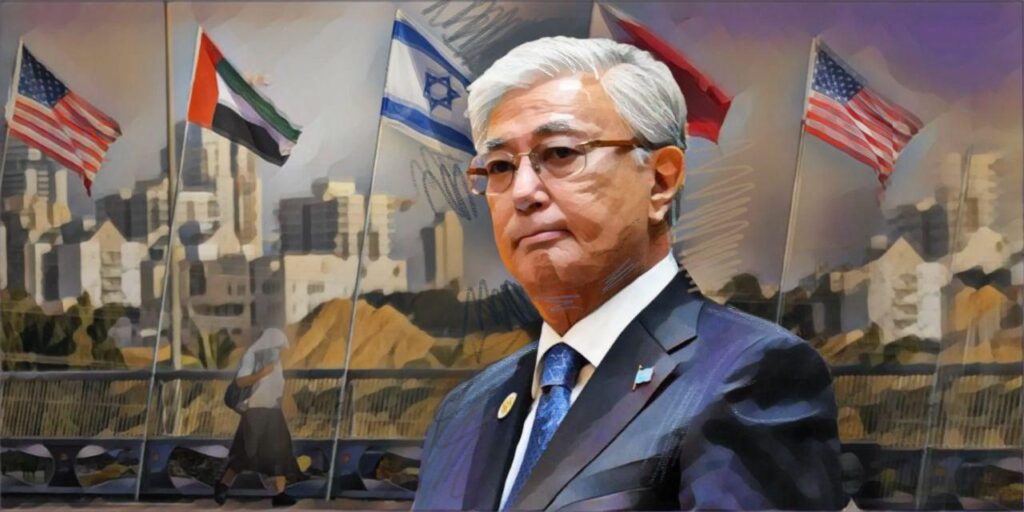
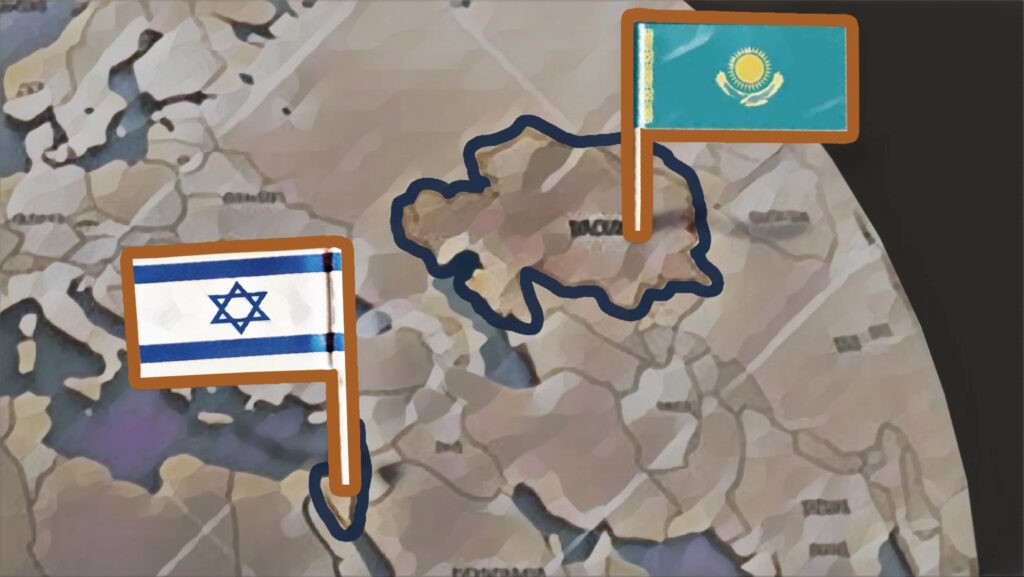
During the call, Kazakhstan announced its intent to join the Abraham Accords. Trump praised the decision, calling it a significant step forward.
“This is an important step in building bridges across the globe,” Trump said. “More countries are embracing the path of peace and prosperity through my Abraham Accords.”
At the Central Asia-U.S. Summit, Tokayev thanked Trump for hosting the historic event at the White House and said the C5+1 summit signals a new era of U.S.-Central Asia cooperation. He highlighted that the potential for economic collaboration between the U.S. and Kazakhstan in sectors such as energy, critical minerals, industry, transport, finance, artificial intelligence, and education exceeds half a trillion dollars.
Tokayev called on U.S. companies to seize the “unique opportunities” emerging in Kazakhstan and assured investors of his personal support.
During the summit, journalists asked Trump whether he would become the first U.S. president to visit Kazakhstan.
“I don’t rule out that possibility,” Trump responded. “You never know what will happen in a year. Your country has tremendous natural resources, and you have an outstanding president.”