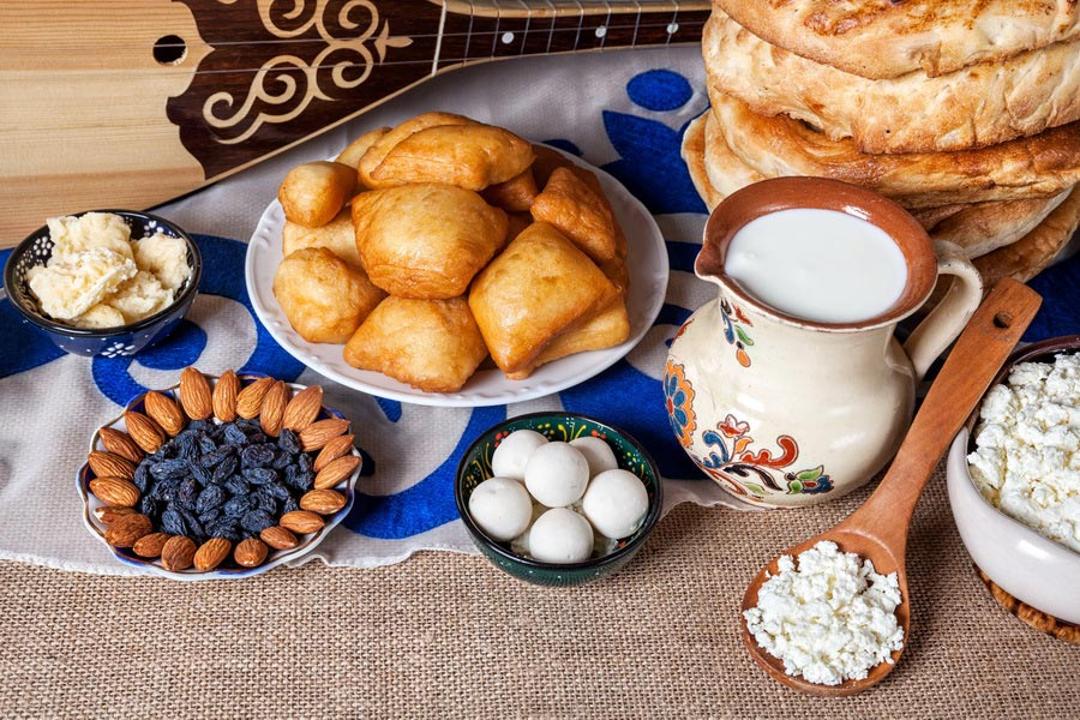
Traditional Kazakh food products such as kazy (a sausage-like delicacy made of horse meat), kumys (a fermented beverage made from mare’s milk), and kurt (dry cheese made from fermented milk) are now expanding beyond Kazakhstan’s borders, becoming part of the country’s export potential.
According to QazTrade Trade Policy Development Center, with state support, the export of traditional Kazakh foods could reach $50-$80 million by 2028.
Russia and China remain the largest markets for traditional Kazakh foods, as these countries are home to more than 2 million ethnic Kazakhs, which creates a stable demand for traditional products. Kurt and kumys are particularly popular on the Russian market. In China, especially in the Xinjiang Uyghur Autonomous Region, home to more than 10 million Muslims, there is growing demand for meat delicacies and halal products.
The export of traditional Kazakh dairy products shows steady growth. The export of kumys, shubat (camel’s milk), and ayran (fermented cow’s milk) totaled $13.4 million in 2024 and $17.3 million in 2025 (a 29.4% increase).
The main difficulty in exporting kumys is its short shelf life. Chilled kumys can be stored for only 3-5 days, so delivering it to more distant markets is a challenge. Producers are currently seeking solutions to this problem, including pasteurising it so that it can be stored for up to 30 days, as well as lyophilised kumys powder. Such products are already being supplied to China, although volumes remain modest for now.
Kazakhstan’s traditional foods are gradually finding their niche in foreign markets under a nomadic gastronomy brand, the cuisine of steppe culture, based on natural meat and dairy products.
In October 2025, another Kazakh delicacy entered the U.S. market when Tary Coffee, a cafe aimed at introducing visitors to Kazakh cuisine and traditional products, began operating in Chicago. One of the products featured on the menu is talkan, which is made from roasted and ground grains. In addition to talkan, the cafe’s menu features traditional Kazakh foods such as millet, nawut (crystallised sugar), alongside various grain-based ingredients.
According to Aitmukhamed Aldazharov, General Director of QazTrade, traditional Kazakh foods meet the world’s growing demand for functional foods and superfoods. Kurt is a source of valuable microelements, while tary and talkan are becoming increasingly recognised by foreign buyers during trade missions and international exhibitions.
“Traditional steppe food sells well and is in demand through networks of Kazakh restaurants and cafes abroad. For example, the famous cappuccino with tary, a kind of ‘ground steppe coffee,’ has already entered the U.S. market,” he said.