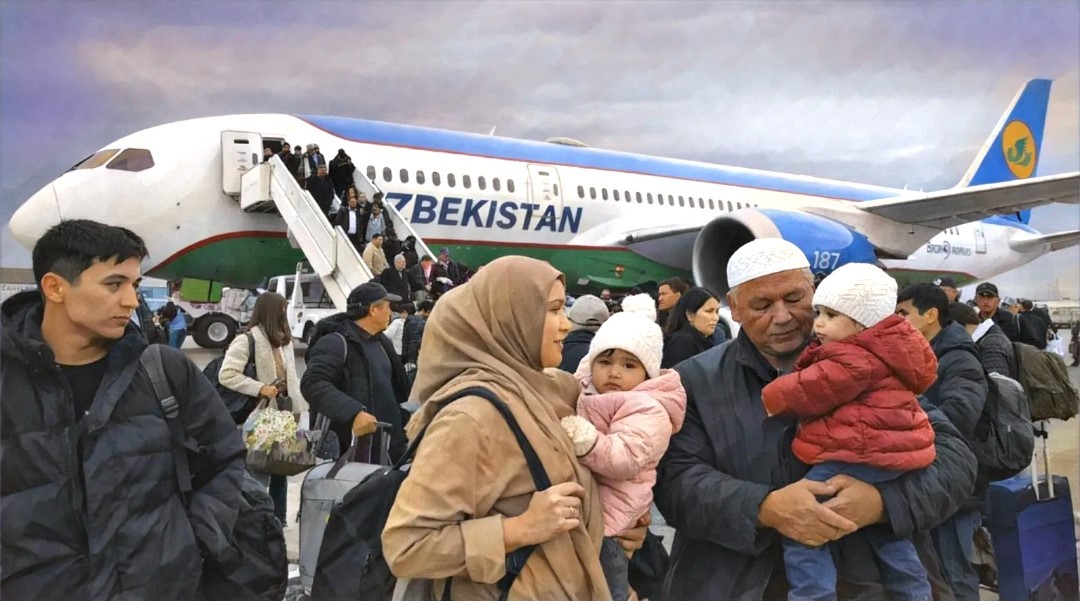
Uzbekistan has repatriated 21,712 citizens from several Middle Eastern countries as of 07:00 on March 9, the country’s Ministry of Foreign Affairs has said, as evacuation efforts continue amid regional instability. Most of those returned came from Saudi Arabia, where 17,963 citizens were brought back to Uzbekistan. Additional repatriations included 3,290 people from the United Arab Emirates, 378 from Qatar, 47 from Iran, 27 from Bahrain, and seven from Oman.
The ministry said the return of Uzbek citizens is being carried out “systematically and in stages,” with authorities continuing to coordinate transport and logistics for those seeking to return.
Officials noted that many repatriation flights are currently being organized through countries whose airspace remains open to civilian aviation.
Uzbekistan’s evacuation reflects the scale of its citizens’ presence across the Gulf. In recent years, the country has expanded labor migration agreements with Saudi Arabia, the United Arab Emirates, and Qatar, sending thousands of workers into construction, hospitality, and service sectors. Saudi Arabia has also become a major destination for religious travel from Uzbekistan, with large annual flows of pilgrims traveling for the Hajj and Umrah.
Kazakhstan has also evacuated citizens during the crisis, bringing 8,585 people home from Middle Eastern countries since the operation began. Central Asian citizens travel widely to Gulf states for work, tourism, and pilgrimage, leaving thousands affected when conflicts disrupt flights and close regional airspace.
The number of returned citizens has risen steadily over the past several days. According to the foreign ministry, 19,347 Uzbek citizens had returned home as of 07:00 on March 8.
Uzbek diplomatic missions in the region have also issued safety guidance to citizens who remain abroad. In a statement published by the Embassy of Uzbekistan in Israel, citizens were urged to follow official security instructions issued by local authorities.
The embassy said red alerts issued by Israel’s civil defense authorities indicate a dangerous situation and require people to stay near protected shelters and immediately enter them if warning sirens sound. Blue alerts indicate that the threat has passed, and people may leave shelters.
Other Central Asian countries have also organized evacuations of their citizens. According to Tajik media outlet Asia-Plus, more than 300 citizens of Tajikistan returned home on March 8 on two flights from Dubai.
One charter flight brought 130 Tajik citizens to Dushanbe in the morning, while a later flight operated by Somon Air transported another 180 passengers. The charter operation was organized with support from the Tajik embassy in the United Arab Emirates, local authorities, and the airline Flydubai.
About 550 Tajik citizens have returned home from Abu Dhabi and Dubai on charter flights in recent days amid the ongoing regional conflict.