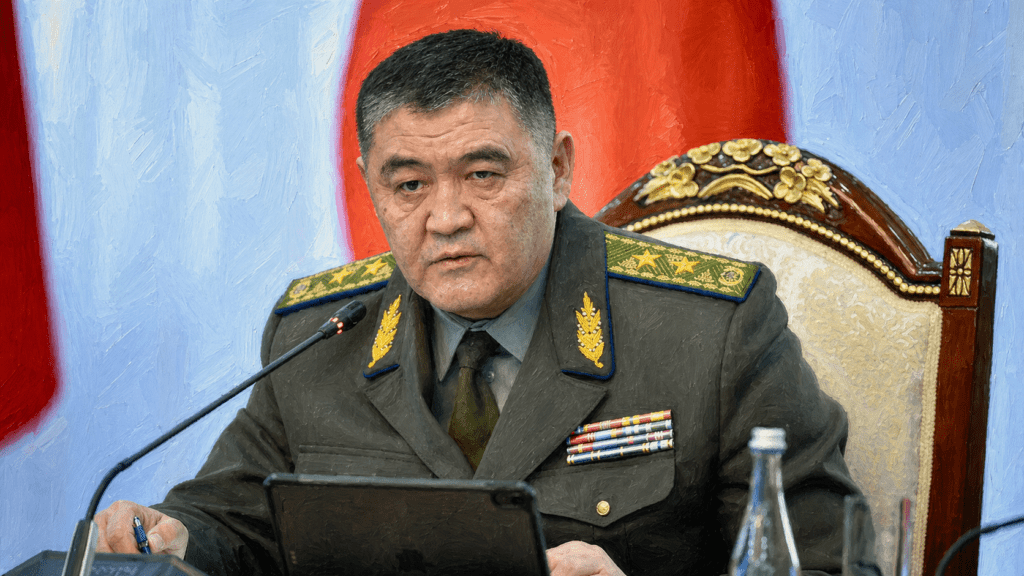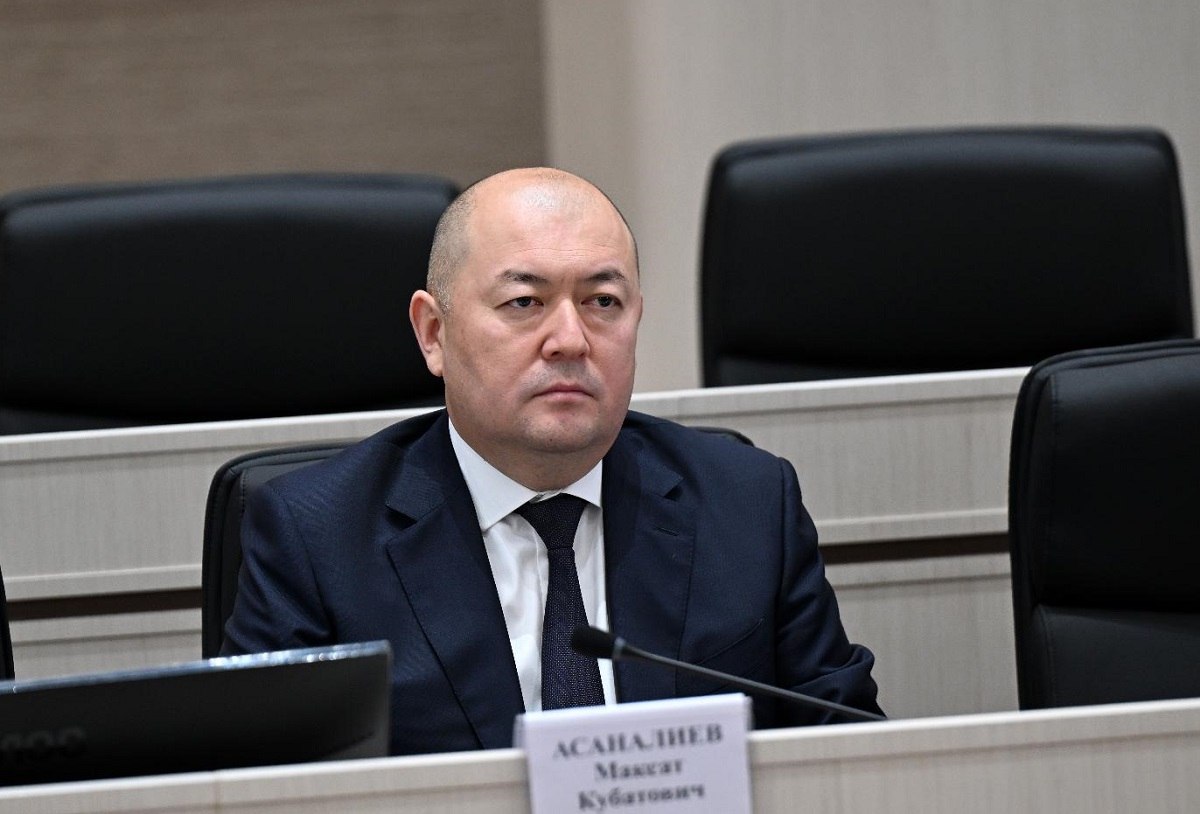
On September 2, Kyrgyzstan’s parliament approved the appointment of Maksat Asanaliyev as chairman of the State Committee for National Security, the country’s main security and intelligence agency, usually known by its Russian acronym GKNB.
Kyrgyzstan’s parliament, the Jogorku Kenesh, gave its consent to Asanaliyev’s appointment following a nomination by President Sadyr Japarov. His appointment was approved by 87 votes to zero, with lawmakers asking no questions about his candidacy.
Asanaliyev, 48, spent around nine years as a GKNB investigator before moving to the prosecutor’s office in 2010. He later served as a district prosecutor in Bishkek and prosecutor of the Osh Region before becoming prosecutor general in June 2024.
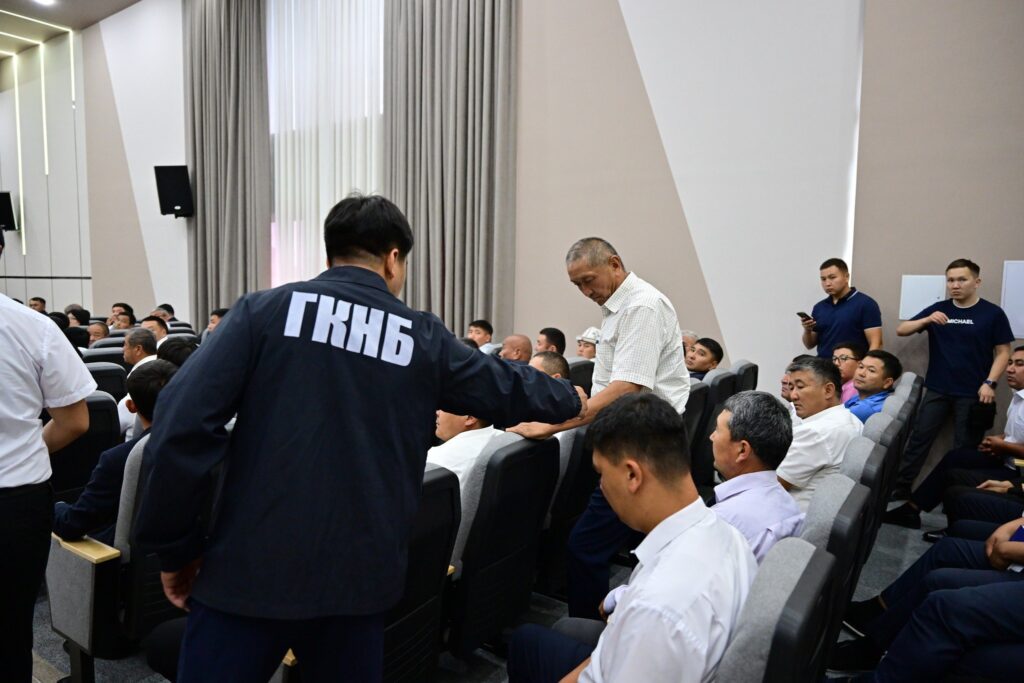
His tenure as prosecutor general also coincided with growing scrutiny of the GKNB following Tashiyev’s departure. In April, Asanaliyev told parliament that 386 complaints concerning GKNB officers had been received and that the Military Prosecutor’s Office was investigating 18 criminal cases involving alleged corruption and abuse of office. Nine GKNB officers had been held accountable, eight of whom were in custody and one under house arrest.
The change at the top of the GKNB has attracted particular attention because of the agency’s political weight in Kyrgyzstan. From 2020, the committee was headed by Kamchybek Tashiyev, one of Japarov’s closest allies and, for several years, one of the most influential figures in the country. Under Tashiyev, the security service’s influence over Kyrgyzstan’s political and economic life grew significantly.
After his departure in February 2026, Jumgalbek Shabdanbekov took over the GKNB. He remained in the post for about four months before leadership passed to Asanaliyev, who was appointed acting chairman by Japarov on June 30.
Tashiyev’s political career, meanwhile, ended in a criminal case. In July, a court found the former GKNB chief and seven others guilty of preparing a violent seizure of power. All eight were sentenced to four years in prison, but the court replaced the custodial sentences with three years of probation supervision. The case is now before the Bishkek City Court on appeal, with prosecutors seeking prison terms while Tashiyev’s defense is seeking an acquittal.
Tashiyev, meanwhile, was subsequently convicted in a criminal case. In July, a court found the former GKNB chief and seven others guilty of preparing a violent seizure of power. All eight were sentenced to four years in prison, but the court replaced the custodial sentences with three years of probation supervision. The case is now before the Bishkek City Court on appeal, with prosecutors seeking to replace the probation sentences with prison terms, while Tashiyev’s defense is seeking an acquittal.