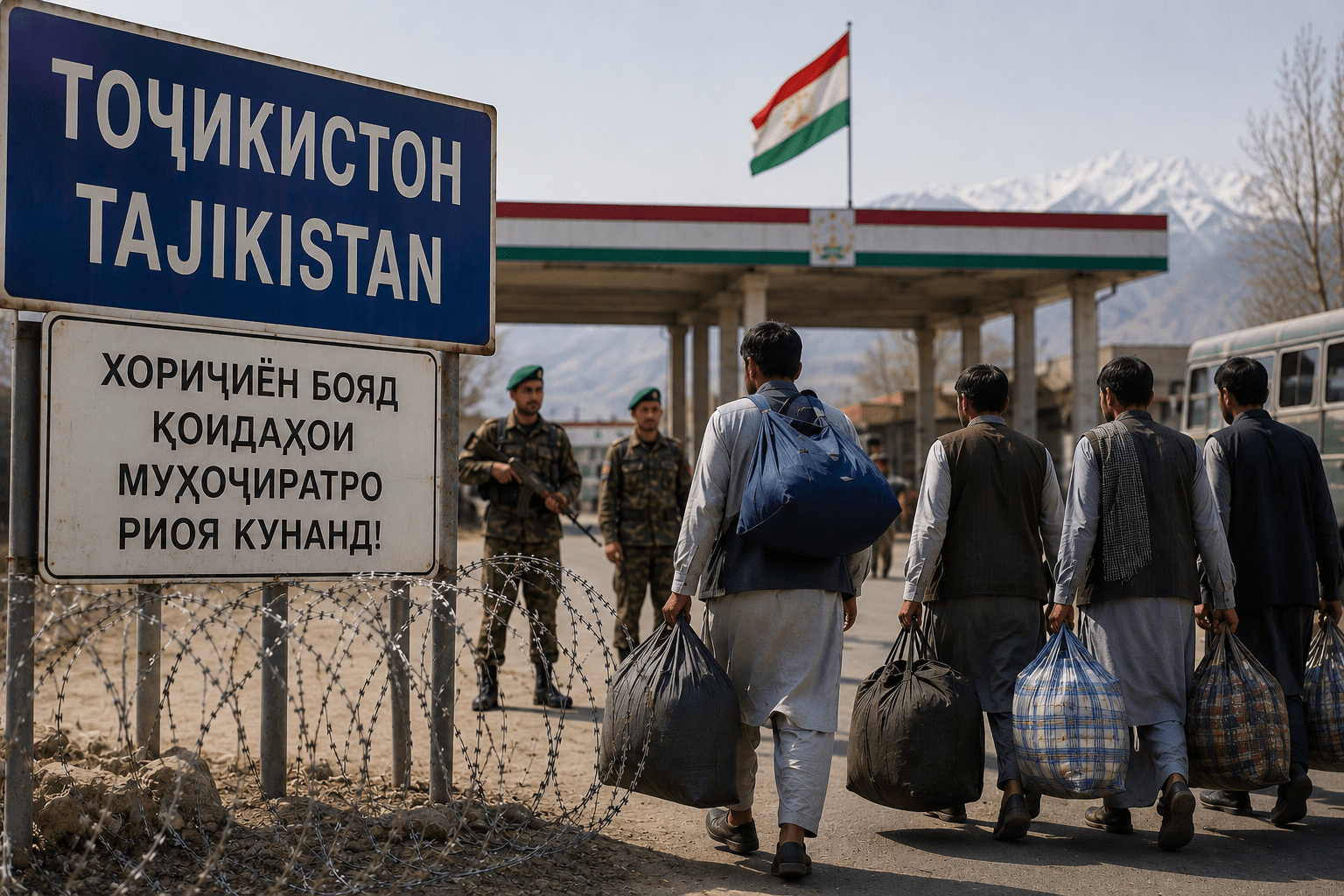
Tajikistan’s State Committee for National Security (GKNB) has publicly commented for the first time on the deportation of Afghan citizens from the country, citing alleged violations of national law and crimes that the authorities said had sparked public outrage.
The statement followed an appeal by Afghan citizen Muhammad Hakim Tursun, who criticized the deportation of his compatriots.
In its response, published through the state news agency Khovar, the security service claimed that some Afghan citizens living in Tajikistan had “grossly violated the requirements of the law” despite being provided with conditions for residence, work, and education.
To justify the deportations, the agency cited crime statistics that it said involved Afghan citizens and foreign nationals, without clearly explaining the time period covered or how many cases were linked specifically to Afghan refugees in Tajikistan’s Sughd region. According to the GKNB, the authorities recorded 670 cases of illegal drug trafficking, 32 cases involving membership in terrorist organizations, 15 cases of sexual violence against minors, and 594 instances of forged documents being used to obtain refugee status.
The security service also reported 45 cases involving the organization of gambling and entertainment establishments and 25 cases related to ties with what it described as “destructive organizations” and attempts to destabilize the situation in the country.
Particular attention in the statement was devoted to a high-profile murder case in Khujand. According to the agency, on the evening of April 30, Afghan citizen Rahmoni Muhammadumar allegedly killed local resident Aziza Vokhidova, who, according to authorities, “attempted to defend her honor and dignity.”
Earlier, Tajikistan’s Interior Ministry reported the detention of the suspect. In a video released by authorities, the suspect allegedly confessed to the crime, saying he acted because of “strong sexual attraction” and stabbed the woman multiple times.
Following the killing, residents of the Dehmoy jamoat in Jabbor Rasulov district told journalists that their Afghan neighbors had suddenly disappeared. According to witnesses, unidentified individuals transported approximately 200 to 250 refugees away in vehicles on May 4, many of whom had reportedly lived there for years.
Until the publication of the GKNB statement, the authorities had not officially confirmed the mass deportation of Afghans. Officials had instead limited themselves to reminding foreigners of the need to comply with migration laws.
Tajikistan has previously faced criticism over the forced return of Afghan refugees. In December 2024, UNHCR urged the authorities to halt deportations after at least 41 Afghan citizens, including 37 refugees, were returned without due process. The agency warned that forced returns to Afghanistan could violate international law and place returnees at risk.
The security service stressed that more than 10,000 Afghan families who obey Tajik laws continue to reside in the country.
The statement also said Tajikistan has served as a “second homeland” for several generations of Afghan citizens over the past 35 years and claimed that the state treats them “impartially.” Nevertheless, the agency emphasized that security concerns remain its top priority.