Migration has become a major socio-economic process, substantially affecting Uzbekistan’s economic development and quality of life. The primary destination countries for labor migrants from Uzbekistan have been Russia, Kazakhstan, the Republic of Korea, and Turkey, as well as certain European and Asian countries. Remittances from migrants have become a major source of foreign currency inflows and a key form of economic support for households. Over time, they have raised economic activity and contributed to greater currency stability. In 2025, remittance inflows to Uzbekistan rose 28% compared to 2024, reaching $18.9 billion.
Despite the positive growth of Uzbekistan’s economy, the country still faces limited employment opportunities. Although the unemployment rate dropped to 4.9% in the third quarter of 2025, a noticeable improvement, around 760,000 people remained unemployed and were looking for work. In 2025, the official average monthly salary in Uzbekistan was 6,376,700 soums (about $530 at the year-end exchange rate). This remains relatively low, pushing many working-age people to seek work abroad.
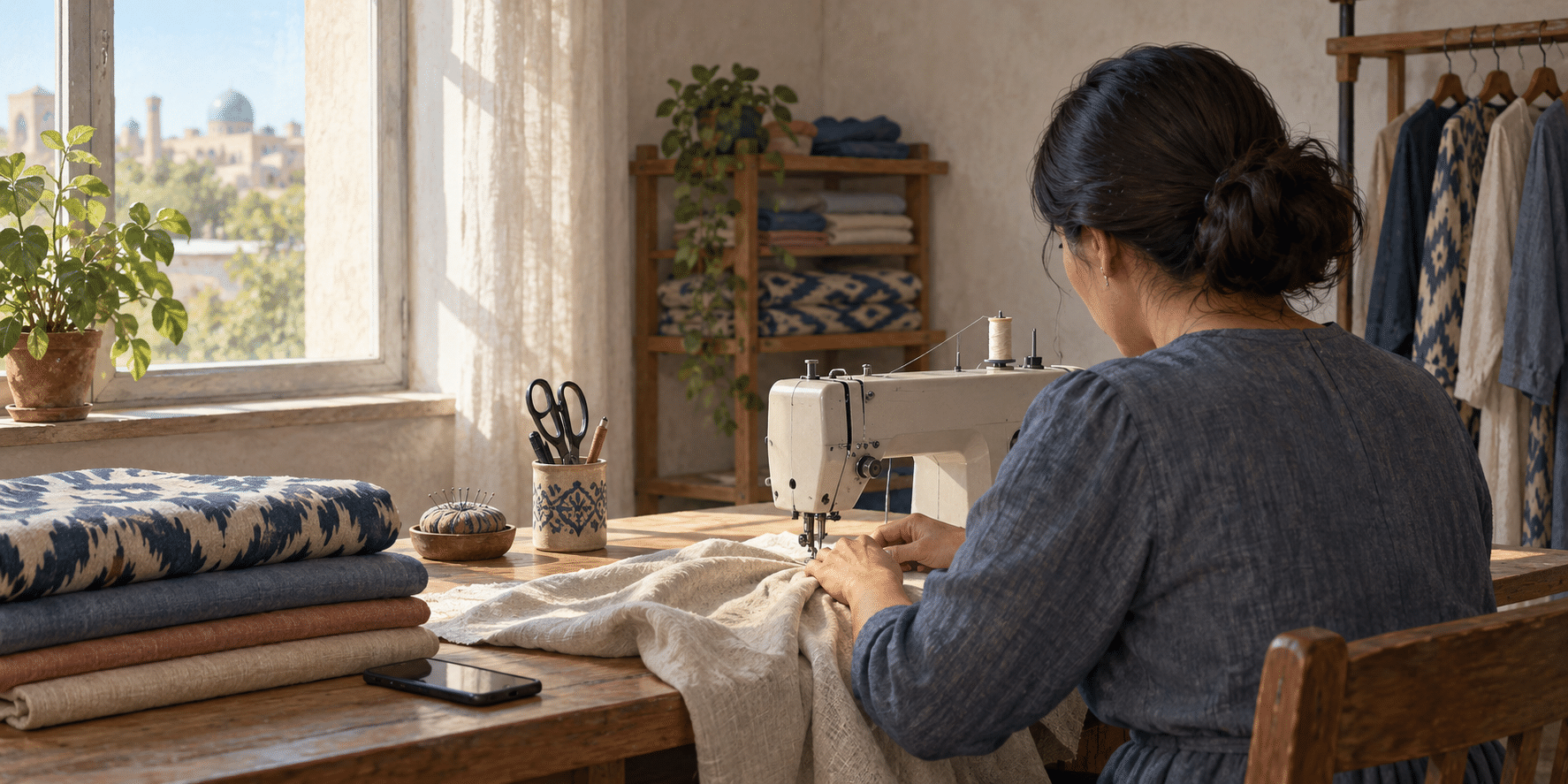
When people picture remittances flowing into Central Asia, they usually imagine one scenario: the father who has gone abroad, sending his family in Uzbekistan “survival money” for rent, groceries, and school fees. In some small districts of Uzbekistan, however, this picture is starting to look different. That same money can now also become a source of opportunity: a sewing machine, a voucher for educational courses, or a business plan with a woman’s name on it.
A Policy Shift Begins
While remittances have substantially improved the living standards of recipient households and have become a crucial source of foreign currency for Uzbekistan, their effect on women is more complex. For some families, money sent home from abroad has been considered “out of the system.” These funds regularly supported family budgets, but financial institutions did not always recognize them as income. Recipients could lack the documented income or credit history needed to qualify for a loan, even when their families had received remittances for many years. However, a pilot program launched in March 2026 by the International Fund for Agricultural Development (IFAD) and the European Union in cooperation with Hamkorbank, one of Uzbekistan’s leading banks, aims to change the picture. According to IFAD, the program’s credit scoring model uses remittances to assess a borrower’s ability to repay a loan. This approach could be transformational for rural women who struggle to access credit directly. It could enable rural borrowers to access formal loans, invest in small businesses, and build a credit history.
Alongside the financial support, 900 rural residents, at least 50% of whom will be women, will have access to business and financial literacy training. In addition, 100 participants will receive enterprise mentoring to help them run or scale up their businesses.
Faces Behind the Numbers
Women face many obstacles in accessing credit, finding employment, and launching a business. According to the World Bank, they own nearly a third of registered micro, small, and medium-sized enterprises in Uzbekistan but receive only about 14% of loans to those businesses. This may be due to limited collateral or a lack of business training. Additionally, UN Women estimated in 2023 that women globally spend 2.8 more hours per day than men on unpaid care and domestic work, which leaves them less time to run a business. If remittances count as proof of income, many women could access credit without a formal job.
For several years, Aziza, a woman from western Uzbekistan whose husband works abroad, has been sewing clothes by hand for her neighbors, using money from remittances. She recently heard about the new program from friends. “I did not even know that remittance income could count toward getting a loan. Previously, I faced many challenges trying to qualify for a loan. Hopefully, through this new remittance-based scoring model, I will finally be able to.” If she eventually becomes eligible for a loan, she intends to rent a small space and buy new equipment for her sewing business.
In eastern Uzbekistan, Madina responded positively to the news about the financial literacy training, saying: “I finally feel like I am starting to take more responsibility for the transactions, having a sense of control and being able to use the money in the right direction.” She hopes the training will teach her to make more informed financial decisions and boost her confidence in managing money.
Finally, Karima, from southern Uzbekistan, runs a small bakery and learned about the program through people in her community. “Many people have started talking about this program after being denied loans by financial institutions because they had no bank record or formal credit history,” she says. She is now eager to apply and see what other opportunities it offers. If it works out, she hopes to take out a loan to hire additional help and expand her bakery.
From Remittances to Supporting Women
Similar programs can help Uzbekistan turn remittances into sustainable local businesses and jobs, but only if they offer more than loans. Women who have struggled to access credit also need practical support with collateral and training in budgeting. For families that rely on money from abroad, earning an income locally could be a step toward financial independence.
However, a business financed through remittances could prolong dependence on migration unless it can eventually sustain itself. Programs should therefore support women in reaching a wider customer base so their businesses can grow and hire more employees, contributing to the country’s economic development.
The views expressed in this article are those of the author and do not necessarily reflect the official policy or position of the publication, its affiliates, or any other organizations mentioned.