Kyrgyzstan plans to repair hundreds of bridges and more than 7,200 kilometers of roads to help livestock farmers reach remote grazing land as pastures near villages deteriorate.
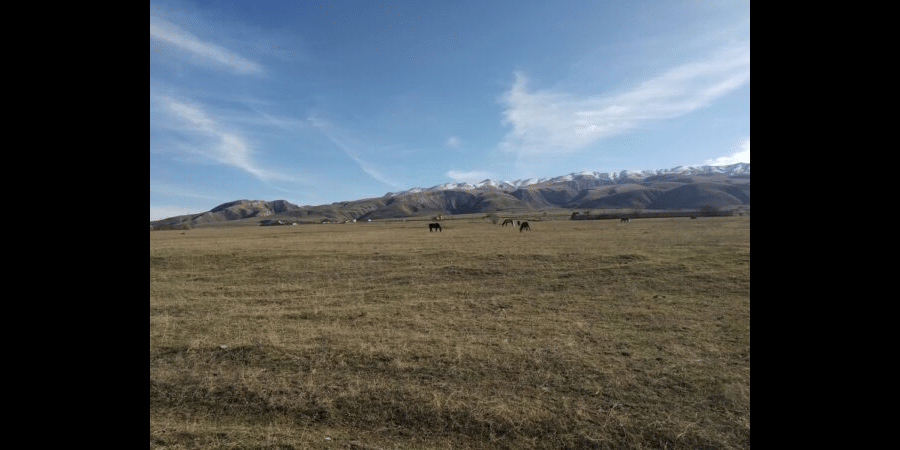
The Ministry of Water Resources, Agriculture and Processing Industry outlined the plans on October 29. It estimates that 184,000 hectares of pasture near settlements have been degraded and need restoration.
To ease grazing pressure near villages, the ministry has identified a need to repair and restore 553 bridges and improve 7,206.3 kilometers of pasture access roads. It also plans to establish 406 livestock watering points and install 170 milk collection tanks.
Plans to restore vegetation include reseeding pastures, controlling weeds unsuitable for livestock feed, and rotating grazing areas. Tractors would be used for sowing on flat terrain and specialized drones in areas that are difficult to reach.
According to the ministry, pasture grass seeds were sown on 34,376.5 hectares of degraded land between 2023 and 2025. In September, it reported purchasing more than 186 metric tons of seeds for 50 million soms (about $570,000). Sowing was still underway in October.
Kyrgyzstan already has a pasture development program for 2024–2029, approved in August 2024. It also calls for restoring degraded grazing land and improving pasture infrastructure. The latest announcement did not explain how the new plans differ from the existing program or specify their overall cost.
In March 2025, the ministry said it had recommended annual restrictions on grazing near villages from April 15 to September 15. At the time, it estimated that 139,069 hectares had been degraded. It is unclear whether the higher figure in the latest announcement reflects further deterioration or a revised assessment.
The ministry estimates the country’s total pasture area at about 10 million hectares. Pastures are the main source of livestock feed, so their deterioration affects feed availability and farmers’ incomes.
Kyrgyzstan’s livestock numbers continued to rise in 2025, reaching approximately 1.8 million cattle and 6.3 million sheep and goats by the end of the year, increases of 1.7% and 0.8%, respectively, over 2024.