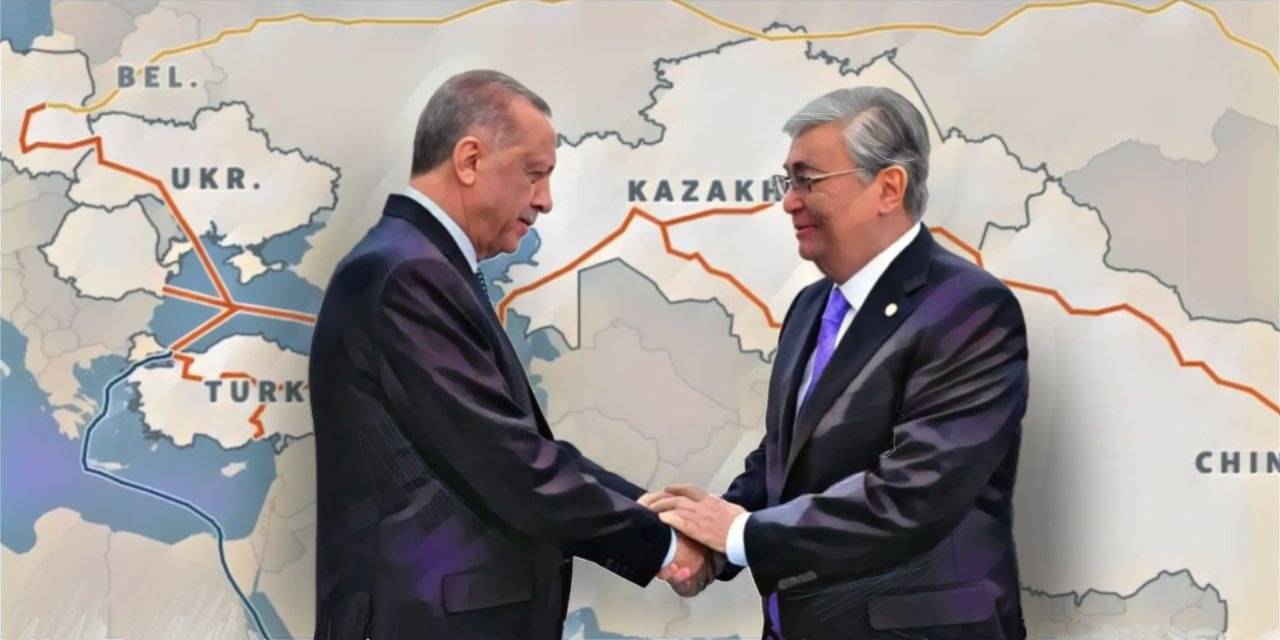
On October 28 in Ankara, Kazakhstani President Kassym-Jomart Tokayev and Turkish President Recep Tayyip Erdoğan held talks in a narrow format and then with their delegations. They met less than six months after chairing the sixth bilateral High-Level Strategic Cooperation Council in Astana on May 14, suggesting a more intensive phase of presidential engagement.
The agenda covered transport and logistics, energy, agriculture and investment. Erdoğan reaffirmed the ambition to raise bilateral trade to $15 billion. The Middle Corridor remains central to bilateral cooperation, alongside trade, energy production and corporate investment linking both countries.
Complementary Commercial Roles
The partnership supports cargo flows both westward to Europe and eastward from Türkiye. In May, KTZ Express and Pasifik Eurasia organized a train carrying 50 forty-foot containers of refrigerators from Izmir toward Chengxiang in China via Aktau and Altynkol. KTZ Express reported an 83-hour transit on the Aktau–Altynkol leg within Kazakhstan. The companies are developing eastbound backhaul, coordinating schedules and transit arrangements to balance cargo flows. Turkish exporters gain a route through Kazakhstan toward Chinese customers, while the operators seek cargo to sustain services in both directions.
Kazakhstan’s inland rail network and Türkiye’s connections to European markets give the two countries complementary roles along the corridor. After crossing the Caspian, the Middle Corridor offers shippers an overland continuation through Türkiye alongside maritime routes through Georgian Black Sea ports. KTZ Express also cooperates with Maersk on Black Sea logistics. Azerbaijan and Georgia connect the Kazakhstani and Turkish sections of this route. Ankara and Astana share an interest in attracting cargo through Türkiye within this network of alternative routes.
Kazakhstan’s inland rail investment supports the route toward Türkiye. According to the Asian Infrastructure Investment Bank’s 2026 project appraisal, the second track on the Dostyk–Mointy line has been completed. A further project would construct a new Mointy–Kyzylzhar section, bypassing congestion in central Kazakhstan to improve corridor alignment and capacity. Farther west, rail services reach Kazakhstan’s Caspian ports, where cargo transfers to maritime transport. Added rail capacity benefits bilateral services insofar as ports and vessels can accommodate the resulting flows.
Connecting the Route
Azerbaijan’s ports and railways connect Kazakhstan’s Caspian services with routes through Georgia to Türkiye. Crossing between rail networks separated by sea requires coordination of trains, vessels, and port handling. Kazakhstan’s container traffic uses Aktau, while Kuryk handles rail and road-vehicle ferries serving Alat in Azerbaijan. Kazakhstan and Türkiye therefore need cooperation with Azerbaijan and the operators responsible for transferring cargo between rail and sea.
Work on the Georgian section of the Baku–Tbilisi–Kars railway was completed in 2026. In June, Türkiye’s Transport Ministry described the completion as a new operational stage for the line, which opened in 2017. The railway carries cargo arriving through Azerbaijan across Georgia into Türkiye. At the June ceremony, Transport Minister Abdulkadir Uraloğlu emphasized regular cargo flows, operational coordination, and reliable service.
Türkiye’s rail improvements toward the Bulgarian border strengthen its European connection and extend the corridor’s commercial reach. The Çerkezköy–Kapıkule section opened in October as part of the wider Halkalı–Kapıkule project; other sections remained under construction. The EU contributed €275 million in grant financing, linking European–Turkish infrastructure cooperation with the route toward Central Asia.
KTZ Express reports that corridor partners have introduced a common train schedule and automated shipment-data exchange. Its October account described coordination between rail and maritime services, using information on rolling-stock locations and advance consignments. According to the operator, these measures have reduced waiting at transfer points and improved delivery predictability.
Kazakhstan and Azerbaijan have also agreed to authorize an additional 6,000 electronic road permits for 2026 and move exclusively to electronic permits from 2027. This road-haulage reform addresses border documentation, while the rail–sea measures coordinate transfers between services. Together, they address the administrative and operational interruptions that can limit the benefits of additional infrastructure.
Trade and Reciprocal Investment
Türkiye is among Kazakhstan’s major export markets, alongside Italy, China and Russia. Preliminary January–August 2026 statistics put its share of Kazakhstani merchandise exports at 7.9%, while it supplied 2.1% of imports over the same period. The presidential trade target thus builds on existing bilateral commerce. Improved services can support bilateral trade and help operators attract transit cargo destined for third markets.
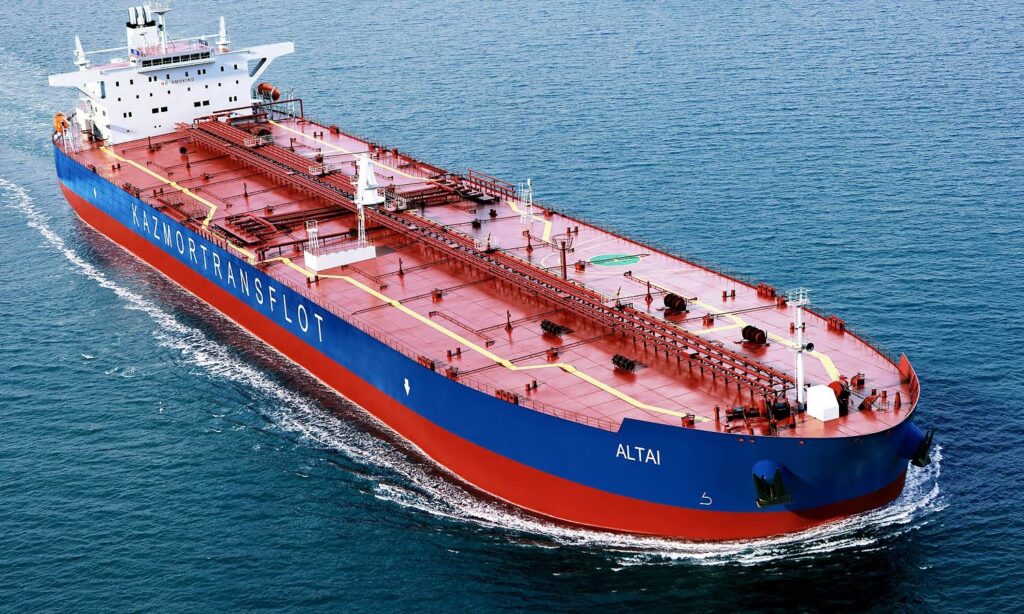
Türkiye’s Mediterranean outlet at Ceyhan gives Kazakhstan an additional export option as it seeks to expand Trans-Caspian oil transit. KazMunayGas, Kazakhstan’s national oil company, moved 1.3 million metric tons along the Aktau–Baku–Tbilisi–Ceyhan route in 2025; its agreement with Azerbaijan’s SOCAR envisions a phased increase to 2.2 million metric tons annually. Tankers carry the crude across the Caspian for onward transport through the pipeline to Ceyhan.
KazMunayGas attributed the 7% decline in 2025 to technical restrictions in the pipeline system. A study commissioned by Tengiz and Kashagan shareholders is examining a much larger Trans-Caspian oil route, with options envisioning up to 35 million metric tons annually. The operating route reaches the Mediterranean without crossing the Black Sea or passing through the Turkish Straits. The service diversifies Kazakhstan’s export options and sustains Türkiye’s transit role. The larger proposal remains under commercial examination.
Aksa Energy, a Turkish power producer, announced full commercial commissioning of its 264-megawatt combined heat and power plant in Kyzylorda on June 1, 2026. Its 15-year capacity agreement with Kazakhstan’s energy settlement institution establishes a lasting Turkish commercial presence in Kazakhstan’s domestic energy market. Pharmaceutical production reinforces these ties: Nobel AFF, the Kazakhstani business of Türkiye’s Nobel Pharmaceuticals, operates a manufacturing facility in Almaty. These operations tie Turkish companies to demand within Kazakhstan, extending the commercial relationship beyond the movement of transit cargo.
Kazakhstan’s Kaspi.kz, a payments and e-commerce group, expanded into Türkiye by acquiring a controlling stake in Hepsiburada for approximately $1.127 billion. The transaction closed on January 29, 2025. The acquisition gave Kaspi an established Turkish marketplace serving local consumers and merchants. The Turkic Investment Fund has committed up to $20 million to Almaty Airport, operated by Türkiye-based TAV, adding regional financing to these bilateral ties, with Azerbaijan participating alongside Kazakhstan and Türkiye. Kaspi’s investment in Türkiye complements Turkish production in Kazakhstan. Companies in both countries thus have a continuing commercial interest in access to the other’s domestic market.
A Framework for Further Cooperation
Transport services and investment support Ankara’s and Astana’s multivector policies by widening their choice of routes, markets and commercial partners. Companies develop the services and commit capital; governments can sustain these options by maintaining market access, reducing administrative obstacles and coordinating with partners along the route.
Cooperation extends beyond commerce. Kazakhstan coordinates the military-political dimension of the Conference on Interaction and Confidence Building Measures in Asia (CICA), with Türkiye as co-coordinator; their work includes professional exchanges and mediation seminars.
For transport and investment, the Kazakhstan–Türkiye Council gives the presidents a forum for setting joint priorities. The Organization of Turkic States provides a multilateral setting, while the trilateral ministerial mechanism with Azerbaijan addresses their transport connections. Ankara and Astana can use their bilateral and transport forums to address obstacles requiring government decisions or coordination with other corridor partners.