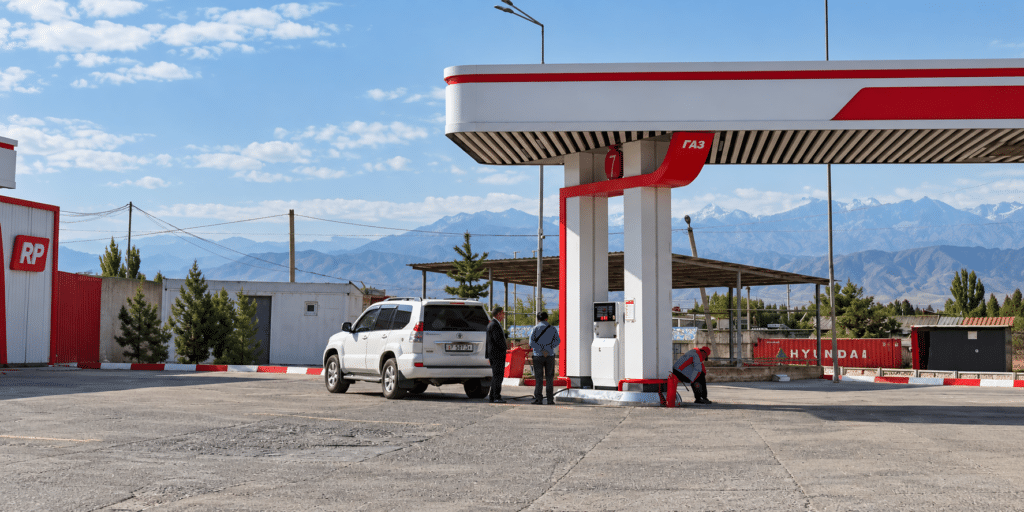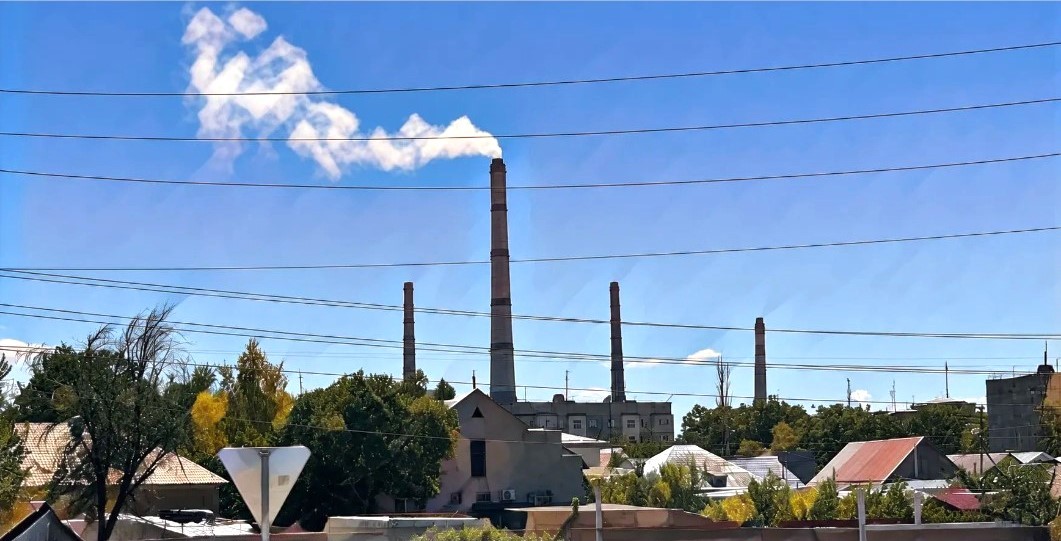
For hundreds of thousands of Bishkek residents, winter heating begins with an order from city hall. On October 28, the authorities began supplying heat through the capital’s district network after temperatures dropped sharply. The decision came as Kyrgyzstan recorded an autumn electricity consumption record, and lawmakers questioned the condition of the city’s main heating plant.
The system does not follow a fixed calendar. Under municipal rules, heating starts when the average outdoor temperature stays at 8°C or lower for five consecutive days. The heating season ends after five consecutive days above that threshold. In comments reported on October 26, Mayor Aibek Dzhunushaliev said the preceding five-day average was 6.5°C, and that the heating network would take three days to become fully operational. The seasonal switch controls building supply, not electricity generation.
Residents can face several cold days before the heating comes on. In 2021, the season began on October 5. In 2024, it started on October 22, while the 2025 opening fell on November 3. An analysis of records since 2004 by Kaktus.media put the average season at around 150 days.
The Legacy of a Centralized System
Bishkek’s heating network traces its origins to the Soviet period. The combined heat and power plant opened in 1961, when the capital was still known as Frunze. As the city grew, pipelines carried heat from the plant to new apartment buildings. The municipal heat-network company says roughly 400 smaller, inefficient boilers were phased out as centralized heating expanded.
Now, the authorities are also upgrading neighborhood heating facilities to reduce reliance on the central system. On October 28, the mayor launched new gas boilers with a combined capacity of 45 megawatts. The equipment was installed in the 10th microdistrict and at the Rotor facility in Jal. The new gas boilers serve individual neighborhoods, while much of Bishkek still relies on the main combined heat and power plant.
The immediate pressure is also falling on the electricity grid. On October 27, national consumption reached 64.318 million kilowatt-hours, according to the National Electric Grid of Kyrgyzstan. That was 34.4% above the figure from October 27, 2025, when consumption stood at 47.869 million kilowatt-hours. The operator called it an autumn record, close to December’s typical daily consumption of at least 66 million kilowatt-hours.
The operator attributed the surge mainly to electric heaters and warned about increased pressure on transformers. City officials said bringing the heating on earlier would help reduce reliance on electric heaters in homes and public buildings.
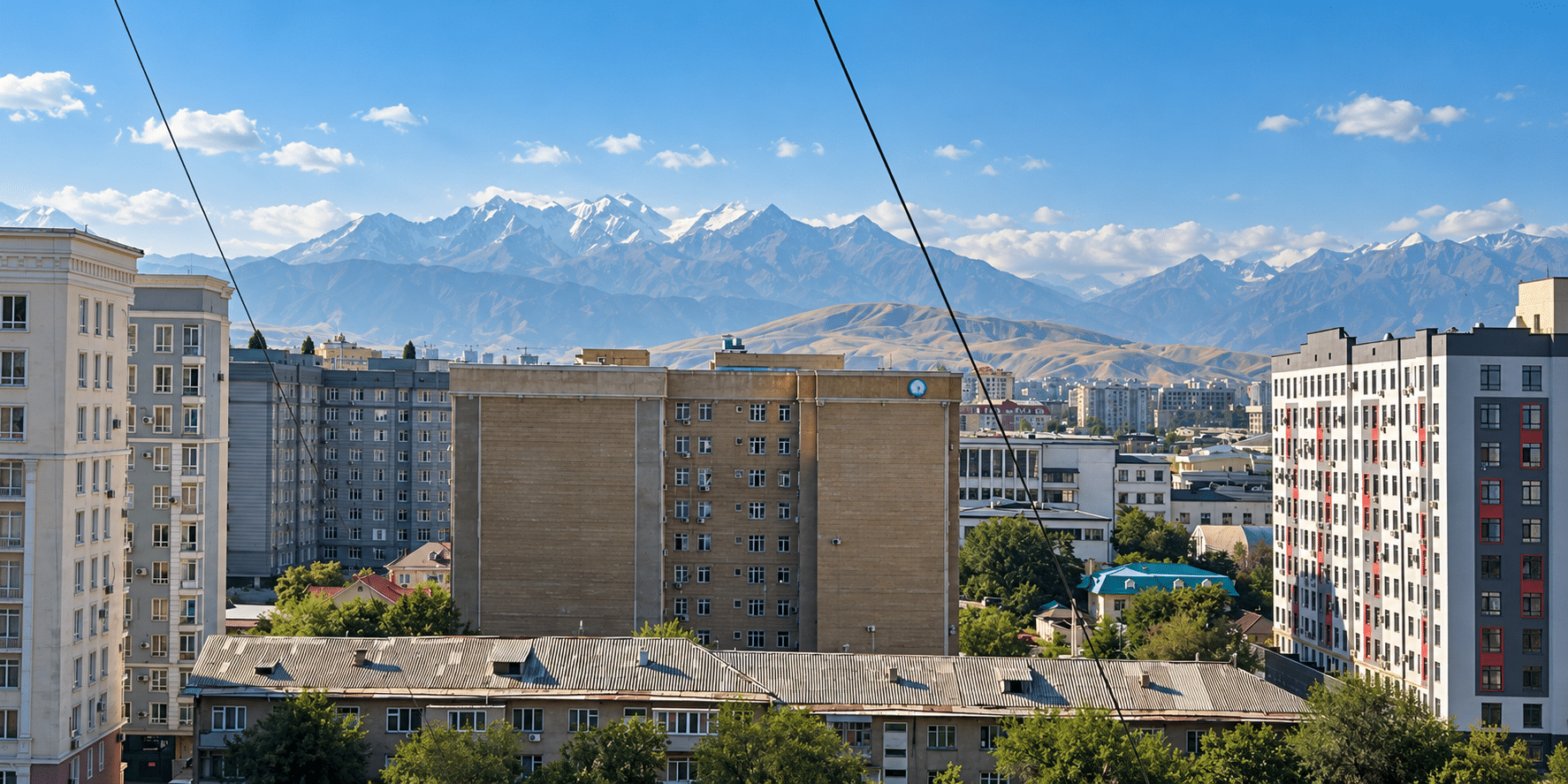
Residential buildings in Bishkek, where falling temperatures have increased demand for heating and electricity; image: TCA/Stephen M. Bland
The Aging Plant and Its History of Failures
On October 27, parliamentarian Mahabat Mavlyanova warned that worn equipment at Bishkek’s combined heat and power plant could interrupt heating. Deputy Mayor Nasipbek Kerimov acknowledged that machinery in its older section had been operating for about 65 years. Mavlyanova called for an independent technical assessment involving foreign specialists and proposed funding it in the city’s 2027 budget.
Plant director Nurlan Kuldzhigachev offered a more reassuring assessment on October 21. He told lawmakers the station was ready to provide heat and that scheduled repairs would not restrict supply. The plant has nevertheless suffered serious failures. An explosion in February 2024 injured workers and disrupted heating and hot water, while a breakdown in January 2018 left parts of Bishkek without heating for three days.
The 2024 explosion occurred in the older section, which had not been covered by a $386 million Chinese-financed modernization. President Sadyr Japarov subsequently ordered a complete overhaul.
Problems also extend into the network. A municipal utility official estimated in March that 68.6% of the city’s heating pipes were physically deteriorated. Some have been operating for 40 to 50 years, despite a standard service life of 25 years.
Bishkek-based independent analyst and TCA contributor Zamirbek Minbaev said fears of another heating failure had not caused widespread alarm. “I wouldn’t say there is widespread anxiety or panic in Bishkek about possible heating failures,” he told TCA. “People are certainly concerned, but they’ve also become accustomed to dealing with occasional disruptions.”
Minbaev recalled the 2018 breakdown, when his apartment became extremely cold. “Many households switched to electric heaters, which overloaded the electricity network and caused additional power cuts,” he said. “They’re simply used to adapting, and they expect the authorities to respond when something goes wrong.”
Pressure Beyond the Capital
The strain extends beyond Bishkek. Kyrgyzstan relies heavily on hydropower, leaving electricity generation sensitive to reservoir levels. Energy Minister Altynbek Rysbekov said the Toktogul reservoir held 11.345 billion cubic meters of water on October 15, below the 11.5–12 billion he said in July would be needed for stable electricity supplies through the autumn and winter.
Government forecasts put electricity use at 19.6 billion kilowatt-hours in 2026, against projected domestic generation of 15.5 billion, with imports expected to cover the remaining 4.1 billion. Rysbekov said that scheduled power restrictions were not planned this winter, but warned that supplies could tighten during morning and evening peaks when exporting countries also face higher demand.
For now, residents who rely on district heating are waiting for their radiators to warm up. Once they do, the concern is whether the aging system can keep homes warm throughout winter.