Kyrgyzstan plans to preserve farmland by encouraging more compact development in towns and villages. The country’s plan for land use and spatial development through 2050 calls for earthquake-resistant mid- and high-rise housing. President Sadyr Japarov approved it by decree on November 16.
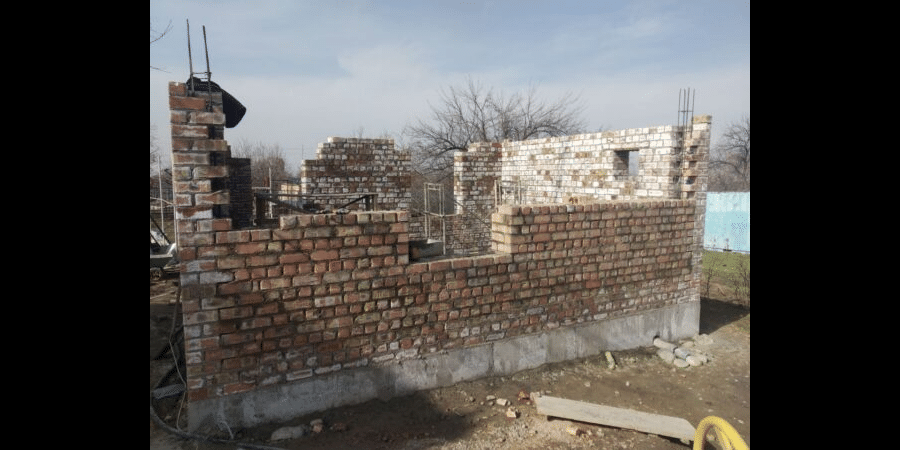
In many regions, towns and villages are expanding as single-family homes go up on new lots. The plan says this pattern consumes farmland and drives up spending on roads and public facilities. Extending power grids and water and sewer networks adds to the cost.
From January through October 2026, Kyrgyzstan added 8,150 single family homes with a combined floor area of about 1.12 million square meters. According to the National Statistical Committee of the Kyrgyz Republic, that was 3.8% more floor space than in the same period in 2025.
The plan proposes stronger protections for irrigated farmland, particularly near towns and villages. To rezone especially valuable irrigated land for housing or industry, authorities would have to show that the law permits the change and that the project cannot be built on degraded land or on plots of lower value or productivity. The plan calls for stricter enforcement against illegal construction and the unauthorized occupation of land. Officials would also check whether plots are used for their designated purpose.
At a November 8 meeting with residents of Kara-Balta and the Jayyl and Panfilov districts, Japarov explained the limits on new housing plots. He said that continuing to hand out plots for single-family homes could lead to the loss of irrigated farmland and pastures. When a woman told him her son had been waiting years for a plot, Japarov suggested he join the waiting list for an apartment through the State Mortgage Company.
The master plan for Karakol, a city in the Issyk-Kul region, already includes multistory housing, as do those for Manas and Osh. Local tour guide Albina Alimova told The Times of Central Asia that new buildings were obscuring historic sites and blocking mountain views. She warned that continued construction could change the city’s historic character.
The first phase of the national plan, from 2027 to 2030, calls for a digital land inventory and pilot projects. According to Tazabek, one pilot site will be the rural municipality of Karakol in the Talas region. The pilot would test a layout that places homes and services closer together. Terrace farming and water-saving irrigation are also planned, along with digital monitoring of pastures and other land as well as water resources.
The next two phases are scheduled for 2031–2040 and 2041–2050. The Cabinet of Ministers has three months to approve an implementation plan for the first phase. It must set deadlines and specify which agency will carry out each measure and how the work will be funded.