During a period when Central Asia remained largely unknown to European audiences, Among Kirghiz and Turkimans offered Western readers a rare first-hand account of the vast steppe and desert regions.
The book was written in the late nineteenth century by Richard Karutz, a German traveler whose work belongs to the broader tradition of European exploratory travel literature.
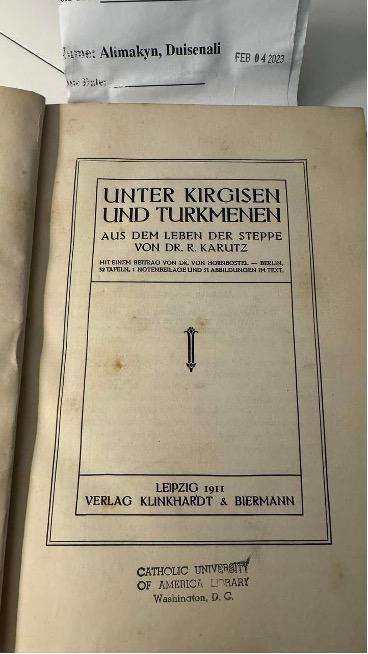
I first encountered this book while studying in the United States and later incorporated it into my research. A copy preserved in the library of the Catholic University of America in Washington, D.C., was published in Leipzig in 1911. Since then, it has been regarded as one of the more noteworthy works in early European writing on Central Asia.
Who Was Richard Karutz?
Richard Karutz was a late nineteenth-century German traveler and writer who journeyed through parts of the Russian Empire’s Central Asian territories. Though not widely known today compared to some British or Russian explorers, Karutz represents a generation of European intellectuals fascinated by the perceived “frontier zones” of empire, regions seen as remote, exotic, and culturally distinct.
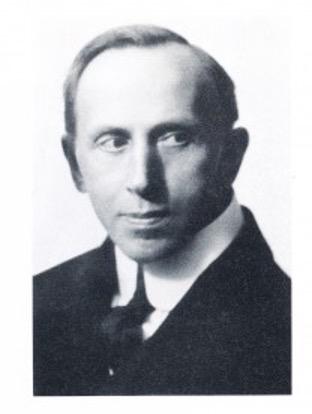
Richard Karutz
He was neither a colonial administrator nor a military officer; rather, he traveled as an independent observer. His writings reflect the curiosity of an educated European shaped by the intellectual currents of his era, including Orientalism and the growing interest in ethnography. Like many travelers of his time, Karutz sought to document ways of life he believed were on the verge of transformation under imperial modernization.
Across the Steppe and Desert
In Among Kirghiz and Turkimans, Karutz traveled among communities then commonly referred to in Russian and European sources as “Kirghiz”, a historical term often applied to Kazakhs, as well as Turkmen tribes. His route took him across vast grasslands, caravan routes, and oasis settlements shaped by pastoral migration, tribal organization, and Islamic traditions.
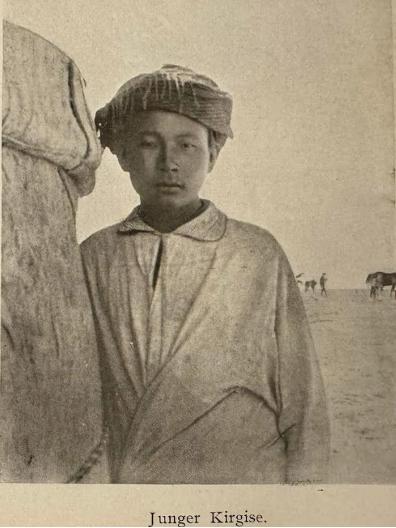
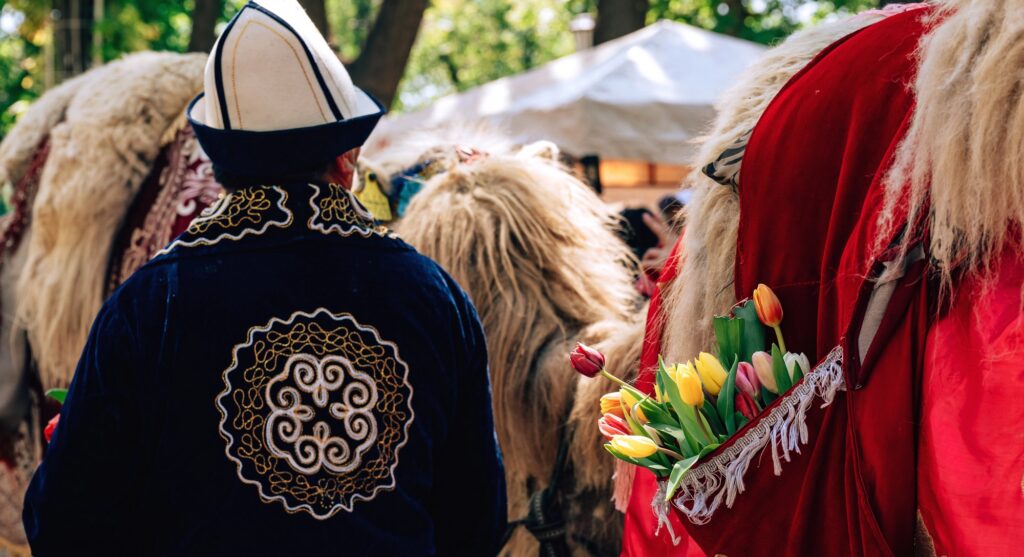
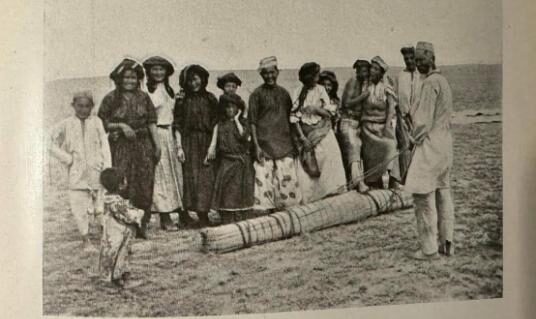
Rather than producing an official report or military survey, Karutz wrote in a personal and descriptive style typical of travel literature. His narrative often reads as impressionistic reflection rather than systematic analysis. He documents everyday life, including nomadic encampments and felt yurts, equestrian culture and elaborate codes of hospitality, tribal leadership and clan loyalty, as well as desert trade routes and caravan movement.
Mangyshlak, a peninsula on the eastern coast of the Caspian Sea in present-day Kazakhstan, features prominently in his descriptions. Significant mineral deposits were later discovered there, leading to its designation as a “peninsula of treasures.” Mangyshlak is characterized by stark desert landscapes and was once described as a barren land consisting largely of sand and stone. In the Middle Ages, it served as a gateway for trade between East and West. The region also played a role in the early history of Turkmen communities. Karutz’s writing attempts to capture both the hardship and the quiet grandeur of steppe existence.
Depicting Nomadic Society
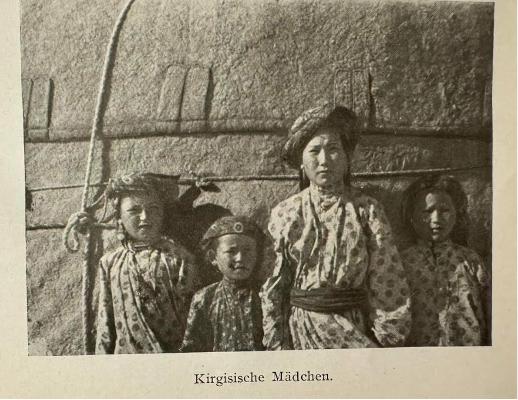
A central strength of the book lies in its attention to social organization. Karutz was particularly struck by the mobility of Kazakh life, seasonal migrations, a livestock-based economy, and a strong attachment to land understood as ancestral heritage rather than private property.
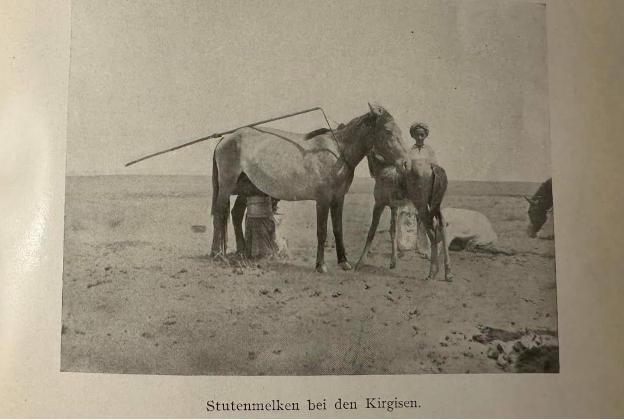
He described the ways of life of Turkmen and Kazakh communities in detail: nomadic movements, settlements and dwellings, clothing, and the human life cycle, including birth, childhood, marriage, family life, illness, and death, as well as beliefs and customary practices.
Karutz encountered these cultures at a time when they had not yet been fully transformed by imperial policies. He provided detailed accounts of everyday life and material culture, examining the close relationship between daily practices and religion. He identified both shared and distinctive features of Kazakh culture in comparison with other Islamic nomadic societies. He also noted elements of pre-Islamic belief systems, including the use of amulets and protective charms, which he interpreted as remnants of earlier traditions. His work includes descriptions of children’s games and toys, traditional Islamic education, interethnic contacts, and perceptions of foreign cultures.
Between Expanding Empires
Karutz traveled during a period of significant geopolitical change. Russian imperial expansion was reshaping Central Asia through railways, administrative reforms, and military consolidation. Although his account is not overtly political, it captures a transitional moment: nomadic autonomy remained visible even as imperial authority strengthened and indigenous systems of governance coexisted with expanding external control.
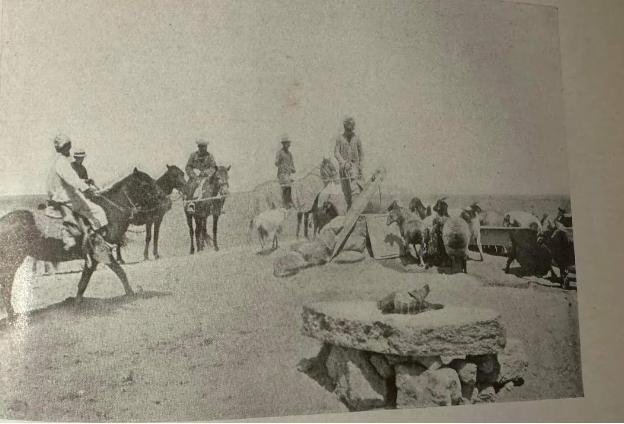
The book therefore preserves a snapshot of Central Asia before full imperial consolidation and long before Soviet transformation.
Landscape as Identity
Karutz frequently dwells on the landscape. The vast steppe horizons, the sands of the Karakum Desert, and the silence of open plains become active forces shaping human character in his narrative. For him, geography helps explain culture: mobility fosters resilience; isolation encourages independence; boundless space invites contemplation. The environment is not merely a backdrop but a formative influence on identity.
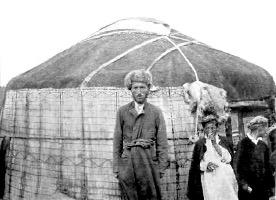
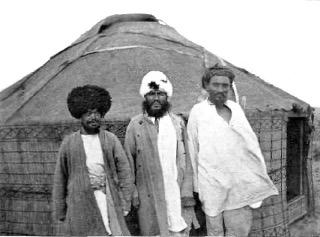
Among Turkmen communities, he describes strong tribal cohesion, warrior traditions, and detailed honor codes. He also comments on craftsmanship, particularly carpet weaving, noting the artistic sophistication embedded in nomadic culture. At the same time, his perspective is shaped by nineteenth-century European intellectual frameworks. His observations, while valuable, reflect the assumptions of an outsider influenced by Orientalist thinking. Modern readers must therefore approach the text critically, balancing appreciation for its ethnographic detail with an awareness of its historical limitations.
A Record of Cultural Encounter
Today, Among Kirghiz and Turkimans remains significant for several reasons. First, it preserves nineteenth-century descriptions of customs, clothing, and social practices. Second, it reveals how Central Asian nomadic societies were interpreted by Western observers. At the same time, the book invites reconsideration: How were images of the “steppe nomad” constructed in European writing? How did such portrayals shape later academic and political narratives?
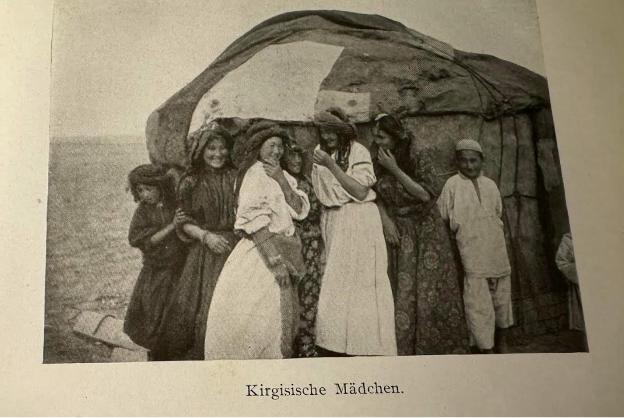
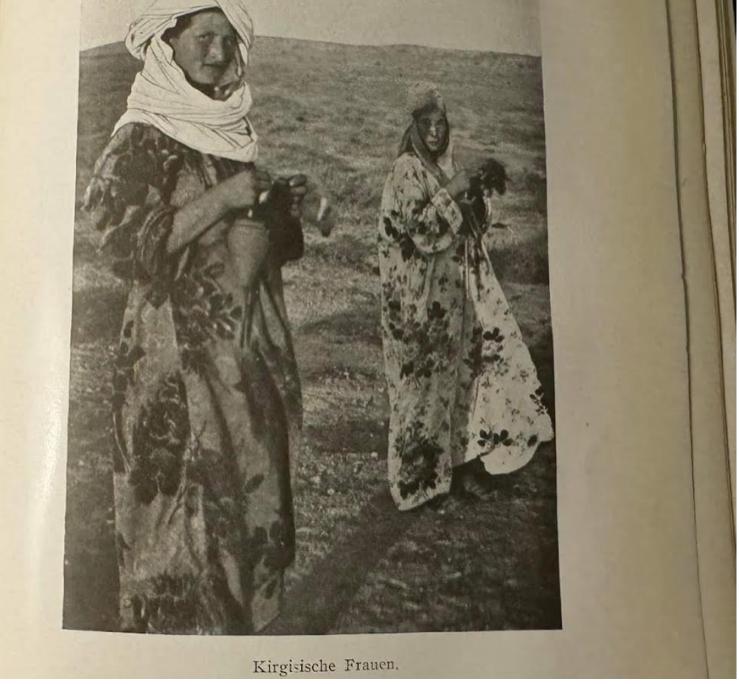
Ultimately, Among Kirghiz and Turkimans is more than a travel memoir. It is a document of cultural encounter, at times perceptive, at times constrained by the worldview of its era. Karutz writes as an outsider attempting to interpret societies with deep historical roots. For readers interested in Central Asian history, nomadic civilization, or the evolution of European travel literature, his work remains a meaningful, though imperfect, window into a region on the threshold of profound change.