Christopher S. Wren, a journalist for The New York Times who was part of a 1974 American expedition that discovered the bodies of seven Soviet women climbers on Lenin Peak, on today’s border between Kyrgyzstan and Tajikistan, has died at the age of 89.
Wren died at home in Vermont on February 15, the newspaper reported, quoting his daughter Celia Wren. The journalist reported extensively from the Soviet Union and China during the Cold War, as well as other regions, and his report on the discovery of what he called “one of the worst tragedies in modern mountaineering” was among his most dramatic dispatches.
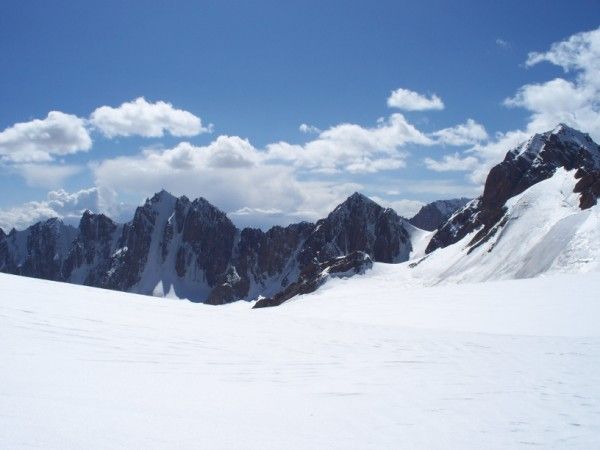
Wren, an experienced mountaineer, was with a team that found the bodies of the all-female Soviet group on Lenin Peak, a 7,134-meter mountain in what was then part of the Soviet Union. Many international climbers had gathered there that year at a time when the Cold War dominated global politics.
The body of an eighth Soviet climber was found after Wren and his teammates left the site.
“The Soviet press did not report the deaths of the country’s best women climbers until after I had returned to Moscow and revealed the disaster in The New York Times,” Wren wrote in his 1990 book The End of the Line: The Failure of Communism in the Soviet Union and China.
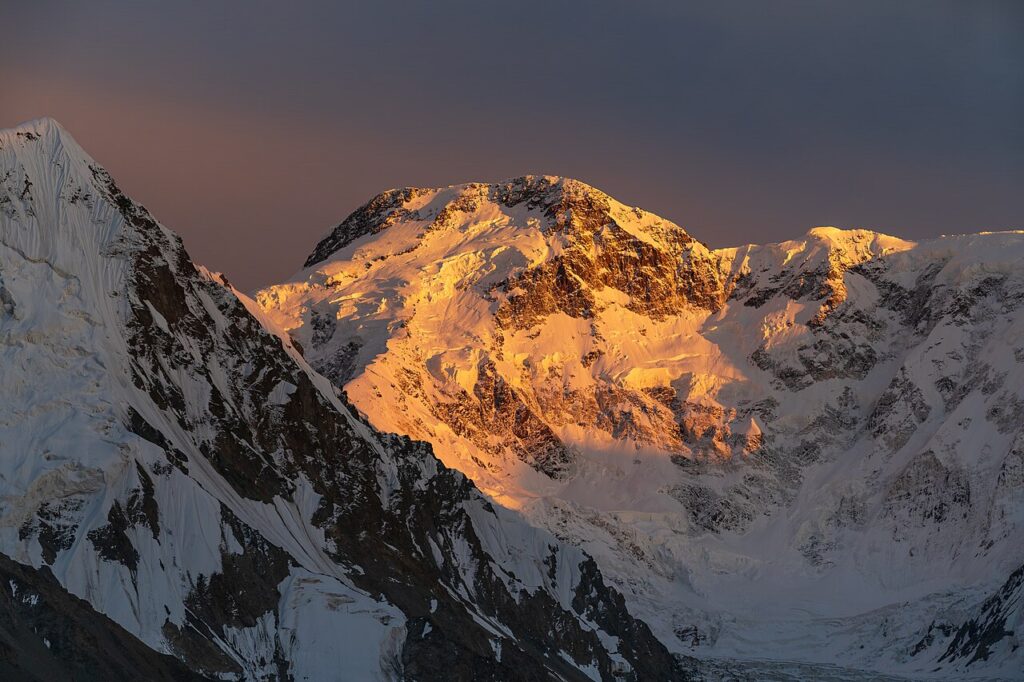
Usually accessed from the Kyrgyz side, Lenin Peak is not the highest mountain in Kyrgyzstan, nor is it considered the most technically difficult. Russian climber Natalia Nagovitsina and an Italian friend, Luca Sinigaglia, died last year on Pobeda Peak, the country’s highest mountain at 7,439 meters above sea level.
Kyrgyzstan’s Mountaineering and Sport Climbing Federation says Lenin Peak is popular among “beginner climbers.”
The peak, the federation says, “is one of the most accessible 7000s in the world for climbing, one of the five world peaks in terms of popularity, and its base camp – Achyk-Tash – is the most convenient in terms of infrastructure accessibility among peaks of this height.”
Infrastructure and communications at the mountain were more basic half a century ago, and the perils of high altitude, the cold, winds and storms are significant.
In 1974, Russian expedition leader Elvira Shatayeva and her party got into trouble in a storm as they descended from the summit. In radio calls, she told base camp that they were dying and, according to Wren’s book, her last words were: “Please forgive us. We love you. Goodbye.”
Heading toward the summit after the storm cleared, Wren and his group found the bodies of the stranded Soviet women.
“A body is stretched on the snow before us. With a chill of recognition, I know it is Elvira Shatayeva, the women’s team leader with whom I sat and talked one evening several weeks earlier,” Wren wrote in a 1974 article.
The Soviet media blamed the storm for the disaster. But Wren said he wondered if more transparency and communication among climbing teams at Lenin Peak, despite heightened tension and rivalry between the superpowers, could have prevented it.
“Everyone lamented the worst weather in the Pamirs in a quarter century,” he wrote in his book. “No one said anything about the obstinacy of the Soviet bureaucracy.”