• KGS/USD = 0.01144 0%
  • KZT/USD = 0.00205 0%
  • TJS/USD = 0.10429 0.29%
  • UZS/USD = 0.00008 0%
  • TMT/USD = 0.28571 0.28%
  • KGS/USD = 0.01144 0%
  • KZT/USD = 0.00205 0%
  • TJS/USD = 0.10429 0.29%
  • UZS/USD = 0.00008 0%
  • TMT/USD = 0.28571 0.28%
  • KGS/USD = 0.01144 0%
  • KZT/USD = 0.00205 0%
  • TJS/USD = 0.10429 0.29%
  • UZS/USD = 0.00008 0%
  • TMT/USD = 0.28571 0.28%
  • KGS/USD = 0.01144 0%
  • KZT/USD = 0.00205 0%
  • TJS/USD = 0.10429 0.29%
  • UZS/USD = 0.00008 0%
  • TMT/USD = 0.28571 0.28%
  • KGS/USD = 0.01144 0%
  • KZT/USD = 0.00205 0%
  • TJS/USD = 0.10429 0.29%
  • UZS/USD = 0.00008 0%
  • TMT/USD = 0.28571 0.28%
  • KGS/USD = 0.01144 0%
  • KZT/USD = 0.00205 0%
  • TJS/USD = 0.10429 0.29%
  • UZS/USD = 0.00008 0%
  • TMT/USD = 0.28571 0.28%
  • KGS/USD = 0.01144 0%
  • KZT/USD = 0.00205 0%
  • TJS/USD = 0.10429 0.29%
  • UZS/USD = 0.00008 0%
  • TMT/USD = 0.28571 0.28%
  • KGS/USD = 0.01144 0%
  • KZT/USD = 0.00205 0%
  • TJS/USD = 0.10429 0.29%
  • UZS/USD = 0.00008 0%
  • TMT/USD = 0.28571 0.28%

Viewing results 25 - 30 of 307

Former Head of Turkmen Railways on Trial in Russia Over Alleged Drug Smuggling

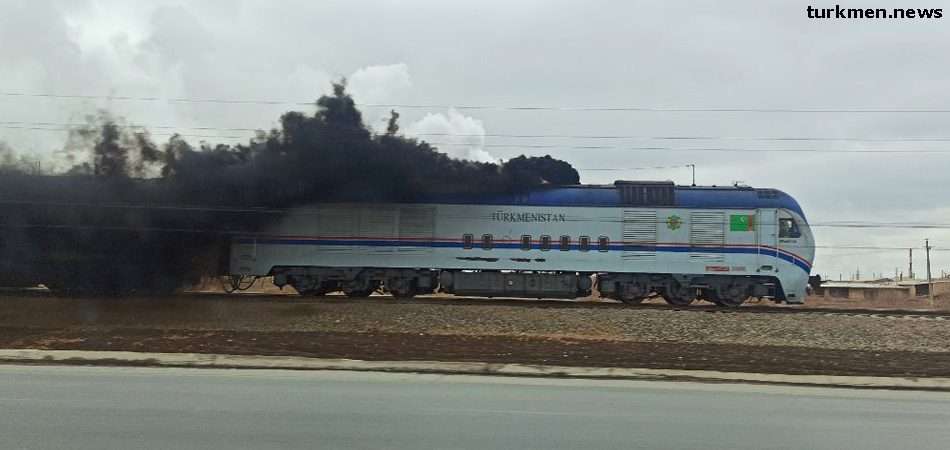
The former head of Turkmenistan’s state rail company is facing trial in Russia on charges of large-scale drug smuggling, as reports emerge of a covert, high-level campaign to secure his release. Khydyr Rakhmanov, who led Demiryollary JSC (Turkmen Railways), was detained on October 4, 2025, at Moscow's Domodedovo airport while allegedly attempting to import LSD. Russian authorities subsequently opened a criminal case under Article 229.1 of the Criminal Code, “Smuggling of narcotic drugs and psychotropic substances.” He has been held in custody since October 6, and on December 4, the Domodedovo court extended his pretrial detention by another two months. Sources cited by turkmen.news allege Rakhmanov is charged under the most severe subsection of the statute, which covers large-scale smuggling and carries a sentence of 10 to 20 years in prison and a fine of up to $13,000. The law does not allow for a suspended sentence. Despite this, efforts appear to be underway to negotiate Rakhmanov’s return to Turkmenistan. According to turkmen.news, the Ministry of Foreign Affairs of Turkmenistan, led by Rashid Meredov, is personally involved in an unofficial campaign to secure his release. Sources further claim that $3 million was transferred from Ashgabat via diplomatic mail as part of a backchannel attempt to reach a settlement with Russian authorities. Roman Kuchin, a Russian lawyer with prior experience in the prosecutor’s office and close ties to legal and political networks, has reportedly been retained to advocate for a suspended sentence and eventual deportation of Rakhmanov. Notably, there is no public information about the case on the Russian court’s official website. Earlier reports suggested that Turkmen special service operatives traveled to Russia to conduct direct negotiations with law enforcement officials. The situation underscores Turkmenistan’s behind-the-scenes influence campaign and raises questions about transparency and diplomatic maneuvering in high-stakes criminal cases involving state officials.
Central Asia Trade with China Tops Record $100 Billion in 2025

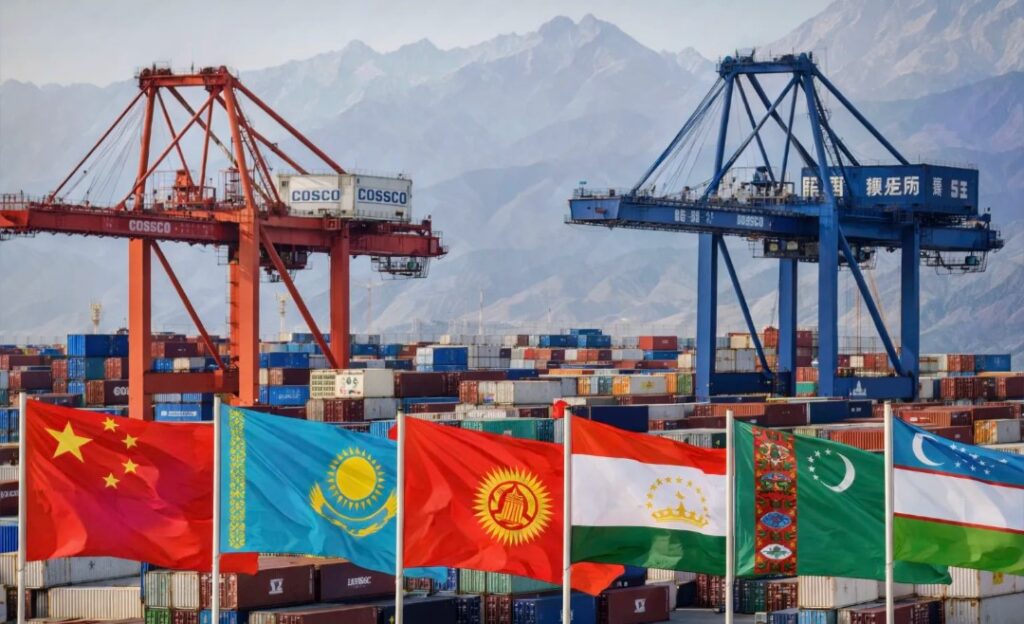
Trade between China and Central Asia increased to a record of more than $100 billion in 2025, despite challenges to global economic growth, the Chinese government said on Monday.  Citing data from China’s General Administration of Customs, Foreign Ministry spokesman Guo Jiakun said the trade structure with the Central Asian nations of Kazakhstan, Kyrgyzstan, Tajikistan, Turkmenistan and Uzbekistan had improved and that more high-end products were entering the Chinese market from the region.   “As global economic growth remains sluggish and the international trading system faces serious challenges, the economic and trade cooperation between China and Central Asian countries has withstood external headwinds, and the trade volume surpassed US$100 billion,” Guo said.  He attributed the increasing cooperation in part to a China-Central Asia summit in Astana, Kazakhstan last year that was attended by Chinese President Xi Jinping and the five Central Asian leaders.  China’s Belt and Road initiatives, which include the development of trade routes that pass through Central Asia and link up with Europe, are also making progress, according to the Chinese official.  Total trade between China and Central Asia was $106.3 billion in 2025, an increase of 12 percent over the previous year, China’s state-run Xinhua news agency reported. Chinese exports such as machinery, electronics and high-tech goods were $71.2 billion, an increase of 11 percent over the previous year. Imports from Central Asia amounted to $35.1 billion, a rise of 14 percent from 2024. China is involved in major projects in Central Asia, including the extraction of minerals used for “clean” technology, equipment manufacturing and the modernization of agriculture. China imports oil and natural gas as well as a growing number of other products from the region.  Russia was once the main trading partner of Central Asia after the fall of the Soviet Union, but China has the lead position now. The United States is also seeking to develop more trade with resource-rich Central Asia, which is diversifying its international partnerships.     

Ashgabat to Host Regional Center for Combating Desertification in Central Asia

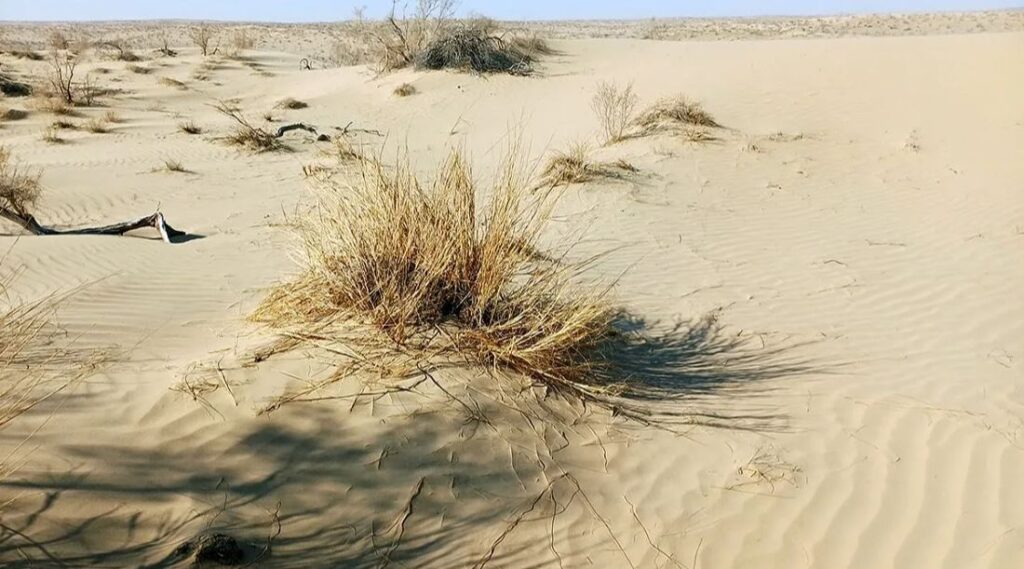
A regional center dedicated to combating desertification will be established in Turkmenistan's capital Ashgabat. The center aims to coordinate efforts among Central Asian nations to address environmental and water management challenges. According to Pirli Kepbanov, Director of the National Institute of Deserts, Flora and Fauna under Turkmenistan’s Ministry of Environmental Protection, the new institution will consolidate regional scientific and practical capacities to tackle transboundary issues affecting agriculture and water resources. “Based at the center, the region’s states will be able to cooperate on shared concerns related to agricultural production and water infrastructure,” Kepbanov said. Ashgabat’s selection as the host city is no coincidence. Turkmenistan has long been a regional hub for desert science, with established research institutions specializing in land degradation, desert ecosystems, and the adaptation of economic activity to arid conditions. “There are only four such scientific institutes worldwide, and one of them is the National Institute of Deserts, Flora and Fauna of Turkmenistan,” Kepbanov added. He also emphasized Turkmenistan’s historical role in developing desert science across Central Asia and beyond. “The first Chinese desert scientists trained here,” he said, adding that contemporary Chinese experts acknowledge Turkmenistan’s important contributions to their national school of desert research. Currently, the National Institute collaborates with the Xinjiang Institute of Ecology and Geography in China, the A.N. Kostyakov Federal Scientific Center for Hydrotechnics and Land Reclamation in Russia, and is receiving partnership proposals from universities across Central Asia.

“We Can’t Help You”: How Turkmenistan’s Ministry of Justice Handles Citizens’ Complaints

A recent public reception at Turkmenistan’s Ministry of Justice has highlighted the formal and often unproductive nature of interactions between citizens and state institutions in the country. On January 10 the ministry held a legal consultation session, officially scheduled to run from 9:00 a.m. to 12:00 p.m. In practice, however, visitors were not admitted until 10:00 a.m. According to Chronicles of Turkmenistan, more than 50 citizens attended the reception, many of whom had previously appealed to state agencies multiple times. They arrived with letters, formal statements, and supporting documentation in hand. Entry was granted in groups of three. The commission included representatives from the Ministry of Justice, the Prosecutor General’s Office, the Supreme Court, and the Bar Association. Each individual was given no more than five minutes. Despite the format suggesting legal support, the outcome for most attendees was discouragingly uniform. After speaking with 38 participants, journalists reported that all had received the same response: “We can’t help you.” Several attendees stated that officials did not even review the documents submitted with their complaints. As a result, nearly all who came seeking redress left empty-handed. Many expressed hopelessness, stating that they had no viable path to resolve their issues, and that government institutions had effectively denied them access to justice. The Times of Central Asia previously reported on the broader challenges faced by Turkmen citizens in navigating bureaucratic procedures and, in particular, how elderly residents endured long waits at social security offices. Although the process appears straightforward on paper, in practice it becomes a burdensome ordeal, especially given the government’s continued refusal to index pensions and social benefits. Missing a single appointment can result in suspended payments, with delays of up to six months before back payments are processed.

ADB Supports Turkmenistan’s Power Grid Modernization with $500 Million Project

The Asian Development Bank (ADB) has been working with Turkmenistan since 2018 to modernize the country’s electricity infrastructure, marking a milestone in cooperation, Business Turkmenistan reported on January 12. At the core of this partnership is the $500 million National Power Grid Development Strategy, the first initiative by an international financial institution in Turkmenistan’s energy sector. According to the ADB, the project aims to enhance the reliability of the national power network and bolster the country’s electricity export capacity. The project has financed the construction of approximately 1,400 kilometers of power transmission lines at 110, 220, and 500 kilovolts. In addition, 11 substations have been built across the regions of Akhal, Balkan, Dashoguz, and Lebap, as well as in Ashgabat. Technical assistance valued at $1.5 million was also provided through a grant from the Japan Fund for Prosperous and Resilient Asia and the Pacific. The ADB reported that the project is already yielding measurable results. Electricity exports rose from 3.4 terawatt-hours in 2017 to 9.3 terawatt-hours in 2023, driven by increased transmission capacity and system stability. The State Electric Power Corporation Turkmenenergo, the ADB’s local partner, contributed $175 million to the project’s implementation. The ADB described its role as supporting sustainable economic growth and development across Asia and the Pacific through the provision of loans, grants, and technical assistance. Cooperation between the ADB and Turkmenistan has also expanded into other sectors. In September 2025, the ADB approved a $75 million loan and a $2 million grant from the Japan Fund to strengthen Turkmenistan’s nursing and midwifery workforce. The initiative marked the ADB’s first health sector project in the country.

Kazakhstan Boosts Trade with Turkic States on Back of Rising Exports

Kazakhstan has significantly increased mutual trade volumes with member states of the Organization of Turkic States (OTS), primarily driven by a surge in exports. According to data from the first ten months of 2025, trade turnover with OTS countries rose by nearly 11%, Deputy Minister of National Economy Asan Darbaev announced at the Third General Assembly of the Union of Turkic Chambers of Commerce and Industry (TCCI) in Astana. The OTS includes Azerbaijan, Kazakhstan, Kyrgyzstan, Turkmenistan, Turkey, and Uzbekistan as full members. Hungary and Northern Cyprus hold observer status and contribute to deepening economic, cultural, and political cooperation across the Turkic world. “At the end of ten months of 2025, the volume of mutual trade between Kazakhstan and OTS countries reached approximately $10.4 billion, which is almost 11% higher than the same period last year,” Darbaev stated. He noted that this growth was largely due to a 16.6% increase in Kazakhstani exports to OTS member states, which totaled $7.6 billion. Imports from these countries to Kazakhstan amounted to $2.8 billion. The export surge was driven by increased shipments of copper and copper cathodes, crude oil, wheat, petroleum products, sunflower oil, and a range of metallurgical and agro-industrial goods. According to Darbaev, this indicates not only the continued strength of Kazakhstan’s raw materials sector but also the gradual diversification of exports with higher value-added products. Turkey, Uzbekistan, Kyrgyzstan, and Azerbaijan remain Kazakhstan’s principal trading partners within the OTS. Turkey leads with a trade turnover of $4.36 billion, followed by Uzbekistan at $3.88 billion. Trade with Kyrgyzstan reached $1.78 billion, while trade with Azerbaijan stood at approximately $390 million. During the assembly, Kazakhstan assumed the rotating chairmanship of the TCCI for the first time since the Union's establishment in 2019. The organization includes chambers of commerce and industry from Azerbaijan, Kazakhstan, Kyrgyzstan, Turkey, Uzbekistan, Turkmenistan, and Hungary. It serves as a key platform for advancing trade, industrial cooperation, investment, and technology exchange among member and observer states. Raimbek Batalov, chairman of the presidium of Kazakhstan’s National Chamber of Entrepreneurs “Atameken,” was appointed head of the TCCI for a one-year term. “The Turkic economic space today possesses all the prerequisites for a qualitative leap forward, scale, resources, an institutional foundation, and political will. Our shared goal is to convert this potential into sustainable production, investment, job creation, and improved living standards,” Batalov said. Delegates at the assembly identified priority areas for future cooperation, including the development of joint industrial projects, operationalization of the Turkic Investment Fund, reduction of trade and technical barriers, and enhanced transport and logistics connectivity. Previously, The Times of Central Asia reported that energy ministers from OTS countries had discussed key joint initiatives in December 2025 as part of ongoing regional collaboration.