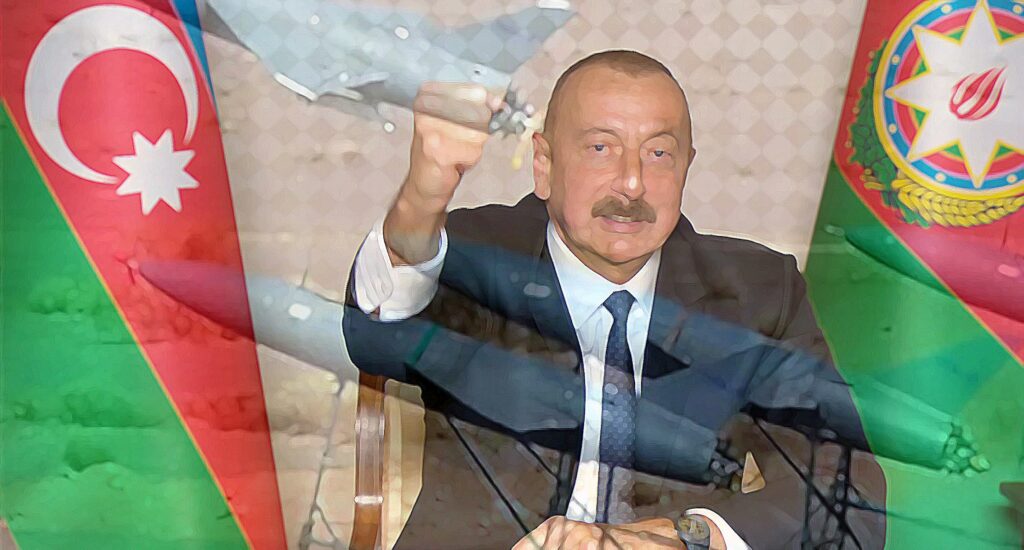
Azerbaijan is the only “reliable country” that can geographically link Central Asia to the West because alternative routes face geopolitical turbulence, according to Azerbaijani President Ilham Aliyev.
Aliyev spoke about Azerbaijan’s prospects as a key conduit for commerce across borders as well as its deepening relationship with Central Asia during a wide-ranging interview with local television channels in Baku on Monday. He acknowledged that there is still work to be done before Azerbaijan can approach its full potential as what he called a “living bridge” for international trade.
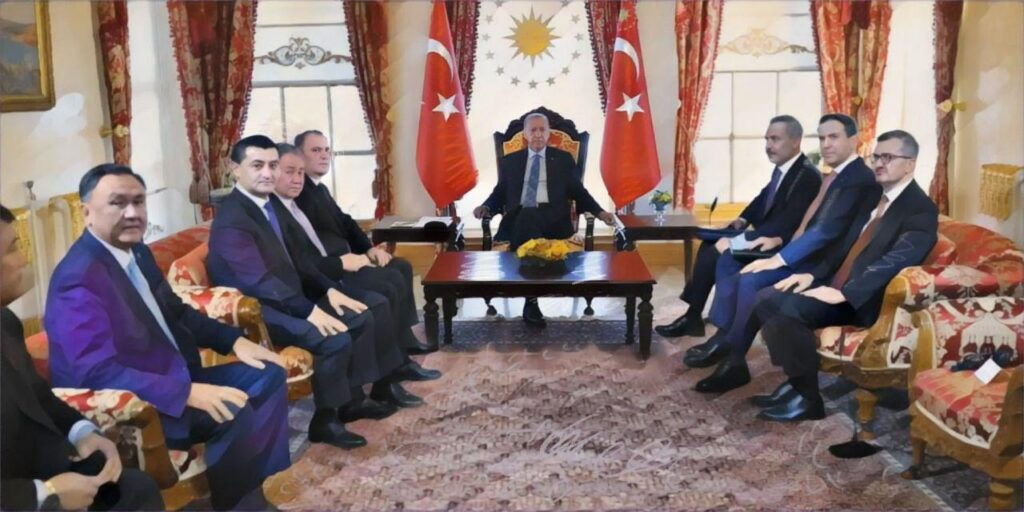
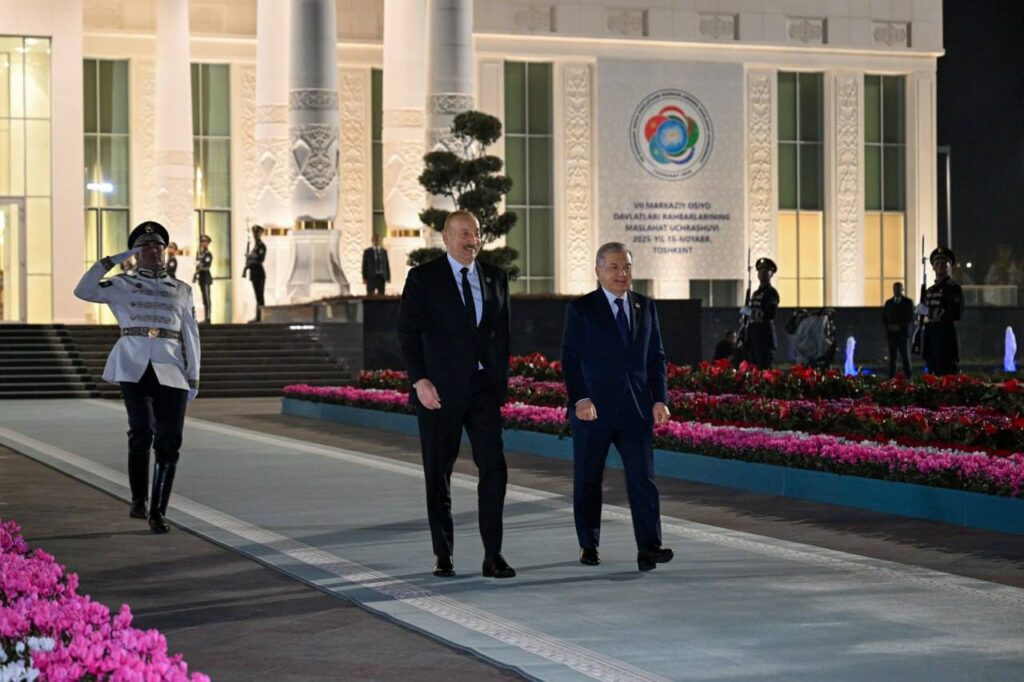
The remarks followed a summit in Uzbekistan in November in which Central Asian leaders supported Azerbaijan’s accession to the region’s Consultative Meeting format as a full participant, even though Azerbaijan is in the South Caucasus. The Consultative Meeting format is a vehicle for high-level collaboration on trade, security, and other issues among Central Asian countries, which have taken steps to resolve border disputes and other sources of tension over the years.
“So many projects have been implemented in recent years that these countries have unanimously elected us as a full member. We can also consider this a great political and diplomatic success,” Aliyev said during the interview. His remarks were published by the state Azerbaijani Press Agency, or APA.
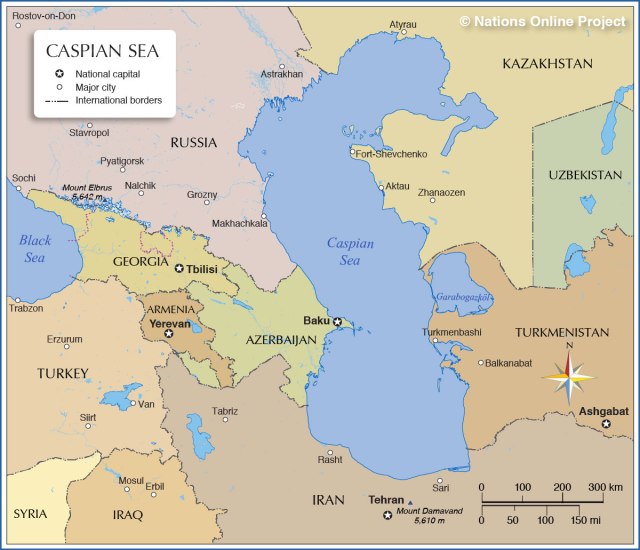
Referring to international connectivity, transport, and logistics, the president said, “Azerbaijan is the only reliable country that can geographically connect Central Asia with the West today,” and, without going into specifics, he alluded to the difficulties that some other trade channels face. Paths through Russia and Iran to the West, for example, are affected by sanctions and long-running political tensions.
“Of course, from a geographical point of view, other routes can also be used. However, taking into account the current geopolitical situation, we can say with complete certainty that alternative routes for the West cannot be considered acceptable,” Aliyev said.
He mentioned developing projects such as a November 2024 agreement involving Azerbaijan, Kazakhstan, and Uzbekistan to lay a fiber-optic cable along the Caspian seabed, as well as China’s large-scale funding for the construction of another railway to the Caspian Sea via Kyrgyzstan and Uzbekistan.
“Freight traffic to the Caspian Sea, and therefore to Azerbaijan, will increase,” the Azerbaijani president said. “Along with Central Asian countries, additional freight from China will naturally increase the demand for the East–West route, the Middle Corridor.”
A September analysis by the Washington-based Jamestown research group suggested that prospects are bright for Azerbaijan, which has actively positioned itself as a trade hub since Russia’s full-scale invasion of Ukraine in February 2022.
“Amid disruptions in both the northern and southern corridors, Azerbaijan has emerged as a critical logistics hub, offering a sanction-free, resilient, and stable environment to facilitate overland trade between the PRC (China) and Europe through the Middle Corridor,” analyst Yunis Sharifli wrote.
In addition, Azerbaijan expects cargo from China and Central Asia to travel along a proposed route that would link the main part of Azerbaijan to the separate Azerbaijani area of Nakhchivan, passing through Armenia and then joining with Türkiye and European markets beyond. Such a link would make land trade between East Asia and Europe more efficient, though Armenia is concerned that the plan threatens its sovereignty.
In August, Aliyev and Armenian Prime Minister Nikol Pashinyan met in Washington with U.S. President Donald Trump acting as a mediator in the peace initiative between the former battlefield foes.