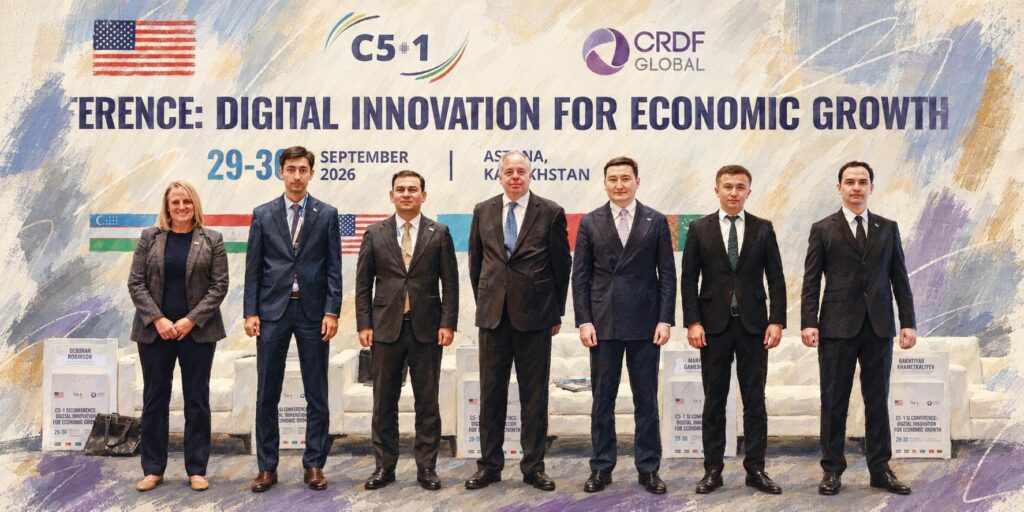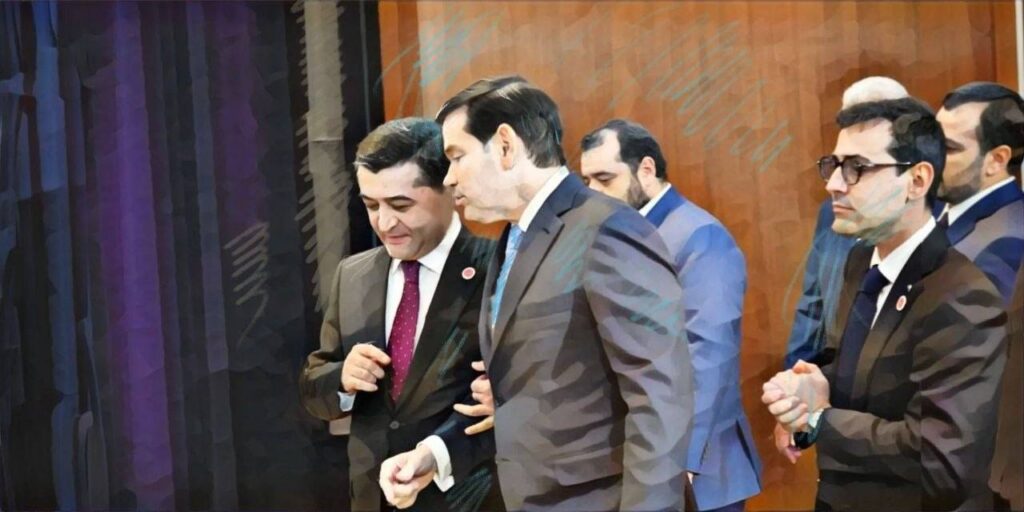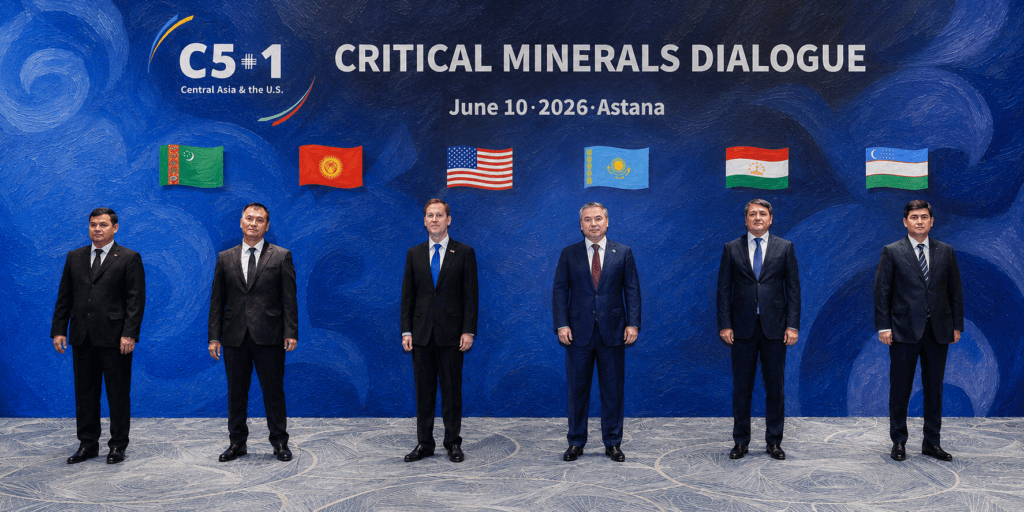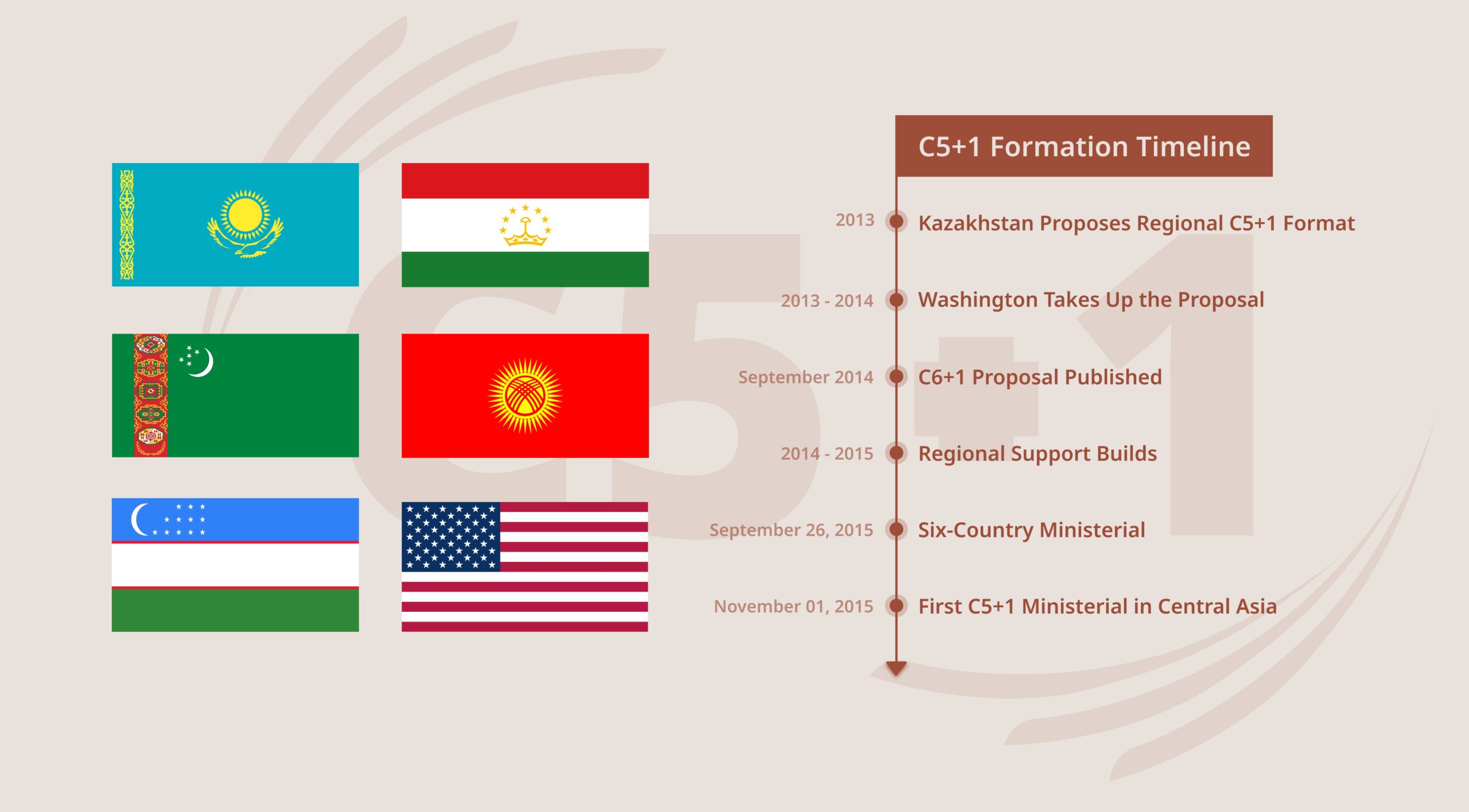
When U.S. Secretary of State Marco Rubio travels to Samarkand in mid-October, he is expected to meet the foreign ministers of all five Central Asian states under a diplomatic format known as C5+1. He will also be accompanied by representatives of more than 100 American companies, underscoring how far the platform has developed since its creation in 2015.
C5+1 — Kazakhstan, Kyrgyzstan, Tajikistan, Turkmenistan and Uzbekistan, plus the United States — has become Washington’s principal diplomatic mechanism for engaging Central Asia as a region. It has expanded from meetings of foreign ministers to presidential summits and cooperation on trade, security, connectivity, energy and critical minerals.
Less widely known is the role Kazakhstan played in getting it started.
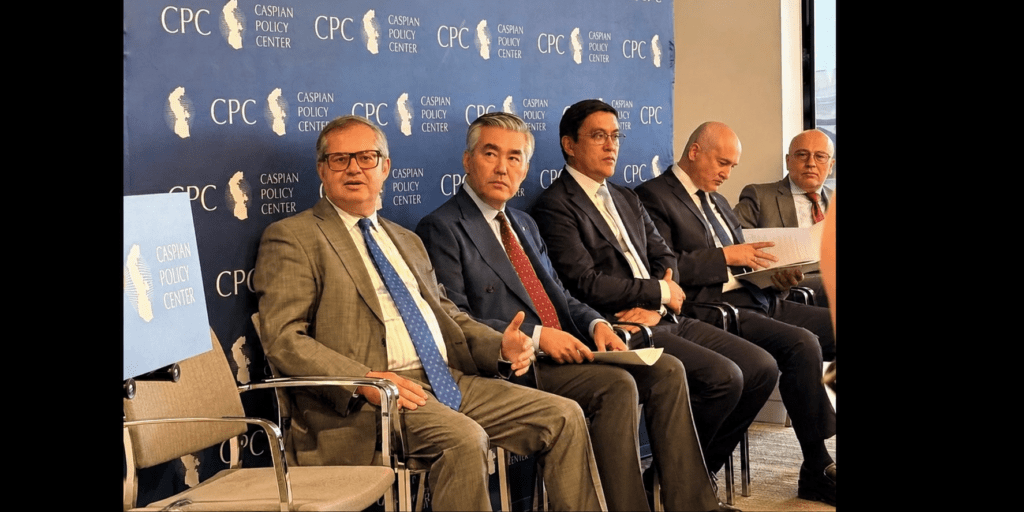
S. Frederick Starr, founding chairman of the Central Asia-Caucasus Institute and a longtime scholar of the region, has argued for years that the proposal that developed into C5+1 came from Kazakhstan rather than from inside the U.S. government.
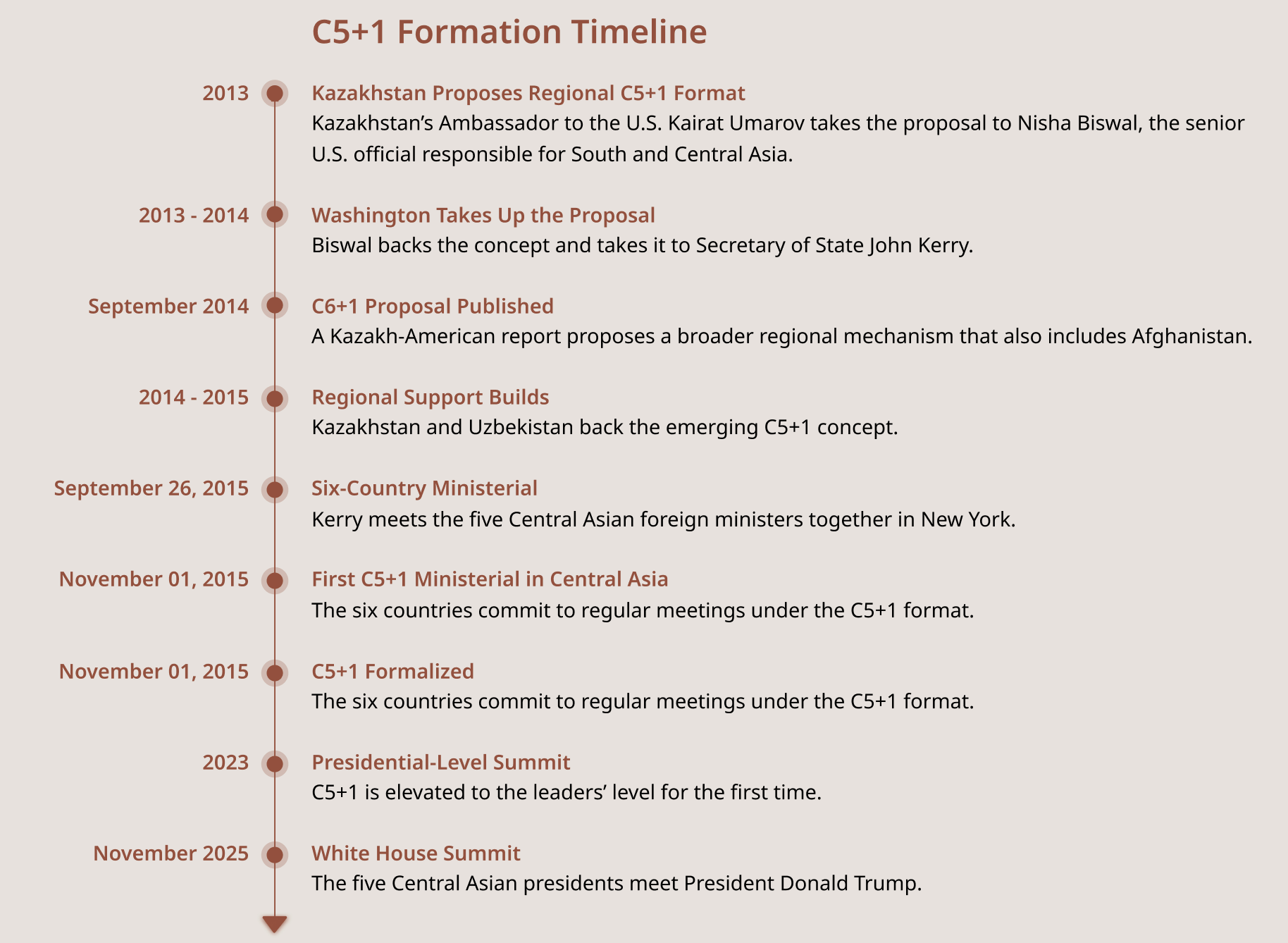
In a detailed account published on September 24, titled How C5+1 Came to Be, Starr identifies Kairat Umarov, then Kazakhstan’s ambassador in Washington, as the diplomat who set the process in motion.
Starr writes that shortly after Umarov arrived in Washington, the two discussed the absence of a mechanism through which the United States could deal with Central Asia collectively rather than through five separate bilateral relationships.
In 2013, after consulting Astana, Umarov approached Nisha Biswal with the idea of creating a regular consultative mechanism between Washington and the governments of Central Asia. According to Starr, Biswal supported the proposal and subsequently took it to Secretary of State John Kerry, who approved moving ahead with the concept.
Afghanistan was initially considered for inclusion, which would have produced a C6+1 format. It was ultimately left outside the mechanism, resulting in the C5+1 grouping that exists today.
In September 2014, three Kazakh and three American authors, including Starr, published Looking Forward: Kazakhstan and the United States. The study was prepared with support that included Kazakhstan’s embassy in Washington and called specifically for establishment of a “Central Asia Six Plus One” mechanism.
The report argued that the United States lacked a regular platform for engaging Central Asia on a regional basis and proposed a U.S.-Central Asia/Afghanistan partnership.
By then, the concept had moved beyond an informal diplomatic conversation. A jointly produced Kazakh-American policy paper was explicitly calling for Washington to establish essentially the same regional mechanism that emerged the following year.
Starr says the proposal subsequently received support from Kazakh President Nursultan Nazarbayev and Uzbek President Islam Karimov. Karimov wanted the Central Asian meeting held in Samarkand, an arrangement to which Astana and Washington agreed.
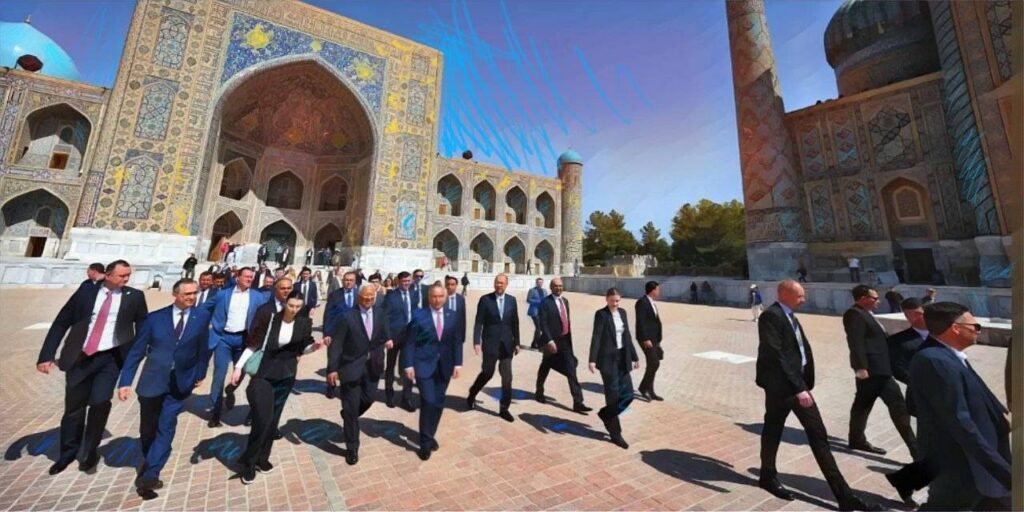
The five Central Asian foreign ministers and Kerry met in New York on September 26, 2015. They gathered again in Samarkand on November 1, where Kerry described the meeting as the first time the six countries had met as a group in that format. The resulting joint declaration committed them to regular meetings under the name C5+1.
Source: S. Frederick Starr, “How C5+1 Came to Be,” September 24, 2026; U.S. State Department records.
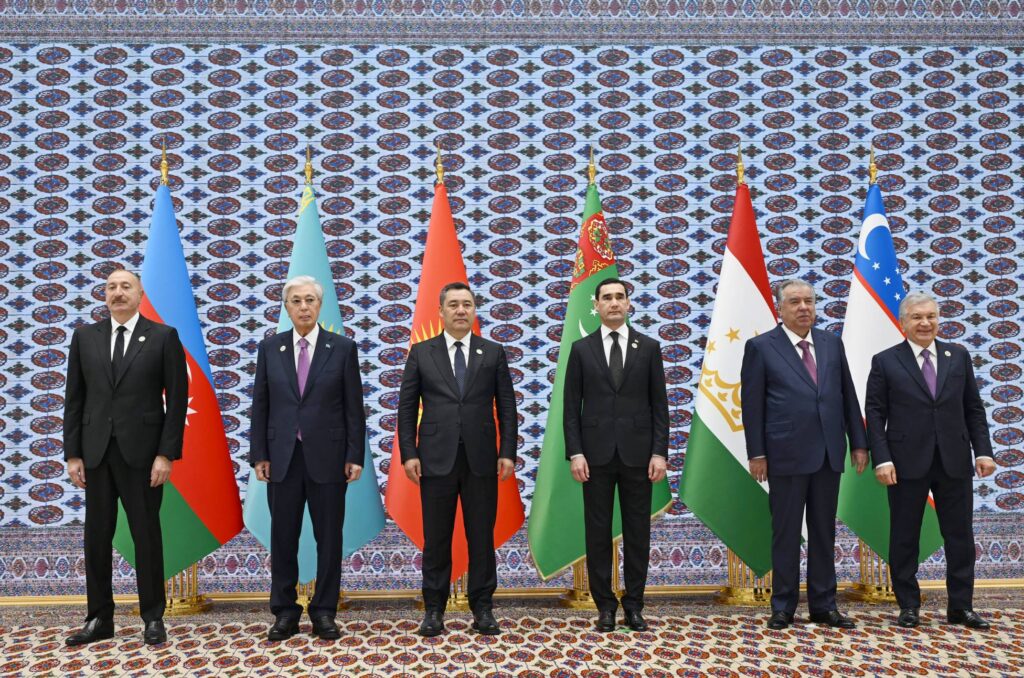
The platform has since become considerably more prominent. It was elevated to presidential level for the first time in New York in 2023, and the five Central Asian presidents met President Donald Trump at the White House in November 2025.
Starr’s account does not make C5+1 a solely Kazakh creation. Establishing it required Washington and the participation of all five Central Asian governments.
But his description of its early development places Kazakhstan in a more consequential role than is often reflected in the shorthand history of the format. In Starr’s telling, Umarov took the proposal to Washington after consulting Astana, and the idea was subsequently developed through Kazakh-American channels before becoming C5+1 in 2015.
As Starr puts it, the initiative that eventually produced Washington’s principal regional platform in Central Asia began not inside the State Department or National Security Council, but with a diplomat from the region.