Kazakhstan is using renewed U.S. interest in critical minerals to push a larger industrial goal: moving beyond raw-material exports and into processing, technology transfer, and higher-value manufacturing.
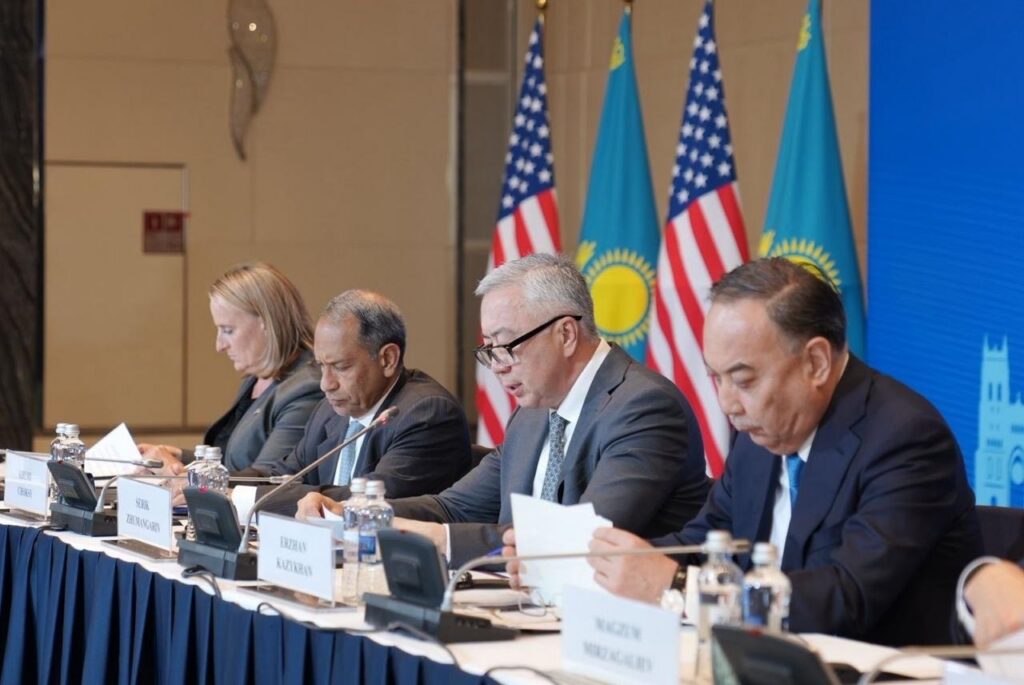
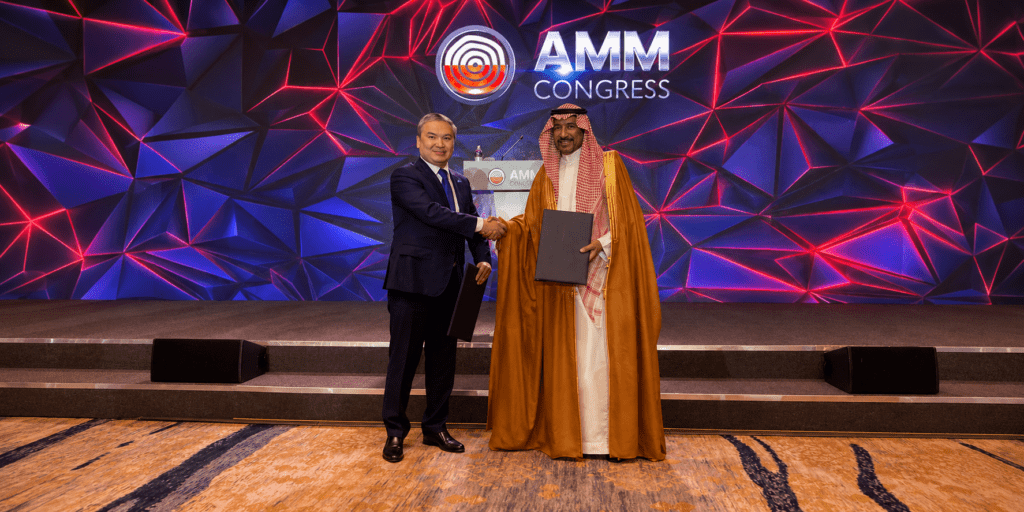
That ambition was on display in Astana this week across two closely linked but distinct events. The C5+1 Critical Minerals Dialogue, held on June 10, brought together representatives of the five Central Asian states and the United States for a diplomatic discussion on supply-chain cooperation. The following day, the 16th International Mining and Metallurgy Congress and Exhibition, Astana Mining & Metallurgy (AMM) 2026 opened as an industry forum for mining companies, investors, technology providers, and government officials. The proximity was deliberate; the purposes were different.
For Kazakhstan, the issue is not only foreign demand. It wants critical minerals to support a wider industrial strategy, including domestic processing, engineering capacity, and new manufacturing clusters.
June 10: The C5+1 Diplomatic Track
The C5+1 dialogue brought together representatives of Kazakhstan, Kyrgyzstan, Tajikistan, Turkmenistan, Uzbekistan, and the United States. Its agenda covered geological exploration, surveying and mapping, mining and processing, logistics, and global value and supply chains.
Kazakhstan’s Minister of Industry and Construction, Yersayin Nagaspayev, used the dialogue to present critical minerals as part of the country’s industrial policy rather than simply as an export opportunity. U.S. Special Envoy for South and Central Asian Affairs Sergio Gor represented Washington at the meeting.
“Kazakhstan is interested not only in exporting raw materials, but also in developing joint production facilities, technology transfer, workforce training, and scientific cooperation,” Nagaspayev said.
That point is central to Astana’s pitch. Kazakhstan has long been a major mining state, but the government is increasingly presenting critical minerals as a way to change the structure of the economy. Nagaspayev said the country has more than 9,500 mineral deposits, including more than 100 that contain rare and rare-earth metals.
Kazakhstan holds significant deposits of tungsten and molybdenum and has the potential to establish a domestic raw-material base for tantalum and niobium production. It also has reserves of lithium and beryllium, which are important for advanced manufacturing, electronics, aerospace, energy storage, and defense-related industries.
Kazakhstan has proven reserves or active production of roughly half of the 54 minerals identified as critical by the United States, according to Al-Farabi Ydyryshev, director general of the National Center for Technological Forecasting under the Industrial Committee.
Ydyryshev said Kazakhstan already has extraction and processing capacity for materials used in aerospace, electronics, energy, and defense industries, including beryllium, tantalum, niobium, titanium, and rhenium. The question is whether those capabilities can be expanded into higher-value production.
Washington’s interest in Central Asia has grown as critical minerals have become a larger part of economic security policy. China remains dominant in the production and processing of many minerals needed for batteries, semiconductors, renewable energy, digital infrastructure, and advanced defense systems.
Speaking at the June 10 meeting, Gor linked the minerals agenda to the need for diversification.
“Our economic security depends on our ability to diversify our access to critical minerals,” Gor said. “Ensuring reliable access to these materials requires not only expanding production, but also building resilient, transparent, and market-driven supply chains in close partnership with trusted partners.”
The Times of Central Asia previously reported that the Astana meeting followed earlier U.S.-Kazakhstan discussions on investment, transportation, regional connectivity, innovation, artificial intelligence, education, and critical minerals.
The political track is expected to continue. U.S. Secretary of State Marco Rubio has said Washington plans to hold a C5+1 meeting in the region later this year and that he intends to travel there. He has also backed repeal of the Jackson-Vanik amendment, a Cold War-era trade restriction that still affects U.S. economic relations with Kazakhstan, Tajikistan, Turkmenistan, and Uzbekistan.
Logistics and Local Value
A logistics strand was also central to the June 10 dialogue. Nagaspayev said the Trans-Caspian International Transport Route, better known as the Middle Corridor, could support more reliable supply chains by giving exporters additional routes across the Caspian Sea, the South Caucasus, and Turkey.
“We believe that the Middle Corridor can play an important role in diversifying global transport routes, strengthening Eurasian connectivity, and supporting reliable supply chains for critical minerals,” he said.
The route does not remove the need for investment in mining, processing, power supply, water management, and industrial infrastructure. But it gives Kazakhstan another argument as it seeks to position itself not only as a source of minerals, but as a regional platform for production and export.
That ambition is broader than the U.S. dialogue. Across Central Asia, governments are increasingly arguing that critical minerals should generate more local value. For Kazakhstan, that means pushing for processing and industrial production inside the country rather than only mining and export.
June 11-12: AMM and the Industrial Agenda
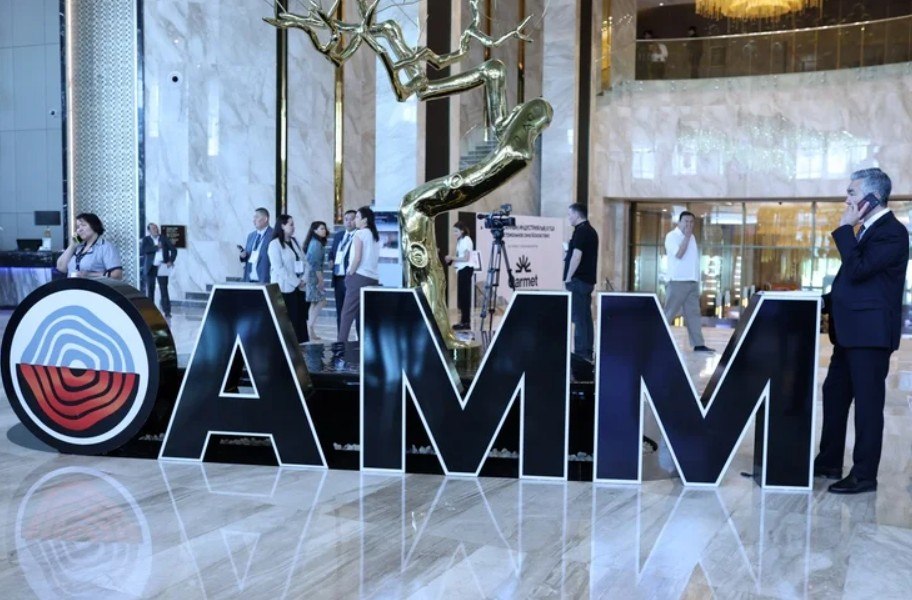
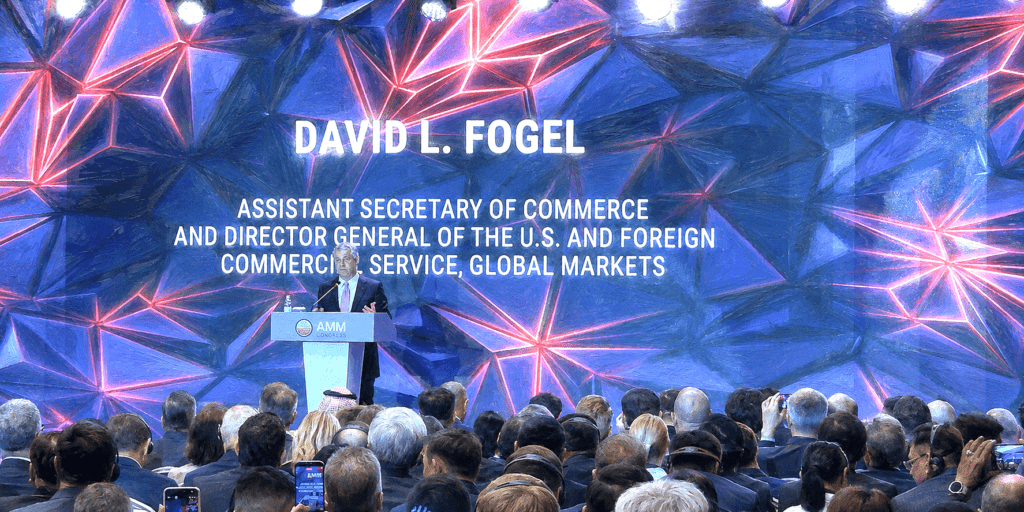
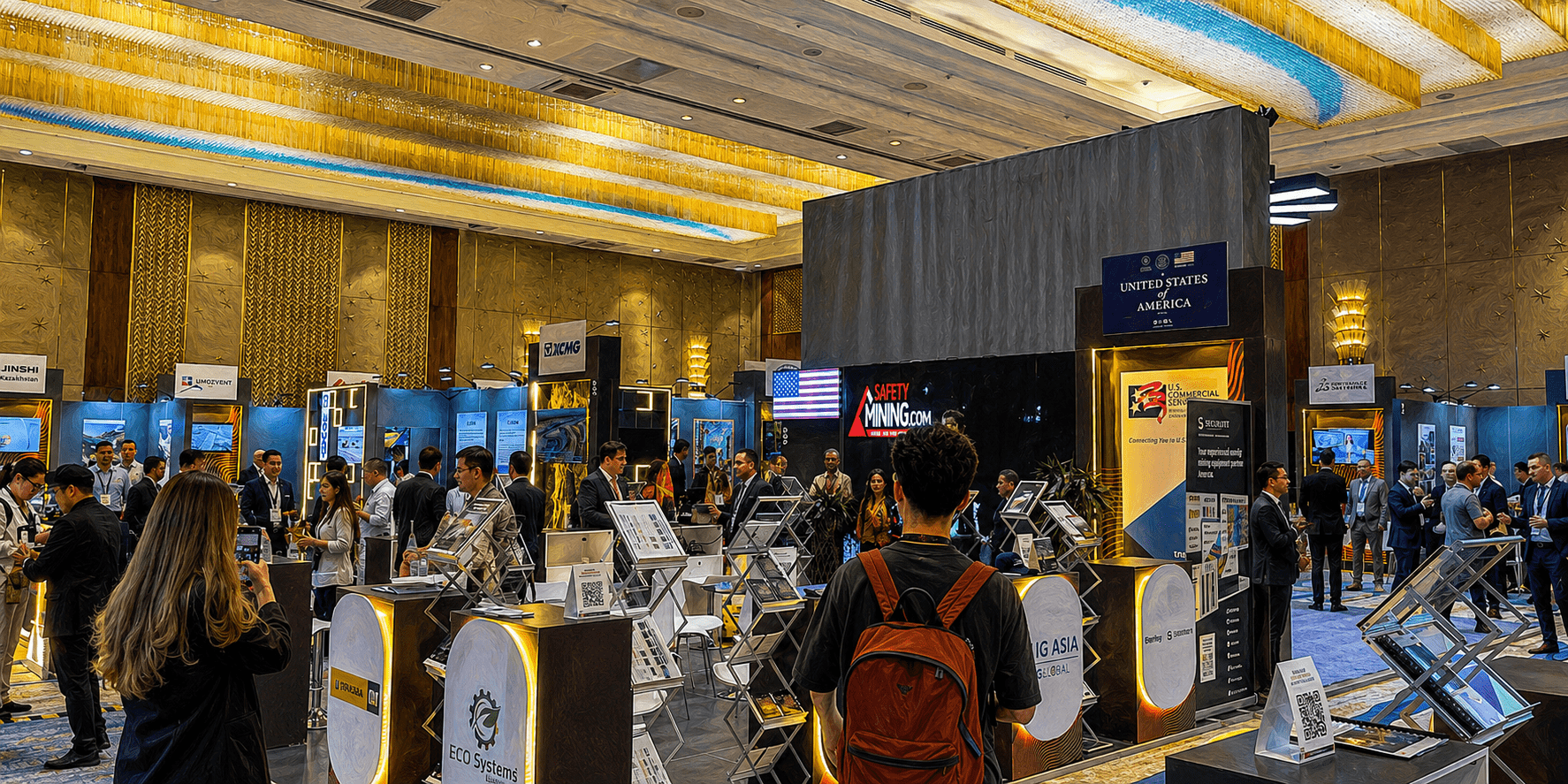
AMM 2026 opened the following day at the Hilton Astana. Unlike the C5+1 dialogue, AMM is an industry platform: it brings mining companies, metallurgical producers, technology providers, investors, experts, and government officials into the same venue. Critical minerals and Central Asia’s place in global supply chains were among its central themes.
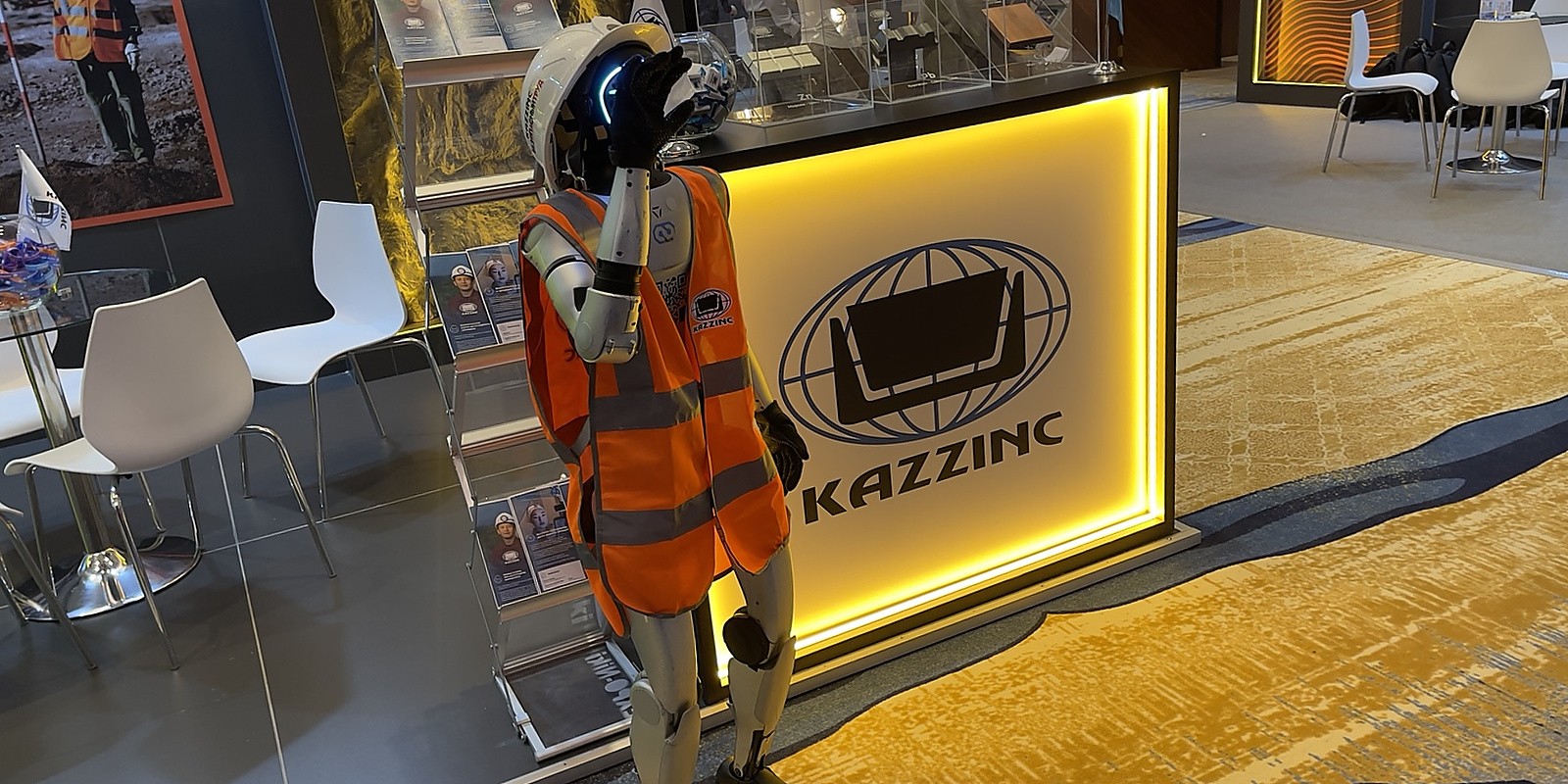
That made AMM a showcase for the domestic side of Kazakhstan’s minerals strategy: deeper processing, new technology, geological exploration, and the modernization of heavy industry.
Several major international companies already operate or have entered Kazakhstan’s mining sector, including Rio Tinto, Barrick Gold, First Quantum Minerals, Ivanhoe Mines, Teck Resources, Fortescue, and Cove Capital. In November 2025, U.S.-based Cove Capital and Tau-Ken Samruk agreed to jointly develop the Severny Katpar and Verkhneye Kairakty deposits in the Karaganda region. The deposits are among the world’s largest tungsten resources, with JORC-compliant reserves estimated at 410,000 tons.
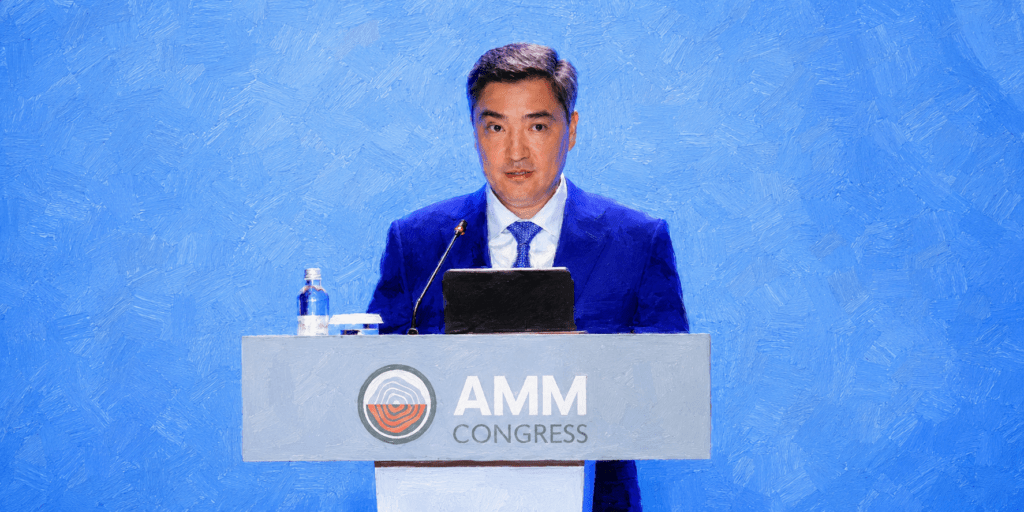
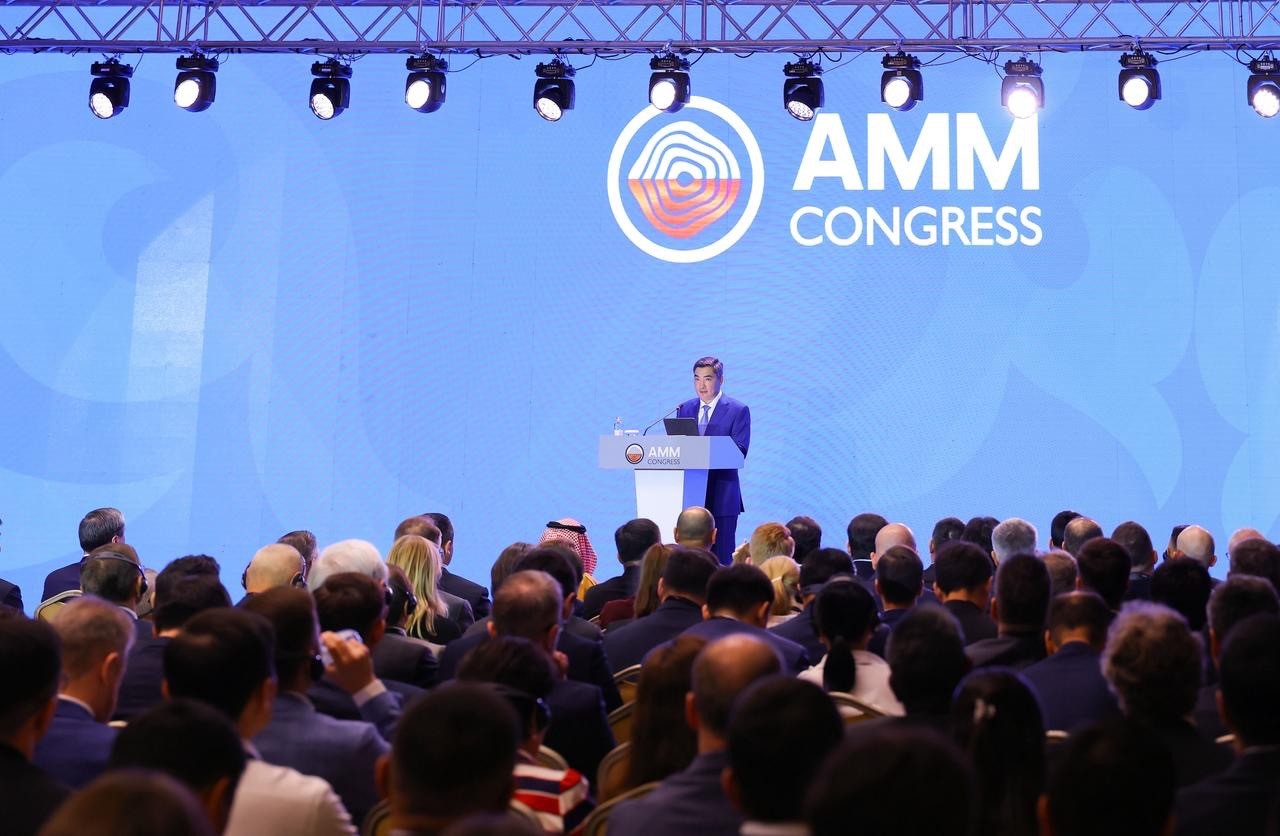
Prime Minister Olzhas Bektenov used the AMM plenary session to reinforce the same industrial theme. He said Kazakhstan wants to transform its mining and metallurgical sector from a supplier of raw materials into a producer of higher-value industrial goods for global markets.
“President Kassym-Jomart Tokayev has tasked us with transitioning from a resource-based economy to one focused on deep processing and high value-added products,” Bektenov said. “Large-scale projects are already underway in the mining and metallurgical sector to expand processing capacity and increase the share of advanced manufactured products.”
Over the past two years, Kazakhstan has commissioned facilities producing cathode copper, ferrosilicon, ferroalloys, and other industrial products worth more than $1 billion. A new copper smelter in the Abai region is expected to allow a significant part of exported copper concentrate to be processed domestically. In the Pavlodar region, construction is underway on a hydrometallurgical facility capable of processing 300,000 tons of gold-copper concentrate annually and producing up to 15 tons of gold. Qarmet is also modernizing facilities in the Karaganda region to produce higher-value steel products, including automotive-grade steel.
“We are interested not only in attracting investment capital but also in developing long-term technological partnerships, localizing production, transferring technology, and training qualified personnel,” Bektenov said. “This approach allows us to build sustainable production chains within the country and achieve deeper integration into the global industrial system.”
Bektenov also pointed to plans to allocate about $470 million for geological exploration in 2026-2028. Kazakhstan has launched a Unified Subsoil Use Platform that provides 22 government services. Licensing procedures and compliance monitoring have been automated, and more than 4.6 million units of primary geological data have been digitized.
The next stage will involve integrating artificial intelligence into geological exploration, data analysis, and production management.
“This will significantly improve the efficiency of developing Kazakhstan’s mineral resource base, accelerate the discovery of new deposits, and enhance the quality of decision-making,” Bektenov said.
A Measure of Follow-Through
The two events should not be read as a single conference. The C5+1 Critical Minerals Dialogue gave Kazakhstan a diplomatic platform for U.S.-Central Asia cooperation, while AMM 2026 gave it an industry platform for investors, mining companies, metallurgical producers, and technology providers. The themes overlapped, but the audiences and purposes were different.
Taken together, they show how Kazakhstan is trying to link foreign-policy interest in secure supply chains with its own industrial agenda at home. The measure will be whether high-level attention turns into bankable projects, clear rules, reliable infrastructure, trained specialists, and local processing capacity.
If that happens, critical minerals could help Kazakhstan move further up the industrial value chain. If it does not, the country risks remaining a supplier of strategic raw materials in a global market shaped by other countries’ processing capacity and technology. The Times of Central Asia has previously reported that Kazakhstan’s rare-earth reserves have exceeded earlier projections following new geological surveys.
For more on the Astana Mining & Metallurgy Congress and Exhibition 2026, see our special coverage.
Explore our critical minerals special coverage for a timeline of Central Asia’s growing place in U.S. supply-chain strategy.