More than a decade has passed since the formal emergence of Islamic State Khorasan Province (ISKP).
For Central Asia, the history of this group is especially significant: the region features prominently in its propaganda and recruitment, and people from Central Asian countries have become part of transnational networks linked to ISKP.
Today, ISKP must be assessed as more than an armed group operating in Afghanistan. Over the past decade, it has repeatedly lost leaders, been driven from most of its original territorial strongholds, and endured several major campaigns against it. Yet it has not disappeared.
The current iteration of ISKP differs markedly from the organization that tried to establish itself in eastern Afghanistan in 2015-16. The main change is that it has learned to survive and spread its influence without controlling substantial territory.
This transformation makes it especially important for Central Asia. Distance from the Afghan border and the number of districts under the group’s control are becoming less important measures of the threat. Its ability to maintain transnational ties, address audiences in local languages, and use migrant and digital networks is becoming more important.
A large body of recent research, including a recently published monograph by the Usanas Foundation, makes it possible to trace this transformation.
The group’s decade-long history is important for what it reveals about changes in the modern terrorist threat: loss of territory and a decline in membership do not necessarily mean an organization will disappear.
ISKP did not emerge in a vacuum. Its original core was formed largely by members of existing jihadist organizations. They included former commanders of Tehrik-e Taliban Pakistan (TTP), Taliban members, and representatives of other groups who pledged allegiance to the Islamic State’s leadership after the organization emerged in Iraq and Syria.
On January 26, 2015, Islamic State officially announced the creation of its “Khorasan Province.”
Eastern Afghanistan became its main territorial base. This choice was no accident. Significant Salafi communities and religious networks had long existed in the region. Their development can be traced at least to the Soviet-Afghan War of the 1980s, and by 1990, Kunar Province already had its own Salafi political-religious movement, which briefly established the Islamic Emirate of Kunar. These networks should not automatically be equated with jihadism, but the presence of an established religious milieu and long-standing tensions between some Salafis and the Taliban gave ISKP more favorable conditions for its initial recruitment and entrenchment.
The initial strategy largely replicated the Islamic State model in Iraq and Syria. ISKP sought to do more than carry out terrorist attacks. It tried to establish itself on the ground, build bases and its own control structures, collect local revenue, and demonstrate an ability to impose an alternative order. It was an effort to implement a specific territorial project.
That effort to establish a territorial foothold soon became the group’s main source of vulnerability.
From the middle of the decade, ISKP came under pressure from several adversaries at once. The armed forces of the former Afghan government and the international coalition conducted operations against it. The Taliban simultaneously waged their own war against the new rival, whose emergence as an alternative jihadist center of power posed both a military and an ideological threat.
The years 2017-2019 were especially difficult for ISKP. The group lost several leaders and much of its territorial foothold. Some research estimates put the number of its fighters at several thousand in the mid-2010s and at roughly 600-800 by 2018.
At first glance, events suggested a gradual defeat of ISKP. Yet a significant transformation was taking place.
The decline in numbers did not bring a comparable reduction in the organization’s capacity to pose a threat. ISKP gradually moved away from the costly strategy of holding territory and toward a different model: clandestine cells, urban networks, and less frequent but high-impact attacks.
By 2019-2020, this transition had become especially visible. After losing many of its stronghold areas, the group effectively dispensed with permanent territorial control and focused on asymmetric operations.
The military defeat of ISKP’s original project therefore did not amount to an organizational defeat of the group itself. It lost territory while becoming less dependent on it.
The Taliban’s return to power in August 2021 again changed the environment in which ISKP operated.
Before then, the group had simultaneously confronted the Western military presence, the Afghan government, and the Taliban. After the former political system collapsed, the Islamic Emirate became its main adversary inside Afghanistan.
Today, the conflict between the two movements extends beyond military and political competition.
The Taliban remain primarily an Afghan movement whose political project centers on governing Afghanistan. ISKP, by contrast, retains the ideology of a global caliphate and rejects national borders as the basis of political organization.
The Taliban victory therefore also became a target of ISKP propaganda. The group tries to portray the Islamic Emirate as a movement that abandoned the global jihadist project for “worldly pleasures”: international negotiations, diplomatic relations, and the administration of a nation-state. From this perspective, attacks against the Taliban serve two purposes: inflicting physical damage and casting doubt on the new authorities’ ability to provide security.
It would be a mistake to regard ISKP as a rival comparable to the Taliban in the contest for power. Since 2021, Afghanistan’s de facto authorities have systematically targeted its cells and leaders. The space for the group’s overt territorial presence is much narrower than it was a decade ago.
The current confrontation is therefore becoming increasingly asymmetric: the Taliban control the state and territory, while ISKP tries to preserve its capacity to carry out limited but conspicuous attacks.
The latest assessment by the UN Security Council’s Analytical Support and Sanctions Monitoring Team captures both sides of this confrontation. Its 38th report, published on August 10, 2026, states: “As a result of counter-terrorism operations by Pakistan and the de facto authorities, [ISKP] suffered serious setbacks, notwithstanding its continuing intent to conduct external operations.” The same assessment describes the organization as being in a rebuilding phase and having a renewed capacity for occasional high-profile attacks. The Monitoring Team directly attributes this to its “resilience and adaptability.”
This yields a crucial distinction for understanding ISKP: the group is much weaker as a territorial rival to the Taliban than it was a decade ago, while its organizational capacity persists.
A second fundamental change involves the geography of the group’s activity.
ISKP was initially rooted primarily in the Afghan-Pakistani conflict environment. Today, its reach increasingly extends beyond Afghanistan itself.
The clearest sign of this transformation has been the development of external operations and networks.
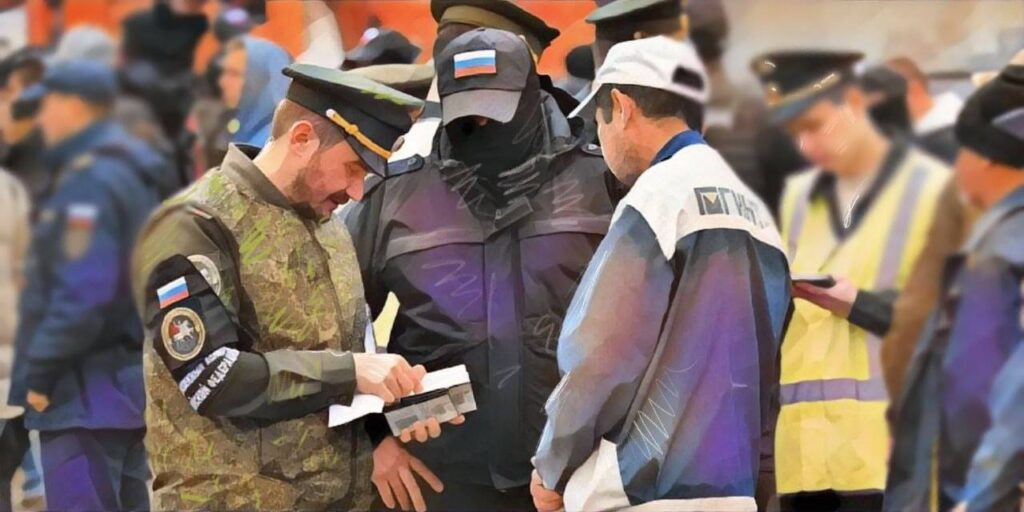
The organization has demonstrated an ability to project influence across a far broader area. Major attacks in Iran and Russia, along with networks uncovered in Europe, have drawn particular attention.
The organization has not become a single global underground structure directed entirely from Afghanistan. Rather, the scale of its operational environment has changed.
In 2015, the main question was which districts ISKP could hold. Today, it is far more important to understand how effectively it can maintain cross-border contacts, draw on diaspora communities, attract supporters outside Afghanistan, and adapt its narratives to different local audiences.
In this sense, Afghanistan remains a central part of the group’s infrastructure, but it no longer defines the geographic limits of its activity.
ISKP’s information strategy changed alongside its military transformation. In recent years, the group has markedly expanded its multilingual propaganda, adapting the Islamic State’s global ideology to local political and social issues in different countries and regions.
This is a major difference between today’s ISKP and its original form. The group no longer needs a physical presence in a particular country to reach a potential audience there. The digital environment allows it to address supporters directly, exploit local conflicts and grievances, and weave them into a broader transnational narrative.
In this sense, the information environment has partly compensated for what ISKP failed to achieve territorially.
The history of ISKP shows how qualified the notion of “defeat” can be when applied to a terrorist organization.
The original project did fail. ISKP was unable to create a durable territorial “province” comparable to what the Islamic State controlled for a time in Iraq and Syria. But this was a failure of an organizational model. ISKP adapted. It gradually developed into a more flexible system combining clandestine cells, cross-border ties, external operations, and a multilingual information infrastructure.
The central question after a decade is no longer whether ISKP can retake substantial territory in Afghanistan. It may not need to.
Far more important is how long a terrorist organization can remain resilient and operational after territory ceases to be the main condition for its existence.
For Central Asia, this transformation is especially significant. ISKP’s place on the regional agenda is shaped by more than its ability to conduct operations inside the region’s countries. Nationals of the five Central Asian states are present in transnational networks linked to it, and the group is increasingly addressing Central Asian audiences through localized propaganda and diaspora communities outside the region.