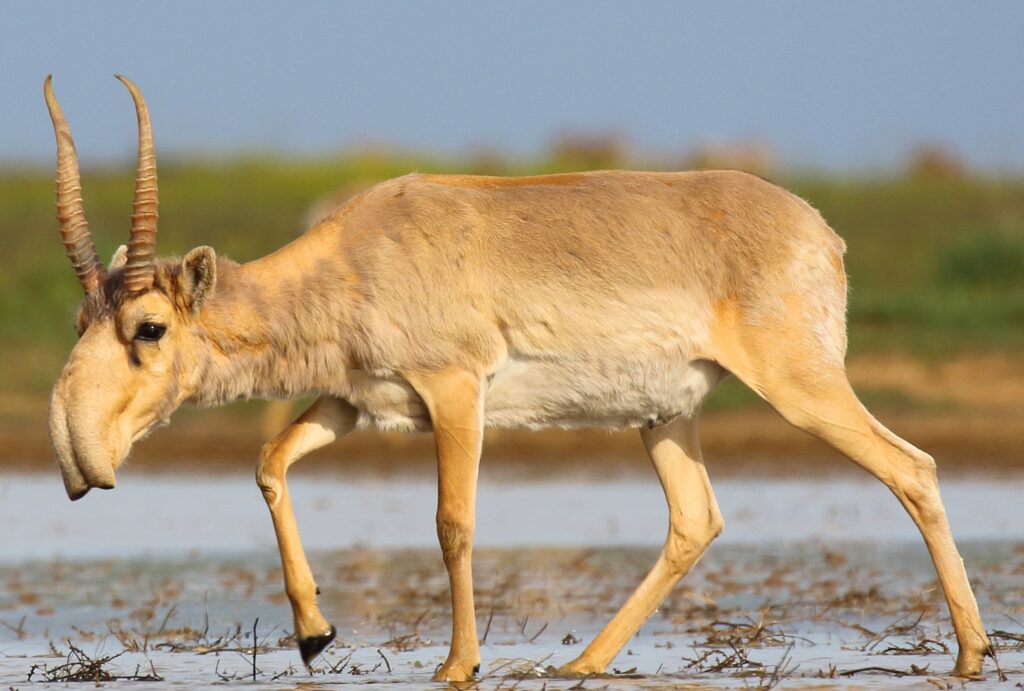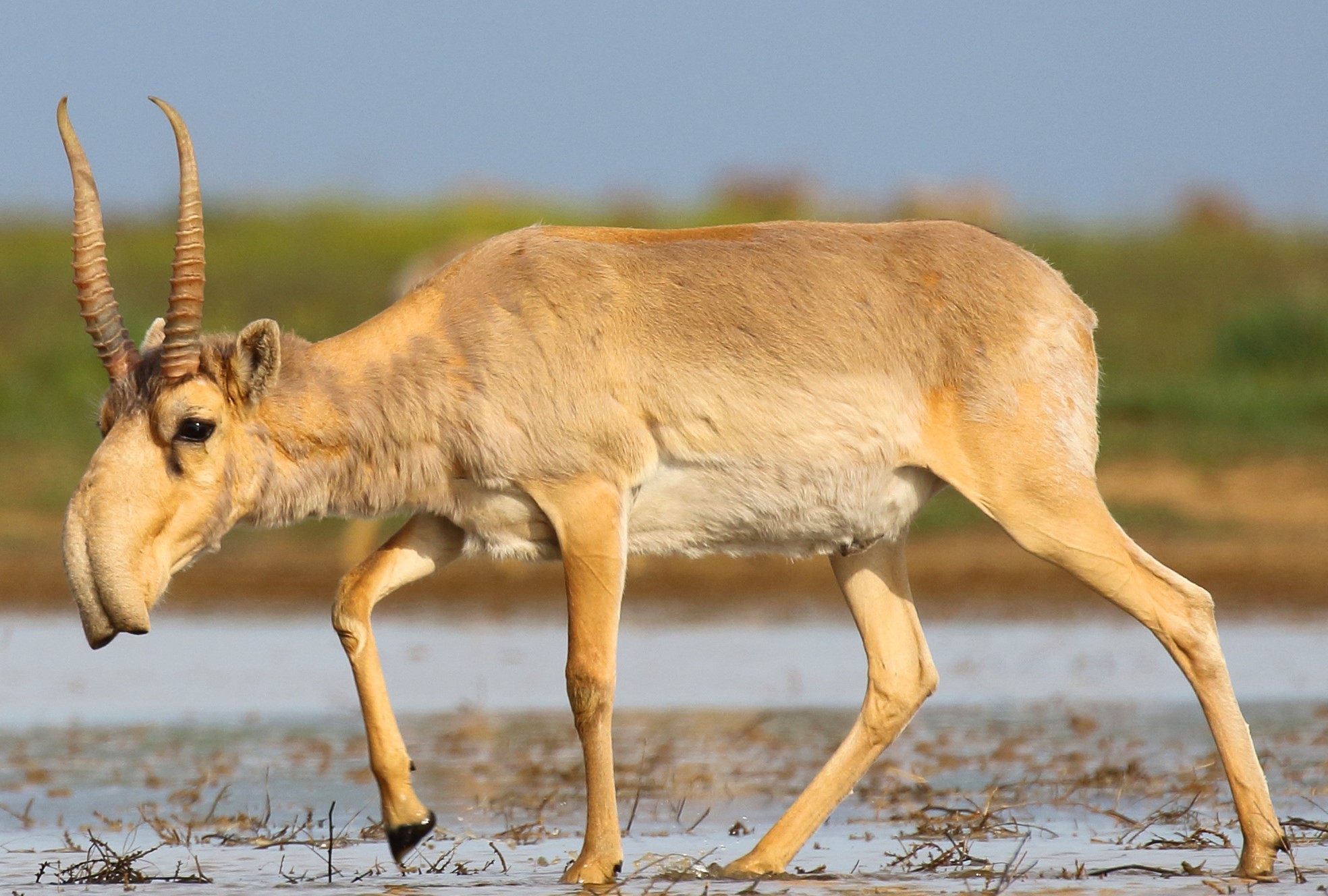
Kazakhstan plans to begin limited and strictly regulated exports of saiga antelope horns, according to the Ministry of Ecology and Natural Resources, as reported by Nege.Aqsha.
Minister of Ecology Yerlan Nysanbayev emphasized that unrestricted trade is not under consideration. He stated that exports will be allowed only under rigorous regulation, with restrictions on both volume and export mechanisms. A three-year quota system is expected to be implemented.
A critical condition for authorizing exports is the establishment of a traceability system. Kazakhstan aims to integrate its national tracking database with China’s, enabling the monitoring of saiga horn derivatives from the point of harvest to final processing. Nysanbayev noted that this system has been under development since 2023. All harvested saiga horns are currently microchipped and individually registered to minimize the risk of illegal trafficking.
The legal basis for these potential exports stems from a decision at the 20th Conference of the Parties to the Convention on International Trade in Endangered Species of Wild Fauna and Flora (CITES), held in Samarkand from November 24 to December 5. While this decision does not trigger automatic exports, it provides Kazakhstan with a legal framework to manage regulated trade in accordance with international agreements.
Simultaneously, the Ministry of Ecology has finalized a national roadmap for managing the saiga population. As of May 2025, Deputy Minister of Ecology Nurken Shabiev confirmed the roadmap’s completion, although the accompanying biological justification was still under preparation.
“As many as they are ready to process will be seized to prevent a repeat of last year’s experience, when there was damage in some places,” a ministry spokesperson said.
Between July and November 2025, approximately 196,000 saigas were culled in Kazakhstan, with the carcasses transferred to local processing facilities.
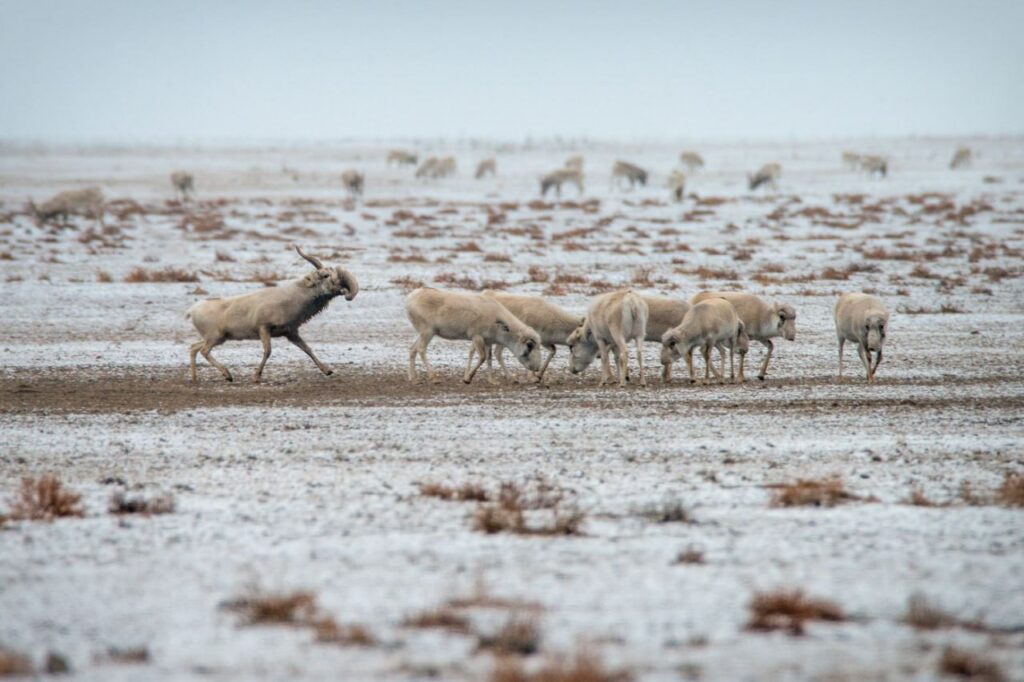
Kazakhstan is home to three main saiga populations, Betpakdala, Ural, and Ustyurt which together account for more than 90% of the global saiga population. As of March 2025, the total population in Kazakhstan stood at 4.1 million, a dramatic increase from the historical high of 1.2 million during the Kazakh SSR period.
The saiga antelope has been listed as critically endangered by the International Union for Conservation of Nature since 2002. A nationwide moratorium on hunting and trade in saiga parts remained in effect until 2024. However, the sharp population increase led authorities to transition from a blanket ban to a model of regulated harvesting.
The renewed interest in saiga horn exports is also driven by persistent demand in traditional Chinese medicine, where the antlers are highly valued.