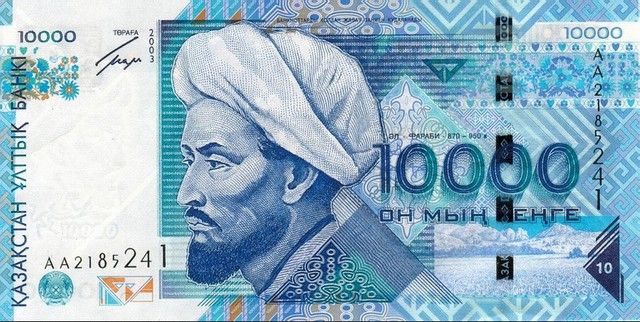
Governor of the National Bank of Kazakhstan, Timur Suleimenov, has attributed the recent strengthening of the tenge to rising global oil prices, which have increased export revenues and boosted the supply of foreign currency on the domestic market.
According to the regulator, the tenge appreciated by 3.9% in March, reaching 478.15 KZT to the dollar. The average daily trading volume on the Kazakhstan Stock Exchange increased from $335 million to $372 million, while total trading volume reached $6.7 billion.
Currency sales from the National Fund totaled $400 million, supporting transfers to the state budget. In addition, approximately $391 million was supplied through the mandatory sale of foreign currency earnings by quasi-state sector entities. No foreign exchange interventions were conducted during the period.
As a result, the National Fund accounted for about 6% of total trading volume, or roughly $22 million per day. Exporters remained the primary source of foreign currency supply, Suleimenov noted.
“Kazakhstan’s main export is oil. Prices are rising, volumes remain unchanged, and accordingly, export revenues and currency supply are increasing,” he said.
Preliminary estimates indicate that National Fund currency sales in April will total $300-400 million, broadly in line with March levels.
Suleimenov also said the tenge remains stable despite earlier forecasts by some analysts suggesting a potential weakening to 1,000-2,000 KZT to the dollar. At the same time, he warned of inflationary risks linked to rising tariffs. According to him, the government plans to factor inflationary pressures into future adjustments of utility and fuel prices.
As of April 1, the moratorium on increases in utility and fuel tariffs in Kazakhstan, introduced in October 2025, has expired.
The Times of Central Asia previously reported that economist Aidarkhan Kusainov had suggested the tenge could weaken to 1,000 per dollar or even further, arguing that the national currency is overvalued.