Kyrgyzstan and Afghanistan have agreed to open trading houses in each other’s countries as part of a broader effort to deepen bilateral trade and economic cooperation.
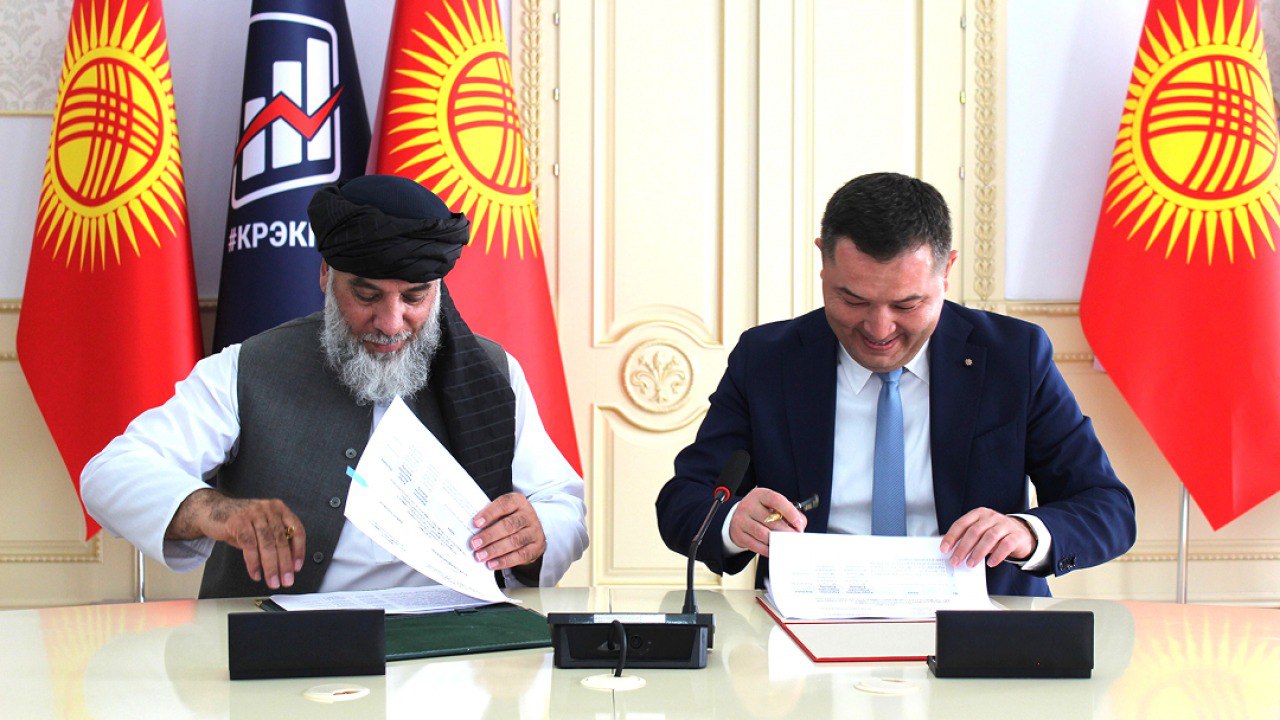
The agreement was reached on August 13 during the visit of an Afghan delegation to Bishkek, led by Nooruddin Azizi, Acting Minister of Industry and Commerce of the Islamic Emirate of Afghanistan.
Azizi met with the Kyrgyz Minister of Economy and Commerce, Bakyt Sydykov. The two ministers signed a roadmap for future cooperation, along with a memorandum of understanding focused on enhancing trade and economic ties.
Sydykov described the visit as a significant step toward strengthening bilateral relations and highlighted Kyrgyzstan’s interest in exploring new, mutually beneficial areas of cooperation. He noted that the two countries hold considerable potential for expanding trade.
Discussions also touched on digitalization, with the Kyrgyz side offering to share its experience in the sector with Afghan partners.
According to Afghanistan’s Ministry of Industry and Commerce, the two countries recorded $66 million in bilateral trade during the last solar year (March 2024-March 2025), with Afghan exports accounting for $7 million of that figure. Key Afghan exports to Kyrgyzstan include aluminum and copper utensils, pressure cookers, carpets, fruits, and vegetables.
In January-February 2025 alone, Kyrgyzstan exported $11.5 million worth of petroleum products to Afghanistan, according to Kyrgyz media.
Trade between the two countries has seen an uptick following Kyrgyzstan’s September 2024 decision to remove the Taliban from its list of prohibited organizations. The Kyrgyz Ministry of Foreign Affairs said the move was aimed at promoting regional stability and fostering constructive dialogue.
On September 6, 2024, then-Chairman of the Cabinet of Ministers Akylbek Japarov met with Afghanistan’s Chargé d’Affaires in Kyrgyzstan, Nurullah Amin, to discuss ways to advance bilateral relations. The Kyrgyz side expressed interest in enhancing trade and transport links, jointly developing Afghan mineral resources, and cooperating in energy, industry, and agriculture.