• KGS/USD = 0.01144 0%
  • KZT/USD = 0.00208 0%
  • TJS/USD = 0.10440 0%
  • UZS/USD = 0.00008 0%
  • TMT/USD = 0.28571 0%
  • KGS/USD = 0.01144 0%
  • KZT/USD = 0.00208 0%
  • TJS/USD = 0.10440 0%
  • UZS/USD = 0.00008 0%
  • TMT/USD = 0.28571 0%
  • KGS/USD = 0.01144 0%
  • KZT/USD = 0.00208 0%
  • TJS/USD = 0.10440 0%
  • UZS/USD = 0.00008 0%
  • TMT/USD = 0.28571 0%
  • KGS/USD = 0.01144 0%
  • KZT/USD = 0.00208 0%
  • TJS/USD = 0.10440 0%
  • UZS/USD = 0.00008 0%
  • TMT/USD = 0.28571 0%
  • KGS/USD = 0.01144 0%
  • KZT/USD = 0.00208 0%
  • TJS/USD = 0.10440 0%
  • UZS/USD = 0.00008 0%
  • TMT/USD = 0.28571 0%
  • KGS/USD = 0.01144 0%
  • KZT/USD = 0.00208 0%
  • TJS/USD = 0.10440 0%
  • UZS/USD = 0.00008 0%
  • TMT/USD = 0.28571 0%
  • KGS/USD = 0.01144 0%
  • KZT/USD = 0.00208 0%
  • TJS/USD = 0.10440 0%
  • UZS/USD = 0.00008 0%
  • TMT/USD = 0.28571 0%
  • KGS/USD = 0.01144 0%
  • KZT/USD = 0.00208 0%
  • TJS/USD = 0.10440 0%
  • UZS/USD = 0.00008 0%
  • TMT/USD = 0.28571 0%

Viewing results 19 - 24 of 12253

Kazakhstan Plans First Legal Saiga Horn Exports

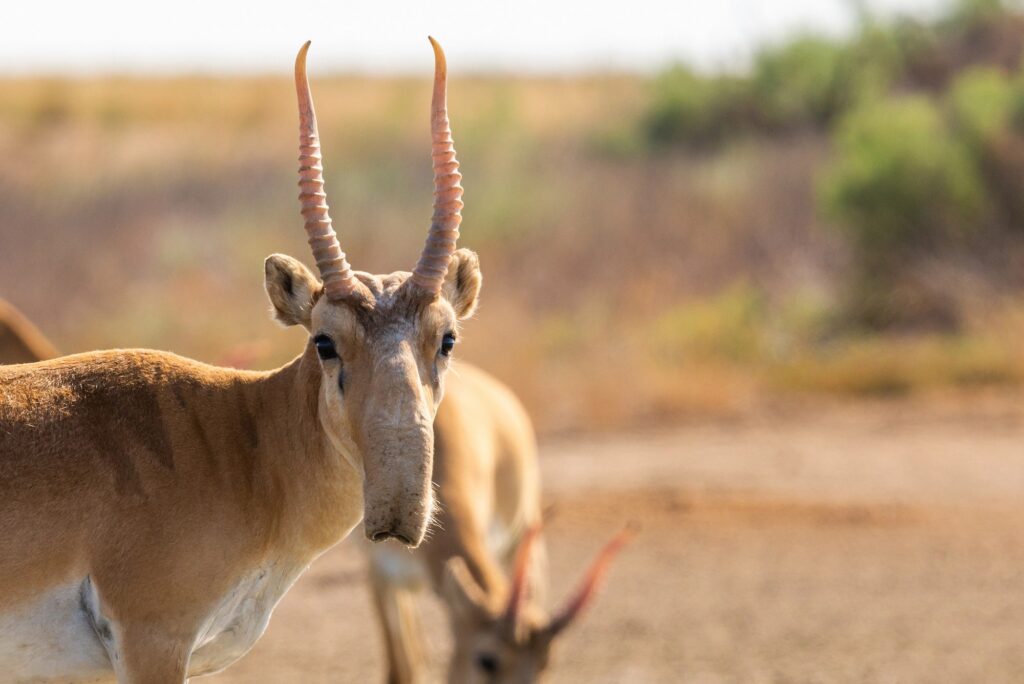
In 2026, Kazakhstan plans to begin officially exporting the horns of saiga antelopes for the first time in its history. The initial shipment is expected to total 20 tons, potentially generating tens of millions of dollars on Asian markets. The decision appears both logical and controversial. On one hand, the state has an opportunity to recover part of the funds spent on protecting the species. On the other, legalising trade could stimulate demand and once again make the saiga antelope a target for poachers. From the Brink of Extinction to a “Problem Species” In the early 2000s, the situation was critical. By 2003, only about 21,000 saigas remained in Kazakhstan. The animals were widely poached for their horns, which were sold on Asian markets. The government responded with strict measures, including a hunting ban, enhanced protection, and the establishment of specialised agencies such as Okhotzooprom, responsible for safeguarding rare and endangered wildlife. Even after 2015, when more than 200,000 animals died from pasteurellosis, conservation programs continued. The results were striking. By 2025, the saiga population had surpassed 2 million. However, this conservation success has created new challenges. Large herds have increasingly damaged agricultural land, trampling pastures and destroying crops. Farmers in affected regions have called for urgent intervention and compensation. Stockpiles and Potential Revenue In response, authorities introduced population control measures, including limited culling. At the same time, antlers accumulated in storage facilities both from legally culled animals and those seized from poachers. Today, around 20 tons of saiga horns are reportedly stored in warehouses. Maintaining these stockpiles entails budgetary costs. With black market prices reaching up to $3,000 per kilogram, the theoretical value of the reserves could approach $60 million. In practice, officials expect lower but still substantial revenue. The main buyers are expected to be in Asia, particularly China, where saiga horns are used in traditional medicine. To enter international markets, Kazakhstan must comply with the strict requirements of the Convention on International Trade in Endangered Species of Wild Fauna and Flora (CITES). This includes demonstrating that trade does not threaten the species’ survival, and ensuring full traceability of the product’s origin. Without such verification, exports will not be permitted. Why Horns Are Being Exported At first glance, domestic processing of saiga horns into pharmaceutical products might appear more profitable. In reality, this option faces significant obstacles. Scientific evidence does not show that there are any medicinal properties in saiga horns, which consist primarily of keratin, similar to human hair and nails. In addition, the traditional medicine market is highly conservative, with consumers placing greater trust in established local brands. Buyers also tend to prefer whole horns, as powdered products are easier to counterfeit. Furthermore, the saiga population remains vulnerable to disease outbreaks, which could undermine long-term investment in processing facilities. Environmental, social, and governance (ESG) considerations further limit investor interest in industries linked to wildlife exploitation. Risks of Legalisation The main concern is that legalising trade could unintentionally strengthen illegal markets. Once a product becomes legal, it...
Threats to Regional Security: Why Escalation Around Iran Matters for Central Asia

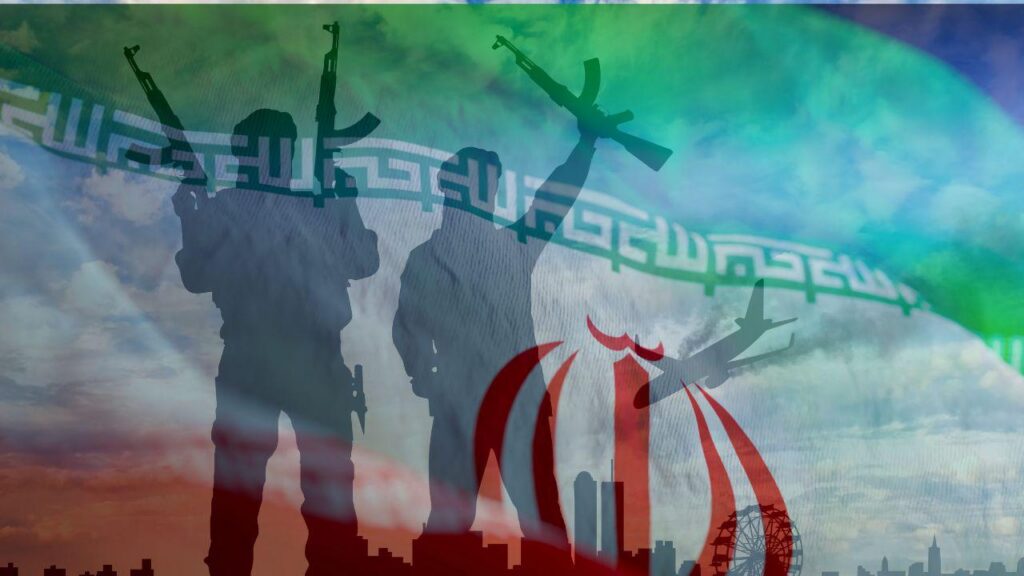
For Central Asia, the central question is not simply whether a wider conflict involving Iran would destabilize the Middle East, but how that instability could spill north into a region that has repeatedly absorbed the consequences of crises to its south. Central Asian states have seen before how militant infiltration, narcotics trafficking, and extremist mobilization can intensify when neighboring wars weaken state control and create more permissive transit corridors. History gives Central Asia specific reasons to take that risk seriously. During the Tajik civil war and its aftermath, the Tajik-Afghan border became a frontline against crossings by Afghan militants and narcotics traffickers. In 1999 and 2000, fighters from the Islamic Movement of Uzbekistan, or IMU, carried out the Batken incursions  into southern Kyrgyzstan, took hostages, and demonstrated how quickly insecurity from the Afghan theater could penetrate Central Asia. At the same time, Afghan opiates moved north through the Northern Route, tying militancy, organized crime, and border insecurity into a single regional problem. Afghanistan remains the most important precedent, but the comparison with Iran must be made carefully. After the fall of Najibullah in 1992, Afghanistan fragmented into competing militias and warlord zones. The Taliban later emerged from that disorder, and the Afghan state collapsed again when the Taliban captured Kabul and returned to power in 2021. Iran is structurally different. It has a centralized state, a denser security apparatus, and the Islamic Revolutionary Guard Corps, or IRGC, which is deeply embedded in regime security and domestic politics. For that reason, the most plausible risk is not an immediate Afghanistan-style collapse, but a slower weakening of control in peripheral regions that could open space for armed groups, trafficking networks, and extremist recruiters. Those peripheral regions matter because Iran’s borderlands already contain armed actors with their own agendas. In the northwest, PJAK remains part of the Kurdish militant landscape. In the southeast, Jaysh al-Adl operates in Sistan-Baluchistan and adjoining border areas. Their capabilities should not be exaggerated, and they do not represent entire Kurdish or Baloch populations. But in a period of prolonged instability, such groups could exploit weaker local control, greater arms circulation, and more permissive smuggling corridors. For Central Asia, however, the greatest concern is the interaction between any Iranian crisis and the threat environment centered on Afghanistan. United Nations reporting in 2025 assessed ISIL-K as the predominant extra-regional terrorist threat, and the U.S. National Counterterrorism Center says ISIS-K has carried out attacks in Afghanistan, Iran, Pakistan, and Russia while using media to recruit new members and advance a vision of “Khorasan” that explicitly includes parts of Central Asia and Iran. In other words, Central Asia already faces a live extremist ecosystem to its south; wider instability involving Iran could amplify that pressure rather than replace it. This is why Central Asia should not be seen as a passive observer. The region sits at the junction of security corridors linking Afghanistan, Iran, the Caspian basin, and Russia. A wider conflict involving Iran could intensify trafficking through existing routes, strain border...

Opening the Islamic Civilization Center in Tashkent: A New Landmark of Memory, Scholarship, and National Identity

With its public opening scheduled for March 17, 2026, the Islamic Civilization Center in Tashkent is emerging as one of the most consequential cultural projects in contemporary Uzbekistan. Conceived under President Shavkat Mirziyoyev’s initiative first announced in 2017, the Center presents itself not simply as a museum but as a national statement about memory, scholarship, and identity. The Center’s own mission describes it as a bridge between the Golden Age and New Uzbekistan, linking a rich spiritual and scientific inheritance with the country’s modern aspirations. In that sense, the opening is not only an institutional debut; it is a carefully staged declaration of civilizational confidence. The setting reinforces that message. The complex rises in Tashkent’s historic Hast-Imam area, at Karasaray 47 in the Almazar district, where architecture itself is part of the narrative. The official site says the building’s 65-meter dome and four portals symbolize the unity of Uzbekistan’s regions, turning the Center into a monument as much as a museum. From the outside, the structure is meant to signal national scale; from the inside, it is designed to draw visitors into a journey through faith, science, and statehood. The opening therefore introduces not just a new institution, but a new symbolic landmark for the capital. What makes the Center distinctive is the scope of its ambition. Official descriptions emphasize that it is more than an exhibition venue: alongside museum halls, it includes a library, restoration and digitization laboratories, research departments, and archival storage. That institutional mix matters. Rather than treating Islamic civilization as a fixed inheritance locked behind glass, the Center is built to keep knowledge active through conservation, scholarship, and public interpretation. It is a museum-research hybrid with an international educational focus, drawing inspiration from historical centers of learning such as Baghdad’s House of Wisdom, the Khorezm Ma’mun Academy, and Ulugh Beg’s madrasah in Samarkand. At the spiritual and architectural core of the complex is the Qur’an Hall. The official website describes it as the largest and most majestic section of the building, as well as the conceptual heart of the entire project. At its center stands the 7th-century Mushaf of Uthman, preserved beneath the great dome and recognized by UNESCO’s Memory of the World Register. The hall also features a gallery of 114 Qur’ans tracing the evolution of Islamic calligraphy, and the Center says the space is designed not only for display but also for contemplation, with continuous Qur’an recitation planned inside. The result is an opening centered on reverence as much as spectacle. Beyond the Qur’an Hall, the Center organizes Uzbekistan’s civilizational story along a long historical arc. Its exhibition program moves from pre-Islamic heritage through the First and Second Renaissances and into New Uzbekistan, combining rare objects with replicas, models, 3D technologies, audiovisual tools, and other modern display formats. The Hall of Honor, one of the site’s highlighted spaces, contains 14 arches depicting key events in Central Asian history and interactive panels linked to a digital platform with avatars of more than one hundred thinkers...

Kazakhstan Maintains Meat Exports to the UAE and Plans to Increase Shipments

Kazakhstani producers continue to export meat products to the United Arab Emirates despite logistical complications caused by the conflict in the Middle East. Shipments are also expected to increase, according to Kazakhstan’s Ministry of Trade and Integration. Military developments in the region, including hostilities affecting Iranian territory since February 28, have disrupted logistics for several Central Asian countries. Nevertheless, Kazakhstani exporters have managed to maintain their presence in Middle Eastern markets. According to the ministry, seven tons of chilled lamb were exported to the UAE over the past week. Deliveries are being carried out with the support of the ministry and the national export development operator QazTrade. Authorities aim to raise lamb exports to a regular level of ten tons per week. Shipments are taking place amid ongoing challenges in international logistics in the Persian Gulf region. International carriers report that restrictions on air traffic and disruptions to certain transport routes continue to affect cargo transport, particularly for perishable goods. To ensure stable exports, government agencies have strengthened cooperation with industry associations, including the Union of Livestock Breeders of Kazakhstan, the Union of Poultry Breeders of Kazakhstan, and the National Association of Meat Processors. The ministry states that Kazakhstan fully meets domestic demand for meat products. Export deliveries are carried out using surplus production volumes, enabling farmers to expand their access to foreign markets. A significant share of the food market in Gulf countries relies on imports. According to estimates by international organizations, up to 85-90% of food products in the UAE are imported. By the end of 2025, Kazakhstan’s total exports to the UAE amounted to $132.9 million. Mutton accounted for about 55% of food exports. Kazakhstan has been supplying mutton to the UAE market since 2021. In recent years, the country has actively expanded food exports to Middle Eastern markets, including shipments of grain, flour, vegetable oils, and meat products. According to Kazakhstan’s Ministry of Agriculture, by the end of the 2024/2025 marketing year (September-August), exports of grain and flour in grain equivalent reached 15.3 million tons, 60% higher than the previous year. In the current marketing year, shipments of grain and flour from the new harvest have already reached 8.5 million tons, representing a 14% increase compared with the same period in 2025.

New Constitution Backed by Majority as Kazakhstan Reports Record Referendum Turnout

Kazakhstan’s Central Referendum Commission has announced the official results of the nationwide vote on the draft of a new constitution. According to the commission, voter turnout reached 73.12%, with a total of 9,127,192 citizens participating. Preliminary results show that 7,954,667 voters or 87.15%, supported the proposed amendments. A further 898,099 citizens voted against, while 146,558 ballots were declared invalid. On 15 March Kazakhstan held a national referendum, proposed by President Kassym‑Jomart Tokayev, on whether to adopt a new constitution. The draft constitution introduces major institutional reforms, including replacing the country’s bicameral parliament with a single chamber, restoring the post of vice-president (abolished in 1996), and creating a new People’s Council (Kurultai) with powers to initiate legislation and referendums. The reforms also allow the president to appoint key officials, and redefine some constitutional provisions, including the definition of marriage. Critics say the changes could strengthen presidential authority and potentially affect future term limits. Regional voting patterns reveal several notable trends. First, Pavlodar region recorded the highest level of support, with 94.14% of voters backing the amendments. Traditionally, Kazakhstan’s northern regions have demonstrated more moderate support for decisions initiated by the central authorities. This tendency was reflected in the Karaganda and North Kazakhstan regions, where support stood at around 83%. Second, two western regions, Aktobe (93.96%) and Mangistau (93.40%), also showed some of the strongest support for constitutional reform. Mangistau was widely regarded during the era of former president Nursultan Nazarbayev as one of the country’s most protest-prone areas. The unrest in January 2022 began with a strike by oil workers in the city of Zhanaozen. Third, residents of Almaty demonstrated a higher share of protest voting than those in the country’s other major cities, Astana and Shymkent, with nearly 30% voting against the amendments. Voter turnout in Almaty reached 33.43%, significantly higher than the slightly more than 25% recorded during the 2024 referendum on the construction of a nuclear power plant. Among those who cast ballots in Almaty, 71.36% supported the 2026 constitution. In Astana and Shymkent, just over 86% voted in favor. Turnout figures had already been analyzed a day earlier by Almaty-based political analyst Andrei Chebotarev on his Telegram channel. He cited preliminary data from the Central Referendum Commission indicating that 9,126,850 citizens, or 73.24% of the electorate, had participated in the vote. Chebotarev compared these figures with turnout in previous referendums. He noted that 7,985,769 citizens (68.05%) took part in the referendum on constitutional amendments held on June 5, 2022, while 7,820,204 voters (63.66%) participated in the October 6, 2024 referendum on the construction of a nuclear power plant. “It is evident that the increase in participation was primarily driven by the political significance of the referendum’s subject matter, namely, the draft of a new Constitution. The relatively frequent use of referendums in Kazakhstan over the past four years may also have contributed,” Chebotarev suggested. Political analyst Daniyar Ashimbayev also highlighted the high turnout, noting that participation exceeded the 70% threshold for the first time. He argued that the...

Tokayev Criticizes Banks Over Slow Adoption of Kazakhstan’s Digital Financial Infrastructure

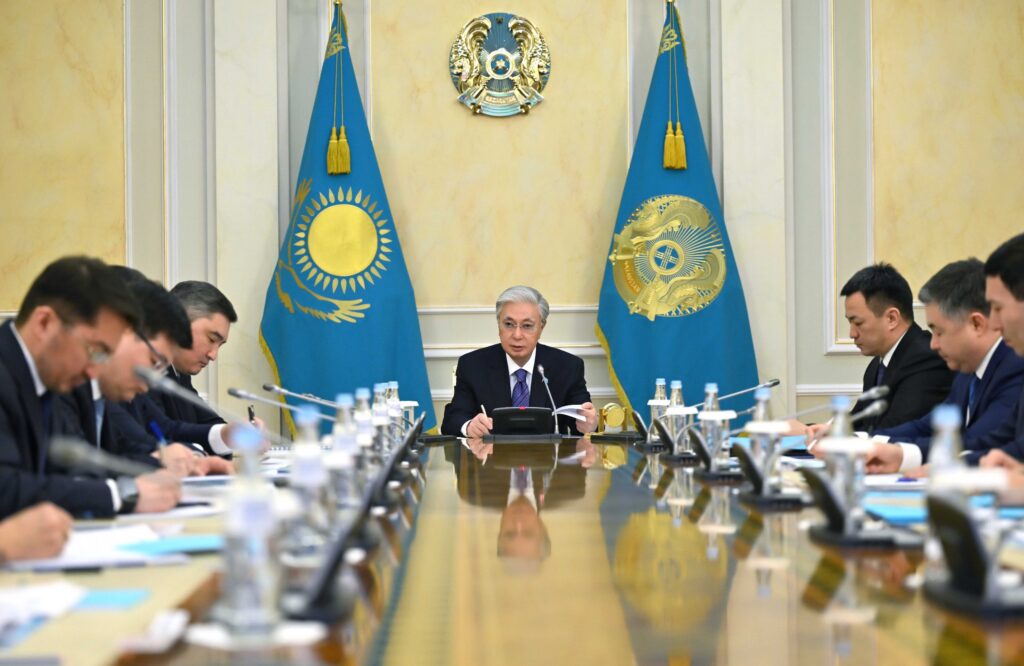
Kazakhstan’s President Kassym-Jomart Tokayev has criticized the country’s banks for their slow adoption of state-developed digital financial infrastructure. He made the remarks during a meeting on the implementation of the Digital Qazaqstan project. During the meeting, the heads of ministries and government agencies presented reports on the rollout of digital solutions in public administration and the economy. In his comments, the president stressed the need for more active deployment of artificial intelligence in industry, as well as progress in developing digital payment infrastructure. According to Tokayev, the National Bank has already created a digital financial ecosystem that includes interbank QR payments and transfers, as well as settlements using the digital tenge. “This significantly reduces costs by shortening the chain of payment intermediaries. The requirement for all banks to connect to this infrastructure is enshrined in law, but the largest banks are delaying compliance,” the president said. Since September 2025, a unified QR code system for interbank payments has been operating in Kazakhstan. The service allows users to pay for goods and services through mobile banking applications. Customers simply scan a QR code at a merchant’s terminal and confirm the transaction. Initially, the service was available to clients of three banks. At present, 15 banks have signed participation agreements, although only six have completed technical integration with the system. The remaining institutions are required to connect by July 18, 2026. Speaking in November 2025, National Bank Chairman Timur Suleimenov said the rollout had been slowed by both technical and market issues, adding that large financial ecosystems were reluctant to share payment traffic. He also described the digital tenge as a tool for transparency and control in public spending rather than a competitor to commercial banks’ own payment products. Tokayev also emphasized that the widespread adoption of artificial intelligence technologies in the real economy is a strategic priority. He linked this goal to the country’s technological sovereignty and called for accelerating the digitalization of the state apparatus. According to the president, more than 90% of public services in Kazakhstan have already been moved online, yet many government information systems remain insufficiently integrated. “Speed and quality must be the priority at every stage. It is data that needs to flow, not people,” Tokayev said. He added that digital transformation is incompatible with outdated bureaucratic practices. “Digitalization and bureaucracy are as incompatible as ice and fire. We cannot force modern technologies to fit into old administrative models,” the president stated. Tokayev also expressed concern about the pace of Kazakhstan’s digital transformation. “I read news about the development of artificial intelligence; it is advancing so rapidly that I am becoming anxious about Kazakhstan’s digital future. It seems to me that the digitalization process is slowing down,” he noted. The Times of Central Asia previously reported that the adoption of artificial intelligence technologies in the financial sector across Central Asia remains uneven, although Kazakhstan is currently regarded as the regional leader.