• KGS/USD = 0.01144 0%
  • KZT/USD = 0.00212 0%
  • TJS/USD = 0.10761 -0.09%
  • UZS/USD = 0.00008 0%
  • TMT/USD = 0.28571 0%
  • KGS/USD = 0.01144 0%
  • KZT/USD = 0.00212 0%
  • TJS/USD = 0.10761 -0.09%
  • UZS/USD = 0.00008 0%
  • TMT/USD = 0.28571 0%
  • KGS/USD = 0.01144 0%
  • KZT/USD = 0.00212 0%
  • TJS/USD = 0.10761 -0.09%
  • UZS/USD = 0.00008 0%
  • TMT/USD = 0.28571 0%
  • KGS/USD = 0.01144 0%
  • KZT/USD = 0.00212 0%
  • TJS/USD = 0.10761 -0.09%
  • UZS/USD = 0.00008 0%
  • TMT/USD = 0.28571 0%
  • KGS/USD = 0.01144 0%
  • KZT/USD = 0.00212 0%
  • TJS/USD = 0.10761 -0.09%
  • UZS/USD = 0.00008 0%
  • TMT/USD = 0.28571 0%
  • KGS/USD = 0.01144 0%
  • KZT/USD = 0.00212 0%
  • TJS/USD = 0.10761 -0.09%
  • UZS/USD = 0.00008 0%
  • TMT/USD = 0.28571 0%
  • KGS/USD = 0.01144 0%
  • KZT/USD = 0.00212 0%
  • TJS/USD = 0.10761 -0.09%
  • UZS/USD = 0.00008 0%
  • TMT/USD = 0.28571 0%
  • KGS/USD = 0.01144 0%
  • KZT/USD = 0.00212 0%
  • TJS/USD = 0.10761 -0.09%
  • UZS/USD = 0.00008 0%
  • TMT/USD = 0.28571 0%

Viewing results 31 - 36 of 12768

Central Asia Steps Out of the Post-Soviet Shadow

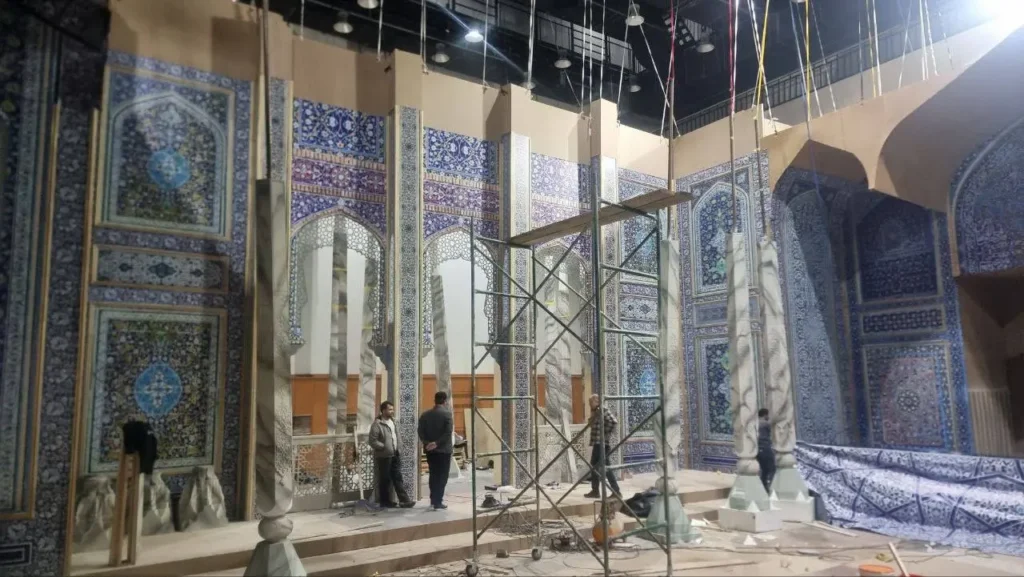
Central Asia is rarely presented on its own terms. It is more often viewed through exterior lenses like Russian imperial memory, Chinese reach, Silk Road romance, or great-power rivalry. The result is a region made to look secondary to the forces around it, even as its five countries carry deep histories, distinct languages, and identities that cannot be reduced to a backdrop. That old frame is starting to crack. Central Asia is finding new ways to tell its own story. The shift goes beyond tourism or national branding. It is about who gets to define the region, which is still too often seen through the things done to it or extracted from it. Culture depicts the other side of that narrative, a place that has shaped history, not merely endured it, with traditions and ideas that have long carried influence far beyond its borders. [caption id="attachment_49147" align="aligncenter" width="2048"] Sky above Almaty: Qandy Qantar; image courtesy of Saule Suleimenova[/caption] Kazakhstan offers one visible example. The Almaty Museum of Arts opened on September 12, 2025, adding a major institution for modern and contemporary art. Its arrival builds on a broader shift in which private galleries, international platforms, and artists such as Aigerim Karibayeva and Saule Suleimenova are moving Kazakh art beyond folkloric shorthand toward identity, postcolonial memory, and urban life. The reopening of the Tselinny Center of Contemporary Culture, in a former Soviet-era cinema, adds a sharper symbolic layer. A building once tied to Soviet public culture has become a platform for modern Central Asian voices, reflecting a scene increasingly rethinking nomadism rather than simply reproducing it. [caption id="attachment_49148" align="aligncenter" width="1024"] Image: The Tselinny Center of Contemporary Culture[/caption] Uzbekistan has made culture central to its international reemergence. The inaugural Bukhara Biennial brought contemporary art into a city more often seen through its monuments, turning madrasas and caravanserais into exhibition spaces for Uzbek and world artists. The same push is visible in the Tashkent Centre for Contemporary Art, Uzbekistan’s presence at the Venice Architecture Biennale, and design projects such as When Apricots Blossom, which link heritage, craft, and the environmental disaster of the Aral Sea. Artists such as Oyjon Khayrullaeva show a younger generation reworking Islamic ornament, textiles, and public space into new visual languages. At the same time, the State Museum of Karakalpakstan in Nukus, with its Soviet-era censored works, gives the country’s art history deeper heft. In Tashkent, the Islamic Civilization Center is working on a different scale. Recognized by Guinness World Records in 2026 as the largest museum of Islamic civilization, it gives Uzbekistan a stronger role in shaping how that legacy is understood today. [caption id="attachment_49146" align="aligncenter" width="2048"] Image courtesy of Oyjon Khayrullaeva[/caption] Kyrgyzstan’s confidence rests on different ground. The sixth World Nomad Games are scheduled for August 31 to September 6, 2026, with events in Bishkek and around Issyk-Kul. That gives Kyrgyzstan a stage for living nomadic traditions, not a static museum display of them. Its contemporary art scene adds a more intimate layer, with artists such as...

Tajikistan and UN to Host Water Crisis Conference in Dushanbe

Tajikistan and the United Nations will co-host the 4th High-Level International Conference on the International Decade for Action "Water for Sustainable Development " 2018-2028 next week, as Central Asia and other regions face increasing water scarcity because of climate change, higher consumption, and other factors. Delegates to the May 25-28 water conference in Dushanbe include government officials, scientists, executives from financial institutions and civil society members from around the world. The goal of creating “sustainable” water resources is especially critical in Central Asia, where there is growing concern that shortages could threaten public health and stir tension between upstream and downstream countries. Kyrgyzstan and Tajikistan, for example, are in mountainous regions and have relatively significant water resources that they share with neighboring countries. However, the resources are under strain. Kazakhstan, Uzbekistan and Turkmenistan, in turn, rely on the cross-border water supply that flows downstream. Central Asian governments have begun joint projects on water infrastructure to avoid the kind of tensions that emerged in the past. The Dushanbe conference is another step in that process, even though the event is global in perspective. Tajik diplomats have held briefings in Azerbaijan, Saudi Arabia and other countries to promote the conference, describing Tajikistan as a leader in “water diplomacy” as the world faces a water crisis that is increasingly evident in floods, droughts, pollution and melting glaciers. Dushanbe has already hosted several international conferences on water. Saidjon Shafizoda, spokesman for Tajikistan’s Ministry of Foreign Affairs, said at a briefing in the Tajik capital on Wednesday that the conference can help accelerate innovation and mobilize funding for the “sustainable and inclusive” management of water, the state Khovar news agency reported. Organizers say more than 2,500 people are expected to participate.

Pannier and Hillard’s Spotlight on Central Asia: New Episode Out Now

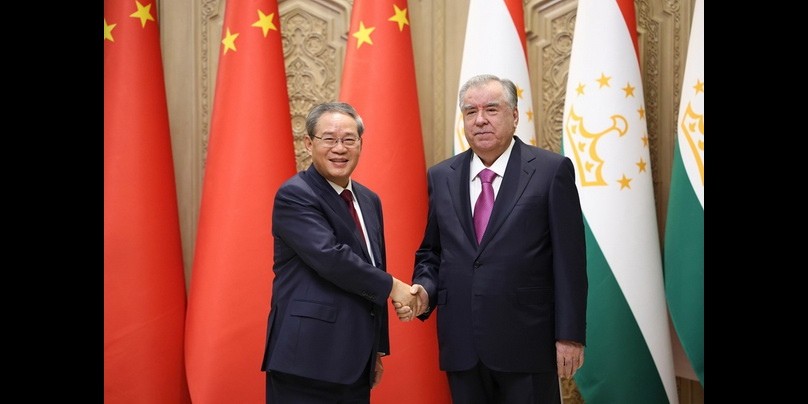
As Managing Editor of The Times of Central Asia, I’m delighted that, in partnership with the Oxus Society for Central Asian Affairs, from October 19, we are the home of the Spotlight on Central Asia podcast. Chaired by seasoned broadcasters Bruce Pannier of RFE/RL’s long-running Majlis podcast and Michael Hillard of The Red Line, each fortnightly instalment will take you on a deep dive into the latest news, developments, security issues, and social trends across an increasingly pivotal region. This week, the team will be covering the highly successful OTS summit in Turkistan, alongside Putin's notably bad day at the Moscow Victory Day parade. We'll also break down the new ships launching in the Caspian Sea and what they signal for cross-Caspian trade, a long-awaited move from Kyrgyzstan's Prosecutor General that we've been tracking for months, another serious shootout involving counter-narcotics forces in Afghanistan, and Emomali Rahmon's trip to Beijing for talks with the Chinese leadership. And for our main story, we turn to Tajikistan's heir apparent, Rustam Emomali, the man widely tipped to become the country's next president On the show this week: - Salim Ayoubzod (Radio Free Liberty) - Edward Lemon (The Oxus Society for Central Asian Affairs)

Japarov Calls for Support of Kyrgyzstan’s Bid for UN Security Council Seat

Kyrgyz President Sadyr Japarov has called on world leaders to support Kyrgyzstan’s candidacy in the election for non-permanent members of the United Nations Security Council, scheduled for June 3, 2026, for the 2027-2028 term. In a statement published on his Facebook page, Japarov said Kyrgyzstan has the backing of the other Central Asian countries and is prepared to promote “pragmatic and depoliticized solutions” on the international stage. According to the president, the underrepresentation of small, developing, and landlocked countries in the Security Council “undermines the sustainability of the entire architecture of collective security.” “This is not a political preference but an objective necessity,” Japarov said. He argued that intensifying geopolitical competition, the erosion of universal international law, and ongoing armed conflicts in Europe, Africa, and the Middle East continue to test the resilience of the international system. “More than $3 trillion is spent annually on military conflicts worldwide. These resources could provide humanity with a decent life. If these expenditures were directed toward greening the planet and eradicating hunger, our world could become a flourishing garden,” the Kyrgyz leader said. Japarov emphasized that Kyrgyzstan is not part of military blocs and does not participate in confrontational geopolitical formats, which he said allows the country to maintain a “balanced, independent, and pragmatic position” on international issues. The president also highlighted Kyrgyzstan’s peaceful settlement of border delimitation issues with neighboring states, describing it as an example of how even highly sensitive security disputes can be resolved through negotiations. Japarov devoted particular attention to Kyrgyzstan’s work within the UN Human Rights Council, to which the country has been elected three times. According to him, Bishkek continues efforts to strengthen democracy, human rights, and the rule of law. The claim comes amid continued scrutiny of Kyrgyzstan’s domestic political trajectory. International observers and rights groups have raised concerns in recent years over pressure on independent media, civil society, and opposition figures, while the authorities have argued that tighter regulation is needed to protect stability and national interests. Japarov also pointed to the introduction of quotas for women, youth, ethnic minorities, and people with disabilities under amendments to the law “On the Election of the President of the Kyrgyz Republic and Deputies of the Jogorku Kenesh,” adopted in 2025. Japarov claimed that Kyrgyzstan ranks first in the world for women’s parliamentary representation. However, Inter-Parliamentary Union data shows that Kyrgyzstan has 30 women in its 90-seat parliament, or 33.3% of deputies. The IPU has instead identified Kyrgyzstan as recording the largest increase in women’s parliamentary representation among countries that held parliamentary renewals in 2025. The president stressed that Kyrgyzstan remains committed to the principles of non-proliferation and disarmament and, if elected to the Security Council, would promote preventive diplomacy, mediation mechanisms, nuclear disarmament, and addressing the growing nexus between climate and security issues. Japarov noted that Kyrgyzstan was among the initiators of the Central Asian Nuclear-Weapon-Free Zone and signed the Treaty on the Prohibition of Nuclear Weapons in 2025. He also said Bishkek intends to devote particular...

Kazakhstan Reshapes Education System to Meet Industrial and Labor Market Needs

Kazakhstan has begun a large-scale restructuring of its education system in 2025-2026 as authorities attempt to address labor shortages, overloaded school infrastructure, and the growing mismatch between graduates’ qualifications and the needs of the economy. While previous reforms focused primarily on expanding access to education, the government is now shifting toward tighter administrative management of student enrollment, stronger support for technical and vocational training, and the integration of digital technologies into schools. As previously reported by The Times of Central Asia, the reforms are unfolding amid growing pressure on Kazakhstan’s labor market. One of the most pressing issues remains the condition of the country’s school infrastructure. Rapid urbanization and internal migration have created chronic shortages of school places in major cities and southern regions. To address the problem, authorities launched the “Comfortable School” national project, which envisioned the construction of 369 schools with capacity for 740,000 students during 2023-2024. However, implementation has faced delays caused by contractor failures and rising construction material costs. According to project operator Samruk-Kazyna Construction, by the end of 2025 authorities had commissioned 208 schools, creating more than 217,000 new student places. Most of the facilities were built in Astana, Almaty, and Turkistan Region. President Kassym-Jomart Tokayev previously warned that even accelerated school construction would only temporarily alleviate the problem, since at current population growth rates the shortage of school places could reach 400,000 in the medium term. Against this backdrop, authorities are increasingly turning to technological solutions. In May 2026, Tokayev signed a decree introducing artificial intelligence into the secondary education system. Under the initiative, AI technologies are expected to serve as auxiliary tools for personalized learning, identifying gaps in student knowledge, and reducing teachers’ workloads. By August 1, schools participating in the pilot program are expected to be equipped with high-speed internet access, while by September 1 authorities plan to approve national standards governing the use of AI in education. At the same time, Kazakhstan is strengthening support for technical and vocational education. For the 2025-2026 academic year, around 70% of state-funded grants in the technical and vocational education system were allocated to engineering and technical specialties, including metallurgy, mechanical engineering, energy, construction, and information technology. Authorities are also attempting to expand elements of dual education programs involving private businesses. According to official data, more than 4,000 enterprises have established partnerships with colleges. However, full-scale implementation remains largely confined to major industrial regions, while small and medium-sized businesses in other areas remain reluctant to participate in organizing practical training for students. Significant changes are also affecting higher education. Minister of Science and Higher Education Sayasat Nurbek announced a redistribution of state grants toward professions facing the most acute labor shortages, including thermal power engineering, industrial engineering, water management, and materials science. University financing will now depend directly on institutions’ positions in national rankings and on graduate employment rates. For weaker regional universities, this could effectively mean automatic reductions in state funding. Leading universities have also been granted the right to independently raise admission thresholds...

Tokayev Urges Central Asia and China to Strengthen Law Enforcement Cooperation

Kazakh President Kassym-Jomart Tokayev hosted the interior and public security ministers of the “Central Asia-China” format in Astana during the second meeting of regional law enforcement agencies. The meeting was attended by Chinese Minister of Public Security Wang Xiaohong, Kyrgyz Interior Minister Ulan Niyazbekov, Tajik Interior Minister Ramazon Rahimzoda, Turkmen Interior Minister Muhammet Hydyrov, and Uzbek Interior Minister Aziz Tashpulatov. Participants discussed transnational crime, drug trafficking, cybercrime, and extremism. Tokayev said strengthening cooperation between the law enforcement agencies of Central Asia and China is essential for maintaining regional stability. “Transnational organized crime is becoming increasingly flexible and interconnected. Cybercrime has evolved into a highly profitable global industry,” the president said. According to Tokayev, criminal groups are increasingly using digital platforms to coordinate activities, launder money, and carry out attacks that transcend national borders. He emphasized that Central Asia’s position at the crossroads of major transport and trade routes leaves the region particularly vulnerable to transnational criminal networks. Tokayev said Kazakhstan considers the rule of law a strategic state priority and is continuing the implementation of its “Law and Order” governance concept. He called for stronger efforts to block the financial flows of criminal organizations, suppress the spread of extremist ideology, and detect preparations for terrorist attacks. The president devoted particular attention to cybersecurity threats. “Artificial intelligence in the hands of destructive actors is becoming an information weapon,” Tokayev said. According to him, illegal content and disinformation are spreading online on an industrial scale, while existing mechanisms of international cooperation require substantial modernization. Tokayev also linked security concerns to the expansion of regional transport infrastructure, including the Trans-Caspian International Transport Route. “The growth of cargo traffic is associated with certain risks, including transnational crime and the trafficking of contraband, drugs, and weapons,” he said. In Tokayev’s view, the “Central Asia-China” format should evolve into a platform for developing coordinated and practical security measures across the region. Participants in the meeting reaffirmed their intention to expand operational information-sharing, strengthen professional cooperation, and introduce modern technologies into law enforcement activities.