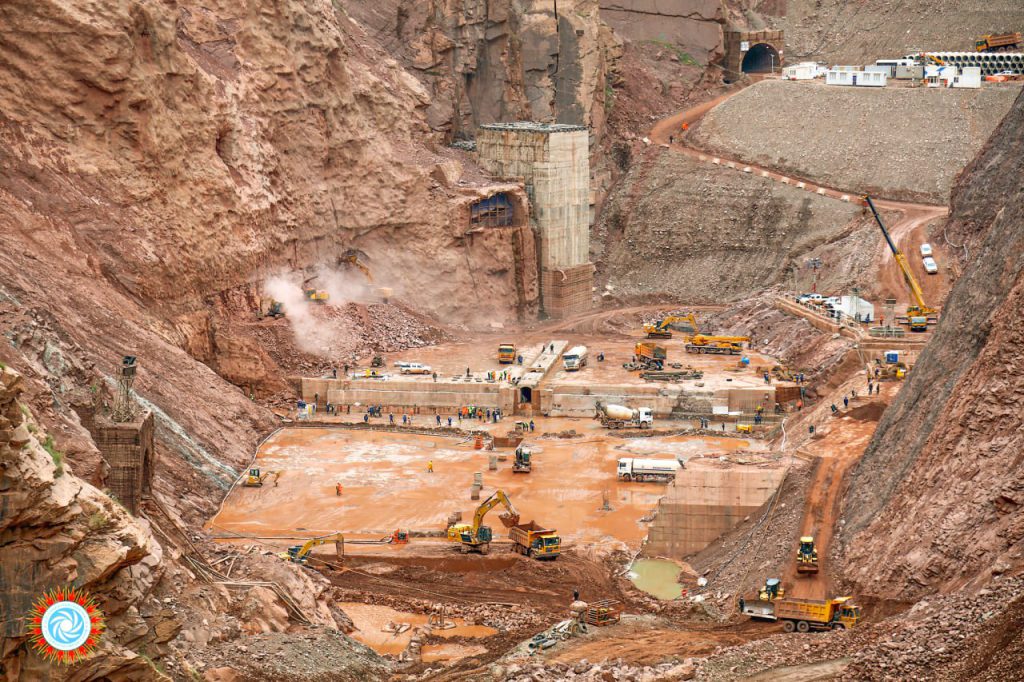
BISHKEK (TCA) — The agreement to provide a US $100 million investment credit from the Eurasian Fund for Stabilization and Development (EFSD) for the rehabilitation of the Toktogul hydro power plant (Phase 2) has taken effect late in March. In the near future, the Kyrgyz Ministry of Economy will begin to prepare tender documents to arrange procurement for the project. Procurement will be effected using international bidding procedures, the press office of the Eurasian Development Bank (EDB) said.
The project is co-financed by the Asian Development Bank. It envisions replacing Units 2 and 4, including the replacement or repair of auxiliary systems and plant equipment, at the Toktogul HPP, one of hydro power plants of the Toktogul cascade. The cascade is Kyrgyzstan’s largest hydro facility and strategic site. The Toktogul HPP, with an installed capacity of 1,200 MW, is the largest and most important plant in the cascade. The project will help to enhance power supplies from domestic sources and support international trade in electricity. It will also improve asset management, as well as planning and performance in the sector.
The Fund’s Manager is also considering Kyrgyzstan’s preliminary application for financing Phase 3 of the project.
Eurasian Development Bank (EDB) is an international financial institution founded by Russia and Kazakhstan in January 2006 with the mission to facilitate the development of market economies, sustainable economic growth, and the expansion of mutual trade and other economic ties in its member states. EDB’s charter capital totals US $7 billion. The member states of the Bank are Armenia, Belarus, Kazakhstan, Kyrgyzstan, Russia, and Tajikistan.
The Eurasian Fund for Stabilization and Development (EFSD) amounting to US $8.513 billion was formed as the EurAsEC Anti-Crisis Fund on 9 June 2009 by the governments of Armenia, Belarus, Kazakhstan, Kyrgyzstan, Russia, and Tajikistan. The objectives of the EFSD are to assist its member countries in overcoming the consequences of the global financial crisis, ensure their economic and financial stability, and foster integration processes in the region.