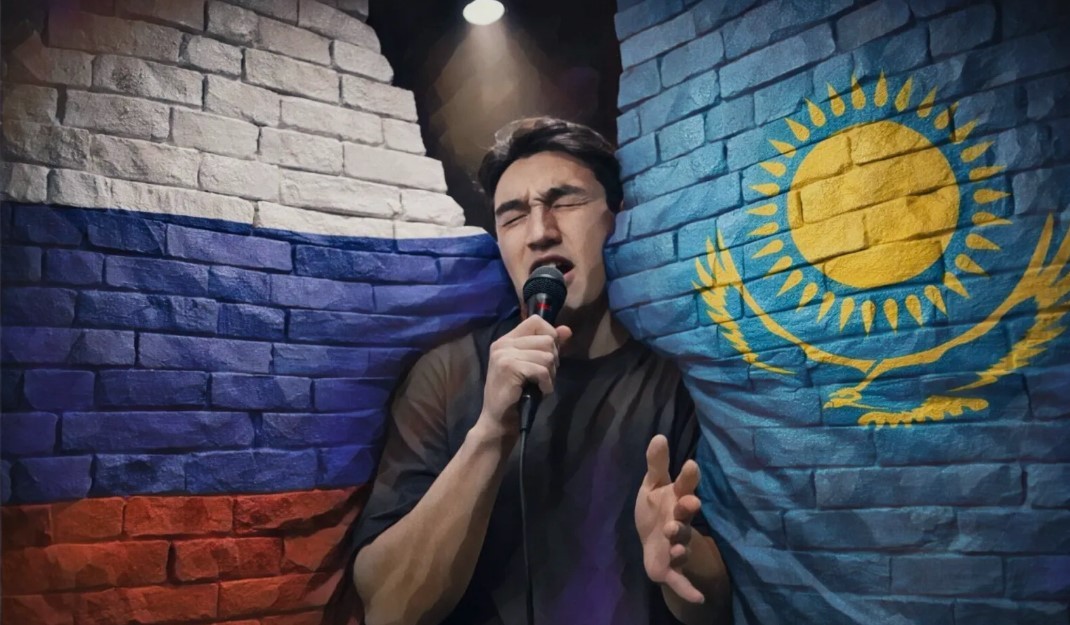
A wave of speculation has followed reports that stand-up comedian Nurlan Saburov, a Kazakh citizen who has worked in Russia for years, has been barred from entering Russia for 50 years.
After returning to Kazakhstan, Saburov became the subject of “verification measures” by the National Security Committee (KNB) following online allegations linking him to a Russian private military formation.
The entry ban prompted widespread discussion in both countries. In Russia, some commentators suggested the decision could be connected to Saburov’s refusal to publicly support Russia’s war in Ukraine. Russian lawmaker Vitaly Milonov, for example, urged the comedian to make a public statement backing Russia, implying that this could help resolve the situation.
In Kazakhstan, the controversy escalated after social media users circulated a video alleging that Saburov had donated enduro motorcycles to a unit described online as the “Wagner Istra Legion.” The authenticity and context of the footage have not been independently verified.
At a parliament briefing on February 11, Deputy Prosecutor General Galymzhan Koigeldiyev declined to comment on Russia’s entry ban and advised those raising allegations to contact the National Security Committee, noting that matters related to mercenary activity fall within the security services’ jurisdiction. Shortly afterward, the Committee confirmed that it had “taken the information into account” and that verification measures were underway.
The article also references comments by Russian designer Artemy Lebedev, who suggested the entry ban could be linked to tensions surrounding the show “What Happened Next,” which briefly moved to the Russian platform VK Video before returning to YouTube. Lebedev described the 50-year ban as excessive and speculated that a minor immigration violation may have been used as grounds. His remarks reflect personal interpretation rather than an official explanation.
According to unnamed sources cited in Russian media, Saburov’s fee for a 25-minute performance exceeds $20,000. Despite the controversy, he continues to perform at private events in Kazakhstan, although such fee estimates are difficult to independently verify.
Separately, debate has intensified in Russia over new restrictions affecting the Telegram messaging platform. Kazakh political scientist Marat Shibutov commented on the issue on his Telegram channel, naming senior Russian officials whom he believes bear responsibility for the decision.
VK is led by CEO Vladimir Kiriyenko, the son of Kremlin official Sergei Kiriyenko. Public reporting has described VK’s development as aligned with state policy promoting domestic digital platforms.
In early February, Russia introduced new restrictions on Telegram, with the Kremlin attributing the measures to alleged legal non-compliance by the platform.