• KGS/USD = 0.01144 0%
  • KZT/USD = 0.00196 -0%
  • TJS/USD = 0.10899 -0%
  • UZS/USD = 0.00008 -0%
  • TMT/USD = 0.28490 0%
  • KGS/USD = 0.01144 0%
  • KZT/USD = 0.00196 -0%
  • TJS/USD = 0.10899 -0%
  • UZS/USD = 0.00008 -0%
  • TMT/USD = 0.28490 0%
  • KGS/USD = 0.01144 0%
  • KZT/USD = 0.00196 -0%
  • TJS/USD = 0.10899 -0%
  • UZS/USD = 0.00008 -0%
  • TMT/USD = 0.28490 0%
  • KGS/USD = 0.01144 0%
  • KZT/USD = 0.00196 -0%
  • TJS/USD = 0.10899 -0%
  • UZS/USD = 0.00008 -0%
  • TMT/USD = 0.28490 0%
  • KGS/USD = 0.01144 0%
  • KZT/USD = 0.00196 -0%
  • TJS/USD = 0.10899 -0%
  • UZS/USD = 0.00008 -0%
  • TMT/USD = 0.28490 0%
  • KGS/USD = 0.01144 0%
  • KZT/USD = 0.00196 -0%
  • TJS/USD = 0.10899 -0%
  • UZS/USD = 0.00008 -0%
  • TMT/USD = 0.28490 0%
  • KGS/USD = 0.01144 0%
  • KZT/USD = 0.00196 -0%
  • TJS/USD = 0.10899 -0%
  • UZS/USD = 0.00008 -0%
  • TMT/USD = 0.28490 0%
  • KGS/USD = 0.01144 0%
  • KZT/USD = 0.00196 -0%
  • TJS/USD = 0.10899 -0%
  • UZS/USD = 0.00008 -0%
  • TMT/USD = 0.28490 0%
08 December 2025

Lawyers for Crocus City Hall Victims Seek Agalarov Asset Seizure

Lawyers representing victims of the March 2024 terrorist attack at Crocus City Hall near Moscow have petitioned Russia’s Investigative Committee to freeze the assets of businessmen Araz and Emin Agalarov. Attorney Igor Trunov, who represents several victims, told RBC, a major Russian business news outlet, that the request targets companies under the Agalarovs’ Crocus Group: JSC Crocus, the private security firm Crocus Profi, and JSC Crocus International.

According to Trunov, JSC Crocus was responsible for the fire suppression system and evacuation mechanisms at the venue. Crocus Group organized cultural events at Crocus City Hall, while Crocus Profi provided security services. Lawyers argue that these companies failed to ensure adequate safety and should bear partial responsibility for the attack’s human toll.

“We are requesting data from the Unified State Register of Rights to identify remaining assets, as properties are being sold and funds moved abroad,” Trunov said. He added that the petition forms part of the broader criminal investigation, which includes two separate proceedings: one targeting the perpetrators of the attack, now in court, and another examining the actions of those responsible for managing the building.

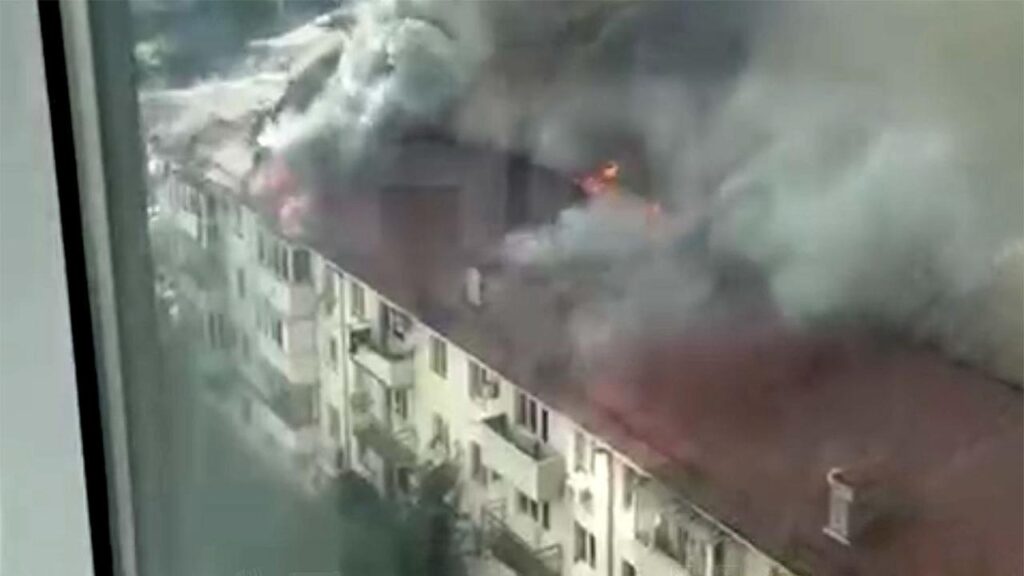
The Crocus City Hall attack occurred on March 22, 2024, when armed assailants stormed the concert venue during a performance and set fire to parts of the building. The attack killed 146 people and injured hundreds more, making it one of the deadliest terrorist incidents in modern Russian history.

In addition to the terrorism charges, a parallel case was opened in March under Article 238 of Russia’s Criminal Code, which covers the provision of services that fail to meet safety standards when such violations result in deaths. Investigators concluded that the fire suppression system did not activate, allowing the blaze to spread rapidly. The use of highly flammable construction materials during renovation further intensified the disaster. According to Trunov, at least 45 people died directly from extreme heat and toxic smoke inhalation, deaths that might have been prevented had safety systems functioned properly.

The Agalarov family, long prominent in Russia’s business and entertainment spheres, has also faced scrutiny in Central Asia. In Uzbekistan, Araz Agalarov’s plans to develop the Sea Breeze Charvak resort complex near Tashkent sparked intense public backlash earlier this year. Environmental activists raised concerns about the potential destabilization of fragile clay soil along the Charvak reservoir and broader ecological risks. Despite widespread opposition, the Uzbek government approved the project, fueling national debates on transparency, environmental governance, and the role of foreign developers in the tourism sector.

RBC reported that it had requested comment from representatives of the Agalarovs regarding the asset seizure petition, but no official response has been issued.

For the victims’ legal teams, the central question is whether accountability for the Crocus City Hall massacre will be confined to the attackers themselves or extended to those responsible for ensuring the safety of one of Russia’s most prominent cultural venues.

Uzbekistan Launches $20 Million School Climate Resilience Project with Restituted Funds

Uzbekistan has launched a $20 million initiative to enhance climate resilience and improve water, sanitation, and hygiene (WASH) infrastructure in schools, marking the first major investment of restituted assets recovered from abroad.

The project, titled “Modelling Climate Resilience and WASH in Schools,” officially begins on October 1. It is part of a broader commitment made in April by the Ishonch Fund Management Committee, which outlined how recovered assets from Switzerland would be used to fund education and community development initiatives. The commitment was reaffirmed during the Namangan Poverty Reduction Forum in September.

Background: The Ishonch Fund

The Ishonch Fund was established under a restitution agreement between Uzbekistan and Switzerland, in accordance with the UN Convention Against Corruption (UNCAC). In February, Uzbek Minister of Justice Akbar Tashkulov and Swiss Ambassador Konstantin Obolensky signed an agreement in Tashkent for the return of $182 million in confiscated assets linked to Gulnara Karimova, daughter of former president Islam Karimov. These funds, seized in Switzerland, are being transferred via the UN Uzbekistan Vision 2030 Multi-Partner Trust Fund.

Project Scope and Impact

The $20 million project targets 45 rural schools across Uzbekistan. Planned upgrades include access to clean water, modern sanitation, improved heating systems, and renewable energy technologies. Officials say these improvements will reduce energy consumption by 30% and cut greenhouse gas emissions by 50%.

The initiative will directly benefit more than 31,500 students, particularly adolescent girls, who will have access to gender-sensitive facilities. Additionally, 2,700 teachers and administrators will be trained in climate resilience, WASH practices, and community engagement.

International Support and Oversight

Obolensky called the initiative a landmark achievement in the restitution process. “Switzerland is proud to see restitution resources being transformed into visible, corruption-resistant investments that directly benefit the Uzbek people,” he said. “With this project, we are ensuring that 31,500 children will learn in healthier, safer, and more dignified environments, a true symbol of restitution serving development.”

At the Namangan forum, Obolensky emphasized that the school modernization project reflects Switzerland’s long-term commitment to ensuring that returned assets support public interests.

Governance and Accountability

Uzbekistan’s Deputy Minister of Economy and Finance, Ilkhom Norkulov, underscored the project’s alignment with the national reform agenda. “By investing in climate-resilient schools and introducing new governance tools, we are building both infrastructure and accountability for generations to come,” he said.

UN Resident Coordinator Sabine Machl added, “By combining clean water, modern sanitation, and climate resilience with transparency and community oversight, we are not only investing in schools but also in trust, equity, and the future of every child.”

To ensure transparency, the initiative will be tracked via My Better School, a digital platform that allows communities to monitor budgets, contractors, and timelines in real time. A pilot Integrity Pact will also be used to safeguard procurement processes.

Officials say this model of restitution-financed development could guide future national school modernization efforts, while helping align Uzbekistan’s education system with international standards for climate adaptation and gender equality.

Uzbek Singer Concert Raided in Krasnoyarsk by Russian Guard

A concert by Uzbek singer Jaloliddin Ahmadaliyev in Russia’s Krasnoyarsk region was abruptly interrupted when officers from the Russian National Guard (Rosgvardiya) raided the venue with sniffer dogs and began conducting mass document checks.

According to Russian state media RIA Novosti, the raid took place on September 22 at the Korona banquet hall in the Yemelyanovo district. Authorities said the operation was aimed at identifying foreign nationals in violation of migration laws and individuals potentially linked to drug trafficking. More than 600 people attended the event, and officers reportedly checked the documents of 620 individuals, including 210 foreign citizens. Witnesses said some attendees were forcibly removed from the venue, but no illegal substances or contraband were discovered during the sweep.

Uzbekistan’s Ministry of Foreign Affairs confirmed the incident, stating that eight Uzbek nationals were found to be in violation of Russian migration regulations. Four were fined and ordered to be deported, while the remaining four were placed in a temporary detention facility for foreign citizens in Krasnoyarsk. The ministry stated that law enforcement actions must have a legal basis and should not disrupt cultural events.

The Consulate General of Uzbekistan in Novosibirsk is providing legal assistance to the detained individuals. In a statement published via its official Telegram channel, the consulate clarified that the concert had not been coordinated with local authorities. In contrast, a previous Ahmadaliyev performance in Novosibirsk was formally approved and took place without incident.

The consulate noted that the event in Krasnoyarsk was privately organized by Russian citizens in a venue not designed for large-scale cultural gatherings. While acknowledging that Russian authorities have the right to enforce migration regulations, the consulate urged that such operations not interfere with cultural events. It added that all required documentation has been submitted to local law enforcement in Krasnoyarsk for a legal review of the incident.

Korean Firm to Reduce Emissions from Bishkek Heating Plant

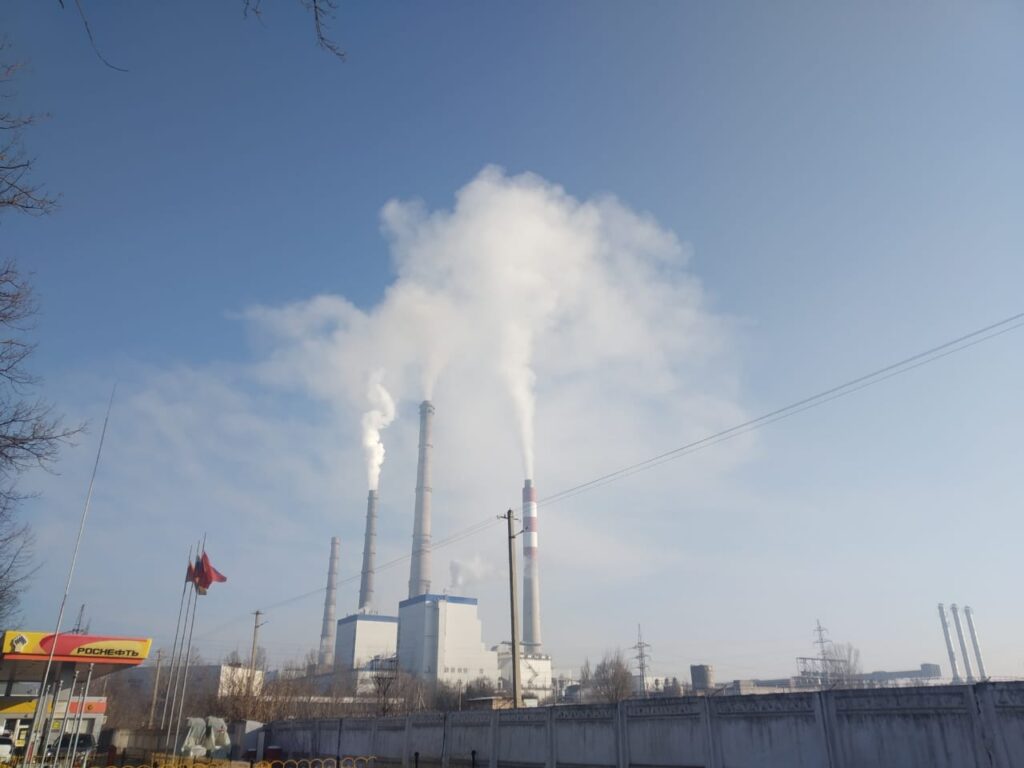
On September 24, the Bishkek city administration and South Korea’s EcoMotion signed a memorandum of understanding aimed at cutting air pollution in the Kyrgyz capital. The agreement focuses on the introduction of advanced High Voltage Power Supply (HVPS) air purification technologies at the Bishkek Thermal Power Plant (TPP).

The initiative begins with a preliminary feasibility study for installing high-voltage electrostatic precipitators, devices that use a strong electrostatic field to capture particulate matter such as dust and smoke from gas emissions. The technology is designed to reduce harmful pollutants produced by the thermal plant, which relies primarily on coal to generate electricity and heat for the city.

The project forms part of the Bishkek City Development Program, which prioritizes clean air and improved environmental conditions. As previously reported by The Times of Central Asia, emissions from the Bishkek TPP account for approximately 15% of the city’s air pollution.

The Bishkek thermal plant generates 13% of Kyrgyzstan’s electricity, the majority of which is otherwise supplied by hydropower, and provides heat and hot water to nearly two-thirds of the capital’s population.

Air quality remains a serious concern in Bishkek, a city of over one million residents. Pollution levels spike during winter months, when widespread coal burning for residential heating significantly increases emissions. Bishkek frequently ranks among the top 10 most polluted cities worldwide, according to IQAir’s global air quality index.

Kazakhstan’s Aging Population: Analysts Warn of Healthcare and Economic Risks

Kazakhstan is undergoing a rapid demographic shift as its population ages at an unprecedented pace. According to a recent study by Ranking.kz, the number of citizens aged 60 and above is growing by 3-4% annually.

As of early 2025, Kazakhstan had 2.8 million residents over the age of 60, an increase of 3.7% compared to the previous year. Seniors now make up 13.9% of the population, up from 12% in 2020 and 9.8% in 2010. The average annual growth rate for this age group has remained steady at around 3.8% since 2010.

The gender disparity is notable: 16.4% of women in Kazakhstan are over 60, compared to just 11.3% of men.

This demographic shift is largely driven by increasing life expectancy. In 2024, life expectancy in Kazakhstan reached 75.44 years, up from 75.1 the previous year. Women live an average of 79.42 years, while men live 71.33. The only recent decline in life expectancy occurred during the COVID-19 pandemic.

The trend mirrors global developments. According to data from the IMF, UN, and WHO, global life expectancy has more than doubled over the past century from just 34 years in 1913 to 72 years by 2022 and continues to rise, even as fertility rates fall.

When the UN and WHO were founded, children under 15 outnumbered people over 65 by seven to one. By 2050, the two groups are projected to be equal. The proportion of people aged 80 and older is expected to nearly quadruple, reaching 5% of the global population.

“These shifts foreshadow a vast array of problems in healthcare, as well as in the social and economic spheres,” IMF analysts caution.

Experts warn that aging will reshape Kazakhstan’s labor market, change consumption patterns, and place mounting pressure on the pension system. Like many other countries, Kazakhstan faces the challenge of balancing support for its growing elderly population with the need to sustain long-term economic development.

Caspian Pipeline Attack After Zelenskyy-Tokayev Meeting Puts Kazakhstan in Delicate Position

A recent drone strike on the Caspian Pipeline Consortium (CPC) office in Novorossiysk has raised concerns in Kazakhstan, whose oil exports rely heavily on the pipeline route. The attack, which killed two people and damaged nearby infrastructure, occurred just one day after Kazakh President Kassym-Jomart Tokayev met with Ukrainian President Volodymyr Zelenskyy in New York. While there is no official indication that the CPC was a deliberate target, the incident has prompted debate over the implications for Kazakhstan’s economic security and diplomatic neutrality amid the ongoing war.

According to CPC, the attack struck its administrative office in central Novorossiysk during the workday. The building sustained damage in addition to nearby residential blocks and a hotel. Two CPC employees were wounded and evacuated; the office’s operations were suspended. The consortium also said others in the building, not employed by CPC, suffered serious injuries. 

Authorities in the Krasnodar region confirmed two deaths and seven injuries from the strike, declaring a state of emergency in the city.  Russian media reported extensive damage to residential buildings and a hotel near the CPC office. 

In response, Kazakhstan’s Ministry of Energy issued a statement assuring that pipeline operations would continue as normal. The ministry said oil intake from Kazakh shippers remains unaffected, and the transportation and loading of oil via the CPC marine terminal is proceeding without restrictions. The ministry added that it is coordinating with CPC shareholders and monitoring developments in real time. 

Notably, the attack followed just 12 hours after Tokayev’s meeting with Zelenskyy in New York. According to the Kazakh presidential press service, Zelenskyy expressed his view of the war’s trajectory while Tokayev emphasized the importance of sustained diplomacy. Ukraine’s version, via its presidential press service, was more expansive: Zelenskyy thanked Tokayev for support on sovereignty, insisted on a leaders’ summit, and said Kazakhstan’s mediation role was welcome. In a later interview, Zelenskyy even floated the possibility of meeting Russian President Vladimir Putin on neutral territory such as Kazakhstan. 

When asked about that proposal after the Novorossiysk attack, Tokayev stated firmly that Kazakhstan does not see itself as a mediator in the Russia-Ukraine conflict. He reiterated that both sides should engage directly, while supporting continued talks. “Talks must continue,” he said. 

Kazakh political analyst Daniyar Ashimbayev noted that Tokayev’s extended commentary suggested he may feel less enthusiastic about a repeat meeting with Zelenskyy. Oil expert Olzhas Baidildinov stated that around 80 percent of Kazakhstan’s oil exports transit via the CPC; he therefore warned the strike directly threatens Astana’s interests. 

Baidildinov also suggested that Kazakhstan may need to consider a range of policy responses to ensure the security of its oil export routes, including enhanced monitoring of trade and transit channels. He noted that international companies operating in Kazakhstan, particularly those using the CPC pipeline, could be indirectly affected by any future disruptions.

Kazakhstan’s Foreign Ministry has not issued a public statement on the incident. Meanwhile, diplomatic engagement continues at various levels. During his visit to New York, Tokayev also met with Chevron CEO Michael Wirth. Chevron is among the largest foreign investors in Kazakhstan’s energy sector and exports a significant volume of oil via CPC.

Analysis and Risks

The strike on Novorossiysk has heightened concerns about the vulnerability of key energy infrastructure used by Kazakhstan, particularly the Caspian Pipeline Consortium (CPC), which carries about 80% of the country’s oil exports. While there is no official indication that the CPC office was an intended target, any disruption to the route could have economic repercussions for Kazakhstan and its international partners.

Observers note the challenge Kazakhstan faces in maintaining its policy of balanced neutrality amid the ongoing war. The proximity of the attack to a high-level diplomatic meeting between Tokayev and Zelenskyy has drawn attention, though Kazakh officials have remained cautious in their public statements.