• KGS/USD = 0.01143 -0%
  • KZT/USD = 0.00192 -0%
  • TJS/USD = 0.10820 0.19%
  • UZS/USD = 0.00008 0%
  • TMT/USD = 0.28575 0%
  • KGS/USD = 0.01143 -0%
  • KZT/USD = 0.00192 -0%
  • TJS/USD = 0.10820 0.19%
  • UZS/USD = 0.00008 0%
  • TMT/USD = 0.28575 0%
  • KGS/USD = 0.01143 -0%
  • KZT/USD = 0.00192 -0%
  • TJS/USD = 0.10820 0.19%
  • UZS/USD = 0.00008 0%
  • TMT/USD = 0.28575 0%
  • KGS/USD = 0.01143 -0%
  • KZT/USD = 0.00192 -0%
  • TJS/USD = 0.10820 0.19%
  • UZS/USD = 0.00008 0%
  • TMT/USD = 0.28575 0%
  • KGS/USD = 0.01143 -0%
  • KZT/USD = 0.00192 -0%
  • TJS/USD = 0.10820 0.19%
  • UZS/USD = 0.00008 0%
  • TMT/USD = 0.28575 0%
  • KGS/USD = 0.01143 -0%
  • KZT/USD = 0.00192 -0%
  • TJS/USD = 0.10820 0.19%
  • UZS/USD = 0.00008 0%
  • TMT/USD = 0.28575 0%
  • KGS/USD = 0.01143 -0%
  • KZT/USD = 0.00192 -0%
  • TJS/USD = 0.10820 0.19%
  • UZS/USD = 0.00008 0%
  • TMT/USD = 0.28575 0%
  • KGS/USD = 0.01143 -0%
  • KZT/USD = 0.00192 -0%
  • TJS/USD = 0.10820 0.19%
  • UZS/USD = 0.00008 0%
  • TMT/USD = 0.28575 0%
13 December 2025

Uzbekistan Plans Full Launch of Large Nuclear Power Plant by 2035

Uzbekistan plans to fully launch a high-capacity nuclear power plant by 2035, according to Azim Akhmedkhadjaev, director of the “Uzatom” agency. Speaking on September 25 at World Atomic Week in Moscow, Akhmedkhadjaev said the first small modular reactor is expected to begin operations in 2029 in the Jizzakh region, followed by a second unit six months later. The large-scale plant will see its first reactor come online in 2033, with full capacity expected by 2035. He noted, however, that final timelines depend on the conclusion of outstanding contract agreements.

Akhmedkhadjaev confirmed that production of reactor equipment is already underway and that the project is proceeding on schedule. Responding to a question from a Spot correspondent, he reiterated the target dates for the larger reactors and emphasized that the timeline will be refined once contracts are finalized.

The announcement aligns with Uzbekistan’s broader nuclear energy strategy. As previously reported by The Times of Central Asia, the country plans to build both small modular and larger reactors at a single integrated nuclear facility. Under a revised agreement with Russia, Uzbekistan intends to construct two large VVER-1000 reactors alongside two smaller RITM-200N units. The initial framework for the project was established in 2018 and updated in 2024.

Earlier this year, The Times of Central Asia reported that Rosatom had begun manufacturing reactor components for the smaller units, with the first steel castings for the RITM-200N already produced in Saint Petersburg.

Uzbekistan’s pivot to nuclear energy is part of its strategy to meet rapidly increasing electricity demand, which is projected to reach 135 billion kWh by 2035, nearly double current consumption levels. To address this, the government is expanding generation capacity and modernizing the national grid.

While the plans are ambitious, challenges remain. As Akhmedkhadjaev acknowledged, the full implementation timeline depends heavily on contract finalization. Nevertheless, Uzbekistan’s dual-track approach, combining scalable small reactors with large base-load units, suggests a strategic commitment to energy security and diversification.

Kazakh Tulips to Bloom in Paris

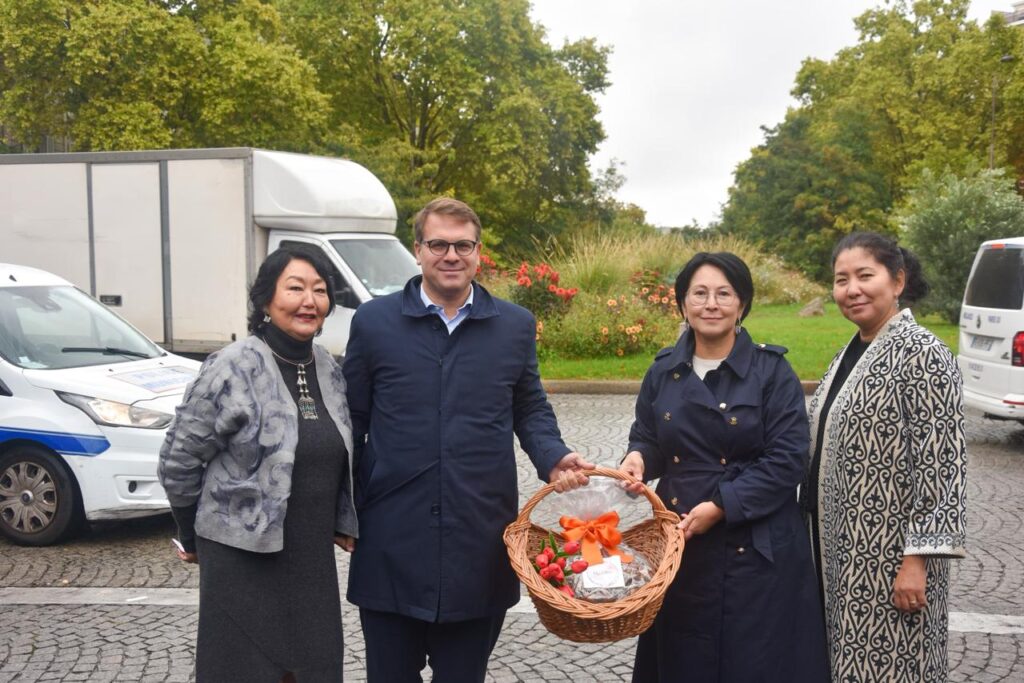
Bulbs of native Kazakh tulips from the steppes near Shymkent have made their way to Paris as part of a broader program of botanical cooperation between Kazakhstan and France. These tulips, originally native to the territory of modern-day Kazakhstan, have long been admired in Europe, especially since the “tulip mania” of the 17th century. Today, Paris officials are eager to add these new specimens from the Kazakh steppe to the city’s botanical heritage.

The initiative was spearheaded by the Association of Kazakh Women in France, “QazElles,” with support from the Embassy of Kazakhstan in France and in close collaboration with the mayor’s office of Paris’s 17th arrondissement. A flower bed dedicated to Kazakh tulips will be established on Place de Wagram, with Shymkent’s city administration selecting and donating the finest local varieties for the project.

@Aliya Syzdykova

The symbolic planting ceremony was attended by Kazakhstan’s Ambassador to France, Gulsara Arystankulova; the mayor of the 17th arrondissement, Geoffroy Boulard; and QazElles president Madina Kulmanova.

“I have good impressions from participating in the symbolic planting of Kazakh tulips in our district, where 160,000 people live. This is a sign of friendship with Kazakhstan. In addition, tulips are an environmentally sustainable plant, which is important to us. Together with the mayor of Shymkent, we are pleased to participate at our level in strengthening ties between France and Kazakhstan,” said Mayor Boulard.

@Aliya Syzdykova

The ceremonial handover of the tulip bulbs was conducted in the presence of Paris’s landscaping services, which will be responsible for planting and maintaining the flower bed. A total of 300 tulips are scheduled to bloom on the square by April next year.

“And now there will be a little piece of Kazakhstan in this place, and we will admire it every spring. This is a great joy for us Kazakhs living here, but our tulips will also make one of the most beautiful cities in the world, Paris, even more beautiful,” said Meruert Tazhenova, a QazElles member and one of the event’s organizers.

Tajikistan Debates Social Media Ban for Children Under 14

A controversial proposal in Tajikistan to ban social media use for children under the age of 14 has sparked public and expert debate. While many agree that the issue requires urgent attention, critics argue that education, digital literacy, and parental involvement offer more effective solutions than blanket prohibitions.

Parliamentary Push for Stricter Controls

The initiative was introduced by lawmaker Dilnoza Ahmadzoda in an article in Narodnaya Gazeta. She proposed banning access to social media for children under 14 and requiring written parental consent for adolescents aged 14 to 17.

Ahmadzoda pointed out that amendments to the Law on the Protection of Children’s Rights were already passed earlier this year, targeting false and harmful content. However, she contends that these changes do not go far enough.

“It is necessary to introduce further changes to ensure that children’s and teenagers’ use of social media is under control,” Ahmadzoda said.

Expert Concerns: “A Ban Is Not the Solution”

Experts caution that an outright ban may do more harm than good. Media literacy specialist Rustam Gulov warned that prohibitions often increase curiosity and drive youth online behavior underground.

“A ban is not the solution. If you forbid it, interest will only grow, and young people will find ways to hide their activity. Such measures push them backward in terms of technological development. Control is more effective,” Gulov said.

He noted that while platforms already impose age restrictions, children frequently bypass them using false birthdates or by accessing accounts through their parents’ devices. Gulov recommended closer collaboration with companies such as Meta to establish more effective content controls.

He also advocated for the inclusion of media literacy education in school programs.

“Children should learn from an early age how to use the internet and social networks responsibly and how to distinguish false or harmful information,” he said.

Another major concern, according to Gulov, is the lack of quality digital content in literary Tajik. As a result, many young users switch to Russian-language platforms.

“Social networks can serve as an educational tool, if there is enough quality content in Tajik,” he added.

Public Opinion in Dushanbe

Reactions among residents of the capital are mixed. Some favor tight restrictions, while others emphasize the potential benefits of social media in education and personal development.

Psychologist Nigina Mamadjonova opposes a complete ban but underscores the importance of parental responsibility.

“This is primarily the responsibility of parents. Unfortunately, most of them do not take it seriously,” she said.

Mamadjonova criticized the widespread practice of giving smartphones to children “for quick peace and quiet” without supervising their activity. She warned that this leaves children vulnerable to cyberbullying, manipulation, and online predators.

She also argued that preschoolers should not use phones at all, as screen time isolates them from physical activity and social interaction. For older children, she supports promoting digital literacy and steering them toward constructive online content.

Mixed Results Abroad

Other countries have implemented similar restrictions with varying degrees of success. In Australia, minors under 16 are prohibited from using platforms such as Instagram, YouTube, and TikTok, with strict penalties for violations. France has explored comparable legislation.

Nepal, however, provides a cautionary tale. A government-imposed ban on social media sparked widespread unrest, particularly among young people. The resulting protests led to 19 deaths, over 100 injuries, and the eventual collapse of the government responsible for the measure.

Almaty Named as the Most Expensive City in Central Asia

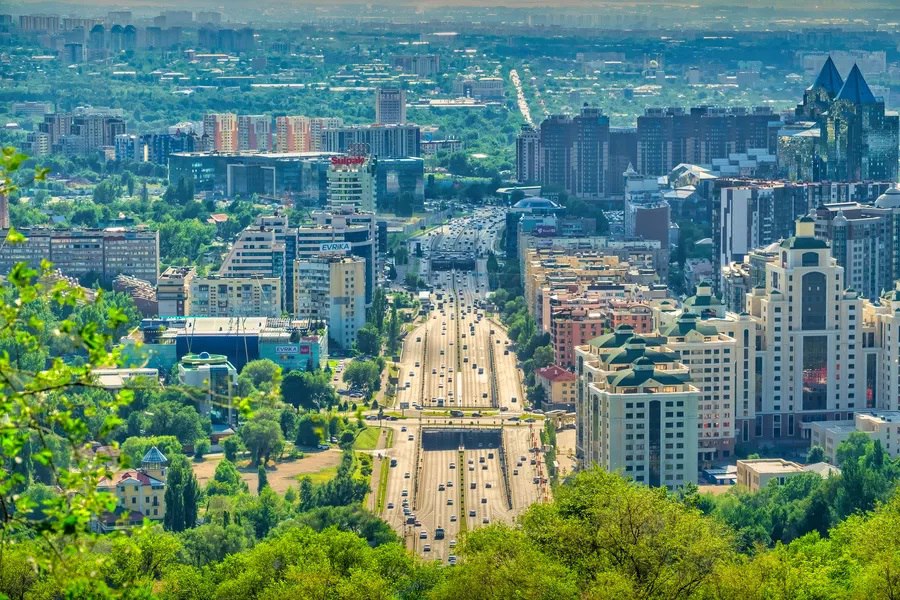
Analysts at Finprom.kz, citing the latest Numbeo report on global cost-of-living data, have identified Almaty as the most expensive city in Central Asia.

Global Leaders and Regional Rankings

Numbeo’s index is based on user-submitted data on the cost of food, transportation, utilities, and housing, benchmarked against New York City, which is assigned a baseline score of 100 (excluding rent). Scores above 100 indicate higher living costs than New York.

Swiss cities once again dominated the top of the list. Zurich (112.5), Geneva (111.4), Basel (110.7), Lausanne (110.5), Lugano (108.4), and Bern (103.4) all surpassed New York, which came in seventh. Rounding out the global top ten were Reykjavik (96.2), Honolulu (94.4), and San Francisco (90.7).

Almaty ranked 346th globally, with a score of 29.4, while Kazakhstan’s capital, Astana, placed 366th at 26.5. Astana’s cost of living aligns closely with Bishkek (26.8) and Tashkent (26.2).

While the cost-of-living index measures expenses, Numbeo’s Purchasing Power Index reflects how well local wages cover those costs.

Astana rose to 59.4 (up from 45.3 in 2020), and Almaty reached 55.9 (up from 36.3). Both cities now surpass their regional peers: Tashkent (49.3) and Bishkek (40.4).

While Kazakhstan remains significantly more affordable than many developed countries, a factor that may appeal to tourists, the lower cost indexes also reflect modest local income levels. Nonetheless, the improved purchasing power in Astana and Almaty signals a positive economic trend, positioning them ahead of neighboring capitals.

Climbing the Value Chain: Uzbekistan’s Textile Transformation Through Chinese Investment

As relations between China and Uzbekistan deepen, cooperation is no longer confined to the traditional pillars of energy and infrastructure. The partnership has begun to branch into new and diverse areas, adding layers of complexity and opportunity to their bilateral ties.

Emerging sectors such as pharmaceuticals and waste-to-energy are gaining traction, signaling a shift toward a more multidimensional relationship. At the same time, the textile industry has become an increasingly important bridge between the two countries, offering fresh avenues for collaboration.

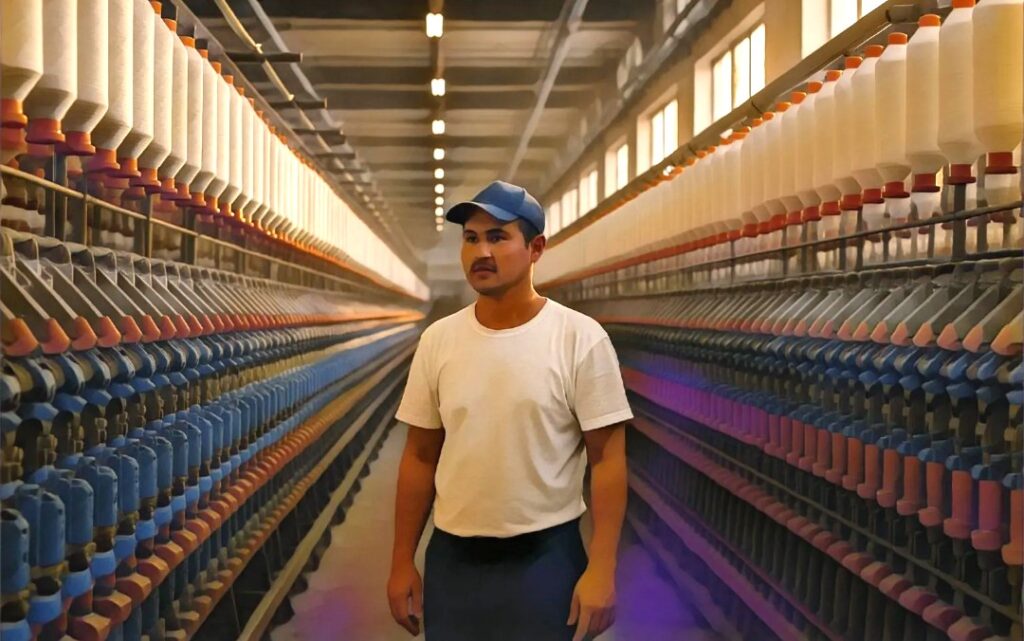
Recent agreements highlight this momentum. In the upstream segment of Uzbekistan’s textile sector, China Hi-Tech Holding has committed to a major investment in synthetic fiber and viscose yarn production. This move is particularly significant for Uzbekistan, as it reduces reliance on cotton and secures inputs essential for modern mixed-fabric production.

Midstream, cooperation is expanding as well. An agreement between Uzbekistan and China’s Fong Group to develop dyeing and finishing facilities for mixed fabrics underscores the practical steps being taken to create a more integrated textile supply chain. These developments also reflect a broader trend of growing Chinese interest in Uzbekistan’s domestic market and its strategic location at the crossroads of the Middle East and Europe.

With its young population and export potential, Uzbekistan is increasingly attractive to Chinese textile companies. The Red Dragonfly Group’s plan to establish a manufacturing base in Uzbekistan by 2026 is a clear example of how Chinese firms see the country not only as a production hub but as a gateway to wider regional markets.

One of the main reasons Uzbekistan is emerging as a crucial destination for Chinese companies is the shifting incentive structure that encourages the relocation of manufacturing capacity abroad. Rising labor costs in China, particularly in the labor-intensive textile sector, are placing companies under pressure amid fierce domestic competition.

In contrast, Uzbekistan offers an appealing alternative where the average monthly wage for a skilled worker is around 200400 dollars, and energy costs are just 0.04 dollars per kilowatt-hour. Together, these factors significantly lower production costs and make the country highly attractive for firms seeking to maintain competitiveness.

Equally important are Uzbekistan’s proactive regulatory policies, which create a favorable business climate for foreign investors. The government has relied heavily on Special Economic Zones and Small Industrial Zones and offers tiered incentive packages that reward higher commitments. Investors contributing between 3 and 5 million dollars receive three years of income tax holidays, while investments of 5 to 15 million dollars are rewarded with a five-year exemption. Those exceeding 15 million dollars benefit from an unprecedented ten-year tax holiday.

Moreover, starting in September 2025, the social tax rate for textile companies and clusters will be cut to 1% for three years. At the same time, imports of blended fabrics and raw materials for the leather and sericulture industries will be exempt from customs duties. These measures provide Chinese companies with tangible cost advantages that rival opportunities in Southeast Asia.

Another powerful driver is geopolitics. Growing trade tensions between China and the West, particularly the threat of new EU and U.S. tariffs, are prompting Chinese manufacturers to diversify their production networks. In this context, Uzbekistan holds a distinct advantage thanks to its status under the EU’s Generalized Scheme of Preferences Plus. This framework allows around 66% of Uzbek exports to enter European markets duty-free.

For Chinese companies, the incentive is clear. By combining their capital, technology, and management expertise with Uzbek-based production, they can rebrand outputs as being of Uzbek origin. This provides a critical tariff arbitrage opportunity and enables Chinese firms to bypass restrictions that apply to goods exported directly from China.

The growing interest of Chinese textile companies in Uzbekistan also aligns with the state’s own objectives and generates tangible benefits. This cooperation is consistent with the Uzbekistan 2030 Strategy, which prioritizes moving away from raw cotton and yarn exports toward value-added textile production and aims to double textile exports to $7 billion by 2030.

In this regard, investments in synthetic fiber and viscose yarn production will help Uzbekistan climb up the value chain. Moreover, the expanding presence of Chinese companies can open new export opportunities to the Middle East and the EU, while also creating access to the vast Chinese market, thus contributing to long-term export diversification.

However, alongside these benefits, the growing role of Chinese firms also carries risks for Uzbekistan. While Chinese companies are willing to relocate labor-intensive segments of the textile industry, they are far less inclined to transfer technology-driven processes. In this context, Beijing is expected to relocate partial manufacturing to Uzbekistan, while retaining critical intermediate production technologies in order to safeguard its own competitiveness.

As a result, Chinese investment is likely to help Uzbekistan build basic and mid-level capacities (yarns, fabrics, dyeing, some leather finishing, and selected final goods), but the cutting-edge, high-value-added segments – such as advanced fabrics, sustainable innovations, and branded products – will remain concentrated in China.

While this dynamic can support Uzbekistan’s transition from a raw material exporter to a more diversified producer, it also risks locking the country into the role of a basic and mid-level producer. Furthermore, this model could deepen Uzbekistan’s dependence on China, as further integration into the value chain will increase Tashkent’s need to import critical intermediates and technologies from its Chinese partners.

In this regard, Uzbekistan’s deepening textile partnership with China is a double-edged sword. On one hand, it offers capital, markets, and the chance to climb the value chain beyond raw cotton exports. On the other hand, it risks cementing Uzbekistan’s role as a mid-tier producer dependent on Chinese technology and intermediates.

The challenge for Tashkent will be to welcome Chinese investment while pushing for greater technology transfer and local capacity-building. How Uzbekistan manages this balance will determine whether today’s influx of Chinese textile firms becomes a stepping stone toward genuine industrial upgrading or another cycle of dependency dressed in new clothes.

After New York, a Shake-Up in Astana: Tokayev Resets His Foreign Policy Team

At the end of last week, the most talked-about news in Kazakhstan was the latest reshuffle in the upper echelons of government. Just one day after returning from New York, where he participated in the UN General Assembly, President Kassym-Jomart Tokayev began issuing personnel decrees resulting in the dismissals and appointments of high-level foreign and trade policy officials.

Murat Nurtleu left his position of Deputy Prime Minister and Minister of Foreign Affairs and was reassigned as Assistant to the President for International Investment and Trade Cooperation. Nurtleu navigated a turbulent regional environment marked by the Russia–Ukraine war, which destabilized trade routes and supply chains, and emphasized building broader alliances with China while balancing ties with Russia, the U.S., and other partners. In his new post, the president has tasked Nurtleu with advancing Kazakhstan’s foreign investment and trade cooperation, refocusing his mandate squarely on securing economic gains from diplomacy.

Yermek Kosherbayev was appointed as the incoming Foreign Minister. He was most recently Deputy Prime Minister and is a career diplomat and administrator, having also held senior posts in the Foreign Affairs and Agriculture ministries. President Tokayev has tasked him with reinforcing a balanced foreign policy, expanding economic diplomacy, deepening multilateral engagement, and strengthening the protection of citizens abroad.

The former Assistant to the President for International Affairs, Yerzhan Kazykhan, was reappointed as Kazakhstan’s Permanent Representative to the UN in Geneva. A seasoned diplomat and ex–foreign minister, Kazykhan coordinated Tokayev’s international outreach with the U.S., EU, and OSCE. His posting to Geneva – where debates on human rights, trade, and security are shaped – signals Astana’s trust in a heavyweight envoy. He succeeds Yerlan Alimbayev, who has been in the post since 2022.

Yerzhan Ashikbayev was recalled as Ambassador to the United States after more than four years in Washington. His tenure was defined by efforts to deepen political and economic ties, including advancing the U.S.–Kazakhstan Enhanced Strategic Partnership Dialogue, supporting the first C5+1 leaders’ summit and Critical Minerals Dialogue, and expanding cooperation through the U.S.–Kazakhstan Strategic Energy Dialogue.

Beyond the personnel changes themselves, observers quickly began parsing what the reshuffle reveals about Tokayev’s foreign policy priorities. As is customary in Kazakhstan, no official comments were offered on the reshuffle in Akorda. Nevertheless, speculation quickly spread across social media, with journalists and bloggers debating the implications throughout the weekend.

Political scientist Gaziz Abishev framed Murat Nurtleu’s reassignment as shifting him from foreign policy towards the execution of the investment–trade agenda. Abishev noted that the “additional responsibilities for working with the investment bloc… which Nurtleu held as deputy prime minister, will go with him to the Presidential Administration,” narrowing his focus to delivery rather than strategy. This interpretation was later reinforced in more formal terms by the Presidential Administration’s spokesman, who explained that in his new post, Nurtleu “will develop contacts with representatives of foreign states at the highest level, as well as heads of major foreign companies, in order to accelerate the promotion of international investment and trade cooperation.”

Analyst Andrei Chebotarev suggested that Ashikbayev’s removal as U.S. ambassador likely reflected a need to “reset relations with Washington.” He pointed to Uzbekistan’s recent success in securing both a major deal and an in-person meeting between President Shavkat Mirziyoyev and Donald Trump as a possible spur for Tokayev. By contrast, speculation in Kazakhstan held that Tokayev had managed only a phone call with the U.S. president.

Economic matters also drew attention, particularly Kazakhstan’s $4.2 billion locomotive agreement with U.S. firm Wabtec. Framed as a long-term package of new locomotives and maintenance services, the deal was nonetheless criticized for unclear profitability, with Wabtec itself acknowledging risks that could affect costs and returns.

Late on Monday evening, however, Tokayev’s press secretary Ruslan Zheldibay dismissed speculation, describing the reshuffle as routine. “This is a normal personnel rotation. The goal is to enhance the effectiveness of work in the most important areas of government activity,” he wrote on Telegram. Zheldibay also published photos of a “standing meeting” between Trump and Tokayev on the sidelines of the UN General Assembly in New York, countering earlier reports that contact was limited to a phone call.

Image: Ruslan Zheldibay

Historically, Tokayev has used major senior personnel changes as a tool to recalibrate policy when he judged the moment to be pressing. In September 2023, Tokayev responded to water shortages, transport bottlenecks, and failures in culture and sports by creating a Ministry of Water Resources and Irrigation, re-establishing the Transport Ministry, and reorganizing the Culture and Sports portfolios with new leadership. In February 2024, amid persistent inflation and stalled infrastructure improvements, he dismissed the entire cabinet and appointed a new government.

The latest moves differ, however, in that they target foreign policy rather than domestic governance, and come amid visible efforts to align more closely with Washington. It is also noteworthy that the foreign policy reshuffle follows other signals from Astana that it is seeking alignment with the U.S. administration. Earlier this month, Tokayev wrote to Trump to address bilateral trade frictions, offering to engage in “constructive dialogue” on issues such as U.S. tariffs on Kazakh exports. That outreach culminated in the earlier Wabtec deal, quickly framed in Washington as a victory for Trump’s “America First” policy and credited with creating 11,000 jobs in Pennsylvania – a decisive swing state.

Following an appearance by Trump at the UN General Assembly, which was marred by mishaps including a stalled escalator and technical malfunctions, Tokayev echoed Trump’s sharp criticism of the United Nations. Taken together, these moves amount to a coordinated push to strengthen ties with the United States and secure traction with the Trump administration.

Like Trump, Tokayev has shown little hesitation in dismissing officials when he sees fit. The reshuffle underscores his determination to pivot toward economic diplomacy and closer engagement with Washington. With its vast natural resources, expanding business opportunities for foreign investors, and sheer GDP weight, Kazakhstan stands out in Central Asia. The open question is whether these moves will translate into Kazakhstan becoming a true priority for U.S. policymakers, or simply leave it competing for attention in an increasingly crowded diplomatic field.