• KGS/USD = 0.01144 0%
  • KZT/USD = 0.00214 0%
  • TJS/USD = 0.10508 0.48%
  • UZS/USD = 0.00008 0%
  • TMT/USD = 0.28571 0%
  • KGS/USD = 0.01144 0%
  • KZT/USD = 0.00214 0%
  • TJS/USD = 0.10508 0.48%
  • UZS/USD = 0.00008 0%
  • TMT/USD = 0.28571 0%
  • KGS/USD = 0.01144 0%
  • KZT/USD = 0.00214 0%
  • TJS/USD = 0.10508 0.48%
  • UZS/USD = 0.00008 0%
  • TMT/USD = 0.28571 0%
  • KGS/USD = 0.01144 0%
  • KZT/USD = 0.00214 0%
  • TJS/USD = 0.10508 0.48%
  • UZS/USD = 0.00008 0%
  • TMT/USD = 0.28571 0%
  • KGS/USD = 0.01144 0%
  • KZT/USD = 0.00214 0%
  • TJS/USD = 0.10508 0.48%
  • UZS/USD = 0.00008 0%
  • TMT/USD = 0.28571 0%
  • KGS/USD = 0.01144 0%
  • KZT/USD = 0.00214 0%
  • TJS/USD = 0.10508 0.48%
  • UZS/USD = 0.00008 0%
  • TMT/USD = 0.28571 0%
  • KGS/USD = 0.01144 0%
  • KZT/USD = 0.00214 0%
  • TJS/USD = 0.10508 0.48%
  • UZS/USD = 0.00008 0%
  • TMT/USD = 0.28571 0%
  • KGS/USD = 0.01144 0%
  • KZT/USD = 0.00214 0%
  • TJS/USD = 0.10508 0.48%
  • UZS/USD = 0.00008 0%
  • TMT/USD = 0.28571 0%

Kazakhstan Aims to Eliminate Energy Deficit and Begin Electricity Exports by 2027

Kazakhstan is on track to eliminate its domestic electricity deficit within the next year and transition from import reliance to surplus. According to projections by the Ministry of Energy, the country will fully meet internal demand by the end of the first quarter of 2027, and by 2029, it expects to maintain a stable surplus in both electricity and regulating capacity, laying the groundwork for future exports.

Energy Minister Yerlan Akkenzhenov announced the plan during a meeting on the development of the electric power industry.

At the close of 2025, Kazakhstan’s electricity generation totaled 123.1 billion kWh, while consumption reached 124.6 billion kWh, resulting in a deficit of over 1 billion kWh. However, this shortfall was less than half the 2 billion kWh gap recorded at the end of 2024, which was offset by imports from Russia, Uzbekistan, and Kyrgyzstan.

Installed generation capacity increased over the year from 25.3 to 26.7 GW. While coal-fired power plants continue to dominate, accounting for 51.4% of output, the shares of gas (25.6%) and renewable energy (13.5%) are steadily growing.

The Energy Ministry credits market liberalization for helping stabilize the power system. Over the past two years, nearly $1.8 billion in investment, mainly for capital repairs and modernization, has flowed into the sector. As a result, the number of technological violations has dropped by 27%, and nine combined heat and power (CHP) plants have exited the so-called “red zone.”

Akkenzhenov noted that generating companies’ owners did not receive dividends, with all profits reinvested into asset renewal. This marks a strategic pivot from short-term profitability to long-term system reliability.

Looking ahead to 2035, Kazakhstan plans to add over 26 GW in new generating capacity, including nuclear power. Simultaneously, the government is prioritizing upgrades to existing coal-fired plants using clean coal technologies.

Key infrastructure projects include the 2,640 MW Ekibastuz GRES-3 station, a new 700 MW facility in Kurchatov, and CHP plants in Kokshetau, Semey, and Ust-Kamenogorsk. Contractors have been selected, and implementation is already underway.

Despite this progress, systemic risks remain. Prime Minister Olzhas Bektenov has strongly criticized delays in the execution of energy projects.

Nuclear power development has emerged as a distinct strategic priority. Kazakhstan plans to construct at least three nuclear power plants. Work on the first began last summer in partnership with Russia’s Rosatom, while two more are expected to be built with the involvement of the China National Nuclear Corporation (CNNC).

President Kassym-Jomart Tokayev has described the development of nuclear energy as correcting a “historical absurdity.” Kazakhstan, one of the world’s leading uranium producers and exporters, has yet to use this resource to support its own energy needs.


Tajikistan Accelerates Transition to Green Energy

Tajikistan has launched its largest solar energy initiative to date, marking a significant step in its transition to green energy. The project entails the construction of two photovoltaic power stations with a combined capacity of 500 MW, an unprecedented scale for the country’s energy sector.

An investment agreement formalizing the project was signed on 13 January 2026 between the government of Tajikistan and Ayon Energy.

The project will involve the development of two equally sized solar power plants:

  • 250 MW in Asht District
  • 250 MW in Jaihun District

These new facilities are expected to play a crucial role in mitigating seasonal electricity shortages. Tajikistan, which relies heavily on hydropower, frequently faces deficits during the winter months. The introduction of solar generation capacity will ease pressure on existing hydroelectric resources, improving the reliability of electricity supply for both households and businesses.

Ayon Energy has committed to completing the design, construction, and commissioning of the plants within 2026. The total investment is estimated at $250 million.

In addition to this approved project, Tajikistan is also evaluating a potential 400 MW solar power plant in partnership with the UAE’s state-owned company Masdar.

Kyrgyzstan’s Power Consumption Rises Amid Declining Water Levels at Toktogul Reservoir

Electricity consumption in Kyrgyzstan continues to rise. In 2025, the country consumed 19.3 billion kWh, an increase of 900 million kWh compared to the previous year. Of this total, 15.4 billion kWh was generated domestically, while 3.9 billion kWh was imported from Turkmenistan, Uzbekistan, Kazakhstan, and Russia, officials reported at a government meeting on 14 January.

Authorities also highlighted critically low water levels at the Toktogul Hydroelectric Power Plant, the country’s largest energy facility, which generates approximately 40% of its electricity. The Toktogul reservoir currently holds 9.102 billion cubic meters of water, a drop of 1.631 billion cubic meters compared to the same date in 2024.

The reservoir is approaching the critical or “dead” level of 5.5 billion cubic meters, below which the plant would be unable to generate electricity. Officials at the meeting warned that continued low inflows could force a reduction in power generation and stressed the importance of adhering strictly to electricity consumption limits.

Kyrgyzstan has long struggled with seasonal electricity shortages, particularly in winter, when many households rely on electric heating. Energy Minister Taalaibek Ibraev previously cautioned that the 2025–2026 winter season could be one of the most difficult in recent years due to the water shortfall at Toktogul.

To address the electricity deficit, Kyrgyzstan is pressing ahead with both the construction of new hydropower projects and the modernization of existing facilities.

In November 2025, the country completed a full modernization of Toktogul, located on the Naryn River. The upgrade increased the plant’s capacity from 1,200 MW to 1,440 MW.

Kyrgyzstan is also moving forward with the construction of the Kambarata-1 hydropower plant, a strategic regional project being developed in partnership with Kazakhstan and Uzbekistan. Once completed, Kambarata-1 is expected to have a capacity of 1,860 MW and produce 5.6 billion kWh annually.

Ashgabat to Host Regional Center for Combating Desertification in Central Asia

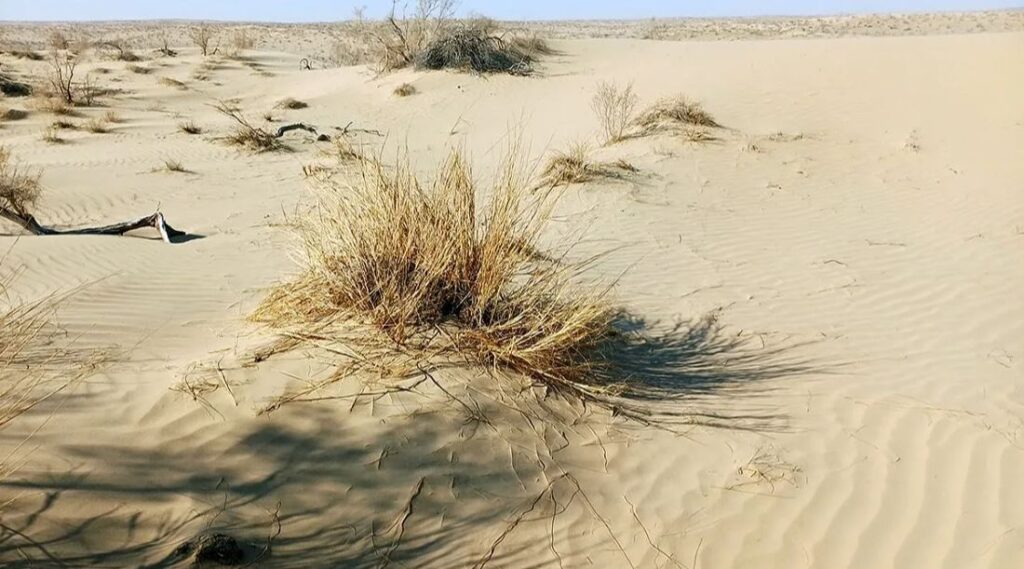
A regional center dedicated to combating desertification will be established in Turkmenistan’s capital Ashgabat. The center aims to coordinate efforts among Central Asian nations to address environmental and water management challenges.

According to Pirli Kepbanov, Director of the National Institute of Deserts, Flora and Fauna under Turkmenistan’s Ministry of Environmental Protection, the new institution will consolidate regional scientific and practical capacities to tackle transboundary issues affecting agriculture and water resources.

“Based at the center, the region’s states will be able to cooperate on shared concerns related to agricultural production and water infrastructure,” Kepbanov said.

Ashgabat’s selection as the host city is no coincidence. Turkmenistan has long been a regional hub for desert science, with established research institutions specializing in land degradation, desert ecosystems, and the adaptation of economic activity to arid conditions.

“There are only four such scientific institutes worldwide, and one of them is the National Institute of Deserts, Flora and Fauna of Turkmenistan,” Kepbanov added.

He also emphasized Turkmenistan’s historical role in developing desert science across Central Asia and beyond. “The first Chinese desert scientists trained here,” he said, adding that contemporary Chinese experts acknowledge Turkmenistan’s important contributions to their national school of desert research.

Currently, the National Institute collaborates with the Xinjiang Institute of Ecology and Geography in China, the A.N. Kostyakov Federal Scientific Center for Hydrotechnics and Land Reclamation in Russia, and is receiving partnership proposals from universities across Central Asia.

Kyrgyzstan Moves to Tighten Vehicle Emissions Rules as Air Pollution Worsens

Kyrgyzstan is preparing to tighten environmental regulations on motor vehicles as part of a broader effort to combat rising air pollution in its major cities. A draft bill currently under public discussion proposes mandatory requirements for the presence and proper functioning of catalytic converters in vehicles originally manufactured with them.

The initiative targets one of the most persistent sources of urban air pollution: an aging vehicle fleet in which catalytic converters are frequently removed. The absence of these devices significantly increases toxic emissions and fuel consumption, with direct consequences for public health.

Under the proposed amendments, vehicles that do not meet environmental standards could be prohibited from operating. Driving a vehicle without a functioning catalytic converter would result in fines of approximately $114 for private individuals and about $400 for legal entities.

According to the bill’s explanatory note, the measures aim primarily to reduce pollution in urban centers such as Bishkek and Osh. Lawmakers emphasize that the widespread removal of catalytic converters contributes to both higher emissions and increased fuel use.

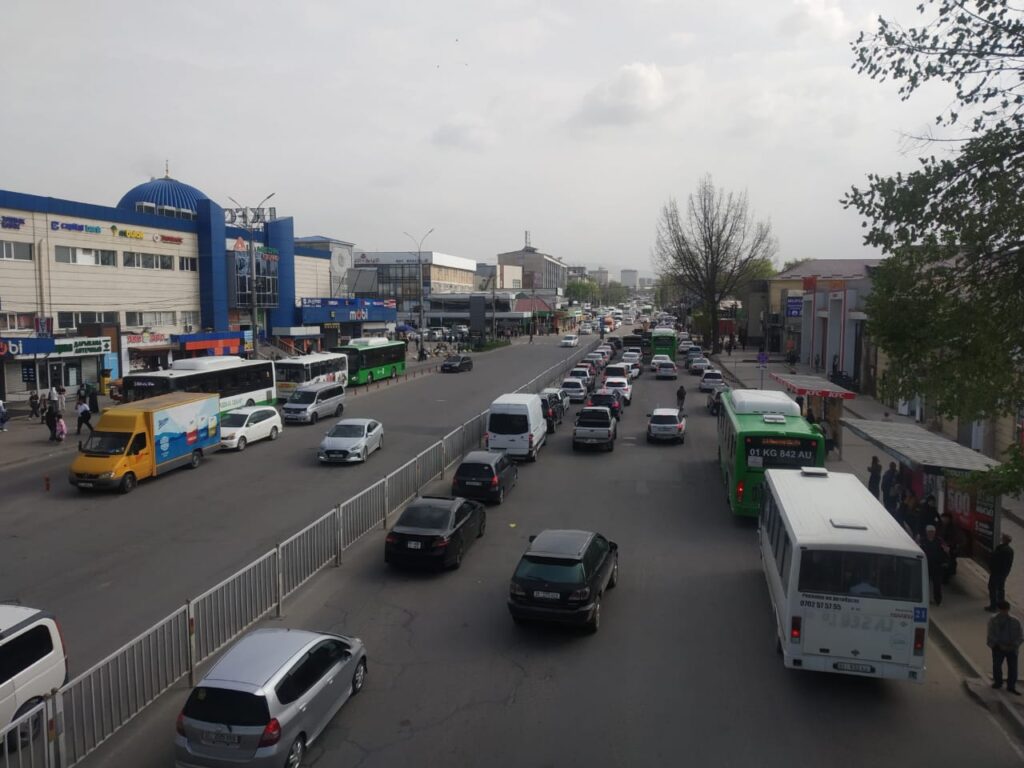
Data from the Ministry of Natural Resources, Ecology, and Technical Supervision show that motor vehicles, particularly older models lacking emissions control systems, account for roughly 30% of air pollution in Bishkek.

Vehicle numbers in the capital have surged in recent years. Bishkek now has more than 600,000 registered vehicles, nearly double the estimated road infrastructure capacity of 350,000. Over 300,000 of these vehicles are more than 15 years old, making them a major contributor to harmful emissions.

Air quality in the city of more than one million residents remains a persistent concern, especially in winter, when coal-burning for residential heating, responsible for an estimated 40% of pollution, intensifies. Seasonal spikes frequently push Bishkek into the global rankings of the most polluted cities.

The draft legislation could also pave the way for a regulated system to dispose of non-functioning catalytic converters, which contain valuable materials such as platinum group metals, rhodium, and cerium. The presence of these metals has fueled a gray market, with online advertisements and repair shops offering to remove converters for resale.

Lawmakers argue that formal regulation would help curb theft and establish a legal recycling sector. In September 2025, the Cabinet of Ministers imposed a six-month ban on the export of catalytic converters and other waste containing precious metals, in an effort to limit illegal outflows and stabilize domestic oversight.

The bill’s authors describe catalytic converter enforcement as a concrete step toward meeting Kyrgyzstan’s commitments under the Paris Agreement and reducing transport-sector greenhouse gas emissions.

However, the effectiveness of the new rules will depend on enforcement capacity. With a significant portion of the current fleet already non-compliant, and the average vehicle age remaining high, implementation may face resistance unless supported by effective inspection systems and realistic compliance pathways.

Kyrgyzstan’s proposed emissions crackdown signals a shift toward more enforceable environmental policy. If properly implemented, the measures could meaningfully reduce air pollution and curtail illicit trade in precious metals. Their success, however, will hinge on the state’s ability to enforce standards while integrating a large

AIIB Supports Almaty Railway Bypass with $150 Million Loan

The Asian Infrastructure Investment Bank (AIIB) has signed a landmark $150 million loan agreement to finance the Almaty Railway Bypass Project in Kazakhstan. The funding will be provided to Kazakhstan Temir Zholy (KTZ), the national railway operator, under a non-sovereign loan structure.

The AIIB loan forms part of a broader international financing package of up to $300 million, denominated in Swiss francs. The package is jointly arranged by the International Finance Corporation (IFC), AIIB, and the Multilateral Investment Guarantee Agency (MIGA), with IFC and AIIB providing investment and MIGA offering risk guarantees. According to AIIB, the structure reflects robust international confidence in Kazakhstan’s transport modernization efforts and in KTZ’s strategic role in national infrastructure.

The project will support the construction of a new single-track, electrified freight railway bypass along the northern perimeter of Almaty, Kazakhstan’s largest city. The bypass will extend approximately 75 kilometers, connecting Zhetygen station in the east with Kazybek Bek station in the west. Its primary objective is to redirect freight traffic away from Almaty’s city center by establishing a dedicated cargo corridor. The scope also includes new stations, bridges, overpasses, and upgrades at both terminal points.

According to AIIB, the bypass is expected to alleviate congestion on Almaty’s current rail network, enhance passenger service efficiency, and reduce freight delays. By separating passenger and cargo rail lines, the project aims to lower emissions caused by congestion and improve operational safety.

AIIB emphasized the project’s role in strengthening Kazakhstan’s position as a regional transit hub by boosting rail efficiency along key Eurasian corridors, including the Middle Corridor. “Strengthening Kazakhstan’s transport backbone is essential for supporting the country’s long-term growth and its role as a key connectivity hub across Eurasia,” said Konstantin Limitovskiy, AIIB’s Chief Investment Officer. He noted that the Almaty bypass addresses a major bottleneck in the national rail system, enabling “faster, cleaner, and more reliable freight movement.”

IFC also underscored the regional significance of the initiative. “By addressing key bottlenecks and improving network reliability, the project is expected to generate positive spillovers for trade facilitation, private sector competitiveness, and the overall logistics ecosystem,” said Laura Vecvagare, IFC’s Regional Head of Industry for Infrastructure and Natural Resources.

Kazakhstan, a founding member of AIIB, is one of the bank’s most active clients in Central Asia. AIIB stated that the project aligns with its strategic focus on connectivity and regional cooperation. Implementation will be led by Kazakhstan Temir Zholy, with construction set to begin following the conclusion of final procurement procedures.

In July of last year, Kazakhstan Temir Zholy secured a separate syndicated loan of up to 480 million Swiss francs (approximately $540 million) for a three-year term. Arranged by Abu Dhabi Commercial Bank and Deutsche Bank, the loan supports infrastructure development along the Trans-Kazakhstan Railway Corridor.