• KGS/USD = 0.01144 0%
  • KZT/USD = 0.00212 0%
  • TJS/USD = 0.10456 0.19%
  • UZS/USD = 0.00008 0%
  • TMT/USD = 0.28490 0%
  • KGS/USD = 0.01144 0%
  • KZT/USD = 0.00212 0%
  • TJS/USD = 0.10456 0.19%
  • UZS/USD = 0.00008 0%
  • TMT/USD = 0.28490 0%
  • KGS/USD = 0.01144 0%
  • KZT/USD = 0.00212 0%
  • TJS/USD = 0.10456 0.19%
  • UZS/USD = 0.00008 0%
  • TMT/USD = 0.28490 0%
  • KGS/USD = 0.01144 0%
  • KZT/USD = 0.00212 0%
  • TJS/USD = 0.10456 0.19%
  • UZS/USD = 0.00008 0%
  • TMT/USD = 0.28490 0%
  • KGS/USD = 0.01144 0%
  • KZT/USD = 0.00212 0%
  • TJS/USD = 0.10456 0.19%
  • UZS/USD = 0.00008 0%
  • TMT/USD = 0.28490 0%
  • KGS/USD = 0.01144 0%
  • KZT/USD = 0.00212 0%
  • TJS/USD = 0.10456 0.19%
  • UZS/USD = 0.00008 0%
  • TMT/USD = 0.28490 0%
  • KGS/USD = 0.01144 0%
  • KZT/USD = 0.00212 0%
  • TJS/USD = 0.10456 0.19%
  • UZS/USD = 0.00008 0%
  • TMT/USD = 0.28490 0%
  • KGS/USD = 0.01144 0%
  • KZT/USD = 0.00212 0%
  • TJS/USD = 0.10456 0.19%
  • UZS/USD = 0.00008 0%
  • TMT/USD = 0.28490 0%

Uzbekistan Has “Only Just Begun” Reforms, Says Saida Mirziyoyeva

Saida Mirziyoyeva has said that the country’s reform agenda remains at an early stage, arguing that the scale of change should be measured in years rather than months. In her first major interview since becoming Head of the Presidential Administration, Mirziyoyeva said Uzbekistan had “only just begun” large-scale reforms. Expectations of rapid results, she warned, often overlook structural limits, including weak infrastructure, uneven regional development, and tight public finances.

Mirziyoyeva spoke about decision-making inside the presidential system and outlined what she described as the administration’s main policy priorities, including water management, education, healthcare, the business climate, and reform of the judicial and legal system. “Our goal is to improve people’s lives,” she stated, emphasizing that improvements in courts and law enforcement were essential for other reforms to succeed. Without legal guarantees, she argued, investment and social policy changes would fail to deliver lasting results.

She said the reforms now underway are intended to address long-standing systemic problems rather than produce quick political gains, and rejected the idea that reform momentum has slowed, arguing that many of the most complex changes require time and careful implementation to succeed.

Water management featured prominently in her remarks. Mirziyoyeva described it as one of Uzbekistan’s most urgent challenges, pointing to climate pressures, ageing infrastructure, and rising demand. Education and healthcare were also presented as priorities, with reforms focused on improving quality and access rather than simply expanding state programs.

The judicial system, however, emerged as the central theme. Mirziyoyeva said that without independent and predictable courts, reforms in other areas would not deliver lasting results. Legal uncertainty, she said, discourages investment and undermines public trust, making the rule of law essential for both economic reform and the protection of citizens’ rights.

Mirziyoyeva also addressed the business environment, arguing that excessive regulation and administrative pressure continue to constrain private enterprise. The state, she said, should act as a partner to entrepreneurs rather than an obstacle, and reforms should create conditions in which businesses can operate transparently and competitively.

Mirziyoyeva described her role as focused on coordination and execution rather than public visibility. The task of the Presidential Administration, she said, is to ensure that decisions taken at the top translate into practical change on the ground. Public service, she added, should be judged by outcomes, not rhetoric.

The interview comes more than nine years after President Shavkat Mirziyoyev took office in December 2016 and launched a reform agenda that marked a break with the isolationist policies of his predecessor. Early measures included the liberalisation of the foreign exchange market in September 2017, easing trade restrictions, and reducing state control over prices. International financial institutions have described Uzbekistan’s economic transition as ambitious, while noting that progress has been uneven.

Political reform has proceeded more cautiously. In its 2024 Nations in Transit assessment, Freedom House classified Uzbekistan as a consolidated authoritarian system, citing restrictions on opposition activity and independent media.

Against that backdrop, Mirziyoyeva said reforms should be judged by tangible outcomes rather than timelines. Reliable access to clean water, better schools and hospitals, and fair treatment in courts, she argued, matter more to citizens than official assurances. Only when those changes become visible, she said, can Uzbekistan’s reform process be said to have moved beyond its initial stage.

Central Asia Watches as Venezuela Drama Unfolds  

Governments in Central Asia have not made any public comment, so far, on the U.S. military operation that captured Venezuelan President Nicolás Maduro, at a time when relations between Central Asian countries and the administration of President Donald Trump are growing closer.

The operation on Saturday involved more than 150 American aircraft and extracted Maduro and his wife, Cilia Flores, from their compound in Caracas, prompting celebrations from many Venezuelan expatriates who viewed Maduro as a dictator, criticism from countries including Russia and China, and concerns that the complex attack violated international law.

Additional questions about Venezuela’s sovereignty emerged after Trump said the United States will “run” the country ahead of a transition and that American oil companies will help to rebuild its oil infrastructure. The U.S. has argued that Maduro himself effectively hijacked Venezuelan sovereignty through electoral fraud, repression and by allegedly funneling illegal drugs to the U.S. Maduro, who has been indicted on narco-terrorism and other charges, denies the allegations.

Countries in Central Asia are more than 10,000 kilometers away from Venezuela and their trade with the Latin American country is minimal, suggesting the uncertain and evolving situation there lies far outside their immediate area of interest. In May, Tokayev met Maduro in Moscow and invited him to visit Kazakhstan after describing Venezuela as an important partner.

“However, he acknowledged that, due to objective reasons, significant achievements in bilateral cooperation have yet to be realized,” Tokayev’s office said at the time.

Still, Tokayev and other Central Asian leaders have spoken in general terms of their adherence to United Nations principles of sovereignty, an issue that is being vigorously debated in some international circles after the U.S. military operation. U.N. Secretary-General António Guterres, who visited Central Asia in 2024 and 2025, has said that the U.S. military operation that extracted Maduro to New York constitutes a “dangerous precedent” and that he was concerned that the rules of international law had not been respected.

The U.S. capture of the leader of oil-rich Venezuela has not had a major impact for now on global oil prices, indicating that Central Asia’s oil and natural gas producers will not see any big fallout. Even so, at a time of ongoing geopolitical tension, a major shock or event in one region could influence distant regions in ways that are difficult to discern.

Russia and China, which are close trading partners with Central Asia and nurtured trade and political ties with Maduro’s government, condemned the U.S. military operation in Venezuela. But the Central Asian countries – Kazakhstan, Uzbekistan, Kyrgyzstan, Tajikistan and Turkmenistan – have not joined in the criticism, much as they have refrained from publicly supporting any side over Russia’s invasion of Ukraine.

Central Asia’s balancing act reflects efforts to maintain good ties with major powers even when they are in conflict, and comes during a period of increasing trade collaboration with the United States. The five leaders from Central Asia traveled to Washington in November for a summit with Trump, who later invited Tokayev and President Shavkat Mirziyoyev of Uzbekistan to the G20 summit, which the U.S. plans to hold in Miami in 2026.

Central Asian media are reporting Maduro’s capture, and regional governments could still comment once circumstances surrounding U.S. intentions in Venezuela become clearer.


Kazakhstan’s MOST Ventures Invests in Uzbek Startup Bito, Valuing Company at $10 Million

Kazakhstan-based venture capital firm MOST Ventures has acquired a stake in Uzbekistan’s Bito, marking a significant cross-border investment in Central Asia’s growing tech ecosystem. The deal, completed in Tashkent on December 25 as part of a Bridge funding round, values the B2B software company at $10 million, a milestone that reflects rising investor confidence in Uzbekistan’s startup landscape.

Bito is a business-to-business software-as-a-service (SaaS) company and a resident of Startup Garage, a leading Central Asian venture studio and accelerator. The company offers a digital ecosystem that integrates enterprise resource planning (ERP), financial technology, and artificial intelligence into a unified operating system tailored for small and medium-sized enterprises (SMEs).

Its platform allows businesses to manage sales, finance, inventory, HR, payments, installment services, and analytics, all in one interface aimed at improving operational transparency and decision-making.

The Bridge round represents a pivotal moment in Bito’s growth trajectory. The company reported that its valuation has tripled over the past ten months, though it has not disclosed the total amount raised. The investment will fund continued product development and regional expansion, with a primary focus on the Uzbek and Kazakh markets.

As part of the transaction, Startup Garage partially exited its position in Bito. The accelerator played a crucial role in the company’s early-stage development, supporting product design, market entry, and initial scaling. Startup Garage founder Mukhammad Khalil said the deal highlights the increasing maturity of Central Asia’s startup ecosystem and its ability to attract institutional capital. “This transaction shows that companies in the region can secure funding based on strong fundamentals and sustainable growth,” he said.

Bito founder Uchqun Tulavov called the investment a validation of the company’s strategic vision. “We are not simply building a product, we are setting a new standard for digital infrastructure for small and medium-sized businesses across the region,” he said. “The support of MOST Ventures confirms our direction as we integrate ERP, fintech, and AI into a unified operating platform.”

Following the funding round, Bito plans to accelerate its regional footprint while consolidating its role as a leading B2B SaaS provider in Central Asia.

Kazakhstan Plans to Send 35 Athletes to 2026 Winter Olympics in Italy

Kazakhstan plans to send a team of 35 athletes to compete at the XXV Winter Olympic Games, which will take place in Italy in 2026 in Milan and Cortina d’Ampezzo.

The 2026 Winter Olympics will be held from February 6 to 22, bringing together approximately 3,000 athletes from 93 countries. A total of 116 sets of medals will be contested.

Kazakhstan’s athletes will compete in 10 disciplines across 58 medal events. These include biathlon, speed skating, figure skating, short track, alpine skiing, Nordic combined, cross-country skiing, ski jumping, freestyle moguls, and freestyle aerials.

Among the strongest medal contenders are figure skaters Mikhail Shaydorov and Sofya Samodelkina; freestyle skiers Anastasia Gorodko and Yulia Galysheva; speed skater Evgeny Koshkin; and a group of short track skaters, including several world championship medalists.

Shaydorov is the current world silver medalist in men’s singles figure skating. Galysheva won bronze in moguls at the 2018 Winter Olympics and was crowned world champion in 2019 in the same discipline. Gorodko has twice earned bronze in parallel moguls at the World Championships, in 2021 and 2025.

Kazakhstan has participated in every Winter Olympics since 1994, when skier Vladimir Smirnov won the country’s first and so far only, Winter Olympic gold medal in Lillehammer, Norway.

To date, Kazakhstan has won eight medals at the Winter Games: one gold, three silver, and four bronze. The Lillehammer Games remain the country’s most successful, with three medals and a 12th-place finish in the overall medal standings. At the most recent Winter Olympics in Beijing in 2022, Kazakh athletes did not reach the podium.

However, the national team delivered a strong performance at the 2025 Winter Asian Games, finishing fourth in the overall standings with 20 medals.

New Port in Mangystau: Strategic Asset or Risk of Overcapacity?

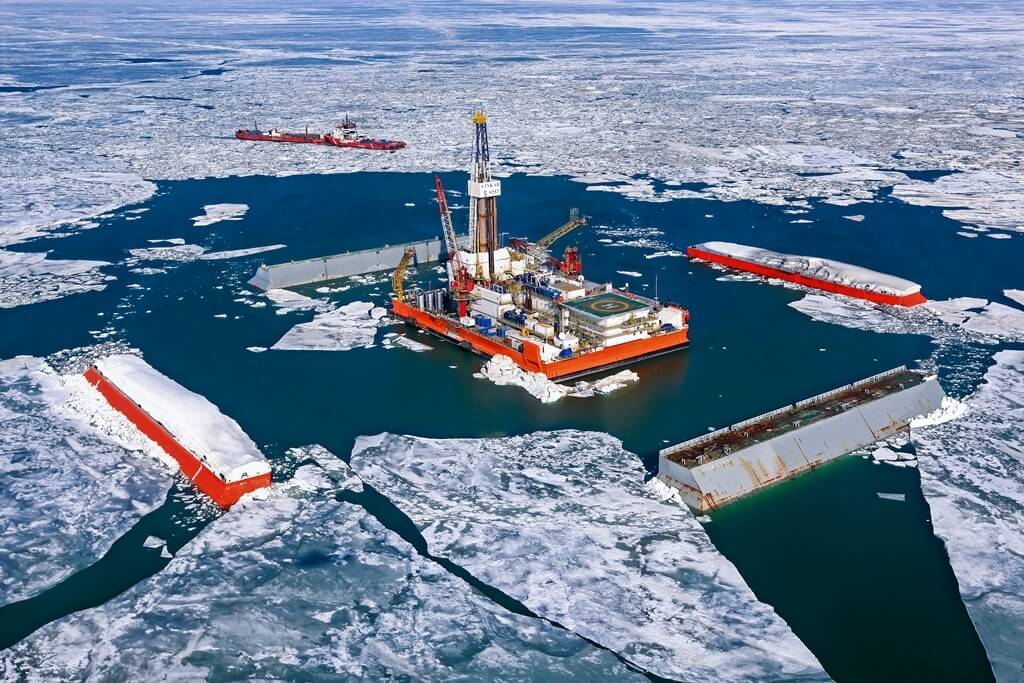
Kazakhstan has announced plans to build a new seaport in the Mangystau region, presenting the initiative as a strategic move to strengthen the country’s role in the East-West transit corridor. However, with existing Caspian ports in Aktau and Kuryk operating at less than one-third of their capacity, questions are being asked about whether the project addresses actual logistical needs or merely redistributes existing cargo flows.

Kazakhstan’s current maritime infrastructure on the Caspian Sea includes the ports of Aktau and Kuryk, which together have a combined throughput capacity of over 27 million tons per year. Yet, in the first nine months of 2025, transshipment volume stood at only 6 million tons, despite a 9% year-on-year increase, placing current utilization at roughly 30%.

Despite this, authorities in the Mangystau region argue that the proposed port in Karakiya district will boost national transit capacity, shorten delivery times on the China-Europe route by 7-15 days, and reduce logistics costs by 18-25%. The port’s design capacity is projected at 20 million tons annually.

Proponents of the project cite periodic bottlenecks at Aktau and Kuryk, such as temporary loading restrictions and railcar congestion, as justification for new infrastructure. Still, forecasts from international institutions suggest that freight volume on the Trans-Caspian route could reach 10-11 million tons by 2030, while the eastern branch of the North-South corridor may handle up to 24.7 million tons. In light of these projections, some question whether expanding and modernizing existing facilities might be a more cost-effective solution.

Indeed, upgrades are already underway. The container hub in Aktau is set to increase capacity to 250,000 TEU, while the multifunctional Sarzha terminal in Kuryk is expected to handle up to 12 million tons annually, developments that could significantly enhance throughput without requiring large-scale capital investment.

Investment details are also attracting scrutiny. The new port’s estimated construction cost is $300 million, with several Chinese companies, owners of cargo bases and logistics assets, lined up as investors. Observers warn this could lead to a shift in transit flows in favor of the new facility, undermining existing ports in a scenario of economic “cannibalization.”

There are also concerns about whether concession agreements might include compensation clauses for underutilized capacity, placing additional financial risk on the state.

The project is slated to unfold in three phases: construction from 2025 to 2027; joint operation with Chinese partners from 2028 to 2037; and a phased transfer of management to the Kazakh side after 2038. The development is expected to create more than 2,000 jobs and will feature a railway connection and automated container terminal.

In parallel, regional authorities are exploring maritime tourism as a complementary development strategy. Plans include launching Caspian Sea cruise routes and enhancing passenger facilities at the port of Kuryk, with a goal of attracting up to 625,000 tourists annually by 2028, envisioning a synergistic effect for the broader transport sector.

While Mangystau has the potential to emerge as a key logistics hub in Central Asia, the success of the new port will hinge not on the scale of its infrastructure but on the strength of its strategic planning. Critical factors include actual demand, alignment with existing logistics networks, and environmental considerations, particularly the declining water level of the Caspian Sea, which is already affecting vessel loading operations.

Kazakh-Spanish Film La Tregua to Premiere on Netflix

Following its premiere at the San Sebastian International Film Festival this fall, where it received a special award, the Kazakh-Spanish film La Tregua (The Truce) has been released in cinemas in Spain and Kazakhstan. It is now set to become the first Spanish-language film featuring Kazakhstan to appear on Netflix.

“Although critics say the film is not for popcorn viewing, given its focus on little-known and tragic chapters in the histories of Kazakhstan and Spain, its release has generated strong emotional responses in both countries,” said Yerlan Bekhozhin, a prominent Kazakh journalist and co-producer of the film, in an interview with The Times of Central Asia. “It speaks to the timeless struggle of human confrontation.”

The film presents a Kazakh narrative about Spaniards caught on opposing sides of ideological conflict. “It is a story from the last century, yet it addresses the present day,” Bekhozhin said. “When we look at today’s world, it’s clear that people lack the ability to engage in dialogue. The main message of the film is: There is always a way to negotiate.”

Netflix is expected to stream the film in 2026. Distribution discussions are also underway for theatrical releases in Mexico and other Spanish-speaking countries in Latin America.

Still from La Tregua

From Karaganda to the Screen

The story is rooted in the history of Karlag, the Karaganda labor camp that operated in Kazakhstan from 1937 to 1959. Victims of Stalinist repression from across the Soviet Union, including foreign nationals, were imprisoned there for dissent, free expression, or as victims of denunciations.

The idea for the film came from Spanish producer César Benítez, inspired by an event from over 30 years ago. During the Soviet era, the identities of Spanish citizens imprisoned in Karlag were kept secret. After Kazakhstan gained independence, its government handed the list of repressed Spaniards to the King of Spain, a gesture that sparked widespread attention in Spain, allowing many families to finally discover the fate of their relatives.

Years earlier, the Spanish documentary, The Forgotten in Karaganda, had drawn significant attention to the subject. Now, Benítez has transformed the story into a feature film.

“The title The Truce is deeply relevant today, at a time when peace requires people to sit at the same table,” said Bekhozhin.

Still from La Tregua

Kazakh Identity on a Global Stage

Bekhozhin also emphasized the film’s role in portraying Kazakh identity. “Its global release will introduce the world to the law of the steppe, the law of hospitality,” he said. “Kazakhs have long demonstrated empathy forged under harsh conditions. It’s part of our national character to welcome others, regardless of nationality or faith.”

One scene in the film shows a Kazakh family near the camp inviting Spanish prisoners into their home and setting a traditional dastarkhan, a generous table of lamb-based dishes. The prisoners are seated in the place of honor, or torge, in keeping with Kazakh custom.

“In the film, the hostess explains that when people from foreign lands appear at your door, you invite them in,” Bekhozhin said. Another scene, ultimately cut to maintain a 2.5-hour runtime, depicted villagers throwing kurt (hard cheese) over the camp fence to feed the prisoners.

Still from La Tregua

Bilbao’s Mini-Karlag

One regret, Bekhozhin admitted, was that the film’s winter scenes were not shot in Kazakhstan, where Karlag’s original buildings still stand.

“Initially, we planned to film in Kazakhstan,” he said. “But after the January 2022 unrest, Spanish insurers declined to cover shooting in the country. They insisted it be done in Europe.”

Filming took place in Bilbao, where a replica of Karlag was built. Local authorities were so impressed by the project that they asked producers to preserve the set for use as a tourist site showcasing this chapter of Spanish history. “They treated the story with seriousness, care, and purpose,” Bekhozhin noted.