Kazakhstan Sees Record Water Recovery in Northern Aral Sea

Kazakhstan’s Ministry of Water Resources and Irrigation has reported a record increase in the volume of water in the Northern Aral Sea, exceeding national and international expectations.
Water Returns to the Sea
Since 2023, approximately 5 billion cubic meters of water have flowed into the basin, bringing the total reserve to 24.1 billion cubic meters. This figure surpasses the target set under Kazakhstan’s Water Resources Management Concept, which had aimed for only 20.6 billion cubic meters by 2025. The current level was not expected to be reached before 2029.
Minister of Water Resources and Irrigation Nurzhan Nurzhigitov said that with the support of a World Bank grant, a feasibility study is underway to raise the Kokaral Dam by two meters and construct a new hydraulic facility. The project is designed to stabilize water levels in the Akshatau and Kamystybas lake systems.
“The project aims to increase both the volume and quality of water in the Northern Aral Sea, restore the Syr Darya delta, reduce salt dispersion from the exposed seabed, develop the fishing industry in the Kyzylorda region, and improve living conditions for local communities,” the minister stated.
International Cooperation
Deputy Minister Nurlan Aldamzharov has said the second phase of the initiative envisions raising the Northern Aral’s capacity to 35 cubic kilometers. He emphasized the critical role of regional cooperation, particularly with Kyrgyzstan, Tajikistan, and Uzbekistan, as the sea’s recovery depends on sustained inflows from the Syr Darya River.
Ministry spokesperson Moldir Abdualyeva attributed the recent progress to “water diplomacy, effective resource allocation, and conservation efforts.”
Environmental and Social Impact
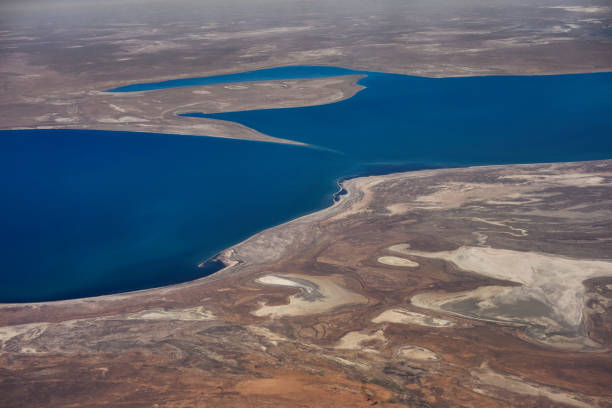
The increase in water volume has led to a corresponding expansion of the sea’s surface area. As of February 2025, the Northern Aral covered 3,065 square kilometers, an increase of 111 square kilometers over the past three years. This has reduced salinity levels and enabled the return of 22 fish species to the ecosystem. The annual fish catch now totals around 8,000 tons, offering renewed economic opportunities for local communities.
To further support the region, Kazakhstan has raised subsidies for farmers implementing water-saving technologies, increasing compensation rates from 50% to 80%. Officials say the measure is intended to conserve water while promoting sustainable agriculture in surrounding areas.
The Small Aral Sea, or Northern Aral, was formed in 1987 during the broader desiccation of the Aral Sea and preserved following the construction of the Kokaral Dam. In 2012, it was added, alongside the Syr Darya delta, to the Ramsar List of Wetlands of International Importance.
Kazakhstan assumed the rotating chairmanship of the International Fund for Saving the Aral Sea (IFAS) in 2024, further strengthening its leadership role in regional water cooperation and ecosystem restoration.