• KGS/USD = 0.01144 0%
  • KZT/USD = 0.00196 -0%
  • TJS/USD = 0.10904 0%
  • UZS/USD = 0.00008 0%
  • TMT/USD = 0.28490 0%
  • KGS/USD = 0.01144 0%
  • KZT/USD = 0.00196 -0%
  • TJS/USD = 0.10904 0%
  • UZS/USD = 0.00008 0%
  • TMT/USD = 0.28490 0%
  • KGS/USD = 0.01144 0%
  • KZT/USD = 0.00196 -0%
  • TJS/USD = 0.10904 0%
  • UZS/USD = 0.00008 0%
  • TMT/USD = 0.28490 0%
  • KGS/USD = 0.01144 0%
  • KZT/USD = 0.00196 -0%
  • TJS/USD = 0.10904 0%
  • UZS/USD = 0.00008 0%
  • TMT/USD = 0.28490 0%
  • KGS/USD = 0.01144 0%
  • KZT/USD = 0.00196 -0%
  • TJS/USD = 0.10904 0%
  • UZS/USD = 0.00008 0%
  • TMT/USD = 0.28490 0%
  • KGS/USD = 0.01144 0%
  • KZT/USD = 0.00196 -0%
  • TJS/USD = 0.10904 0%
  • UZS/USD = 0.00008 0%
  • TMT/USD = 0.28490 0%
  • KGS/USD = 0.01144 0%
  • KZT/USD = 0.00196 -0%
  • TJS/USD = 0.10904 0%
  • UZS/USD = 0.00008 0%
  • TMT/USD = 0.28490 0%
  • KGS/USD = 0.01144 0%
  • KZT/USD = 0.00196 -0%
  • TJS/USD = 0.10904 0%
  • UZS/USD = 0.00008 0%
  • TMT/USD = 0.28490 0%
08 December 2025

Uzbekistan President Urges SCO Reform and Regional Unity in Tianjin

On September 1, Uzbek President Shavkat Mirziyoyev participated in the regular meeting of the Council of Heads of State of the Shanghai Cooperation Organization (SCO), held in Tianjin, China, according to the presidential press service. The summit brought together leaders of member states to discuss the future of the organization, regional stability, and responses to global challenges.

Opening the meeting, Chinese President Xi Jinping congratulated Uzbekistan on its Independence Day and commended the country’s progress under Mirziyoyev’s leadership.

In his address, Mirziyoyev stressed the need for the SCO to adapt to a world marked by growing geopolitical tensions, a crisis of trust, and the weakening of multilateral institutions. He stressed that closer solidarity among SCO members is crucial for ensuring peace and stability in the region.

Among his key proposals was the adoption of a declaration on multilateral partnership for nuclear security. The initiative is intended to enhance cooperation in the peaceful use of nuclear energy and support global non-proliferation efforts within the UN framework.

Mirziyoyev also called for the resumption of interior minister-level meetings within the SCO, revisions to the existing agreement on combating organized crime, and the drafting of a new program to fight drug addiction, with targets extending to 2030.

On Afghanistan, he proposed reviving the SCO-Afghanistan Contact Group to promote dialogue and launch socio-economic initiatives aimed at stabilizing the country.

On economic cooperation, Mirziyoyev urged SCO member states to sign an agreement simplifying trade procedures and to develop new financial mechanisms to support industrial and infrastructure projects. He proposed the creation of a regional center for critical raw materials, a unified energy consortium, a network of venture capital funds for start-up development, and a digital portal to promote cross-border investment and connect businesses across the SCO space.

Transport and connectivity featured prominently in his speech. Mirziyoyev advocated for the establishment of a “common transport space” and strengthening of the North-South and East-West corridors linking Central Asia with the Persian Gulf and Indian Ocean regions.

He also called for the launch of regional platforms dedicated to climate adaptation and green technology development, alongside new initiatives in culture, education, and tourism to deepen people-to-people ties across the SCO.

Two Kyrgyz Citizens Shot Dead by Uzbek Border Guards Near Tripoint Frontier

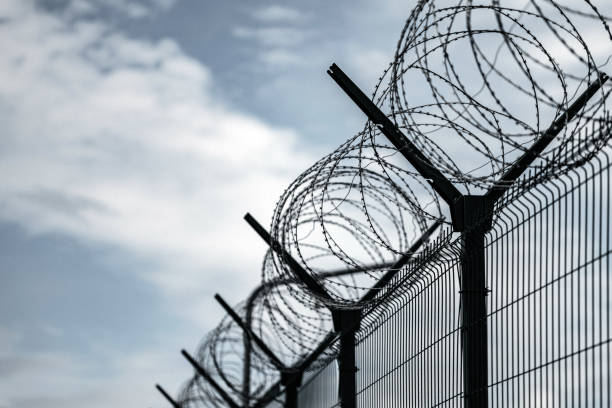
According to the Kyrgyz Border Service, two Kyrgyz citizens were shot and killed on August 15 near the junction of the Kyrgyz, Uzbek, and Kazakh borders after allegedly failing to comply with Uzbek border guards during an attempted detention. Their bodies were returned to Kyrgyzstan via the Baymak checkpoint, and authorities from both countries are conducting a joint investigation.

The two men, residents of Aygyr-Zhal village in Kyrgyzstan’s Chatkal District, were reported missing on August 25. During bilateral consultations held three days later, the Uzbek authorities informed their Kyrgyz counterparts that on August 15, an Uzbek border patrol had encountered two unidentified individuals in the border zone. According to the Uzbek side, the men ignored orders to stop, prompting border guards to open fire. Both men sustained fatal injuries.

On August 31, family members of the deceased traveled to Uzbekistan to identify the bodies, which were subsequently returned to Kyrgyzstan for forensic examination. Uzbek officials also expressed their readiness to return the men’s belongings, including three horses and a tent.

Authorities in both countries have confirmed that the incident will be subject to a formal investigation, with its findings to be made public.

The shooting follows the resolution of a decades-long border demarcation process involving Kyrgyzstan, Uzbekistan, and Tajikistan. In March 2025, after nearly twenty years of negotiations, the three countries agreed on the official tripoint demarcation during talks in Dushanbe. While that agreement was hailed as a breakthrough in regional cooperation, the recent incident underscores the lingering sensitivities and security challenges along portions of the border.

Where Tourists Stay in Kazakhstan: Hotel Trends and Costs

Analysts at Ranking.kz have examined hotel preferences in Kazakhstan, including nightly rates, regional popularity among tourists, and where accommodations are most expensive.

New Rules and Classification Standards

Kazakhstan has implemented updated classification rules for hotels, hostels, recreation centers, and other tourist facilities. While largely technical, the amendments aim to make the classification system more transparent. New standards define specific requirements for accommodations from bed sizes to the mandatory availability of bathrooms and clarify procedures for applications, review timelines, and certificate issuance.

According to the National Statistics Bureau, Kazakhstan had 4,300 accommodation facilities in the first quarter of 2025, up 7.7% from a year earlier. These included:

  • 1,500 hotels without restaurants
  • 1,400 bungalows, rural houses, and cottages
  • 804 hotels with restaurants
  • 113 children’s camps
  • 108 holiday homes
  • 60 tourist bases
  • 46 resorts
  • 46 campsites

Additionally, the country had 28 motels, nine trailer parks and entertainment complexes, and five tourist camps.

Out of the total number of hotels, 2,200 had no star classification. Among those categorized, 25 received five-star ratings, 54 received four stars, 32 three stars, three received two stars, and one hotel had a one-star rating.

Rising Tourist Numbers and Revenue

The hospitality sector continues to show growth. In the first quarter of 2025, Kazakhstani hotels and similar facilities hosted 1.9 million guests, an increase of 12% compared to the same period in 2024. Of these, 1.6 million were Kazakhstani citizens and 257,200 were international tourists.

Among domestic travelers, 1.2 million were leisure visitors, while 489,500 traveled for business. For foreign visitors, 120,100 arrived for personal reasons and 137,000 for business purposes.

The most common countries of origin included Russia, China, India, Turkey, Uzbekistan, the United States, Kyrgyzstan, Germany, the United Kingdom, South Korea, the United Arab Emirates, Italy, Ukraine, Belarus, and Malaysia.

According to UN Tourism, Kazakhstan generated $2.6 billion in international tourism revenue in 2024, up 17.1% from the previous year. Statista projects that the hotel industry will reach $583.15 million in 2025 and grow to $775.03 million by 2030, with the number of users expected to rise to 5.82 million.

Regional Tourism Hubs

Almaty remains Kazakhstan’s primary tourist destination, attracting 496,900 visitors in the first quarter of 2025, a 5% year-on-year increase. Other leading destinations include Astana (314,100), Almaty Region (161,500), Akmola Region (113,500), and Shymkent (100,100).

Tripadvisor lists approximately 2,600 lodging options in Kazakhstan. The top-rated hotels by value include:

  • Kazakhstan Hotel (3.2/5 based on 431 reviews)
  • Park Hotel Almaty (4.5/5, 290 reviews)
  • Uyut Hotel (3.9/5, 166 reviews)
  • Swissotel Wellness Resort Alatau Almaty (4.2/5, 122 reviews)
  • Grand Hotel Tien-Shan (4.3/5, 340 reviews)

Data from the eQonaq platform shows that in June 2025, the most visited hotels were Rixos Water World Aktau, Holiday Inn, Sheraton Nur-Sultan Hotel, SAAD Hotel, and Rixos Almaty. The majority of guests during this period were from Uzbekistan (47,600), Russia (42,700), and China (19,500).

Hotel Prices by Region

In July 2025, the average cost of a hotel night in Kazakhstan was 20,100 KZT (approximately $37), a 0.3% increase from June and 6.2% higher than in July 2024.

The highest rates were recorded in:

  • Almaty – 31,200 KZT ($58)
  • Uralsk – 25,700 KZT ($48)
  • Petropavlovsk – 21,900 KZT ($41)
  • Konaev – 21,000 KZT ($39)
  • Astana – 19,400 KZT ($36)

Monthly price increases were recorded in the Almaty Region (21.6%), Shymkent (2.7%), Kostanay Region (1.2%), and Abai Region (0.6%). On an annual basis, accommodation prices rose in most regions, ranging from a 36.7% increase in the Almaty Region to 1.2% in the Atyrau Region. The Turkestan Region showed no change, while prices in the Pavlodar Region declined by 3.7%.

Kazakhstan Aims to Boost Grain Exports to China to Two Million Tons Annually

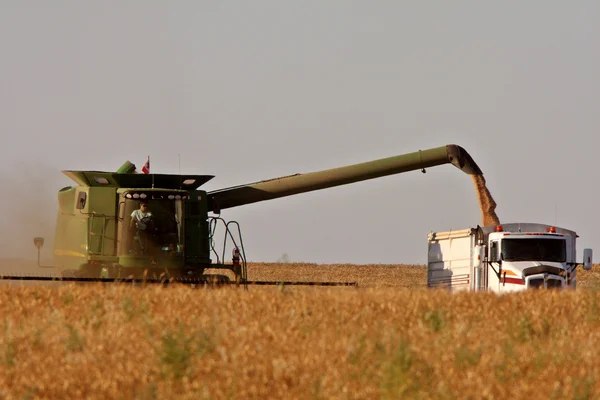
Kazakhstan plans to increase its grain exports to China to two million tons per year in the coming years, President Kassym-Jomart Tokayev announced at the eighth meeting of the Kazakhstan-China Business Council in Beijing.

“Kazakhstan has the sixth-largest area of arable land in the world and ranks among the top ten grain exporters globally. Our country exports over ten million tons of wheat and approximately two million tons of flour each year. The Chinese market is of great interest to us, and Kazakhstan possesses the resources and capacity to export up to two million tons of grain to China annually,” Tokayev stated.

According to Kazakhstan Temir Zholy, the national railway operator, grain exports to China reached 1.7 million tons in 2023.

Strengthening Agro-Industrial Cooperation

Beyond raw grain exports, Astana places significant emphasis on developing joint processing enterprises. Tokayev highlighted ongoing projects by China’s Dalian Group, which is establishing a grain processing plant in the Akmola Region, and the Fufeng Group, which is developing a corn processing facility in the Zhambyl Region. Products from both plants are intended for the Chinese and European markets.

The president also invited Chinese investors to collaborate in the sectors of organic farming and livestock breeding.

Expanding Transport Corridors

Tokayev underscored the strategic importance of enhancing transport and logistics corridors as part of the Belt and Road Initiative, noting that 85% of all land freight between China and Europe currently transits through Kazakhstan. The opening of a second track on the Dostyk-Moyinty rail section this year is expected to increase the capacity of the China-Europe corridor fivefold.

The president also emphasized the rising significance of the Trans-Caspian International Transport Route (TITR), also known as the Middle Corridor. In 2023, freight volume along the TITR reached 4.5 million tons, an increase of 62% compared to 2022. Kazakhstan aims to raise this volume to ten million tons in the near future.

“Through joint efforts, we have already implemented major infrastructure projects, the Kazakh-Chinese logistics terminal at the port of Lianyungang and the dry port in Xi’an. For Chinese companies, leveraging Kazakhstan’s transit potential opens up significant opportunities,” Tokayev said.

The Times of Central Asia previously reported that Kazakhstan and China have also begun digitizing customs declaration procedures for transit cargoes along the TITR, aiming to reduce delays at border crossings.

Financing for Tajikistan’s Rogun Project Rises to $500 Million

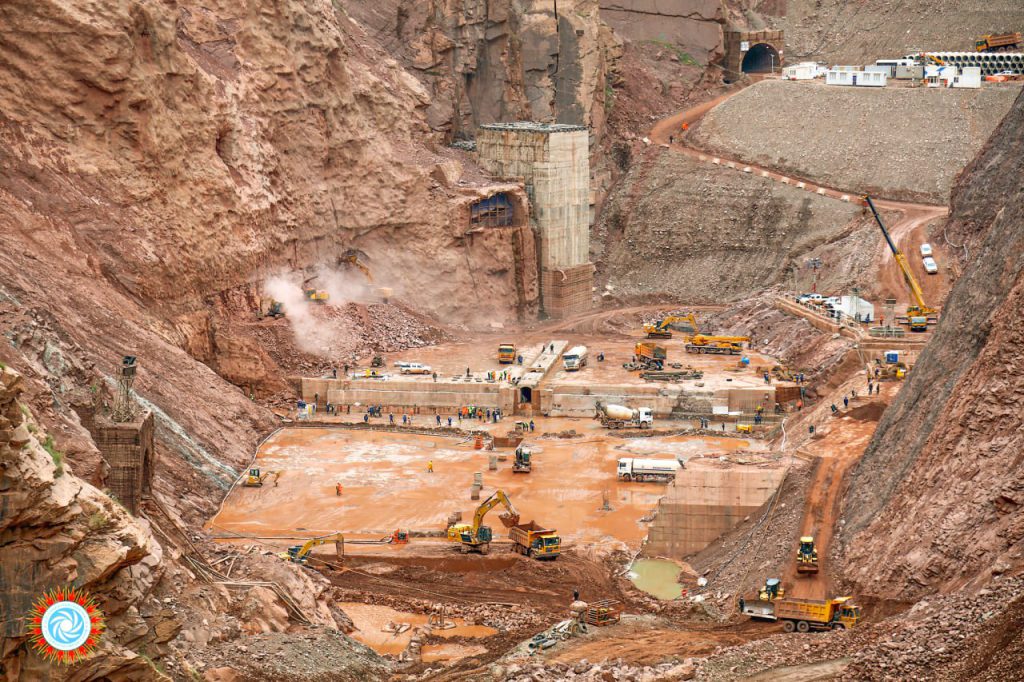
The Asian Infrastructure Investment Bank (AIIB) has confirmed its decision to increase financing for the construction of Tajikistan’s flagship energy project, the Rogun Hydroelectric Power Plant (HPP), to $500 million.

New Agreements on Energy, Water, and Transport

According to the Tajik president’s press service, the agreement was reached on September 1 in Tianjin during talks between President Emomali Rahmon and AIIB President Jin Liqun. The meeting took place on the sidelines of the Shanghai Cooperation Organization (SCO) Council of Heads of State summit.

President Rahmon thanked the AIIB for supporting Tajikistan’s infrastructure development and noted that the bank is already involved in four national projects totaling over $430 million. These include the Rogun HPP and the construction of a 920-meter-long road bridge in the Nurabad district.

“The parties discussed broad opportunities for cooperation in the field of green energy, including the construction and modernization of power plants of various capacities, as well as the commissioning of solar and wind installations,” the press service stated.

Discussions also focused on water resource management, disaster risk reduction, and the deployment of modern monitoring technologies. Other priorities included transport integration, municipal infrastructure renewal, and innovative mechanisms to attract investment. Expanding private sector participation and utilizing innovative financing instruments were also identified as promising areas.

Previously Signed Agreements

In December 2024, Tajikistan and the AIIB signed a $270 million (1.92 billion yuan) agreement for the first phase of the Rogun development program. According to the Ministry of Finance, the bank’s total commitment now stands at $500 million, to be disbursed in two tranches.

During a visit to Rogun on August 27, Rahmon stated that loan negotiations with the AIIB are in their final stages. In total, Tajikistan has secured commitments exceeding $2 billion from development partners and is negotiating an additional $1.7 billion.

However, Standard & Poor’s (S&P) Global Ratings has noted delays in funding from some international partners, including the World Bank, citing unmet conditions. The agency estimates the total cost of completing Rogun at $6.4 billion.

According to S&P, the Tajik government plans to finance half of the project through a consortium of international partners, with the remainder coming from the national budget and project revenues. The proposed financing includes $1.5 billion in non-concessional loans, $850 million in grants, and $550 million in concessional loans. Part of the grant support is contingent on Tajikistan’s classification as a “least developed country,” a status that may be reconsidered in 2026.

Rogun: Central Asia’s Largest Hydropower Project

Since the start of 2025, 4.3 billion somoni (approximately $451 million) has been allocated from Tajikistan’s state budget for Rogun. In total, over 48.1 billion somoni (roughly $5.04 billion) has been invested in the project since 2008 from both public and external sources.

The Rogun Hydropower Plant is poised to become the largest in Central Asia. Once completed, it will have an installed capacity of 3,780 MW and is expected to generate over 14.5 billion kWh annually. Six 630 MW turbines are planned, with full commissioning expected by 2029.

Two units, launched in 2018 and 2019, are currently operational. In 2024, they generated 1.22 billion kWh of electricity, accounting for 5.5% of Tajikistan’s total electricity production, according to the Ministry of Energy.

Gold and Gunfire: Tajik-Taliban Tensions Flare on the Border

Tajik border guards and Taliban fighters have exchanged fire in an area along the Tajik-Afghan border. The incident happened on August 24 and is connected to a Chinese gold mining operation on the Afghan side of the border. The hostilities ended after a rare meeting between local Tajik and Taliban officials, though each side accused the other of harboring enemies.

Gold Mining

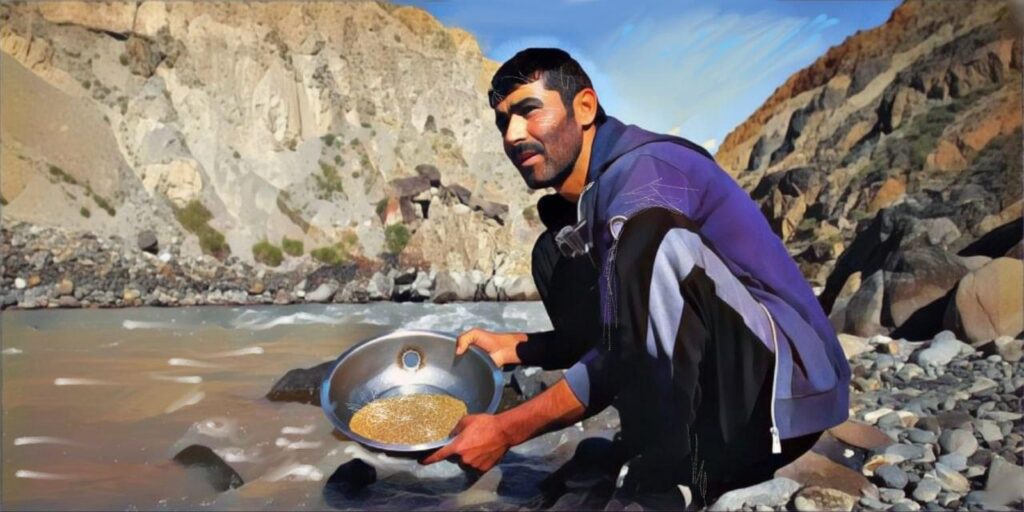
The Tajik authorities have been watching Afghanistan’s Dovang district in Afghanistan’s Badakhshan Province since the start of a gold mining operation there three years ago.

Residents of Tajikistan’s Shamsiddin Shohin district, across the Pyanj River from Dovang, reported rising water levels in their area. Sodikjon Rahmonzoda, the head of the district branch of Tajikistan’s Ministry for Emergency Situations, stated that “On the opposite bank of the river, in Afghanistan, industrial gold mining started…. They built infrastructure (including) dams that direct water to our bank.”

The Tajik authorities have been reinforcing the bank on the Tajik side of the river to prevent nearby villages from flooding. It is unclear if the two sides were previously in contact about the problems the diversion of water in the river was causing in Tajikistan.

The other four Central Asian governments have all established a dialogue with the Taliban since they returned to power in August 2021. Kazakh, Kyrgyz, Turkmen, and Uzbek officials have visited Afghanistan, and Taliban representatives have visited Kazakhstan, Turkmenistan, and Uzbekistan (but so far, not Kyrgyzstan).

The Tajik government has kept its contact with the Afghan militant group to a minimum, though several border crossing points are working again, and some bazaars on the Tajik side of the frontier have reopened to Afghan customers.

Rising Tensions

In May, Tajik authorities detained a group of Chinese and Afghans who drove across the river on excavators from the mining site in Dovang into Tajikistan. According to the Tajik authorities, the Chinese and Afghans were seeking to launder money in Tajikistan.

On August 24, a group of Taliban arrived at the border area in Dovang. It is not clear what sparked the shooting, but Tajik border guards and Taliban fighters exchanged fire using heavy weapons. One Taliban fighter was reportedly killed, and four others were wounded. There were no reports of casualties among the Tajik border guards.

Neither the Tajik government nor Taliban officials have commented on the clash.

A Rare Meeting

Following the shooting, the commander of the Tajik border guard unit in the Shamsiddin Shohin district led a group of soldiers across the border to Dovang to meet with the head of mining operations and other officials in Badakhshan Province. The two sides discussed the gold mining operation on the Afghan side of the border, but the conversation degenerated into accusations, with each side complaining that the other was sheltering and training their enemies.

Both sides are correct.

The Tajik government allows members of the National Resistance Front (NRF), including its leader Ahmad Masoud, to travel to and often stay in Tajikistan. The NRF is a group of mainly ethnic Tajiks who were part of the foreign-backed former Afghan government’s military. Representatives of ousted Afghan President Ashraf Ghani still occupy the Afghan Embassy in the Tajik capital, Dushanbe.

The Jamaat Ansarullah extremist group from Tajikistan are allies of the Taliban. At least several hundred of their fighters are based in Afghanistan, with some deployed by the Taliban to areas along the border with Tajikistan.

In September 2023, Tajik security forces said they had killed three armed members of Jamaat Ansarullah who crossed from Afghanistan into Tajikistan’s Darvoz district, which borders the Shamsiddin Shohin district to the east. Tajik authorities claimed the three entered Tajikistan to carry out terrorist attacks ahead of Independence Day celebrations on September 9.

What’s Next?

In the absence of official comments from either side, it is difficult to say if the situation is better or worse after the meeting between local officials.

Reports on the clash agree that the two sides were shooting at each other, and the Taliban suffered casualties. However, it is unclear who started shooting first or why. Were the hastily arranged talks a total failure, or was there any agreement or at least an understanding about future activities in this border area that would prevent a repeat of the August 24 shoot-out?

The gold-mining operation on the Afghan side of the Pyanj River is expanding, indicating that it is profitable. That has convinced the Tajik authorities that they should start prospecting for gold on their side of the river, which means soon there will be more people, and presumably more armed border guards and Taliban fighters in the area.

If there is no acceptable resolution to the events of August 24, both sides risk a more serious incident in the future.