• KGS/USD = 0.01144 0%
  • KZT/USD = 0.00195 -0%
  • TJS/USD = 0.10861 0.18%
  • UZS/USD = 0.00008 0%
  • TMT/USD = 0.28571 0%
  • KGS/USD = 0.01144 0%
  • KZT/USD = 0.00195 -0%
  • TJS/USD = 0.10861 0.18%
  • UZS/USD = 0.00008 0%
  • TMT/USD = 0.28571 0%
  • KGS/USD = 0.01144 0%
  • KZT/USD = 0.00195 -0%
  • TJS/USD = 0.10861 0.18%
  • UZS/USD = 0.00008 0%
  • TMT/USD = 0.28571 0%
  • KGS/USD = 0.01144 0%
  • KZT/USD = 0.00195 -0%
  • TJS/USD = 0.10861 0.18%
  • UZS/USD = 0.00008 0%
  • TMT/USD = 0.28571 0%
  • KGS/USD = 0.01144 0%
  • KZT/USD = 0.00195 -0%
  • TJS/USD = 0.10861 0.18%
  • UZS/USD = 0.00008 0%
  • TMT/USD = 0.28571 0%
  • KGS/USD = 0.01144 0%
  • KZT/USD = 0.00195 -0%
  • TJS/USD = 0.10861 0.18%
  • UZS/USD = 0.00008 0%
  • TMT/USD = 0.28571 0%
  • KGS/USD = 0.01144 0%
  • KZT/USD = 0.00195 -0%
  • TJS/USD = 0.10861 0.18%
  • UZS/USD = 0.00008 0%
  • TMT/USD = 0.28571 0%
  • KGS/USD = 0.01144 0%
  • KZT/USD = 0.00195 -0%
  • TJS/USD = 0.10861 0.18%
  • UZS/USD = 0.00008 0%
  • TMT/USD = 0.28571 0%
18 December 2025

‘Orange Angels’: Aviators of Eastern Kazakhstan Fly Daily Rescue Missions

When there is no help left on the ground, they take to the skies: orange fuselages, the roar of propellers, and salvation descending from above. The Aviation Division of the East Kazakhstan Region – the ‘Orange Angels’ – is more than a state enterprise; it is a vital lifeline, operating when every minute counts.

No Margin For Error

Since its founding in 2003, the division has become an indispensable part of the region’s emergency response system. Its 114 full-time specialists conduct medical flights, firefighting operations, evacuations, and rescues.

Yet staffing remains a challenge. “We are short 12-13 personnel. Ideally, we should have around 120,” Kalikan Baigonusov, Director of the East Kazakhstan Aviation Division, told The Times of Central Asia. “Young people prefer big airlines, foreign skies, and big paychecks. Our salaries are decent, between $1,300 and $2,900, but the profession lacks visibility and appeal. It’s a calling, not just a job.”
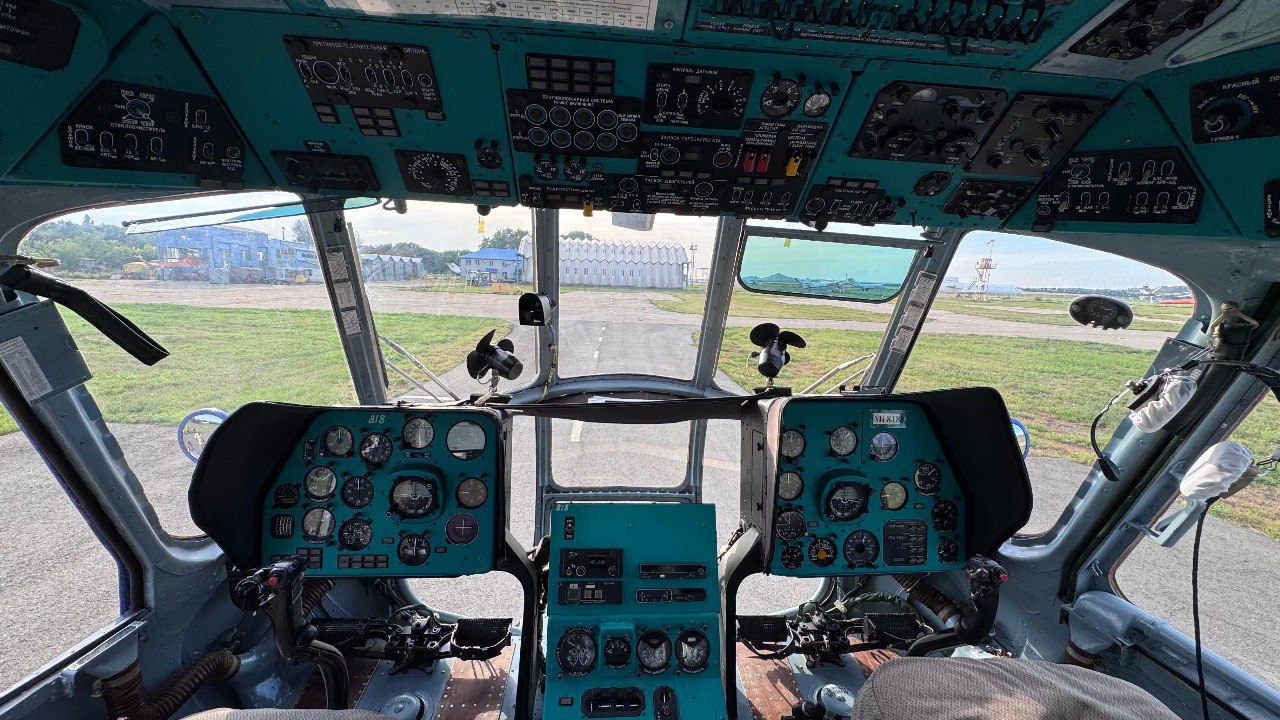
Image: TCA

Baigonusov hopes more young people will be drawn to aviation through education. His division is now organizing practical MI-2 helicopter training for students from the Civil Aviation Academy JSC. There is also close cooperation with the East Kazakhstan Multidisciplinary College, which, with support from the regional governor, launched new specialties in aviation engineering and mechanics on September 1, 2024. Therein, students undergo practical training with the air squadron, learning directly from experienced pilots and engineers.

Still, Baigonusov believes Kazakhstan’s personnel training system needs urgent reform. “I’ve knocked on every door, the academy, the rector, the department head,” he told TCA. “We need to train our people locally. Sending a student to Russia costs $47,000. That’s simply out of reach. We need to promote dual education here, so people can study and work at home.”

Many of the division’s specialists are graduates of now-diminished Soviet-era aviation schools in Kachinsk, Omsk, Kyiv, and Riga. Each year, their ranks grow thinner.

Engineering, Maintenance, and a Race Against Time

Despite operating from aging facilities built in the 1970s and 1980s, the team is working to modernize and extend the lifespan of its equipment. The aircraft fleet, averaging 35 years in age, has undergone extensive inspections and upgrades. Standardization tests have been passed, and all certifications are in place.

Thanks to the expertise of the engineering team, the division recently secured certification for maintaining YAK-40 and YAK-42 aircraft and Mi-8 and Mi-2 helicopters.

Image: TCA

“Before, we relied on outside companies for repairs. Now we do everything ourselves,” says Baigonusov. “That saves time and money and makes us more self-reliant.”

Deputy for the Engineering and Aviation Service (IAS) Lobanov leads a team dedicated to his work, although he, like many in the unit, is already over 55. Baigonusov is determined to attract the younger generation.

“We need to show how important and beautiful this profession is. It’s demanding, but it’s also deeply meaningful.”

Rescuing the Stranded in Kalbatau

Chief pilot Denis Grunsky recalled one of the most dramatic missions of his career to TCA.

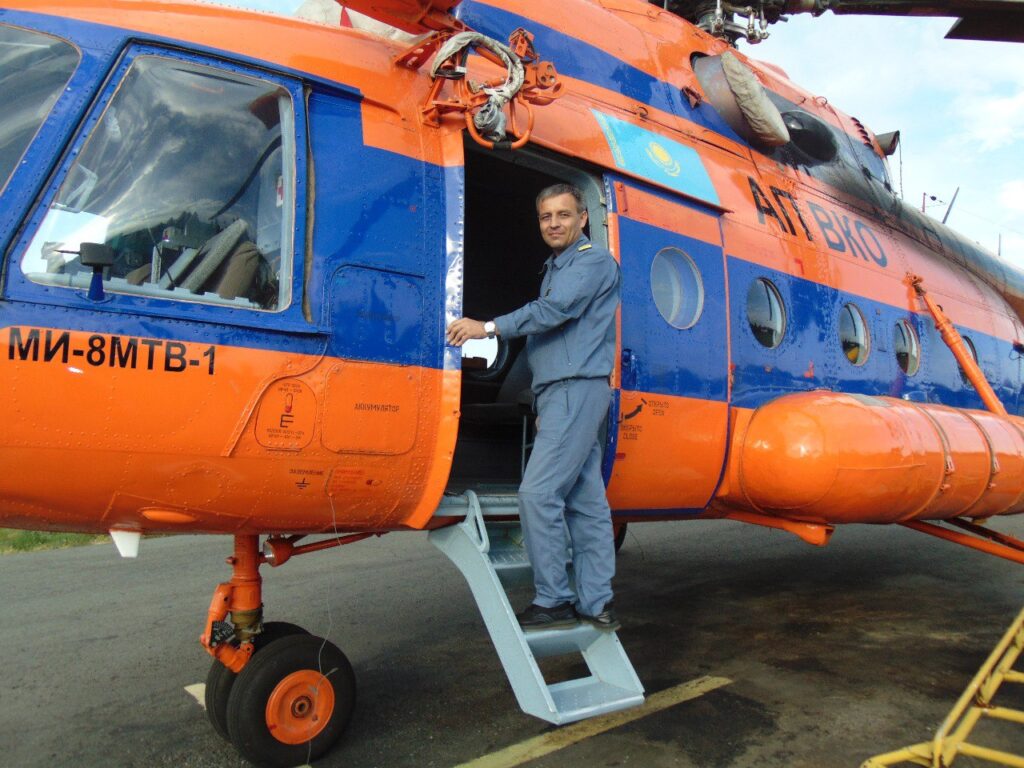
“Over 100 people were stuck in a snowdrift near Kalbatau in Kokpekty district. Rescuers couldn’t get through. It was snowing hard, freezing cold… We made three Mi-8 flights to evacuate women and children. Winds were strong, fuel was running low, and the sun was setting; you can’t fly in the mountains at night. But we did it.”

For this team, days off are rare. Technically, they can’t work more than seven days in a row. But as Grunsky puts it: “If we’re not flying, it doesn’t mean we’re not working.”

They also genuinely love their equipment.
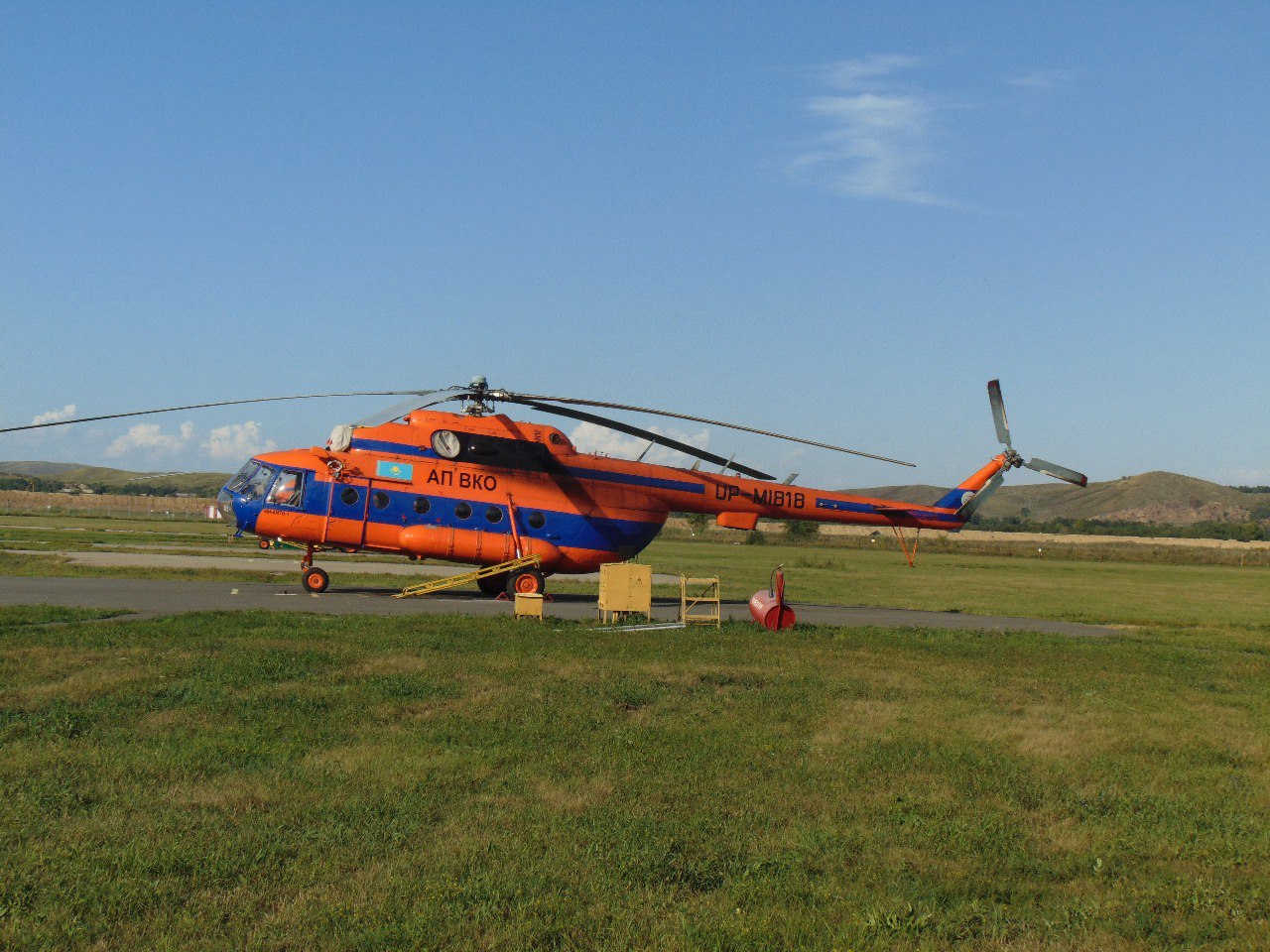
Image: TCA

“Our Machine”: The Mi-8 Helicopter

“The Mi-8 is our legendary machine – the team’s workhorse,” Grunsky told TCA. “It handles temperatures from -50°C to +50°C. You can start it even in the freezing cold with little preheating. It doesn’t need hangars and can carry 22 passengers, plus animals, if needed. It’s not just a tool, it’s our partner.”

While Western helicopters may be sleek, the Mi-8 and Mi-2 remain ideally suited for Kazakhstan’s harsh environments.

“The Mi-2 even has an anti-icing system, which many newer models lack,” Grunsky adds.

The People Behind the Missions

A typical crew includes a captain, co-pilot, and flight engineer, with the co-pilot training to become a future captain. The flight engineer acts as the captain’s eyes, managing water discharge for firefighting and checking the helicopter’s condition.

Grunsky, a father of three, acknowledges the demands of the job: “It looks romantic, but it’s intense: constant medical checks, a strict regime, and physical limits due to pressure changes. It’s not just a job, it’s a lifestyle. I won’t push my kids into this, but if one of them chooses this path, I won’t stop them.”
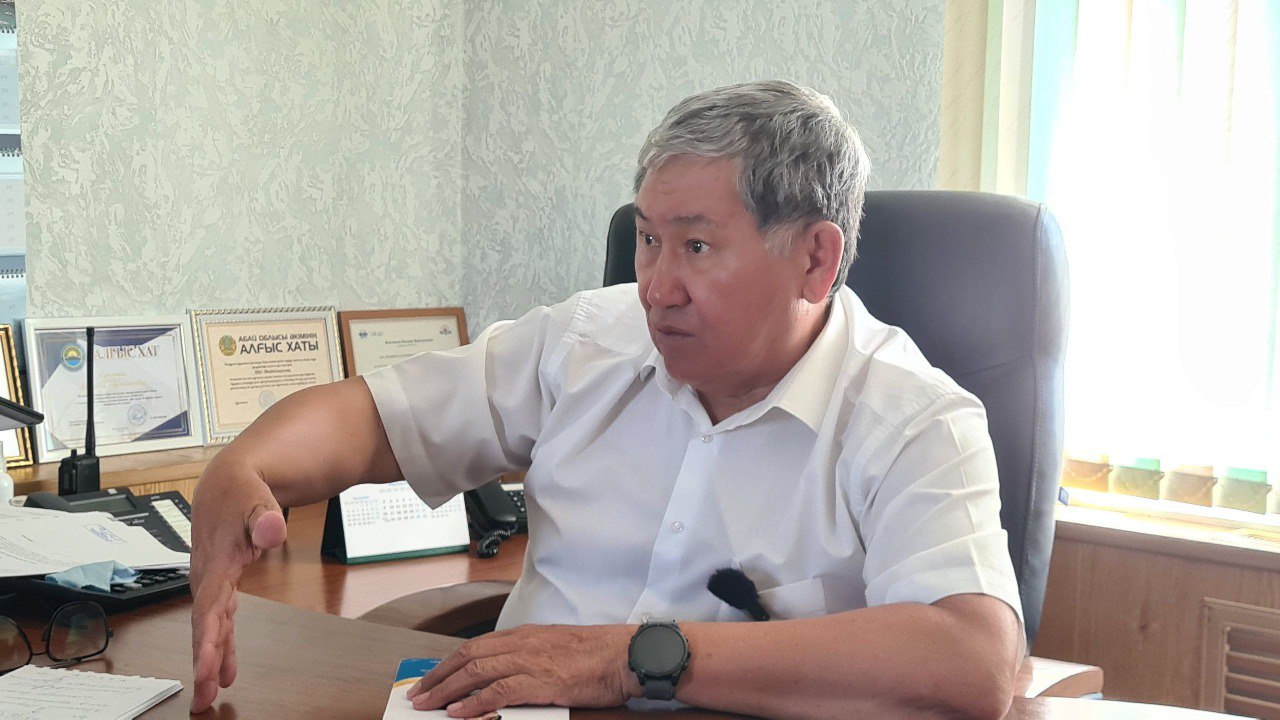
Director of the Aviation Division of the EKR Kalikan Baigonusov; image: TCA

Dispelling Rumors, Building Legacy

Despite their life-saving work, the team faces damaging rumors, such as claims that their helicopters are used by regional officials.

“It’s simply not true,” says Baigonusov. “We operate under strict regulations; every flight is documented with reports and protocols. We’re public servants, not a private airline.”

Private aviation companies with far larger budgets may covet their niche, but Baigonusov remains focused on preserving the division’s mission and legacy: “If there’s no one to pass on the knowledge, everything will be lost. Continuity is what matters most.”


Kazakhstan Boosts Air Transport Sector with New Fleet and Airport Revamps

Kazakhstan is set to double its civil aircraft fleet over the next five years, increasing the number of aircraft from 103 to 216 by 2030.

According to the Ministry of Transport, in 2025 the country’s fleet will add six new Airbus A320s and one Boeing 737 MAX 8. In January 2025, FlyArystan and Air Astana received new aircraft as part of this expansion. The government’s long-term plan aims to boost the number of aircraft operated by Kazakh airlines to 216 by the end of the decade.

“This year, 36 new international routes have been launched, and eight foreign airlines have entered the market. There are currently 61 domestic routes with 850 flights per week,” said Deputy Minister of Transport Maksat Kaliakparov.

As part of domestic connectivity efforts, 21 subsidized routes are now operating across nine regions, with approximately $12 million allocated for these services in 2025. The government’s priority is to improve air access to tourist destinations such as Usharal, Urdar, Kokshetau, and Turkestan.

Airport Infrastructure Development

Major investments are also being channeled into the country’s largest airports in Astana, Almaty, Shymkent, and Aktobe, all of which are being developed into multimodal transport hubs.

In Astana, a $1.1 billion modernization project for Nursultan Nazarbayev International Airport began in 2025. Plans include the construction of a second runway, a third passenger and cargo terminal, and a multifunctional complex known as the Aerotropolis. The new facility will feature an industrial and logistics zone, business centers, hotels, and retail space.

In Almaty, the airport is undergoing modernization in line with a General Development Plan extending to 2050. The initial phase includes reconstructing the domestic terminal, building a taxiway, upgrading the runway and fueling infrastructure, and establishing a cargo apron and maintenance hangar. Future phases envision a hotel and a multi-level parking facility. During the construction phase, more than 1,800 jobs are expected to be created, with an additional 550 jobs during operations.

Shymkent opened a new 40,000 square-meter terminal in December 2024, boosting its annual passenger capacity from 800,000 to 6 million. Plans are underway to construct a new 3,500-meter runway and develop a multimodal hub connecting the airport with the Ontustik Special Economic Zone.

In Aktobe, a multifunctional logistics center is being implemented at the airport. As part of this effort, the fuel filling complex is being upgraded, and storage capacity will more than double, facilitating an increase in flight operations. Authorities are also considering the construction of a second runway, which would allow the existing runway to undergo major repairs without disrupting service.

“In addition, the government has decided to expand the boundaries of special economic zones at the country’s largest airports. This will attract investors, develop industry and logistics, and turn Kazakhstan’s air hubs into growth points for the national economy,” the government said in a statement.

Foreign Investment and Regional Expansion

As previously reported by The Times of Central Asia, the German company Skyhansa intends to construct a new cargo and passenger airport in Kazakhstan’s Zhetysu region. The project is slated for the Khorgos-Eastern Gate Special Economic Zone, located along the border with China.

Aliyev: SOCAR Begins Oil Project in Uzbekistan, Results Expected Soon

Azerbaijani President Ilham Aliyev has announced that the State Oil Company of Azerbaijan (SOCAR) has officially launched operations at an oil field in Uzbekistan. “SOCAR has already started work on an oil field in Uzbekistan, and the contract has been signed. We hope to hear good news within one to two years, and we all look forward to the announcement of a major oil discovery in Uzbekistan,” Aliyev said, as reported by Report.

Aliyev also highlighted Azerbaijan’s longstanding energy partnership with Turkmenistan, noting that expanding cooperation to include Uzbekistan presents new strategic opportunities for regional development.

Energy cooperation in Central Asia continues to deepen. In March 2025, Kazakhstan’s national oil company KazMunayGas and SOCAR agreed to increase oil transit volumes via the Aktau-Baku-Ceyhan route, reinforcing Azerbaijan’s growing role as a transit hub for Central Asian energy exports.

Kazakhstan’s Gumilyov Eurasian National University Opens Branch in Kyrgyzstan’s Osh

Kazakhstan’s L.N. Gumilyov Eurasian National University (ENU) has opened a new branch at Osh State University in Kyrgyzstan’s second-largest city, Osh.

The new branch will offer training in ecology, information and communications technology (ICT), and the service sector. Students will also study Russian language and literature, translation, foreign languages, journalism, and physics, earning dual diplomas from both ENU and Osh State University.

ENU Rector Yerlan Sydykov said that the new branch would help strengthen regional human capital and “create a strong intellectual foundation for the sustainable development of Central Asia.”

ENU currently collaborates with 16 Kyrgyz universities through academic mobility initiatives and dual-degree programs.

Uzbek Migrants Send Home $4.8 Billion in Q2 2025

Uzbekistan’s Central Bank has reported that migrant workers sent home $4.8 billion in remittances during the second quarter of 2025. This marks a 21.4% increase compared to the same period last year, although it represents a slowdown from the 38.6% recorded in 2024.

The Central Bank attributed the increase to stable exchange rates in host countries, higher wages, and continued economic activity. However, the report also noted varied growth by region. Remittances from the Baltic states saw the sharpest rise, up 65.6% year-on-year, while transfers from the United States, Russia, and Europe increased more modestly by 10.3%, 23.7%, and 26.9%, respectively. Inflows from Asia remained relatively unchanged.

At the start of the year, Uzbekistan’s Embassy in Russia urged its citizens working abroad to consider returning home to participate in the construction of New Tashkent, an ambitious capital expansion project, according to Podrobno.uz.

The embassy noted that companies involved in the project could offer jobs to approximately 10,000 workers across 38 professions. Demand is especially high for concrete workers, plasterers, plumbers, electricians, and bricklayers. Officials emphasized that the project provides an opportunity to earn decent wages while contributing to national development.

Since the collapse of the Soviet Union in 1991, Russia has remained the primary destination for labor migrants from Central Asia. Official Russian data suggests nearly four million citizens from Kazakhstan, Kyrgyzstan, Uzbekistan, Tajikistan, and Turkmenistan currently reside in Russia, alongside an estimated 670,000 undocumented migrants.

Anti-migrant sentiment has intensified in Russia following the terrorist attack at Moscow’s Crocus City Hall on March 22, 2024. In response, the Russian authorities have tightened migration regulations and increased enforcement.

Kazakhstan Develops Water-Efficient Rice Variety to Combat Climate and Irrigation Challenges

The Ibrai Zhakhayev Kazakh Scientific Research Institute of Rice Growing is trialling a new moisture-saving rice variety in the Kyzylorda region. The variety, known as “Syr Sulu,” is designed to mature more quickly and use significantly less water compared to traditional strains.

Syr Sulu matures within 105-110 days and offers high yields, up to 80-85 centners per hectare with proper agricultural practices. By comparison, Russian rice varieties typically cultivated in the Kyzylorda region require 120-125 days to reach maturity, resulting in higher water consumption.

“The water situation in the southern regions of Kazakhstan makes it necessary to find and develop new ways to save water. Given global climate change, such crop varieties could become a compelling alternative to existing water-intensive varieties. The results of this research will have a positive impact on the development of agriculture and reduce water consumption in rice fields,” said a representative of the Kazakh Rice Institute.

Moisture Retention Innovations

In parallel, the institute is working with the Ministry of Water Resources and Irrigation to continue trials of the Hungarian product Water Retainer, a soil treatment designed to preserve moisture. In 2025, the product is being tested on irrigated land in the Almaty, Zhambyl, Kyzylorda, Karaganda, Akmola, and Zhetysu regions.

“The first stage of testing, in which four research institutes participated, showed that the product reduces the growing season of rice and achieves significant water savings. Traditionally, rice is watered for 90 days, but with the use of the preparation, 51 days are sufficient,” said Lazzat Dzhusipova, Director of the Ministry’s Department of Scientific and Innovative Technologies.

Broader Water Challenges

As previously reported by The Times of Central Asia, the Eurasian Development Bank (EDB) released a comprehensive assessment of Central Asia’s water and energy challenges in April 2025. The study found that much of the region’s water infrastructure is outdated and inefficient, leading to the loss of 40-55% of available water. The EDB estimates that, without urgent modernization, Central Asia could face an annual water deficit of 5-12 cubic kilometers by 2028.