• KGS/USD = 0.01144 0%
  • KZT/USD = 0.00193 -0%
  • TJS/USD = 0.10811 -0.28%
  • UZS/USD = 0.00008 0%
  • TMT/USD = 0.28490 0%
  • KGS/USD = 0.01144 0%
  • KZT/USD = 0.00193 -0%
  • TJS/USD = 0.10811 -0.28%
  • UZS/USD = 0.00008 0%
  • TMT/USD = 0.28490 0%
  • KGS/USD = 0.01144 0%
  • KZT/USD = 0.00193 -0%
  • TJS/USD = 0.10811 -0.28%
  • UZS/USD = 0.00008 0%
  • TMT/USD = 0.28490 0%
  • KGS/USD = 0.01144 0%
  • KZT/USD = 0.00193 -0%
  • TJS/USD = 0.10811 -0.28%
  • UZS/USD = 0.00008 0%
  • TMT/USD = 0.28490 0%
  • KGS/USD = 0.01144 0%
  • KZT/USD = 0.00193 -0%
  • TJS/USD = 0.10811 -0.28%
  • UZS/USD = 0.00008 0%
  • TMT/USD = 0.28490 0%
  • KGS/USD = 0.01144 0%
  • KZT/USD = 0.00193 -0%
  • TJS/USD = 0.10811 -0.28%
  • UZS/USD = 0.00008 0%
  • TMT/USD = 0.28490 0%
  • KGS/USD = 0.01144 0%
  • KZT/USD = 0.00193 -0%
  • TJS/USD = 0.10811 -0.28%
  • UZS/USD = 0.00008 0%
  • TMT/USD = 0.28490 0%
  • KGS/USD = 0.01144 0%
  • KZT/USD = 0.00193 -0%
  • TJS/USD = 0.10811 -0.28%
  • UZS/USD = 0.00008 0%
  • TMT/USD = 0.28490 0%
10 December 2025

Latest Baikonur Launch Pays Tribute to 1975 Apollo-Soyuz Mission

In July 1975, millions of people watched on television as a U.S. Apollo spacecraft docked with a Soviet Soyuz capsule in a crewed mission in orbit that symbolized collaboration between the two superpowers at the height of Cold War enmity.

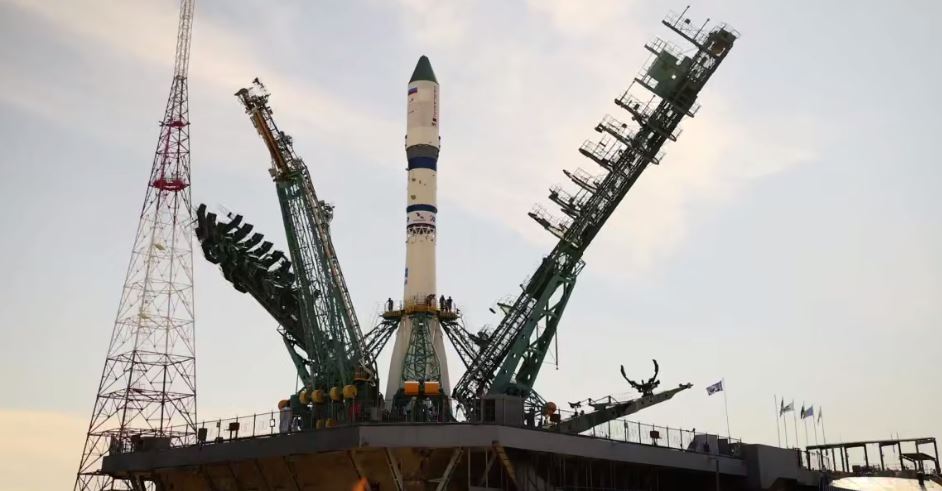
That remarkable moment 50 years ago is being commemorated on a Soyuz rocket carrying a Russian cargo spacecraft that launched from the Baikonur Cosmodrome in Kazakhstan – early on Friday, Baikonur time – and is scheduled to reach the International Space Station after a two-day trip. The spacecraft is loaded with more than 2.5 tons of fuel, drinking water, food, medicine, science equipment, and other supplies for the crew on the station.

The Soyuz rocket currently heading to the ISS is painted white and blue and has an emblem marking the anniversary of the Soyuz-Apollo docking, which was the first international space mission. It had begun on July 15, 1975, when two Soviet cosmonauts launched from Baikonur and, hours later, three American astronauts blasted off from Cape Canaveral, Florida. The Russians and the Americans connected in space two days later, shaking hands, exchanging gifts, and sharing a meal.

The show of comity in space contrasted with the intense competition between the two global rivals that was known as the “space race,” which included the Soviet launch of the Sputnik satellite into orbit in 1957 and the Apollo 11 landing of American astronauts on the moon in 1969.

“I really believe that we were sort of an example … to the countries. We were a little of a spark or a foot in the door that started better communications,” Apollo astronaut Vance Brand had said, according to a NASA account of the Apollo-Soyuz mission.

Tensions between Russia and the United States escalated after Moscow launched a large-scale invasion of Ukraine in 2022, though relations improved after U.S. President Donald Trump took office for a second term in January. The U.S. and Russian space agencies have continued to collaborate over the course of the protracted war.

Roscosmos, the Russian space agency, refers to the cargo spacecraft currently in orbit as Progress MS-31, while the U.S. agency NASA uses the term Progress 92 because it’s the 92nd Russian resupply craft to launch in support of the International Space Station since its construction began in 1998. The Apollo-Soyuz mission has been described as a precursor of the ISS project.

Spanish Artist Jaume Plensa Unveils “Nades” Sculpture for Almaty Museum of Arts

A new 12-meter sculpture titled Nades, created by internationally acclaimed Spanish artist Jaume Plensa, has been unveiled in Almaty. Commissioned specifically for the future Almaty Museum of Arts, the piece was presented during a special ceremony attended by the museum’s founder, Kazakhstani entrepreneur and arts patron Nurlan Smagulov.

“We dreamed of having a work of art next to the museum that would become an important part of Almaty. Nades is the embodiment of female strength, dignity, and beauty,” Smagulov said.

The sculpture portrays the head of a young woman with closed eyes and two long braids, a nod to the traditional image of a Kazakh girl. According to Plensa, the work is based on a real face that was scanned and then abstracted into a universal symbol.

“I work with real people, I scan their faces and transform the image until their individuality disappears. I want every viewer to recognize themselves in them. These faces become mirrors,” Plensa explained.

Born in Barcelona in 1955, Plensa is known for his monumental public sculptures installed in cities around the world. His notable works include Water’s Soul (2020, Jersey City), Julia (2018, Madrid), Roots (2014, Tokyo), Soul (2011, Singapore), and Alchemist (2010, MIT, Boston).

The Almaty Museum of Arts, Kazakhstan’s first private contemporary art museum, is set to open in September 2025. It will showcase a collection of over 700 works from Kazakhstan, Central Asia, and beyond, all curated from Smagulov’s personal collection.

Chinese Firm to Invest $600 Million in Waste-to-Energy Plants in Kazakhstan

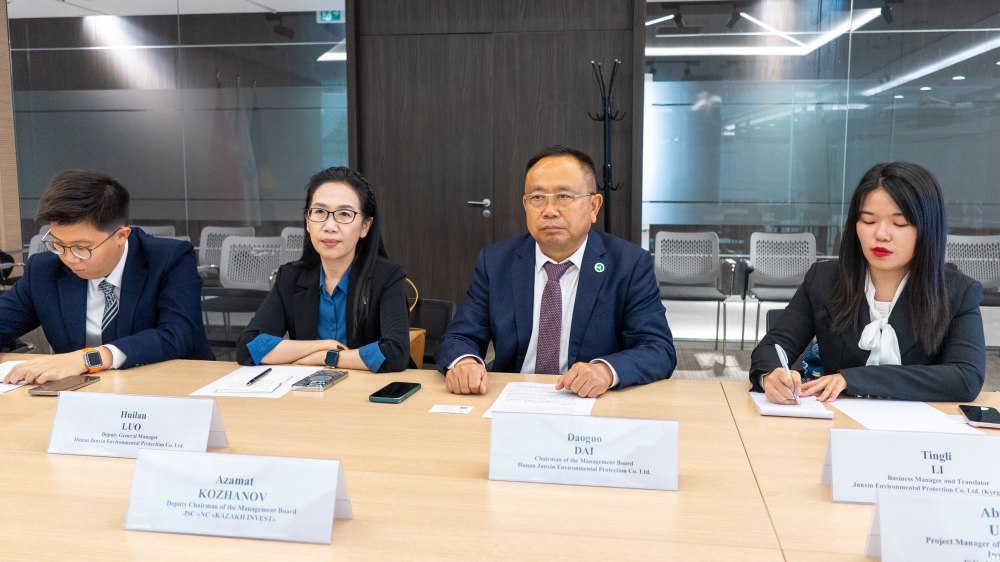
China’s Hunan Junxin Environmental Protection Co. Ltd. plans to invest $600 million in constructing three waste-to-energy plants in Kazakhstan. The project was the focus of a meeting on July 3 between Azamat Kozhanov, Deputy Chairman of the Board at Kazakh Invest, and Dai Daoguo, Chairman of Hunan Junxin’s Board of Directors.

According to Dai, the initiative will go beyond waste incineration to establish an integrated technological ecosystem. Plans include green data centers powered by the energy produced, training facilities, and smart waste management systems.

“Our goal is not just to build plants, but to implement an innovative approach to waste handling,” Dai said. “We aim to bring technologies to Kazakhstan that integrate recycling, energy generation, and digitalization. I’m confident this will be a major contribution to the region’s sustainable development and environmental safety.”

Kozhanov highlighted the importance of large-scale, environmentally focused projects that promote technology localization and sustainable energy. “We see strong potential for joint implementation of green projects that meet international standards. Junxin’s experience, including successful initiatives in China and Kyrgyzstan, can contribute significantly to the development of green infrastructure in our cities,” he said.

Hunan Junxin is already active in Kyrgyzstan, where it is implementing similar projects in Bishkek and Osh. As previously reported by The Times of Central Asia, on June 10, the company began construction of a $95 million solid waste incineration facility in Osh, Kyrgyzstan’s second-largest city. The plant will convert municipal waste into electricity and heat.

In Bishkek, the company is building a solid waste recycling facility at the city’s sanitary landfill. Initially, the facility will process 1,000 tons of waste per day, with plans to expand capacity to 3,000 tons. Completion is scheduled for December 2025.

Uzbekistan and Azerbaijan Forge $1B Trade Vision

President Shavkat Mirziyoyev of Uzbekistan arrived in Baku on July 2 for a state visit at the invitation of Azerbaijani President Ilham Aliyev. He was received at the airport by Deputy Prime Minister Yagub Eyyubov and other senior officials, with an official reception taking place at the presidential residence in Zagulba. 

A Thirty-Year Economic Partnership

During bilateral talks, Presidents Mirziyoyev and Aliyev reaffirmed their commitment to enhancing the strategic partnership between Uzbekistan and Azerbaijan as the two nations mark 30 years of diplomatic ties. “Never in history have our relations been at such a high level as they are today,” said Mirziyoyev.

Economic cooperation was a key focus of the discussions. Trade between the two countries has increased by 25% over the past year, and there are now approximately 300 joint ventures with a combined project portfolio valued at $4 billion. The leaders agreed to a new goal of boosting bilateral trade and investment to $1 billion annually by 2030. A comprehensive cooperation program was adopted to facilitate this, covering sectors such as industry, infrastructure, agriculture, healthcare, tourism, and banking.

Advancing Transport and Logistics Links

Significant progress was reported in the transport and energy sectors. The two presidents welcomed the growth of cargo transit along the Trans-Caspian International Transport Route, also known as the “Middle Corridor.” Uzbek cargo volumes on the route rose by 25% in 2024, surpassing one million tons, a development supported by the launch of a new electronic permit system in March. The leaders also committed to accelerating work on a joint green energy export initiative targeting European markets.

Institutionalizing Strategic Ties

Several bilateral documents were signed to formalize cooperation. These included a roadmap for implementing the 2023 Treaty on Alliance Relations through 2029, as well as agreements in environmental protection, science, higher education, and industry for the 2025-2026 period. Additional deals addressed agriculture, food security, social protection, maritime navigation, and municipal partnerships. New sister-city agreements were signed between Tashkent and Sumgayit, and between Navoi and Gabala.

At a joint press briefing, Mirziyoyev lauded Azerbaijan’s efforts to restore its UN-recognized territorial integrity, stating, “You have fulfilled the long-standing dream of your father and every citizen of Azerbaijan.” He also praised infrastructure development in formerly disputed territories of Nagorno-Karabakh and described Azerbaijan as a “reliable ally and strategic partner.” The two leaders emphasized their shared positions on regional and global issues and pledged continued coordination in international forums. Mirziyoyev reaffirmed Uzbekistan’s commitment to the diplomatic resolution of conflicts.

Cultural Diplomacy and Symbolism

The visit featured symbolic and cultural highlights. In Baku’s Ag Sheher district, the presidents laid the foundation for Uzbekistan Park, a 4.5-hectare space celebrating Uzbek culture and architecture. They also inaugurated Uzbekistan’s new embassy in Baku, which includes halls named after different Uzbek regions, with Mirziyoyev proposing to name one of the halls after Karabakh as a gesture of friendship.

The two leaders later toured the Sea Breeze resort complex on the Caspian coast, part of the broader Caspian Riviera tourism project. A similar development, Sea Breeze Uzbekistan, is being considered near Tashkent by private investors.

On July 3, Mirziyoyev and Aliyev attended the 17th summit of the Economic Cooperation Organization (ECO) in Aghdam, Karabakh. They visited the restored Imaret complex, including the mausoleum of Panah Ali Khan, founder of the Karabakh Khanate. The visit concluded with a cultural event titled Zafar (Victory), featuring music and Karabakh horse performances. The leaders agreed to deepen collaboration in trade, logistics, education, and culture, and announced a series of joint cultural and youth events this fall to commemorate 30 years of bilateral ties. Mirziyoyev expressed confidence that the outcomes of the visit would enhance the prosperity of both nations.

A Shifting Geopolitical Landscape

Since 2022, particularly after the Second Karabakh War, Azerbaijan has pursued a policy of geopolitical multi-vectorism, intensifying ties with Turkey, Israel, the European Union, and the Central Asian states. In 2024-2025, Baku’s relationship with Moscow soured due to shifts in the South Caucasus power balance and the downing of an Azerbaijan Airlines flight over Kazakhstan, said to have been caused by accidental Russian ground fire. As previously reported by The Times of Central Asia, in January, Aliyev stated that the “guilt for the deaths of Azerbaijani citizens in this accident lies with the representatives of the Russian Federation. We demand justice, we demand punishment of the guilty.” Against this backdrop, Uzbekistan has emerged as a key ally for Azerbaijan on its eastern flank.

Uzbek-Azerbaijani relations exemplify the evolving geopolitical architecture of Eurasia, where regional powers are seeking greater autonomy, a balanced approach to global powers, and the increasing assertion of national identity. The growing partnership between Uzbekistan and Azerbaijan strengthens both countries’ positions on the international stage and elevates the Trans-Caspian corridor as a strategic priority in Eurasian policy.

Kyzyl-Ompol Mining Resumes Under New Law, Public Concern Persists

Trial production of titanomagnetite has commenced at the Kyzyl-Ompol deposit near Balykchy in Kyrgyzstan’s Issyk-Kul region, First Deputy Prime Minister Bakyt Torobaev announced in a recent interview with local media.

According to Torobaev, the deposit holds an estimated 20 million tons of titanomagnetite, and the total value of useful elements in the subsoil could approach $1 billion.

“When this project was just starting, few believed in it. Today we see concrete results: experimental development has begun, infrastructure and technology are being developed. The potential of the deposit is enormous,” he said. Torobaev added that the site is also being used to test new technological solutions that could be implemented elsewhere in the country.

A Controversial Resource and Legal Shifts

Mining at Kyzyl-Ompol was previously prohibited due to the presence of uranium and thorium, radioactive elements often found alongside titanomagnetite. Their extraction has been banned in Kyrgyzstan since 2019, following widespread public protests over environmental and health concerns.

However, a 2023 law lifted the ban under strict environmental compliance conditions. The bill’s explanatory note cited the need for alternative revenue sources in light of economic challenges stemming from the COVID-19 pandemic and regional sanctions.

President Sadyr Japarov emphasized that titanomagnetite comprises roughly 95% of the deposit’s reserves. The Ministry of Natural Resources, Ecology, and Technical Supervision has assured the public that current extraction technologies meet all safety and environmental standards and pledged ongoing oversight.

Economic Potential and Public Concerns

Government estimates suggest that the project’s initial phase could contribute approximately $150 million to the state budget and generate around 1,000 jobs. Torobaev described Kyzyl-Ompol as having the potential to become a “second Kumtor”, a reference to the country’s largest and most profitable gold mine.

Nonetheless, public debate continues. Critics caution that the area’s known uranium reserves could pose environmental risks if disturbed, particularly in the ecologically sensitive Issyk-Kul region.

Titanomagnetite is used in metallurgy, particularly for producing specialized steels, and also has applications in the chemical and energy sectors. Discovered in 1951, the Kyzyl-Ompol deposit comprises five sites. To date, detailed geological surveys have been conducted on only one, with its reserves officially registered in the state balance.

Kyrgyzstan Approves Plan to Achieve Carbon Neutrality by 2050

On July 3, Kyrgyzstan’s Cabinet of Ministers approved the Concept for Achieving Carbon Neutrality of the Kyrgyz Republic along with the action plan for its initial implementation phase.

The approval marks a significant step in the country’s climate policy, setting long-term guidelines for sustainable development and signaling Kyrgyzstan’s political commitment to global climate goals.

The concept outlines a phased transition to a carbon-neutral economy, targeting key sectors such as energy, transport, industry, agriculture, waste management, and forestry. It aims to reduce greenhouse gas emissions, promote renewable energy, enhance energy efficiency, restore forest ecosystems, adopt digital and innovative technologies, and integrate climate risk into state planning processes.

The government sees the concept as a foundation for attracting climate finance, creating green jobs, and ensuring environmental security for future generations. It also reinforces Kyrgyzstan’s status as an active and responsible participant in the international climate framework under the Paris Agreement.

Kyrgyzstan has pledged to achieve carbon neutrality by 2050, a commitment first announced by President Sadyr Japarov at the 2021 World Leaders Summit during the UN Climate Change Conference in Glasgow. The country has also set a target to reduce greenhouse gas emissions by 44% by 2030.