• KGS/USD = 0.01144 0%
  • KZT/USD = 0.00192 -0%
  • TJS/USD = 0.10866 0.18%
  • UZS/USD = 0.00008 0%
  • TMT/USD = 0.28571 0%
  • KGS/USD = 0.01144 0%
  • KZT/USD = 0.00192 -0%
  • TJS/USD = 0.10866 0.18%
  • UZS/USD = 0.00008 0%
  • TMT/USD = 0.28571 0%
  • KGS/USD = 0.01144 0%
  • KZT/USD = 0.00192 -0%
  • TJS/USD = 0.10866 0.18%
  • UZS/USD = 0.00008 0%
  • TMT/USD = 0.28571 0%
  • KGS/USD = 0.01144 0%
  • KZT/USD = 0.00192 -0%
  • TJS/USD = 0.10866 0.18%
  • UZS/USD = 0.00008 0%
  • TMT/USD = 0.28571 0%
  • KGS/USD = 0.01144 0%
  • KZT/USD = 0.00192 -0%
  • TJS/USD = 0.10866 0.18%
  • UZS/USD = 0.00008 0%
  • TMT/USD = 0.28571 0%
  • KGS/USD = 0.01144 0%
  • KZT/USD = 0.00192 -0%
  • TJS/USD = 0.10866 0.18%
  • UZS/USD = 0.00008 0%
  • TMT/USD = 0.28571 0%
  • KGS/USD = 0.01144 0%
  • KZT/USD = 0.00192 -0%
  • TJS/USD = 0.10866 0.18%
  • UZS/USD = 0.00008 0%
  • TMT/USD = 0.28571 0%
  • KGS/USD = 0.01144 0%
  • KZT/USD = 0.00192 -0%
  • TJS/USD = 0.10866 0.18%
  • UZS/USD = 0.00008 0%
  • TMT/USD = 0.28571 0%
12 December 2025

After U.S. Strikes, Kazakhstan Warns of Deteriorating Security in Caspian Region

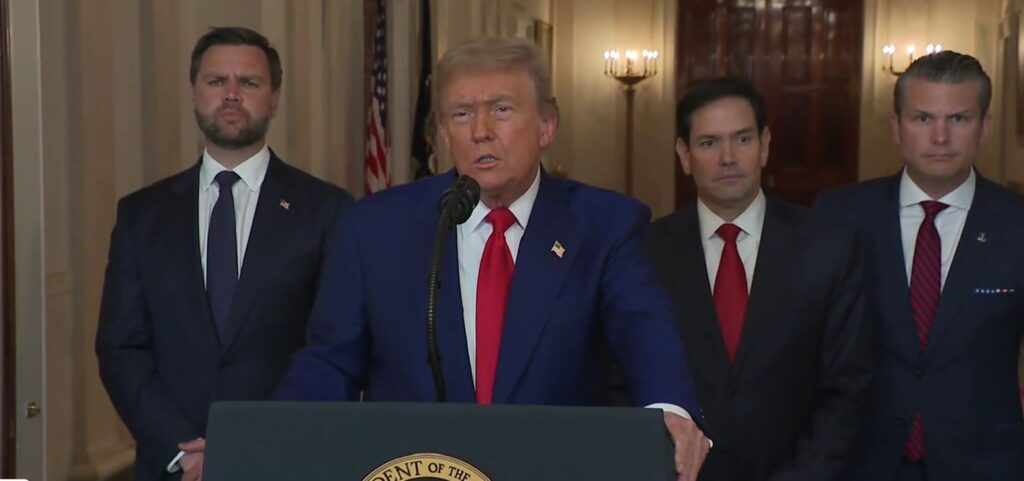
Kazakhstan said on Sunday that U.S. military strikes on Iran pose “serious consequences” for security in the Caspian region.

“As a result of recent U.S. military actions against Iran, the international situation is rapidly deteriorating, posing serious consequences for the security of states in our region,” Kazakhstan’s Ministry of Foreign Affairs said after the United States joined Israel’s war against Iran and attacked several Iranian nuclear sites.

“Kazakhstan, as one of the Caspian region states, maintains cooperation with Iran in various spheres. We believe that all disputes, including those related to nuclear issues, must be resolved through negotiations based on the United Nations Charter,” the ministry said.

“We urge all relevant states to accelerate the development of an agreement aimed at preventing the proliferation of nuclear weapons and providing security guarantees for states that comply with the non-proliferation regime under international oversight,” it said.

Kazakhstan, Azerbaijan, Turkmenistan, Iran and Russia border the Caspian Sea. The area is an important trade route.

Japan-Backed Tunnel Project Begins on Kyrgyzstan’s Bishkek–Osh Highway

Construction has begun on a 750-meter tunnel along Kyrgyzstan’s vital Bishkek–Osh highway, the country’s only overland route connecting the northern and southern regions. The project marks a major step in modernizing national transport infrastructure and improving safety in an area prone to rockfalls, landslides, and harsh weather conditions.

The tunnel is being built at the 400-kilometer mark of the highway by Japan’s Takenaka Civil Engineering & Construction Co., using advanced Japanese technologies designed to meet the region’s complex geological challenges.

A formal groundbreaking ceremony took place on June 19, attended by Kyrgyz Transport and Communications Minister Absattar Syrgabayev and Japanese Ambassador to Kyrgyzstan Hideki Goda.

Minister Syrgabayev described the tunnel as a key solution to the dangers posed by the mountainous terrain. “In this area, the risks are high. A tunnel is the safest and most reliable solution,” he said.

Stretching 655 kilometers, the Bishkek–Osh highway runs through the regions of Chui, Talas, Jalal-Abad, and Osh, linking the capital with the country’s second-largest city. It plays a crucial role in both domestic mobility and regional trade, forming part of international corridors that connect Kyrgyzstan with Kazakhstan, Uzbekistan, Tajikistan, and China.

The tunnel reflects the government’s continued efforts to strengthen the safety and reliability of one of its most important infrastructure assets.

Uzbekistan Startup to Build First National EV Charging Network

A Tashkent-based startup is set to build Uzbekistan’s first national electric vehicle (EV) charging network, marking a significant step in the country’s push toward clean energy and technological self-reliance.

Pulseev, established earlier this year, aims to install 500 EV charging stations across Uzbekistan by 2026, with a long-term target of 3,000 stations by 2030. Its first large-scale charging hub, now under construction, will include more than 50 charging bays, complemented by modular cafés, coworking spaces, and a children’s playground.

Designed and assembled locally, Pulseev’s chargers are tailored to Uzbekistan’s energy infrastructure and climatic conditions. The stations will offer fast charging, mobile app integration, and remote monitoring, features aimed at simplifying the user experience.

“We’re not just installing hardware,” said co-founder Jasurbek Khodjaev. “We’re creating spaces where people feel proud to power their vehicles with clean energy, while families enjoy time together.”

The initiative aligns with Uzbekistan’s broader strategy to invest in renewable energy and improve energy efficiency. The government has expressed strong support for EV adoption and digital infrastructure as part of efforts to reduce dependence on fossil fuels and modernize the national grid.

Pulseev’s long-term vision includes expansion into other Central Asian markets and the Middle East. The company promotes a concept it calls “energy freedom,” advocating for democratized access to clean energy not only for transportation but also for everyday life.

“This is about dignity, independence, and innovation,” said Mukhammad Khalil, founder of Startup Garage, a regional accelerator supporting Pulseev.

The project also reflects a broader shift in Central Asia’s startup ecosystem, with increasing emphasis on indigenous technological solutions to local challenges. By developing EV infrastructure domestically, Pulseev positions itself as a key player in shaping the region’s sustainable transport future.

Kazakhstan’s Domestic Violence Law Brings Progress Amid Ongoing Challenges

Crimes against women and children have declined over the past year in Kazakhstan, a trend attributed to a sweeping new law on domestic violence. Despite these gains, authorities caution that women and children remain at significant risk from abuse.

Persistent Challenge

On June 16, 2024, Kazakhstan’s Law on Ensuring the Rights of Women and the Safety of Children came into force, having been signed by President Kassym-Jomart Tokayev two months earlier. Since the outset of his presidency, Tokayev has identified combating domestic violence as a top policy priority.

Children’s Ombudsman Dinara Zakieva reported that roughly 900 crimes against the sexual integrity of minors are recorded annually. Since the law’s enactment, at least 25 individuals convicted of sexual violence against children have received life sentences.

Meanwhile, according to Marat Abishev of the General Prosecutor’s Office, at least 80 women die from domestic violence each year. Law enforcement officials stress that official statistics significantly underreport the true extent of domestic abuse. Surveys suggest that one in three women in Kazakhstan has experienced physical violence, threats, or psychological pressure.

The new law has introduced tougher criminal penalties for domestic abuse, as well as protective and preventative mechanisms. Amendments to the Criminal Code now bar lenient sentences for crimes involving violence against minors and prohibit reconciliation between victims and perpetrators in such cases. The sole punishment for the murder or rape of a minor is now life imprisonment.

The law also establishes liability for the sexual harassment of persons under 16 and introduces penalties for inciting or abetting suicide.

Initial Results

State Secretary Yerlan Karin recently shared data showing early progress under the new legislation. In the first five months of 2025, reports of domestic violence dropped by 20.5% compared to the same period in 2024. The number of serious domestic crimes fell by 29%, while particularly serious offenses declined by 44%.

Crimes against the sexual integrity of minors decreased by 21.3%, and pedophilia-related offenses dropped by 40.7%.

Karin noted that crimes against women have halved over the past five years, crediting stricter penalties and improved prevention efforts for the amelioration. He also highlighted a rise in the detection of domestic violence cases, facilitated by a new mechanism allowing authorities to launch investigations without a complaint from the victim. Between January and May 2025, more than 19,000 such cases were identified through mobile patrol units, police reports, witness statements, and social media monitoring.

To improve reporting mechanisms, QR codes for the national 111 contact center are now displayed in schools. This has led to a spike in outreach: in the first five months of 2025, children sent more than 86,000 messages, with over 2,000 seeking help for violence or bullying. In 28 cases, potential suicides were prevented. Adults also placed over 62,000 calls to the center, many concerning domestic violence.

Kazakhstan currently operates 20 psychological support centers and family support services in 112 districts and cities. A new prevention initiative, mandatory psychological counseling for aggressors, was introduced this year, with courts ordering 52 individuals to participate.

Legal Reversal on the Horizon?

Despite these improvements, newly proposed legislation has sparked concern. The Ministry of Internal Affairs has introduced a draft bill, On Crime Prevention, which seeks to consolidate five laws, including the 2009 Law on the Prevention of Domestic Violence, into a single legal framework.

Critics, including Professor Muslim Khasenov, warn that the consolidation may dilute legal protections for victims. Speaking at a meeting of the Public Chamber in the Mazhilis, Khasenov said the draft includes just one article on domestic violence, reducing the issue to a list of general forms and preventive measures.

“While these measures may theoretically apply to domestic violence, in practice there’s a high risk that the specific nature of such crimes will be overlooked,” Khasenov said. He noted that most post-Soviet states maintain separate domestic violence laws that reflect the distinct dynamics of such offenses.

Deputy Minister of Internal Affairs Igor Lepekha has responded by issuing assurances that key reforms, such as harsher penalties for assault and minor bodily harm, will be preserved. The ministry states that the draft law is part of a broader reform of Kazakhstan’s law enforcement and legal system.

The issue of domestic violence has been the subject of much public scrutiny in recent years, particularly since the live-streamed trial of Former Minister of the National Economy, Kuandyk Bishimbayev, for the murder of his common-law wife, Saltanat Nukenova, in November 2023. Bishimbayev was sentenced to 24 years in prison.

Amidst Diplomatic Tensions, Russia and Uzbekistan Explore Long-Term Youth Exchange Program

During a recent meeting with the heads of global news agencies in St. Petersburg, Russian President Vladimir Putin responded positively to a proposal from Uzbekistan’s National News Agency (UzA) to establish a long-term youth exchange program aimed at strengthening bilateral ties and addressing migration-related issues.

Abdusaid Kochimov, Director General of UzA, initiated the proposal, emphasizing the historical and cultural ties between the two countries. “There is a strong interest in Uzbekistan in everything that happens in and around Russia. Our societies share close mentalities and traditions,” he said.

Kochimov praised the leadership of Presidents Vladimir Putin and Shavkat Mirziyoyev in deepening strategic cooperation, describing their efforts as “titanic.” However, he pointed out persistent challenges in the migration sphere and argued that a structured youth program with defined goals could foster deeper mutual understanding and resolve some of these issues.

“There is a real need for a large-scale and long-term youth exchange program with clear projects and goals,” Kochimov said. “This would bring our young people closer and build a strong, friendly image of each other, based on our shared values and history.”

President Putin welcomed the suggestion, noting ongoing collaboration between Russia and Uzbekistan across several sectors, including energy. He referenced the two countries’ partnership in nuclear energy development and acknowledged Uzbekistan’s rapidly growing population, from 15 million three decades ago to 38 million today, highlighting the resulting pressures on its labor market.

“We agreed with President Mirziyoyev to prepare people who want to work in Russia in advance. This includes learning the Russian language and culture. There’s a good plan in place,” Putin said, adding, “This work is not just important, it’s essential. I fully agree with you.”

Putin also mentioned recent visits by Uzbek officials to Moscow, including Saida Mirziyoyeva, which included discussions on youth engagement. He reaffirmed Russia’s commitment to supporting joint initiatives in this area.

However, this positive diplomatic development comes against the backdrop of recent tensions over the treatment of Uzbek nationals in Russia. On June 10, the Uzbek Foreign Ministry summoned Russian diplomats to protest what it called the aggressive and disrespectful conduct of law enforcement officers during identity checks on Uzbek migrants.

The protest followed a major police raid in Moscow’s Strogino district on June 8. Footage shared online appeared to show migrants being forcibly removed, verbally abused, and subjected to electric shocks. Uzbek authorities criticized these actions as unauthorized and unacceptable.

In response, Uzbekistan’s embassy in Moscow issued an official note requesting a legal explanation and urging Russian authorities to treat migrants with dignity in line with international standards.

Russian Foreign Ministry spokesperson Maria Zakharova confirmed that the matter is currently under official review.

Kazakhstan’s Youth Face Barriers to Entrepreneurship

A recent analysis by the analytical portal Ranking.kz reveals a concerning stagnation in youth entrepreneurship in Kazakhstan. Despite government rhetoric promoting innovation and small business, the number of young individual entrepreneurs has remained nearly flat over the past two years.

Youth Entrepreneurship by the Numbers

As of the end of Q1 2025, Kazakhstan recorded 736,100 individual entrepreneurs (IE) under the age of 35. Of these, 698,900 are active. The growth rate over two years is just 0.2%, signaling stagnation rather than progress.

The decline in young entrepreneurs’ share of the total business landscape underscores this trend. In 2023, they made up 50.9% of all active IEs; by 2025, that figure dropped to 47.3%.

According to the National Statistics Bureau, today’s young entrepreneur in Kazakhstan is more likely to be a woman (55.4%) than a man (44.6%). Urban residents dominate the demographic, comprising about 75.3% of the total, while rural entrepreneurs represent only 24.7%.

Sectoral Growth and Decline

Trade remains the leading sector for young entrepreneurs, employing 303,300 individuals, though it saw no growth over the past year. The most significant expansion occurred in transportation and logistics, which grew by 90.1% to 49,700 entrepreneurs. Construction also showed positive movement, with a 10.7% increase, totaling 21,000 entrepreneurs.

In contrast, other sectors experienced contraction: agriculture dropped by 25.1%, manufacturing by 11.9%, and real estate by 2.8%. These declines suggest a shift away from traditionally accessible sectors for new entrepreneurs.

Geographically, growth was concentrated in major urban centers. Almaty leads with 121,200 active young entrepreneurs, followed by Astana (89,500) and Shymkent (62,100). Modest gains were also observed in the Almaty, Kostanay, Pavlodar, and North Kazakhstan regions. The Ulytau region registered the lowest number, with just 6,700 young individual entrepreneurs.

Barriers to Growth

The Atameken National Chamber of Entrepreneurs’ 2024 “Business Climate” rating provides insight into regional variations in the ease of doing business. Entrepreneurs in Shymkent, Kyzylorda, and Ulytau reported the most favorable conditions. Conversely, Astana, Pavlodar, and North Kazakhstan ranked lowest.

Key challenges cited by entrepreneurs include:

  • High tax burdens (44% of respondents)
  • Excessive bureaucracy and a complex licensing system (43.1%)
  • Frequent inspections by regulatory authorities (42.4%)
  • Corruption, especially in land allocation and public procurement

These issues are reflected in the National Bank’s 2025 Q1 business sentiment survey, where 31.4% of respondents cited taxes as the primary obstacle, while 30% pointed to broader economic conditions and high competition.

Despite a vibrant and youthful potential workforce, Kazakhstan’s business environment continues to present structural challenges that deter innovation and sustainable growth. Addressing these barriers will be critical if the country is to harness its demographic dividend and support the next generation of entrepreneurs.