• KGS/USD = 0.01144 0%
  • KZT/USD = 0.00211 0%
  • TJS/USD = 0.10460 0.19%
  • UZS/USD = 0.00008 0%
  • TMT/USD = 0.28490 0%
  • KGS/USD = 0.01144 0%
  • KZT/USD = 0.00211 0%
  • TJS/USD = 0.10460 0.19%
  • UZS/USD = 0.00008 0%
  • TMT/USD = 0.28490 0%
  • KGS/USD = 0.01144 0%
  • KZT/USD = 0.00211 0%
  • TJS/USD = 0.10460 0.19%
  • UZS/USD = 0.00008 0%
  • TMT/USD = 0.28490 0%
  • KGS/USD = 0.01144 0%
  • KZT/USD = 0.00211 0%
  • TJS/USD = 0.10460 0.19%
  • UZS/USD = 0.00008 0%
  • TMT/USD = 0.28490 0%
  • KGS/USD = 0.01144 0%
  • KZT/USD = 0.00211 0%
  • TJS/USD = 0.10460 0.19%
  • UZS/USD = 0.00008 0%
  • TMT/USD = 0.28490 0%
  • KGS/USD = 0.01144 0%
  • KZT/USD = 0.00211 0%
  • TJS/USD = 0.10460 0.19%
  • UZS/USD = 0.00008 0%
  • TMT/USD = 0.28490 0%
  • KGS/USD = 0.01144 0%
  • KZT/USD = 0.00211 0%
  • TJS/USD = 0.10460 0.19%
  • UZS/USD = 0.00008 0%
  • TMT/USD = 0.28490 0%
  • KGS/USD = 0.01144 0%
  • KZT/USD = 0.00211 0%
  • TJS/USD = 0.10460 0.19%
  • UZS/USD = 0.00008 0%
  • TMT/USD = 0.28490 0%

Private Employment Agencies Expand Overseas Recruitment of Kyrgyz Migrants

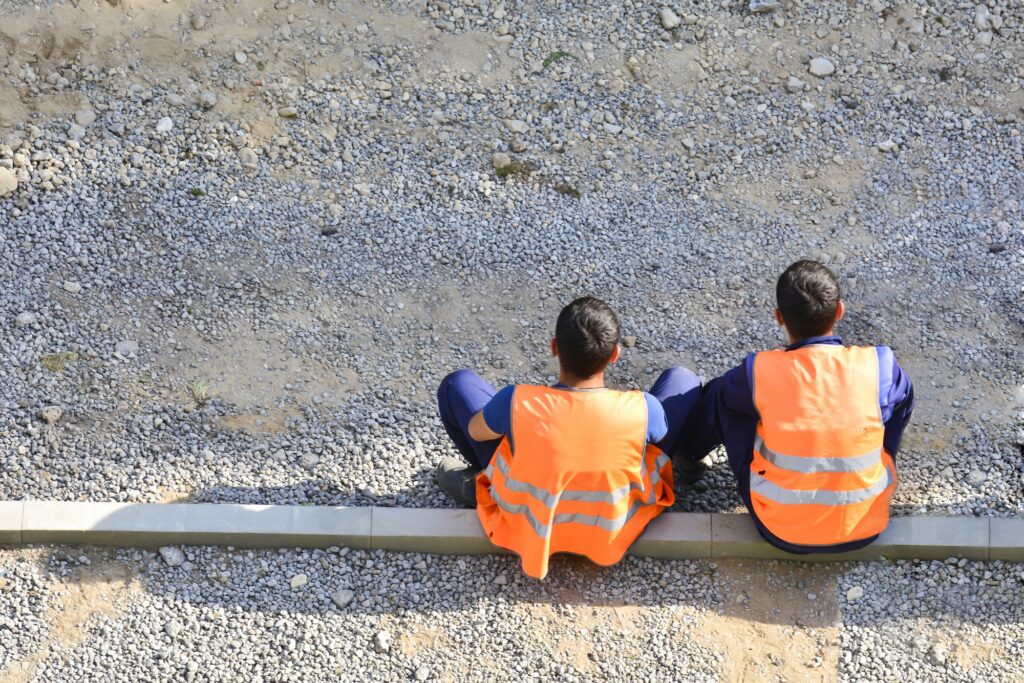
Private recruitment agencies that arrange overseas employment for Kyrgyz citizens contributed about $230,000 in tax payments to the state budget last year, according to data published on the Open Budget portal.

At the same time, some migrants say that working conditions abroad do not always match the promises made by intermediaries.

Kyrgyz media report that 159 companies in the country currently hold official licences to facilitate employment abroad. While Russia remains the main destination for labor migration, interest in jobs in Europe and Southeast Asia has increased in recent years.

Kyrgyz citizens can seek employment abroad through the Ministry of Labor, Social Security, and Migration, which has intergovernmental agreements with several countries, including the United Kingdom, Italy, Slovakia, and South Korea.

However, many migrants continue to use private agencies, citing faster processing times and a broader choice of destinations. According to official information, licensed companies offer employment opportunities in 26 countries, with the largest number of permits issued for sending workers to Bulgaria, Turkey, Russia, Germany, and the Baltic states.

Migrant experience

One Kyrgyz migrant, Nurbek Nogoibayev, said he decided to seek work in Europe for the first time after previously working in Kazakhstan and participating in a Work and Travel programme in the United States. A welder by profession, he said a Bishkek-based agency offered him a factory job in Kaunas, Lithuania.

“They promised inexpensive housing, a two-year residence permit, and stable work. I had an interview via WhatsApp, and since I speak English and Russian and have experience, they quickly accepted me,” he told The Times of Central Asia.

After completing paperwork, obtaining a visa, and paying for travel, he arrived in Lithuania three months later. According to Nogoibayev, the contract signed in Bishkek specified a salary of €5.5 per hour with the possibility of gradual increases. However, he said he was asked to sign a new contract with different conditions upon arrival.

He also reported higher housing costs than initially promised and changes to his working schedule, including a six-day work week and mandatory night shifts without additional compensation.

When he contacted the agency in Bishkek, he said he was told it could not assist further.

Nogoibayev added that he cannot easily change jobs. According to his understanding of local regulations, foreign workers are required to remain with their first employer for a certain period before switching employment, or risk losing their residence permit. He also said that leaving earlier could result in financial penalties.

“I would like to work overtime to earn more, but that is not possible,” he said.

Calls for oversight

Cases such as this have prompted discussion about the need for stronger oversight of private recruitment agencies and improved protection of Kyrgyz citizens working abroad. Observers note that while overseas employment provides an important source of income for many households, disputes over contracts and working conditions remain a recurring concern.

Uzbek Woman Killed in Traffic Accident in New York

A citizen of Uzbekistan has died following a traffic accident in New York City. The incident occurred on March 10 and resulted in the death of 31-year-old Nilufar Komilova, according to Uzbekistan’s state news agency Dunyo.

Preliminary information cited by the agency indicates that the accident involved a dump truck operated by the New York City Department of Transportation. The crash took place in the Kew Gardens neighborhood in the borough of Queens.

Police told the New York Daily News that Komilova was struck by a yellow Mack dump truck as it made a right turn from Metropolitan Avenue onto Lefferts Boulevard shortly before 9 a.m. She died at the scene.

Akobir Azizov, described as a close family friend, told the newspaper that Komilova had just taken her seven-year-old daughter to school and was walking home when the accident occurred about two blocks from her apartment.

“She usually takes Lefferts Boulevard,” Azizov said. “She always followed traffic rules. She would wait for the signal to cross the street.”

Komilova is survived by two children, a three-year-old son and a seven-year-old daughter. Azizov said relatives have struggled to explain the tragedy to them.

According to the report, Komilova’s husband, who works as a driver for the ride-hailing service Uber, became aware of the accident after trying unsuccessfully to contact her.

Uzbek officials said the Consulate General of Uzbekistan in New York is in regular contact with the family and is providing consular and legal assistance. The diplomatic mission has also expressed condolences.

The incident follows another fatal traffic accident involving an Uzbek national earlier this year. On February 5, an 11-year-old girl from Uzbekistan was struck by a school bus in the Bath Beach neighborhood of Brooklyn and later died at Maimonides Medical Center.

In February, Uzbekistan introduced amendments to its law “On Burial and Funeral Services,” published on the government legal portal Lex.uz. The changes allow state financial assistance for transporting the remains of Uzbek citizens who die abroad, a measure aimed at easing the financial burden on migrant families.

Tokayev: Kazakhstan’s GDP Could Reach $320 Billion by End of 2026

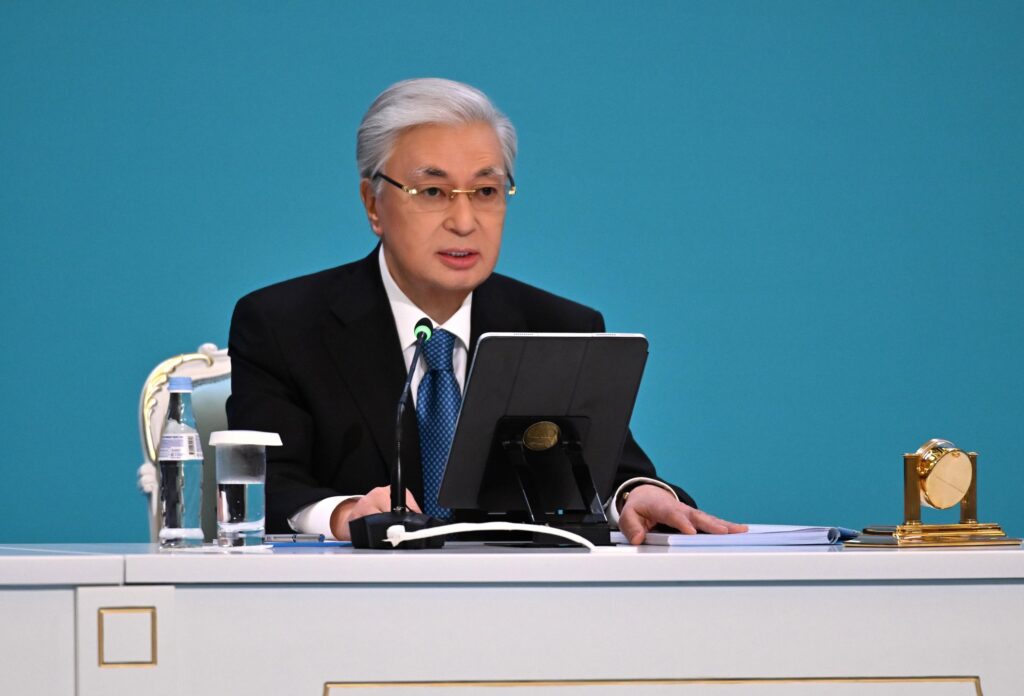
Kazakhstan’s gross domestic product could reach $320 billion by the end of 2026, President Kassym-Jomart Tokayev said at a forum for parliamentary deputies.

Speaking at the event, Tokayev noted that the global economy is facing heightened geopolitical tensions and trade conflicts, which he linked to declining trust between major powers and what he described as a weakening of international responsibility mechanisms.

“Of course, the current situation directly affects our country’s opportunities. But despite this, we are overcoming challenges, maintaining steady economic growth, and consistently implementing our national strategy,” Tokayev said.

According to him, Kazakhstan’s GDP reached $306 billion in 2025. He described this as the second-highest level among post-Soviet countries and the highest in Central Asia.

Tokayev also said Kazakhstan had entered the world’s top 50 economies and cited forecasts by international financial institutions suggesting that GDP could reach $320 billion by the end of 2026.

Investment and reserves

Kazakhstan continues to attract significant foreign direct investment, Tokayev said, noting that net inflows had exceeded $150 billion. According to him, this represents about 69% of total investment directed to Central Asia.

He added that the country’s financial buffers remain substantial. Gold and foreign exchange reserves stand at about $74 billion, while total reserves, including assets held in the National Fund, amount to approximately $139 billion.

Industrial and agricultural growth

Tokayev said economic expansion is being driven not only by overall growth but also by structural changes. In particular, manufacturing output has increased by more than 6% annually over the past two years.

He also highlighted the importance of the agro-industrial sector, which he said affects the living standards of 7.4 million people, or about 36% of Kazakhstan’s population.

State support for agriculture has increased in recent years. In 2025, more than $2 billion was allocated for concessional lending to farmers, which Tokayev described as the largest level of support provided to the sector since independence.

According to Tokayev, government policy aims not only to expand agricultural production but also to develop a modern, export-oriented agro-industrial economy.

He said that in 2025 around 250 new production facilities were launched in the sector, while international companies increased their presence in agricultural projects.

Major investment initiatives involving foreign partners are being implemented in the Almaty, Akmola, Zhambyl, and North Kazakhstan regions, as well as in the city of Shymkent. Total investment in these projects exceeds $1 billion and is expected to create tens of thousands of jobs.

As previously reported by The Times of Central Asia, export revenues from Kazakhstan’s agro-industrial sector reached $7 billion in 2025, an increase of 37% compared with the previous year.

Kazakhstan Authorities Acknowledge Gap Between Real Scale of Shadow Employment and Official Data

Kazakhstan’s authorities have acknowledged a significant discrepancy between official estimates of informal employment and administrative data, highlighting the scale of the country’s shadow labor market.

Minister of Labor and Social Protection Askarbek Yertaev said the actual number of people working outside the formal economy could be almost three times higher than indicated by official statistics. He made the statement during a Senate meeting devoted to regional development issues.

Presenting the ministry’s assessment of informal employment, Yertaev noted that out of a workforce of 9.7 million people, only 6.7 million made mandatory pension contributions at least once in 2025. Of these, 5.3 million were employees and 1.4 million were self-employed. This leaves around 3 million people without recorded pension contributions.

According to the minister, the figure significantly exceeds official estimates. Data from the National Statistics Bureau indicated that at the beginning of 2025, informal employment accounted for about 12% of the employed population, or just over 1.1 million people.

Yertaev said the discrepancy suggests that a substantial number of citizens either work informally or underreport their income.

Additional evidence of the scale of shadow employment comes from differences between statistical data and digital administrative records. While official statistics show 7.1 million registered employees, the Unified System for Accounting for Employment Contracts records contracts for only 4.1 million people.

Among the factors driving workers into informal employment, Yertaev cited overdue debts and the freezing of bank accounts, which he said may encourage individuals to conceal income and avoid formal labour arrangements.

To address the issue, the Ministry of Labor plans to expand the use of digital tools aimed at facilitating formal employment. This includes the introduction of AI solutions on the Electronic Labor Exchange portal.

According to the ministry, an AI-based system will automatically match job seekers with vacancies based on their education and professional background, while also supporting users throughout the job search process.

Deputy Chairman of the State Revenue Committee of the Ministry of Finance Zhanibek Nurzhanov also presented the results of a pilot project on platform employment. Implemented jointly with the Ministry of Labor, the initiative led to the registration of more than 43,000 taxi drivers as individual entrepreneurs under a special tax regime.

The State Revenue Committee’s information systems are now integrated with 31 online platforms, a step authorities say should help bring more workers into the formal economy.

Participants in the Senate discussion stressed that efforts to reduce shadow employment should combine enforcement measures with policies that encourage voluntary legalization of labor relations.

As The Times of Central Asia previously reported, proposals to combat the payment of undeclared wages included sectoral agreements on salary levels and requirements for companies to disclose employment structures.

Kazakhstan Faces Landmark Constitutional Referendum

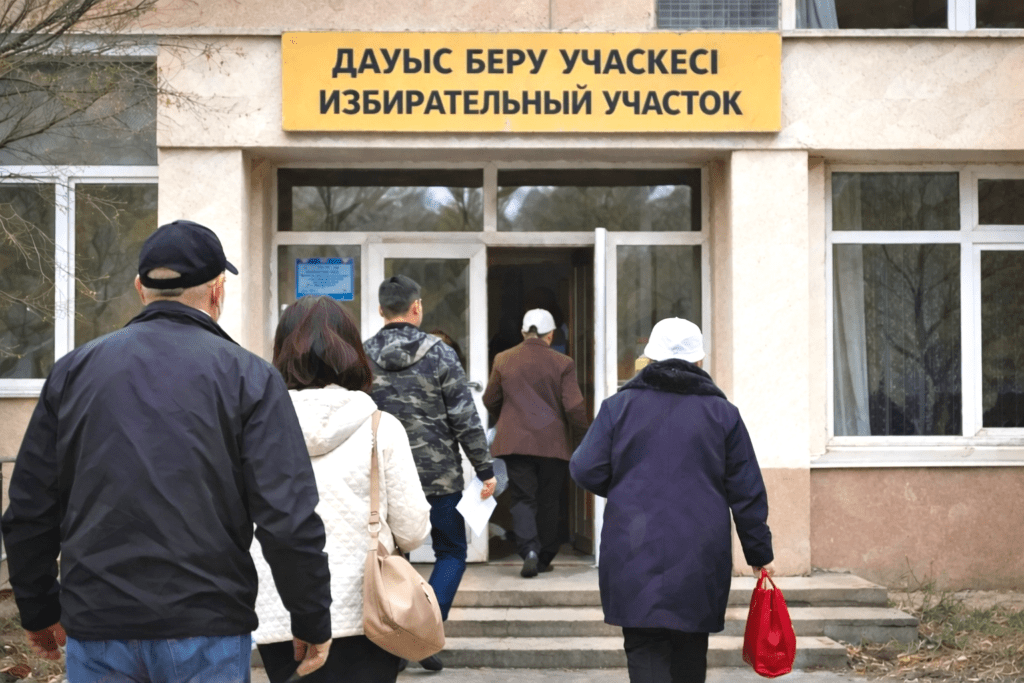
On March 15, citizens will vote in a nationwide referendum on sweeping constitutional amendments that could significantly reshape Kazakhstan’s political system.

Kazakhstan’s Constitution has undergone periodic revision since independence, with changes adopted in 1998, 2007, 2011, 2017, 2019, and most recently in 2022, when 56 amendments to the basic law were approved in a national referendum. According to official statements, the proposed draft would affect about 84% of the Constitution, making it the most extensive revision in the country’s modern history. President Kassym-Jomart Tokayev has described the proposed document as “essentially a new Constitution.”

At the same time, the draft retains several core principles. Kazakhstan would continue to be defined as a secular, democratic, unitary state, with the people recognized as the sole source of state power. Attempts to overthrow the constitutional order would remain punishable by law.

The draft also proposes the creation of a new representative body, the Kurultai, which would replace the current bicameral parliament, consisting of the Mazhilis (lower house) and the Senate (upper house), with a unicameral legislature.

The scale of the proposed reforms has generated significant public attention. The draft Constitution has been widely debated, and the referendum campaign has been accompanied by a large-scale public information effort. Supporters argue that the changes could streamline governance and modernize political institutions, while critics have raised concerns about the concentration of authority and the pace of reform.

Rights and Freedoms

The current Constitution states that human rights and freedoms must not infringe on the rights of others, the constitutional order, or public morality. The new draft expands this provision, specifying that the exercise of rights and freedoms must not violate the rights or restrict the freedoms of other individuals, undermine the constitutional order, disrupt public order, threaten public health, or contradict societal morality.

The document continues to guarantee freedom of speech and prohibit censorship, stating, “Freedom of speech and scientific, technical, and artistic creativity is guaranteed.” It also introduces an additional clause stipulating that the dissemination of information must not infringe upon the honor and dignity of others, public health, or public order.

The list of prohibited forms of propaganda is also broadened. It includes advocacy for violent changes to the constitutional order, violations of territorial integrity and sovereignty, threats to national security, incitement to war or armed conflict, and the promotion of social, racial, national, ethnic, or religious superiority or discord, as well as the glorification of cruelty and violence.

Supporters of the draft say these provisions are intended to strengthen social stability and national security. However, some observers note that broader restrictions linked to public order or morality may raise questions about how such norms would be interpreted and applied in practice.

In family law, the draft specifies that marriage is defined as a voluntary and equal union between a man and a woman, registered by the state in accordance with the law.

President and Vice President

Proposed changes to the structure of executive power have been among the most widely discussed aspects of the reform. The draft retains the rule that the president is elected for a single seven-year term. It also provides that, with the consent of the Kurultai, the president would appoint ten judges to the Constitutional Court for eight-year terms, six members of the Central Election Commission for five-year terms, and eight members of the Supreme Audit Chamber for five-year terms. If the Kurultai twice refuses to approve these appointments, the president would have the authority to dissolve the legislature.

The draft reintroduces the post of vice president, which existed between 1991 and 1996, and was held by Yerik Asanbayev before being abolished. Under the proposed amendments, the vice president would be appointed by the president with the consent of the Kurultai.

The vice president’s anticipated duties include representing the country abroad on behalf of the president, serving as the president’s representative in relations with the Kurultai, the government, and other state bodies, and maintaining contacts with public, scientific, and cultural organizations both domestically and internationally.

If the Kurultai twice refuses to approve the vice-presidential appointment, the president would again have the right to dissolve it. Proponents argue that the measure could help prevent institutional deadlock, while critics warn it may further strengthen presidential leverage over the legislature.

The reintroduction of the vice presidency would also alter the constitutional succession procedure. Currently, if the president leaves office early, his duties are assumed by the chair of the Senate, followed by the chair of the Mazhilis, and then the prime minister. Under the draft, presidential powers would first pass to the vice president. If the vice president is unable to assume the role, authority would transfer to the chair of the Kurultai and subsequently to the prime minister.

Unicameral Parliament

Legislative authority in Kazakhstan is currently vested in a bicameral parliament comprising the Senate and the Mazhilis. If the amendments are approved, these chambers would be replaced by the Kurultai, a term historically used for assemblies of tribes among Turkic and Mongol peoples.

President Tokayev first proposed the creation of a unicameral parliament in September 2025 and suggested the name Kurultai. The proposed body would consist of 145 deputies elected for five-year terms.

According to the draft, the Kurultai would serve as the country’s highest legislative authority, responsible for passing laws, reviewing legislation challenged by the president, deciding on matters of war and peace, calling presidential elections, and initiating referendums. It would also approve key state appointments and oversee government activity through reports and votes of no confidence, as well as establish commissions, hold hearings, and monitor budget implementation.

Supporters of the unicameral model argue that it could make the legislative process more efficient and responsive. Others caution that removing the upper chamber may reduce institutional checks within the parliamentary system.

The draft also provides for the creation of the Kazakhstani People’s Council as a consultative body representing citizens’ interests. It would be tasked with developing recommendations on major areas of domestic policy, strengthening national unity, and promoting national values. The council would also be able to submit draft legislation to the Kurultai and propose national referendums.

Correcting Accumulated Imbalances

Kazakh political analyst Daniyar Ashimbayev argues that both domestic developments and changes in the international environment are driving the push for constitutional reform.

“The 1995 Constitution was adopted during the transition to a market economy and the consolidation of independence. At that time, expectations about globalization and international law were different. Today, international legal norms are under strain, and geopolitical risks are increasing. Some provisions have become outdated and require reassessment. In this sense, the new Constitution reflects an emerging political reality,” he stated.

Ashimbayev added that modern societies face competing trends, including what he described as cosmopolitanism on the one hand, and a revival of traditionalist social models on the other. In his view, this creates a need to redefine and institutionalize balanced social principles.

Timur Suleimenov Advances Tokayev Crypto Reserve Plan with $350M Portfolio

National Bank Governor Timur Suleimenov is moving to implement President Kassym-Jomart Tokayev’s crypto strategy, saying Kazakhstan has already formed a crypto-related investment portfolio of up to $350 million from gold and foreign-exchange reserves. The move is the clearest sign yet that Tokayev’s calls for a strategic state role in digital assets are moving from presidential strategy to central-bank implementation.

Suleimenov has presented the initiative as a measured reserve-management step rather than a dramatic plunge into direct coin buying. The National Bank is preparing a list of instruments that goes beyond direct cryptocurrency exposure and includes shares of high-tech companies tied to crypto and digital financial assets, index funds and other instruments with similar market behavior. Deputy Governor Aliya Moldabekova said the first investments are expected in April-May, with officials focusing on digital-asset infrastructure companies rather than a large immediate direct allocation to cryptocurrencies.

The structure closely tracks Tokayev’s own instructions. In his September 8, 2025 state-of-the-nation address, Tokayev said Kazakhstan should place greater focus on crypto assets and called for a State Digital Assets Fund to be created on the basis of the National Bank’s investment arm to accumulate a strategic crypto reserve. That same address argued that Kazakhstan needed to accelerate the formation of a full digital-asset ecosystem, and The Astana Times reported that the National Investment Corporation, a National Bank subsidiary, will manage the crypto fund.

Tokayev had already laid some of the political groundwork a year earlier. In his September 2, 2024 address, he said Kazakhstan should continue improving the regulatory framework for digital assets and mining while further developing crypto exchanges. By May 2025, he was also telling central-bank officials of the Organization of Turkish States that Kazakhstan would introduce new regulations for the secure circulation of digital assets, including cryptocurrencies, stablecoins and tokenized assets.

At the same time, Tokayev has paired crypto expansion with tougher enforcement language. During a January 28, 2026 meeting at the Financial Monitoring Agency, he warned that attempts to move capital abroad through cryptocurrency schemes were continuing and said the state needed a stronger barrier against such activity. That caution helps explain why Timur Suleimenov and Tokayev are favoring a state-managed, rules-based portfolio of diversified crypto-linked assets, rather than a rapid expansion into direct cryptocurrency purchases.

Taken together, Kazakhstan’s direction is becoming clearer: Tokayev is setting the strategic line, and Timur Suleimenov is translating it into a controlled investment program inside the National Bank. If the first allocations begin on schedule in April or May, the coming weeks will offer the first concrete test of whether Tokayev’s crypto-reserve vision can work under Suleimenov’s more cautious, institutionally managed model.