• KGS/USD = 0.01144 0%
  • KZT/USD = 0.00212 0%
  • TJS/USD = 0.10456 0.19%
  • UZS/USD = 0.00008 0%
  • TMT/USD = 0.28490 0%
  • KGS/USD = 0.01144 0%
  • KZT/USD = 0.00212 0%
  • TJS/USD = 0.10456 0.19%
  • UZS/USD = 0.00008 0%
  • TMT/USD = 0.28490 0%
  • KGS/USD = 0.01144 0%
  • KZT/USD = 0.00212 0%
  • TJS/USD = 0.10456 0.19%
  • UZS/USD = 0.00008 0%
  • TMT/USD = 0.28490 0%
  • KGS/USD = 0.01144 0%
  • KZT/USD = 0.00212 0%
  • TJS/USD = 0.10456 0.19%
  • UZS/USD = 0.00008 0%
  • TMT/USD = 0.28490 0%
  • KGS/USD = 0.01144 0%
  • KZT/USD = 0.00212 0%
  • TJS/USD = 0.10456 0.19%
  • UZS/USD = 0.00008 0%
  • TMT/USD = 0.28490 0%
  • KGS/USD = 0.01144 0%
  • KZT/USD = 0.00212 0%
  • TJS/USD = 0.10456 0.19%
  • UZS/USD = 0.00008 0%
  • TMT/USD = 0.28490 0%
  • KGS/USD = 0.01144 0%
  • KZT/USD = 0.00212 0%
  • TJS/USD = 0.10456 0.19%
  • UZS/USD = 0.00008 0%
  • TMT/USD = 0.28490 0%
  • KGS/USD = 0.01144 0%
  • KZT/USD = 0.00212 0%
  • TJS/USD = 0.10456 0.19%
  • UZS/USD = 0.00008 0%
  • TMT/USD = 0.28490 0%

Korean Firm to Reduce Emissions from Bishkek Heating Plant

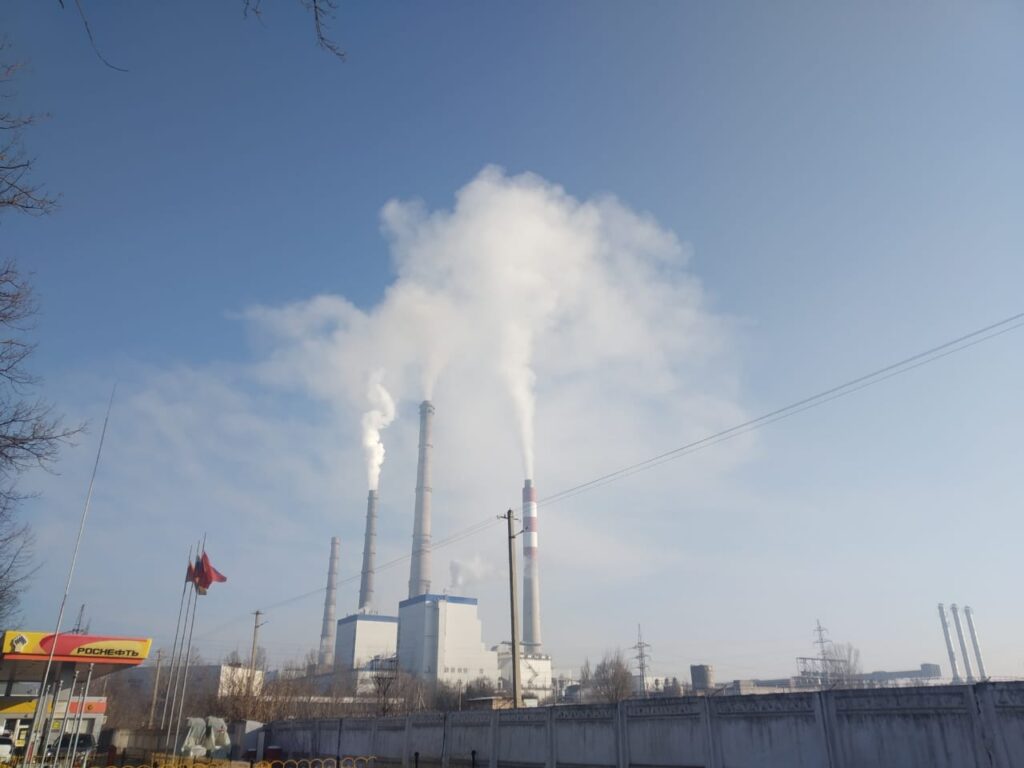
On September 24, the Bishkek city administration and South Korea’s EcoMotion signed a memorandum of understanding aimed at cutting air pollution in the Kyrgyz capital. The agreement focuses on the introduction of advanced High Voltage Power Supply (HVPS) air purification technologies at the Bishkek Thermal Power Plant (TPP).

The initiative begins with a preliminary feasibility study for installing high-voltage electrostatic precipitators, devices that use a strong electrostatic field to capture particulate matter such as dust and smoke from gas emissions. The technology is designed to reduce harmful pollutants produced by the thermal plant, which relies primarily on coal to generate electricity and heat for the city.

The project forms part of the Bishkek City Development Program, which prioritizes clean air and improved environmental conditions. As previously reported by The Times of Central Asia, emissions from the Bishkek TPP account for approximately 15% of the city’s air pollution.

The Bishkek thermal plant generates 13% of Kyrgyzstan’s electricity, the majority of which is otherwise supplied by hydropower, and provides heat and hot water to nearly two-thirds of the capital’s population.

Air quality remains a serious concern in Bishkek, a city of over one million residents. Pollution levels spike during winter months, when widespread coal burning for residential heating significantly increases emissions. Bishkek frequently ranks among the top 10 most polluted cities worldwide, according to IQAir’s global air quality index.

Kazakhstan’s Aging Population: Analysts Warn of Healthcare and Economic Risks

Kazakhstan is undergoing a rapid demographic shift as its population ages at an unprecedented pace. According to a recent study by Ranking.kz, the number of citizens aged 60 and above is growing by 3-4% annually.

As of early 2025, Kazakhstan had 2.8 million residents over the age of 60, an increase of 3.7% compared to the previous year. Seniors now make up 13.9% of the population, up from 12% in 2020 and 9.8% in 2010. The average annual growth rate for this age group has remained steady at around 3.8% since 2010.

The gender disparity is notable: 16.4% of women in Kazakhstan are over 60, compared to just 11.3% of men.

This demographic shift is largely driven by increasing life expectancy. In 2024, life expectancy in Kazakhstan reached 75.44 years, up from 75.1 the previous year. Women live an average of 79.42 years, while men live 71.33. The only recent decline in life expectancy occurred during the COVID-19 pandemic.

The trend mirrors global developments. According to data from the IMF, UN, and WHO, global life expectancy has more than doubled over the past century from just 34 years in 1913 to 72 years by 2022 and continues to rise, even as fertility rates fall.

When the UN and WHO were founded, children under 15 outnumbered people over 65 by seven to one. By 2050, the two groups are projected to be equal. The proportion of people aged 80 and older is expected to nearly quadruple, reaching 5% of the global population.

“These shifts foreshadow a vast array of problems in healthcare, as well as in the social and economic spheres,” IMF analysts caution.

Experts warn that aging will reshape Kazakhstan’s labor market, change consumption patterns, and place mounting pressure on the pension system. Like many other countries, Kazakhstan faces the challenge of balancing support for its growing elderly population with the need to sustain long-term economic development.

Caspian Pipeline Attack After Zelenskyy-Tokayev Meeting Puts Kazakhstan in Delicate Position

A recent drone strike on the Caspian Pipeline Consortium (CPC) office in Novorossiysk has raised concerns in Kazakhstan, whose oil exports rely heavily on the pipeline route. The attack, which killed two people and damaged nearby infrastructure, occurred just one day after Kazakh President Kassym-Jomart Tokayev met with Ukrainian President Volodymyr Zelenskyy in New York. While there is no official indication that the CPC was a deliberate target, the incident has prompted debate over the implications for Kazakhstan’s economic security and diplomatic neutrality amid the ongoing war.

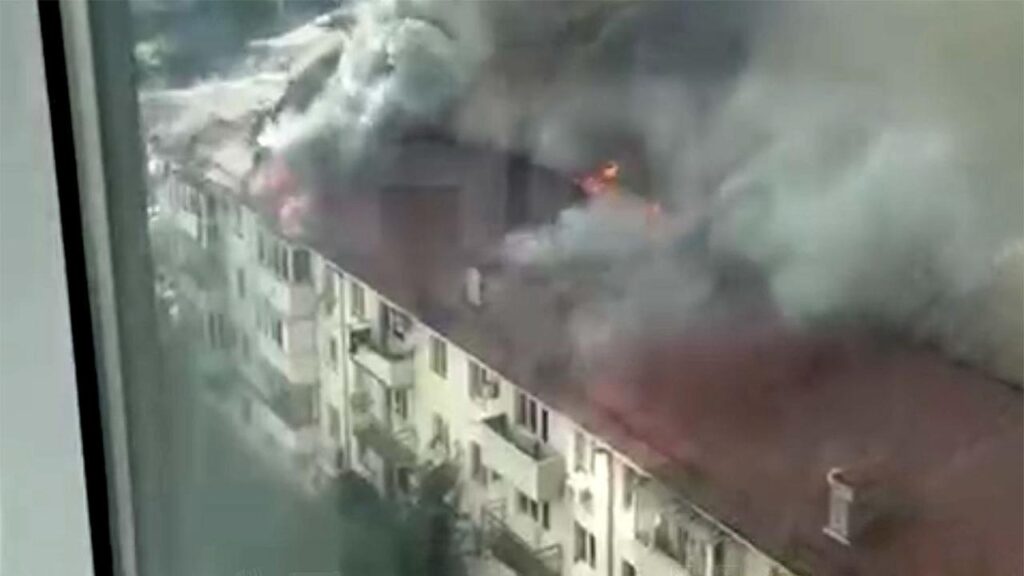
According to CPC, the attack struck its administrative office in central Novorossiysk during the workday. The building sustained damage in addition to nearby residential blocks and a hotel. Two CPC employees were wounded and evacuated; the office’s operations were suspended. The consortium also said others in the building, not employed by CPC, suffered serious injuries. 

Authorities in the Krasnodar region confirmed two deaths and seven injuries from the strike, declaring a state of emergency in the city.  Russian media reported extensive damage to residential buildings and a hotel near the CPC office. 

In response, Kazakhstan’s Ministry of Energy issued a statement assuring that pipeline operations would continue as normal. The ministry said oil intake from Kazakh shippers remains unaffected, and the transportation and loading of oil via the CPC marine terminal is proceeding without restrictions. The ministry added that it is coordinating with CPC shareholders and monitoring developments in real time. 

Notably, the attack followed just 12 hours after Tokayev’s meeting with Zelenskyy in New York. According to the Kazakh presidential press service, Zelenskyy expressed his view of the war’s trajectory while Tokayev emphasized the importance of sustained diplomacy. Ukraine’s version, via its presidential press service, was more expansive: Zelenskyy thanked Tokayev for support on sovereignty, insisted on a leaders’ summit, and said Kazakhstan’s mediation role was welcome. In a later interview, Zelenskyy even floated the possibility of meeting Russian President Vladimir Putin on neutral territory such as Kazakhstan. 

When asked about that proposal after the Novorossiysk attack, Tokayev stated firmly that Kazakhstan does not see itself as a mediator in the Russia-Ukraine conflict. He reiterated that both sides should engage directly, while supporting continued talks. “Talks must continue,” he said. 

Kazakh political analyst Daniyar Ashimbayev noted that Tokayev’s extended commentary suggested he may feel less enthusiastic about a repeat meeting with Zelenskyy. Oil expert Olzhas Baidildinov stated that around 80 percent of Kazakhstan’s oil exports transit via the CPC; he therefore warned the strike directly threatens Astana’s interests. 

Baidildinov also suggested that Kazakhstan may need to consider a range of policy responses to ensure the security of its oil export routes, including enhanced monitoring of trade and transit channels. He noted that international companies operating in Kazakhstan, particularly those using the CPC pipeline, could be indirectly affected by any future disruptions.

Kazakhstan’s Foreign Ministry has not issued a public statement on the incident. Meanwhile, diplomatic engagement continues at various levels. During his visit to New York, Tokayev also met with Chevron CEO Michael Wirth. Chevron is among the largest foreign investors in Kazakhstan’s energy sector and exports a significant volume of oil via CPC.

Analysis and Risks

The strike on Novorossiysk has heightened concerns about the vulnerability of key energy infrastructure used by Kazakhstan, particularly the Caspian Pipeline Consortium (CPC), which carries about 80% of the country’s oil exports. While there is no official indication that the CPC office was an intended target, any disruption to the route could have economic repercussions for Kazakhstan and its international partners.

Observers note the challenge Kazakhstan faces in maintaining its policy of balanced neutrality amid the ongoing war. The proximity of the attack to a high-level diplomatic meeting between Tokayev and Zelenskyy has drawn attention, though Kazakh officials have remained cautious in their public statements. 

Tajikistan Revises Export Duties to Boost Domestic Processing

The government of Tajikistan has approved revised export duties on raw materials and semi-processed goods, a move that has prompted considerable discussion within the business community. The changes, which directly affect exporters and producers, are intended to stimulate domestic processing and reduce the export of unrefined resources.

The key reform replaces fixed tariffs with duties calculated as a percentage of a product’s market value. Previously, export duties were set at:

  • €300 per ton for leather
  • 20% or €100 per ton for silk and cocoons
  • 10% for cotton fiber

Under the new rules, export duties fluctuate with global market prices, allowing for more adaptive regulation.

According to the Ministry of Economic Development and Trade, the reform is designed to promote higher-value production within Tajikistan. “The goal of this resolution is to reduce the export of raw materials and support the production of high-value goods,” said First Deputy Minister of Economic Development and Trade Ashurboy Solekhzoda.

The revised duties apply to a range of commodities including cotton fiber, leather, silk, cocoons, minerals, concentrates, plant juices, and other semi-processed goods. However, around 34 categories of raw materials remain exempt from export duties.

Tajikistan’s approach mirrors policies implemented in neighboring states. Kazakhstan imposes export duties on 44 product categories, including leather, wool, scrap metal, sunflower seeds, and oil. In Uzbekistan, export duties apply to over 86 types of goods, with some rates reaching as high as 100%.

Such measures aim to reduce reliance on raw material exports, stimulate domestic value-added industries, and enhance export competitiveness.

Economists and industry observers say the new policy could incentivize companies to expand local processing operations and reduce dependence on commodity exports. It may also enhance Tajikistan’s attractiveness to foreign investors interested in long-term, value-driven partnerships.

Over time, the revised export framework is expected to help strengthen the national economy and integrate Tajikistan more deeply into regional supply chains across Central Asia.

Experts Say Kazakhstan Must Boost Manufacturing to Tame Inflation

Inflation is steadily eroding incomes in Kazakhstan, depleting savings and undermining government efforts in the social sector. The Times of Central Asia previously noted that surging economic growth could be a contributing factor to Kazakhstan’s inflation problem. But despite rising prices, the government has no plans to apply the brakes. On the contrary, officials point to promising GDP growth driven by sectors beyond oil. Meanwhile, independent experts argue that only large-scale industrial development can provide a lasting solution to inflation.

Persistent Price Pressures

Inflation continues to outpace official projections. In August, annual inflation hit 12.2%, and by the end of 2025 it is expected to reach 14%, well above the National Bank of Kazakhstan’s target range of 5-6%. Economists say the country’s dependence on imports is a key driver. Kazakhstan imports large volumes of food, fuel, medicine, equipment, and consumer goods. Wage and pension increases are failing to keep pace with the surge in prices.

President Kassym-Jomart Tokayev has acknowledged that high inflation poses a serious challenge, warning it is “eating away at economic growth and household incomes.”

Government efforts to stabilize prices have yet to show meaningful results. On September 23, Minister of Trade and Integration Arman Shakkaliev announced that Kazakhstan will gradually phase out price controls on socially significant food products (SZPT) in favor of targeted digital support for consumers. The SZPT list currently includes 19 essential items.

At the same time, Prime Minister Olzhas Bektenov instructed agencies to crack down on unjustified price hikes for basic goods, ordering strict enforcement of available price control tools.

Growth at a Cost

Inflation, according to Deputy Prime Minister and Minister of National Economy Serik Zhumangarin, is being fueled by economic expansion. He warned that efforts to restrain inflation could hinder growth.

“Since 2023, GDP has grown by 5%, and in 2024 we grew without the contribution of oil. This year is a turning point. From 2026, oil will no longer influence GDP growth,” Zhumangarin said.

Although Kazakhstan’s economy has long relied on oil revenues, the minister believes this trend is now shifting. “Economic growth is always accompanied by high inflation,” he said. “More than $12 billion in investments have already been attracted, and the target for the year is $24 billion. The government will soon announce a new strategy for economic growth. We must follow the path of Asian countries but with modern technologies.”

Call for Industrialization

Independent analysts argue that real progress against inflation requires mass domestic production across a wide range of goods. Political analyst Gaziz Abishev stressed the urgency of moving beyond megaprojects toward practical, infrastructure-linked industry.

“Kazakhstan needs real production, not fairy-tale megaprojects. Industry tied to infrastructure, logistics, human resources, and markets solves many issues,” he wrote. “It creates well-paid jobs, stimulates small and medium-sized businesses, reduces reliance on imports, supports the tenge, and addresses budget deficits.”

Abishev also called for openness to foreign industrial investment, regardless of origin. His comments appear to push back against public concerns over the influence of Russia, China, and Western countries in Kazakhstan’s economy.

“We must not listen to populists. History grinds those who can’t keep up with technological progress into dust,” he wrote. “Science, technology, and labor are the answer to both unemployment and inflation. That should be the national idea.”

Kyrgyz Parliament Votes to Dissolve; Preparations for Early Elections Begin

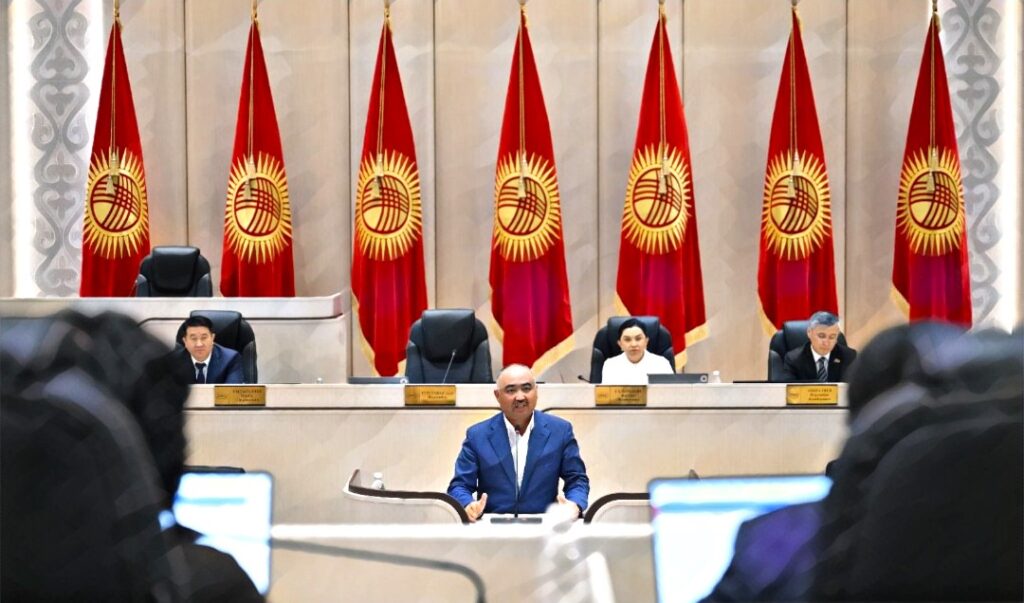
Deputies in Kyrgyzstan’s parliament voted on September 25 to dissolve parliament, paving the way for early elections that will be conducted under a revised electoral format later this year.

Deputies voted 84-0 in favor of dissolving parliament. Five other deputies abstained from voting, and one MP was absent from the session.

Kyrgyz President Sadyr Japarov now has five days to name the date for snap parliamentary elections, though speaker of parliament Nurlanbek Turgunbek uulu said he expects the date will be November 30.

The move was expected as a group of deputies started collecting signatures earlier in September to introduce a motion on dissolving parliament.

The chairman of Kyrgyzstan’s Central Election Commission (CEC), Tynchtykbek Shaynazarov, said in an interview on September 2 that the CEC is ready to conduct parliamentary elections this year, “if [parliament] takes the decision to dissolve itself.”

Shaynazarov explained the reason for advancing elections by one year. “According to the law, and plans, the elections for deputies to the Jogorku Kenesh (Kyrgyzstan’s parliament) will take place in November 2026.” 

However, Shaynazarov said, “According to the constitutional regulations, the next presidential election is set for January 2027. If we have (parliamentary) elections… in November 2026, the CEC must release an official tally (of votes) within 20 days.” Shaynazarov continued, “Then there will be those who are dissatisfied with the elections and will file a lawsuit. Thus, the campaign for the election of deputies may drag on until December.”

Shaynazarov pointed out this would overlap with campaigning for the presidential election.

Member of Parliament Janar Akayev agreed the proximity of the two elections according to the current schedule could negatively impact the work of the CEC.

Akayev also noted that Japarov signed a new law on procedures for electing parliamentary deputies in June this year. 

That law changed the mixed system of electing deputies Kyrgyzstan used in 2021, whereby 36 MPs were elected in single-mandate districts and 54 by party lists. In the next elections, all 90 deputies will be chosen in single-mandate districts. “Since current MPs support the transition to a new system, new elections should be held,” Akayev said.

Kyrgyzstan’s early parliamentary elections, in 1995, 2000, and 2005, were conducted via single-mandate districts. Election by party lists was first used in the 2007 snap elections, and continued to be used in the 2010, 2015, and 2020 elections.

The new regulations for parliamentary elections have negative and positive aspects.

The non-refundable fee to seek a seat in parliament favors the wealthy.

The fee for independent candidates to run remains at 100,000 Kyrgyz som (about $1,115), which is still a high price in a country where the average monthly salary is just a bit over 41,000 som.

Political parties can still participate in elections but must pay 9 million som (almost $103,000). Currently six parties have seats in parliament, but 21 parties fielded candidates in the 2021 elections.

The prohibitively high cost of registering will make it difficult for many people who aspire to a seat in parliament to run as candidates, leaving mainly those with access to relatively large amounts of money to run for seats.

Further favoring the affluent and powerful, all of Kyrgyzstan’s previous elections have been riddled with accusations of vote-buying and use of state funding and/or influence for select candidates. Japarov’s government has criticized both practices, and several of the deputies elected in November 2021 were subsequently removed for paying for votes.

Parliamentary Speaker Turgunbek uulu addressed these concerns when announcing the dissolution of parliament. “The current government intends to hold clean and transparent elections,” Turgunbek uulu said, “No one will be pushed through, no one will be hindered.”

The new elections rules make it obligatory for 30 of the 90 seats, at least one seat from each of the 30 voting districts, to go to women.

The new rules also dispense with by-elections should a deputy step down from his or her post. One of the authors of the amendments to the election law, Ulan Primov, pointed out that Kyrgyzstan has spent nearly 200 million som (about $2.29 million) on by-elections since the 2021 parliamentary elections.

The candidate from the district with a vacated seat who received the fourth most votes in elections will receive the empty seat. If the deputy vacating their seat is a woman, the female candidate who received the next highest number of votes in that electoral district will fill the seat.

The current parliament will continue to function until elections.

Campaigning officially starts 30 days before the elections.