• KGS/USD = 0.01144 0%
  • KZT/USD = 0.00193 -0%
  • TJS/USD = 0.10811 -0.28%
  • UZS/USD = 0.00008 0%
  • TMT/USD = 0.28490 0%
  • KGS/USD = 0.01144 0%
  • KZT/USD = 0.00193 -0%
  • TJS/USD = 0.10811 -0.28%
  • UZS/USD = 0.00008 0%
  • TMT/USD = 0.28490 0%
  • KGS/USD = 0.01144 0%
  • KZT/USD = 0.00193 -0%
  • TJS/USD = 0.10811 -0.28%
  • UZS/USD = 0.00008 0%
  • TMT/USD = 0.28490 0%
  • KGS/USD = 0.01144 0%
  • KZT/USD = 0.00193 -0%
  • TJS/USD = 0.10811 -0.28%
  • UZS/USD = 0.00008 0%
  • TMT/USD = 0.28490 0%
  • KGS/USD = 0.01144 0%
  • KZT/USD = 0.00193 -0%
  • TJS/USD = 0.10811 -0.28%
  • UZS/USD = 0.00008 0%
  • TMT/USD = 0.28490 0%
  • KGS/USD = 0.01144 0%
  • KZT/USD = 0.00193 -0%
  • TJS/USD = 0.10811 -0.28%
  • UZS/USD = 0.00008 0%
  • TMT/USD = 0.28490 0%
  • KGS/USD = 0.01144 0%
  • KZT/USD = 0.00193 -0%
  • TJS/USD = 0.10811 -0.28%
  • UZS/USD = 0.00008 0%
  • TMT/USD = 0.28490 0%
  • KGS/USD = 0.01144 0%
  • KZT/USD = 0.00193 -0%
  • TJS/USD = 0.10811 -0.28%
  • UZS/USD = 0.00008 0%
  • TMT/USD = 0.28490 0%
10 December 2025

Threads of Power: Women, Heritage, and the Art of the Silk Road

From June 24 to July 10, 2025, the Minerva Association will be presenting the exhibition Weaving the History of Central Asia at the Centre Paris Anim’ Espace Beaujon. This exhibition brings together the artworks of Fatimah Hossaini and the textile creations of Beltepà, paying tribute to the women of the region through the motifs and textile skills inherited from the Silk Road.

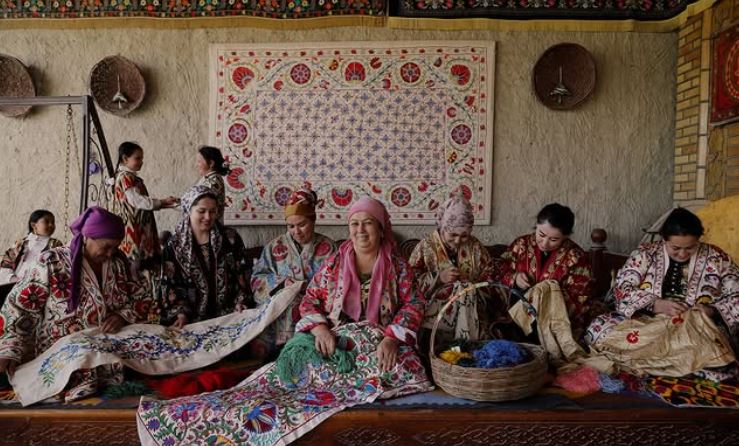
In Central Asia, weaving, embroidery, and sewing have long been passed down from mother to daughter, practiced within the home and shared among craftswomen. These domestic yet deeply skilled practices embody an often-overlooked heritage, one that is both intimate and monumental. The exhibition sheds light on how art and fashion can transcend cultural and geographic boundaries, revealing stories of resilience, identity, and creativity.

The exhibition celebrates women not only as artists and artisans but as powerful custodians of heritage. The handmade garments by the women of Beltepà, paired with Fatimah Hossaini’s striking photographic portraits, convey a sense of strength, dignity, and continuity. Together, these works send a compelling message: that of women’s empowerment and the intergenerational transmission of ancestral knowledge.

Fatimah Hossaini’s artwork delves into themes of gender, identity, and cultural resilience. Her portraits of women in Central Asia illuminate lives and traditions that are often rendered invisible, offering a bold visual language that honors their presence and voices. The suzanis featured in the exhibition are rich with meaning. Every motif, color, and pattern tells a story, echoing the layered influences of the Silk Road and the women who continue these traditions today.

Beltepà reinterprets traditional Uzbek fabrics — atlas, adras, bakhmal, and suzani — through a contemporary lens. Her collections merge craftsmanship with innovation, turning textiles into wearable artworks that reflect a living, evolving cultural identity.
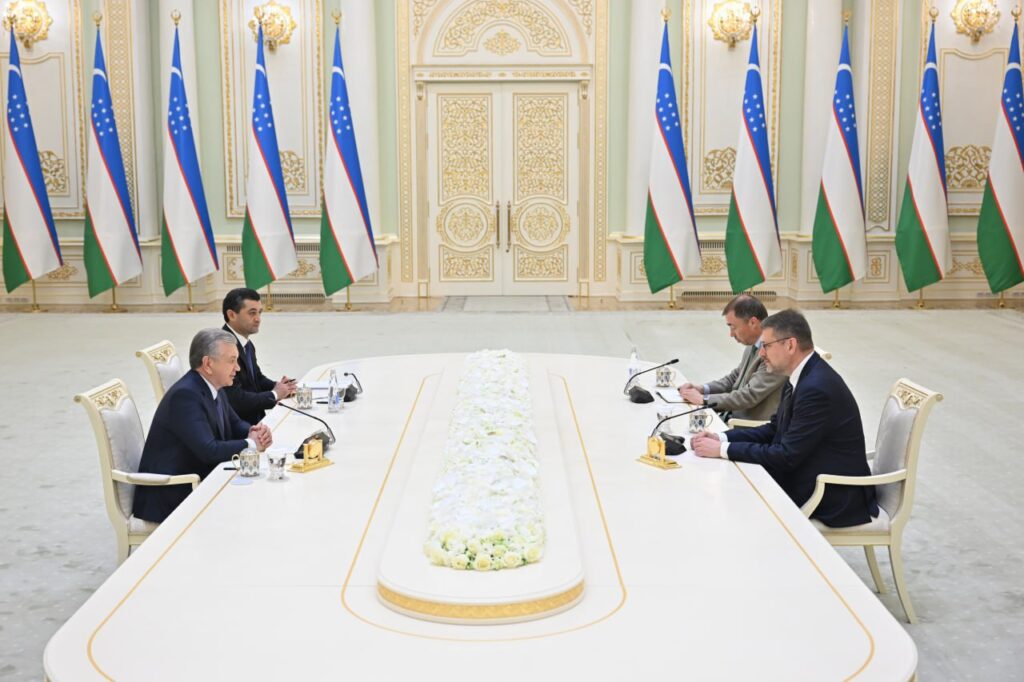

Uzbekistan and EU Discuss €12 Billion in New Projects

On May 13 in Tashkent, President Shavkat Mirziyoyev met with Eduards Stiprais, the European Union’s Special Representative for Central Asia, according to the presidential press service, with the two sides reviewing the outcomes of the first Central Asia-European Union Summit, held in Samarkand in April, and discussing ways to implement its decisions.

Expanding Strategic Cooperation

The talks focused on strengthening both bilateral and regional partnerships, with particular attention to advancing investment and technical cooperation initiatives valued at €12 billion. The parties also exchanged views on key regional developments and discussed plans for upcoming joint events.

Economic ties between Uzbekistan and the EU have accelerated in recent years. Since 2020, trade between the two has doubled to more than €6 billion, while Uzbek exports to the EU have quadrupled. Over a thousand joint ventures have been launched, and the value of European investment projects in Uzbekistan now exceeds €30 billion.

To attract more European investors, Uzbekistan has undertaken reforms to improve its business environment. In 2024 alone, trade with EU countries reached $6.4 billion, and more than a thousand European firms are currently operating in the country.

Geopolitical Undercurrents

During a separate visit to Uzbekistan in April, Russian Foreign Minister Sergey Lavrov criticized the EU’s growing presence in the region. He accused the EU of using development projects to expand geopolitical influence, particularly in sensitive areas such as customs and border management.

“We are categorically against politicizing cooperation processes and introducing ideological elements associated with Western attempts to dominate,” Lavrov stated, whilst emphasizing that Russia respects the sovereignty of its neighbors and will refrain from interfering in their internal affairs.

A Strategic Pivot

Uzbekistan’s growing ties with the EU reflect a strategic pivot to diversify its economic partnerships and reduce dependence on traditional allies like Russia and China. This move aligns with the region’s broader efforts to balance relations with global powers while fostering local development. The EU’s €12 billion investment and technical cooperation initiatives signal a deeper commitment to Central Asia, enabling countries like Uzbekistan to modernize industries, improve infrastructure, and enhance trade networks. This shift not only boosts Uzbekistan’s economic growth but also creates new opportunities for regional integration by connecting Central Asia with European markets through preferential trade agreements and enhanced supply chains.

However, the deepening EU-Uzbekistan partnership does not come without challenges in the region’s geopolitical landscape. Russia, historically a dominant influence in Central Asia, views the EU’s expanded presence as a potential threat to its sphere of influence. Likewise, China, which has established extensive connectivity projects under the Belt and Road Initiative, may perceive Uzbekistan’s alignment with the EU as a cautious step towards reducing reliance on Beijing-led projects. This strategic recalibration creates a more competitive environment, with Uzbekistan leveraging its geographical position to attract diverse investments while carefully navigating tensions between rival powers. By maintaining a delicate balance, Uzbekistan could emerge as an economic and diplomatic bridge linking Europe, Central Asia, and East Asia.

Brutal Assault on Kazakh Politician Raises Questions

Nurlan Baigaziev, a local politician in the Ili district in the Almaty region, has been brutally beaten in Taraz, according to reports that quickly spread across social media and were subsequently confirmed by law enforcement authorities.

Incident Details

Police confirmed that the incident occurred on the evening of May 13 at a local café. Baigaziev, who sustained facial injuries, was taken to a hospital but declined further treatment. The Zhambyl region police stated that a pre-trial investigation has been launched under Part 1 of Article 293 of the Criminal Code (hooliganism). An individual identified as being involved in the attack has been detained, and investigators are working to determine all the circumstances surrounding the case.

Background and Possible Motives

Social media reports indicate that Baigaziev was in Taraz on a business trip, purportedly meeting with clients in his capacity as a lawyer. Some accounts suggest that the assailant used brass knuckles during the attack. However, the exact motives remain unclear.

This incident comes on the heels of an earlier controversy involving Baigaziev. On April 28, a video circulated online showing juvenile police officers in the Almaty region stopping a 17-year-old girl and offering her a ride in an official vehicle. Baigaziev, who publicly criticized the police for what he described as an abuse of power, attracted widespread attention. The fallout from that video led to the dismissal of one officer and the removal of another.

Related Incidents

Notably, attacks on officials in Kazakhstan are not uncommon. For example, on April 21, Ruslan Berdenov, the deputy mayor of Shymkent, was seriously injured near the city administration building when an assailant fired shots with a Saiga-12 shotgun. The attacker, identified as 30-year-old Zhiinbai Yernar Zhiinbaiuly, was detained at the scene following the intervention of Berdenov’s driver, and a criminal case has been opened on charges of attempted murder. The investigation into that incident remains ongoing.

China Becomes Largest Importer of Kyrgyz Honey

In the first four months of 2025, Kyrgyzstan exported 143.7 tons of honey, a 47% increase compared to the same period last year, according to the Ministry of Water Resources, Agriculture, and Processing Industry.

China emerged as the leading importer, purchasing 82.1 tons of Kyrgyz honey. Other major destinations included the United Arab Emirates (24.5 tons), Uzbekistan (15.1 tons), Qatar (6.3 tons), and Kuwait (4.6 tons).

Meanwhile, honey imports into Kyrgyzstan have virtually ceased. Only 0.5 tons were imported in 2025, a dramatic drop from 44.8 tons the previous year. The ministry attributed this decline to robust domestic production and growing consumer confidence in local honey.

EU Market Prospects

Kyrgyz honey is expected to be included in the European Union’s product registry by early 2025. To gain access to the EU market, Kyrgyz authorities submitted a residue monitoring plan to the European Commission, a required step for export approval.

Renowned for its flavor and health benefits, Kyrgyz honey owes its distinctive quality to the diverse herbs found in the country’s mountainous regions.

International Attention

At EXPO 2025 in the Japanese city of Osaka, Kyrgyz honey drew significant attention. Nazim Baibosunov, a representative of the Kyrgyz diaspora in Japan, noted that the product created a stir on the opening day. One incident underscored its popularity: an 83-year-old Japanese man attempted to steal a jar of Kyrgyz honey on display.

According to Japanese media, this marked the first reported theft and subsequent arrest at the exhibition.

Kyrgyzstan Begins Construction of New Jalal-Abad International Airport

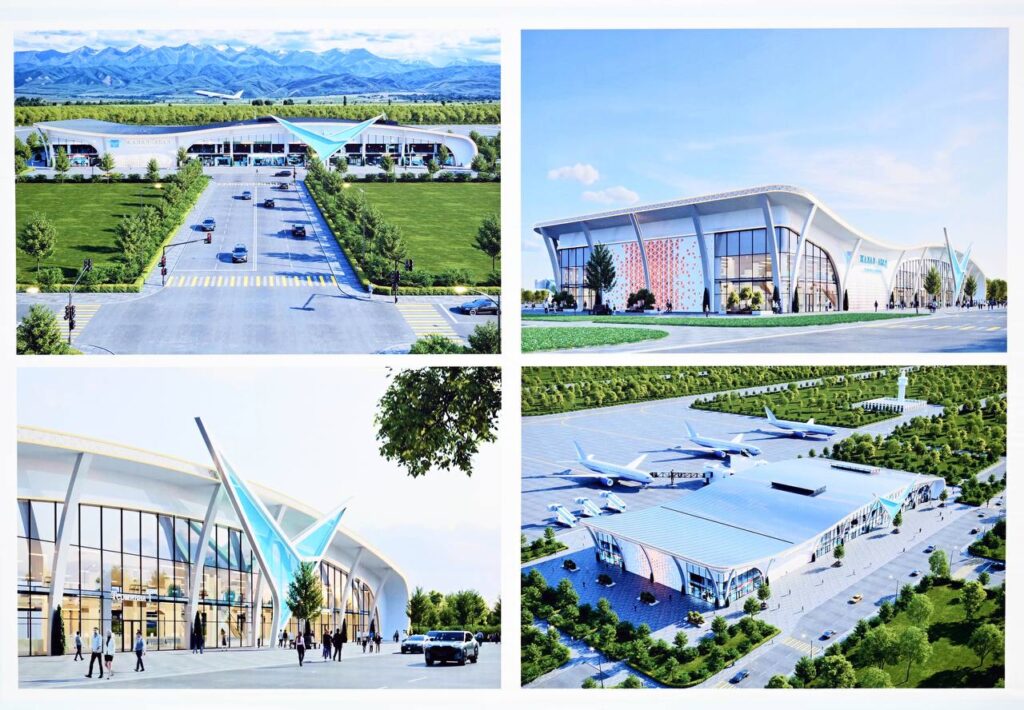
On May 13, President Sadyr Japarov laid the foundation stone for a new international airport in Jalal-Abad, Kyrgyzstan’s third-largest city.

The new airport will span over 380 hectares and include a two-story passenger terminal covering 10,000 square meters, with the capacity to handle 350 passengers per hour. Its airfield infrastructure will meet international standards, featuring a 3,800-meter runway and six aircraft parking bays. The facility will accommodate both passenger and cargo aircraft, including Boeing 737, Airbus A320, and A321 models.

Unlike a renovation of the existing facility, the project entails entirely new construction. The current Jalal-Abad airport dates back to 1938, originally serving as an airfield, with a terminal building and asphalt runway added in 1972.

Boosting Air Infrastructure

At the groundbreaking ceremony, Japarov emphasized the rising demand for both domestic and international flights, underscoring the need to expand the country’s airport infrastructure.

“Since 2021, Kyrgyzstan has increased passenger traffic by 46% and the number of flights by 31%. New aircraft have been acquired, and previously idle regional airports have resumed operations,” he said.

He also noted that the newly established Asman Airlines has restored all domestic routes, linking the capital, Bishkek, with Talas, Karakol, and Kerben. In 2024, the airline added two Canadian-made Bombardier Dash 8 Q400 short-haul aircraft to its fleet for domestic service.

Regional Impact

Japarov stated that the new Jalal-Abad International Airport would enhance logistics, trade, tourism, and investment across the Fergana Valley, a region shared by Kyrgyzstan, Tajikistan, and Uzbekistan.

This project is part of Kyrgyzstan’s broader strategy to modernize its aviation infrastructure. In February 2025, construction began on a new airport complex at Osh International Airport, located in the country’s second-largest city.

Kyrgyzstan has also recently inaugurated Karakol International Airport and Talas Airport.

Reconstruction efforts are currently underway at Issyk-Kul International Airport and Naryn Airport.

UAE Investor to Inject $1.1 Billion into Astana Aerotropolis Project

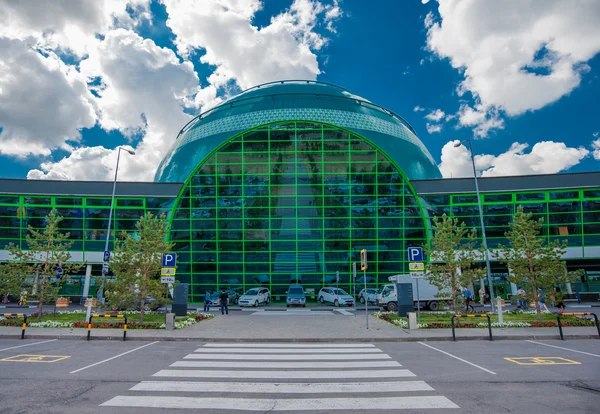
The Ministry of Transport of Kazakhstan has signed a long-term investment agreement with Terminals Astana Airport Limited, a subsidiary of UAE-based Terminals Holding, to transform Astana International Airport into a world-class Aerotropolis. The deal, valued at $1.1 billion, was formalized on May 12 during the official visit of Crown Prince Sheikh Khalid bin Mohammed bin Zayed Al Nahyan of Abu Dhabi to Kazakhstan.

Strategic Infrastructure Development

The agreement outlines a comprehensive development plan, including the construction of a second runway, a third passenger terminal, and a dedicated cargo terminal at Astana International Airport. According to the Ministry of Transport, the investor also aims to build a multifunctional Aerotropolis complex, encompassing an industrial and logistics zone, a business cluster, hotels, retail space, and logistics terminals.

An Aerotropolis is a modern urban model that integrates aviation, logistics, and commercial infrastructure to create a self-sustaining hub catering to both passengers and businesses. The concept is designed to provide short-term accommodation and consumer services in proximity to the airport, effectively transforming it into a small city.

Operational Modernization

In addition to physical infrastructure, the project includes plans to modernize the airport’s operational systems. Terminals Astana Airport Limited will upgrade the fleet of specialized airport equipment, introduce digital solutions and automation, and implement phased training and retraining programs for airport staff.

Following the restoration of municipal control over the airport in January, Astana’s local authorities extended the trust management agreement, with Terminals Astana Airport Management continuing in its role as the airport operator. Both Terminals Astana Airport Limited and the current operator are subsidiaries of Terminals Holding.

In 2024, Astana International Airport served 8.315 million passengers, an 11% increase from the previous year.

Broader Investment Context

As previously reported by The Times of Central Asia, Kazakhstan continues to attract foreign investment in its aviation infrastructure. Earlier this year, Vietnam’s Sovico Group, which owns Kazakh airline Qazaq Air, was offered the opportunity to manage an airport in the Kyzylorda region.