• KGS/USD = 0.01144 0%
  • KZT/USD = 0.00210 0%
  • TJS/USD = 0.10438 0%
  • UZS/USD = 0.00008 0%
  • TMT/USD = 0.28490 0%
  • KGS/USD = 0.01144 0%
  • KZT/USD = 0.00210 0%
  • TJS/USD = 0.10438 0%
  • UZS/USD = 0.00008 0%
  • TMT/USD = 0.28490 0%
  • KGS/USD = 0.01144 0%
  • KZT/USD = 0.00210 0%
  • TJS/USD = 0.10438 0%
  • UZS/USD = 0.00008 0%
  • TMT/USD = 0.28490 0%
  • KGS/USD = 0.01144 0%
  • KZT/USD = 0.00210 0%
  • TJS/USD = 0.10438 0%
  • UZS/USD = 0.00008 0%
  • TMT/USD = 0.28490 0%
  • KGS/USD = 0.01144 0%
  • KZT/USD = 0.00210 0%
  • TJS/USD = 0.10438 0%
  • UZS/USD = 0.00008 0%
  • TMT/USD = 0.28490 0%
  • KGS/USD = 0.01144 0%
  • KZT/USD = 0.00210 0%
  • TJS/USD = 0.10438 0%
  • UZS/USD = 0.00008 0%
  • TMT/USD = 0.28490 0%
  • KGS/USD = 0.01144 0%
  • KZT/USD = 0.00210 0%
  • TJS/USD = 0.10438 0%
  • UZS/USD = 0.00008 0%
  • TMT/USD = 0.28490 0%
  • KGS/USD = 0.01144 0%
  • KZT/USD = 0.00210 0%
  • TJS/USD = 0.10438 0%
  • UZS/USD = 0.00008 0%
  • TMT/USD = 0.28490 0%

Shell Signs New Exploration Deal in Kazakhstan Amid Legal Disputes

British energy company Shell has launched a new exploration project in Kazakhstan despite previously announcing that it would pause new investments in the country. On March 5, it was announced that Shell had signed a contract for geological exploration in the Aktobe region. The company has been involved in several legal disputes with Kazakhstan over subsoil use and had stated that it did not plan to invest further in the country’s energy sector.

Geological Exploration Contract

The Zhanaturmys site, which has attracted Shell’s interest, covers an area of 1,377 square kilometers and is located in one of Kazakhstan’s most actively developed oil and gas basins.

The document was signed by Kazakhstan’s Deputy Energy Minister, Yerlan Akbarov, and Shell’s Senior Vice President and Chair in Kazakhstan, Suzanne Coogan. The contract provides for seismic exploration, data collection, and technical assessments.

“The signing of today’s contract for geological exploration is further confirmation of Shell’s commitment to long-term cooperation with the Republic of Kazakhstan. Drawing on our global experience and advanced technologies, we intend to continue contributing to geological exploration and the expansion of the country’s resource base,” Coogan said.

The agreement will remain in force until 2032. The project will be implemented under the terms of an improved model contract. According to Kazakhstan’s Energy Ministry, the company will allocate at least 100 million tenge (about $200,000) to finance socio-economic development in the region where the site is located.

Shell is currently involved in three projects in Kazakhstan: the North Caspian Production Sharing Agreement (NCOC, 16.81% stake); the Karachaganak Production Sharing Agreement (29.25% stake); and the Caspian Pipeline Consortium (7.4% stake).

Kazakhstan produces around 1.8–1.9 million barrels per day and hosts some of the world’s largest offshore reserves in the Caspian Sea. Western energy majors, including Shell, Chevron, ExxonMobil, and Eni, have operated in the country for decades through complex production-sharing agreements.

Legal Disputes

In February, Shell CEO Wael Sawan said the company would suspend new investments in Kazakhstan while legal proceedings with the government were ongoing. Numerous lawsuits filed by Kazakhstan, with claims amounting to billions of dollars, have reduced the company’s willingness to invest in the country, he said.

“This affects our desire to continue investing in Kazakhstan. Although we see many opportunities for investment in the future, we will wait until we have a clearer picture of how things will turn out,” Sawan stated.

Karachaganak and Kashagan

Kazakhstan is currently involved in several legal disputes with Western oil companies, both in national courts and international arbitration. The cases concern two major oil and gas projects.

One of them is Karachaganak. In 2023, the Kazakh government filed a lawsuit against the field’s developers over cost deductions. The initial claim amounted to $3.5 billion but later increased to $6 billion after additional claims were filed.

The project is operated by a consortium led by Eni and Shell, each holding a 29.25% stake. Other partners include Chevron (18%), Lukoil (13.5%, which has agreed to sell its stake), and KazMunayGas (10%).

In January, it was reported that Shell and its partners, Eni, Chevron, and Lukoil, had lost a dispute over cost deductions. Payments to Kazakhstan could reach $4 billion, although the consortium still has the right to appeal the decision.

Previously, investors had proposed settling the dispute by building a gas processing plant to meet Kazakhstan’s domestic needs.

Another dispute concerns the Kashagan project. The Kazakh government has challenged the terms of the long-term agreement for the Kashagan field and filed arbitration claims related to the Kashagan project that together could amount to about $160 billion.

Kazakh officials have argued that under the current terms, oil companies involved in the project, including Shell, ExxonMobil, Eni, TotalEnergies, CNPC, Inpex, and KazMunayGas, receive up to 98% of the revenue from oil production at Kashagan, leaving the country with only symbolic royalties.

There is also an ongoing dispute over sulfur storage at the Kashagan field, which authorities say constitutes an environmental violation. According to some reports, Kazakhstan’s total claims related to this project may reach $13.5 billion.

Nevertheless, Shell’s management appears to be continuing to seek new projects in Central Asia. The region’s importance for Europe has increased significantly following the war in Ukraine and the reduction of energy supplies from Russia.

Kyrgyzstan Signs Deal to Acquire Two Airbus A321 Aircraft

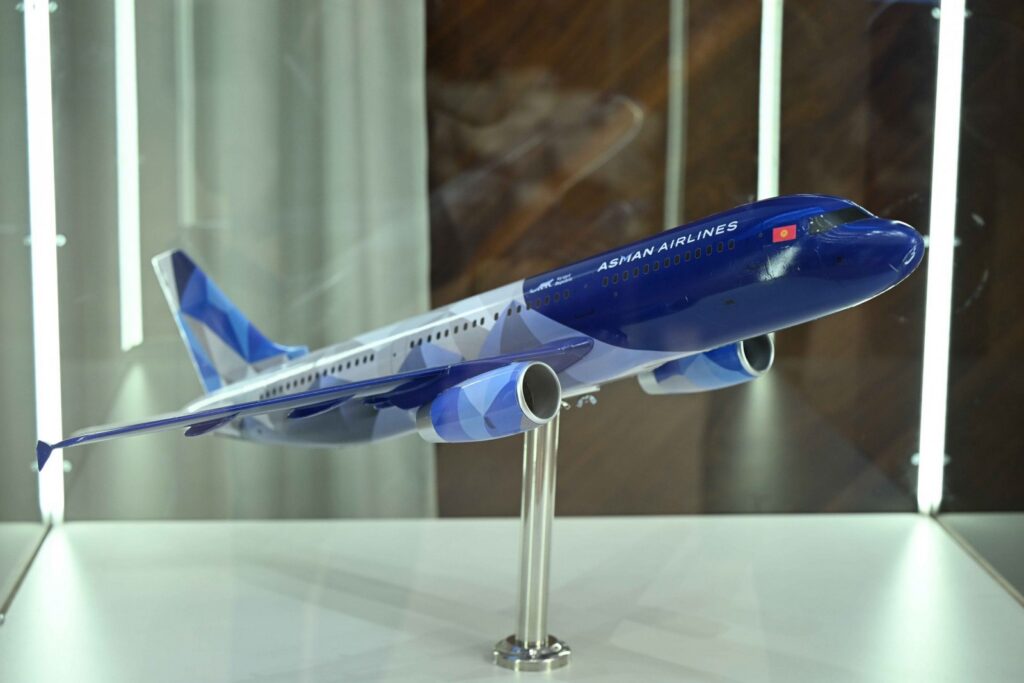
Kyrgyzstan has signed an agreement to acquire two Airbus A321ceo aircraft as part of efforts to expand the country’s civil aviation sector and launch new international routes.

The signing ceremony took place on March 5 in Bishkek, where the agreement was signed by Manasbek Samidinov, chairman of the board of Airports of Kyrgyzstan OJSC, and Maurice Prendergast, senior vice president of BBAM Aircraft Leasing & Management.

The event was attended by Johan Pelissier, president of Airbus Europe, and Kyrgyz Prime Minister Adylbek Kasymaliev.

According to the agreement, the aircraft will be delivered to Kyrgyzstan by the end of 2026. They are intended for the state-owned carrier Asman Airlines, a subsidiary of Airports of Kyrgyzstan. The new aircraft are expected to support the launch of international flights and improve operational capacity.

Asman Airlines currently operates three Dash 8 Q400 aircraft, Canadian-made short-haul turboprop planes capable of carrying up to 80 passengers over distances of up to 2,000 kilometers. These aircraft serve domestic routes across Kyrgyzstan after the airline recently restored air connections between Bishkek and several remote regional centers.

Speaking at the ceremony, Kasymaliev said that the acquisition of modern and efficient aircraft would help raise Kyrgyzstan’s civil aviation sector to a new level of development.

He added that between 2021 and 2025 the number of passengers served at Kyrgyzstan’s airports on domestic and international routes increased by 52%, while the number of flights rose by 53%.

Kasymaliev also noted that audits conducted by the International Civil Aviation Organization (ICAO) in 2023-2024 confirmed that Kyrgyzstan’s aviation system complies with international standards. According to the latest audit, the aviation security compliance rate reached 85.76%, a significant improvement compared with previous results.

“These achievements create the necessary conditions for Kyrgyzstan to be removed from the European Union’s aviation safety blacklist,” the prime minister said, adding that the final audit by the European Commission is expected in the coming days.

Later the same day, President Sadyr Japarov met with Johan Pelissier and Maurice Prendergast to discuss the development of Kyrgyzstan’s aviation sector.

During the meeting, Japarov highlighted the rapid modernization of airport infrastructure and the expansion of domestic air routes. While previously only four airports in the country were fully operational, all 11 airports in Kyrgyzstan are now functioning. Construction of a new international airport in Jalal-Abad is also underway.

The president also confirmed that Kyrgyzstan is in the final stage of the process to be removed from the European Union’s aviation safety blacklist, with the final inspection expected later this month.

Middle East Conflict Disrupts Logistics Routes for Deliveries to Kyrgyzstan

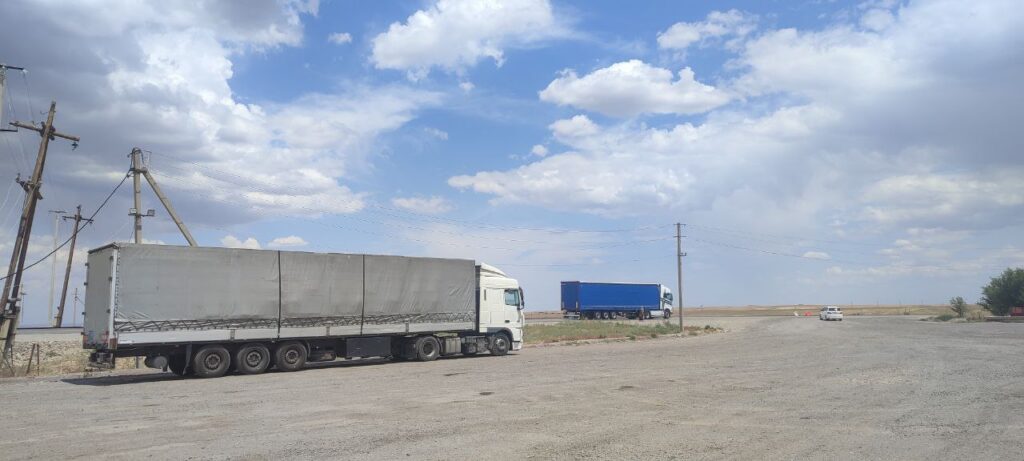
Military activity in the Middle East has caused serious disruptions to logistics routes used to deliver goods to Kyrgyzstan. In particular, the transit of cargo through Iran has completely stopped. This was reported to The Times of Central Asia by the Association of International Freight Forwarders of Kyrgyzstan.

According to industry representatives, the auto parts market is already experiencing some of the most significant consequences. A substantial share of goods from the U.S., Europe, and the Middle East is delivered to Kyrgyzstan via the Iranian port of Bandar Abbas on the Persian Gulf. The port is considered a key transit hub through which a large volume of international cargo passes.

However, due to the escalating situation in the region, maritime transport along this route has effectively been halted. As a result, many goods that have already been paid for and are intended for delivery to Kyrgyzstan remain stuck in ports of departure or transit zones.

“A large volume of cargo used to be transported through the port of Bandar Abbas. We used this route for transit to the Emirates, to Dubai and Sharjah. Now we are effectively cut off from maritime transport. All the countries of the Persian Gulf are closed to us, and there are serious problems with air traffic in this region. A lot of cargo normally goes from Sharjah and Dubai to Kyrgyzstan, but these deliveries have now been suspended,” Igor Golubev, deputy chairman of the Association of International Freight Carriers of Kyrgyzstan, told The Times of Central Asia.

According to him, equipment, auto parts, perfumes, and other goods are supplied to Kyrgyzstan from the countries of the Persian Gulf. If the conflict continues and logistics chains are not restored, Kyrgyzstan could face shortages of certain types of products.

“Ships from all over the world used to arrive at the port of Bandar Abbas. It served as a transshipment hub from which we received a wide range of goods. Now this transit hub is effectively closed,” Golubev said.

The disruptions have affected not only imports but also exports. According to the Association of Carriers, the transit of Kyrgyz cargo to Turkey and Europe, which previously passed through Iranian territory, has completely stopped. At present, more than 30 Kyrgyz trucks carrying goods remain in northern Iran, and their drivers are unable to return home.

Additional difficulties have emerged due to fighting between Pakistan and Afghanistan. Kyrgyz logistics companies actively use the port of Karachi in Pakistan, and some cargo has traditionally been delivered to Kyrgyzstan through Afghanistan. This route is now also effectively closed.

According to the Association of International Freight Carriers, negotiations are currently underway with Chinese partners on the possible use of alternative logistics corridors.

The state-owned organization Kyrgyz Export told The Times of Central Asia that it is closely monitoring the situation and remains in constant contact with carriers. Authorities are also holding talks with Iran and other states in the region while considering alternative routes to restore the import and export of Kyrgyz goods.

Uzbek Citizen Detained in Israel After Video Mocking Civilians During Rocket Alert

An Uzbek citizen working in Israel has been detained after a video circulated online showing him mocking civilians rushing to bomb shelters during a rocket alert.

The video, widely shared on social media, was first posted in a Facebook group for people from Bukhara. It shows people running toward shelters after warning sirens sounded, while the man filming the scene can be heard laughing and making derogatory remarks. In the recording, he says, “Look how the rats are running,” while filming civilians attempting to reach safety during what appears to be a missile warning.

The footage quickly sparked outrage among Israeli social media users, many of whom described the comments as offensive and inappropriate given that civilians were seeking protection from a potential attack.

Posts circulating within the Bukharan community claimed that Israeli singer Avi Hen later recognized the individual on the street and alerted authorities. Police reportedly arrived shortly afterward and detained the man for questioning.

Officials said the detention was carried out on suspicion of incitement and disturbing public order. An investigation into the case is ongoing.

Meanwhile, the Embassy of Uzbekistan in Israel released an official statement addressing the incident. According to the embassy, the episode occurred on February 28, when an Uzbek citizen identified as N.H. uploaded a video to TikTok during a rocket attack while air-raid sirens were sounding.

The embassy said the video contained inappropriate language and was later widely shared across Israeli social media platforms.

The statement added that an Israeli citizen identified as A.H. subsequently contacted the police about the video. After learning about the situation, the embassy’s consular department contacted the Uzbek citizen and held a conversation with him. Embassy representatives also communicated with the Israeli citizen who filed the complaint.

According to the embassy, the Uzbek national is currently safe, and the situation remains under the supervision of the consular department.

Uzbek Citizen Evacuation Flights Continue from Middle East

More than 9,300 citizens of Uzbekistan had been evacuated from countries in the Middle East as of March 5.

According to the press service of Uzbekistan’s Ministry of Foreign Affairs, between March 1 and 10:00 a.m. local time on March 5, a total of 9,361 Uzbek citizens safely returned home from several countries in the region.

Officials said the largest number of evacuees arrived from Saudi Arabia, where 8,114 people were transported to Uzbekistan on both regular and specially arranged charter flights.

Another 1,192 citizens have so far been repatriated from the United Arab Emirates. Smaller groups were also evacuated from other countries in the region, including 23 citizens from Iran, 25 from Bahrain, and seven from Oman.

The ministry said the return of Uzbek nationals is being organized in a structured and phased manner. Officials added that evacuation operations are currently focused on countries whose airspace remains open to civilian flights, with additional flights to be arranged once airspace restrictions are lifted elsewhere in the region.

Separately, Uzbekistan’s Ministry of Transport reported that by March 5 a total of 41 special flights had been carried out to bring citizens home from the Middle East.

According to the ministry, several Uzbekistan-based airlines, including Uzbekistan Airways, Centrum Air, Qanot Sharq, Fly One Asia, Fly Khiva, and Air Samarkand, have been operating evacuation flights.

These included routes from Jeddah and Medina in Saudi Arabia to Tashkent, Andijan, Namangan, Urgench, Qarshi, and Samarkand, as well as flights from Dubai to Tashkent.

Transport officials said that 36 flights departing from Jeddah and Medina transported 7,988 passengers to Uzbekistan. An additional five flights from Dubai carried 838 people.

Several flights were still operating at the time of the ministry’s latest update, including routes from Dubai and Jeddah to Tashkent and Samarkand.

Authorities stated that the evacuation process is continuing step by step and urged Uzbek citizens abroad to remain calm, follow local laws, and rely only on official information issued by Uzbekistan’s diplomatic missions and government agencies.

Prices in Turkmenistan Rise Sharply Due to the Situation in the Middle East

Military activity in neighboring Iran has begun to directly affect Turkmenistan’s economy. Disruptions to supplies from a key trading partner have triggered a sharp increase in prices for food, household chemicals, building materials, and cigarettes. According to retailers, this may only be the beginning as existing stocks are running low and prices continue to climb.

Despite having domestic production, Turkmenistan remains heavily dependent on imports from Iran, particularly for food products, household chemicals, and construction materials.

The conflict in Iran has disrupted established logistics routes, causing prices for several categories of goods to rise significantly across Turkmenistan.

Vegetables and citrus fruits have seen some of the steepest increases. Prices for potatoes and cucumbers have risen by three to three-and-a-half times, while citrus fruits have become about 50% more expensive. Cigarette prices have already increased by roughly 40%, and traders warn that further rises are likely.

At the end of February, a kilogram of potatoes imported from Iran cost between $1.45 and $1.74 in Ashgabat. The price has now risen to $4.93 per kilogram. A similar trend has been observed for cucumbers, whose price increased from $2.32 to $4.93 per kilogram.

Citrus fruits have become even more expensive. Oranges have risen in price from $2.61 to $5.22 per kilogram, while mandarins have increased from $3.48 to $6.38.

Residents of Turkmenistan are also facing higher prices for household chemicals. Although the increase has not yet been as dramatic, retailers say the upward trend is clear. Tobacco products have also risen significantly in price, with cigarettes increasing by an average of about 35%.

The construction sector has also been affected. Prices for cement, wood, metal, and other building materials have increased by around 40%.

These increases are linked to disruptions in established supply routes. Some construction materials were previously imported from the United Arab Emirates via Iran. Businesses are now being forced to search for alternative logistics routes, including through Georgia and Azerbaijan, which significantly increases transportation costs.

On March 4, customs regulation issues were discussed at a meeting of Turkmenistan’s Security Council.

However, according to a report by the state news agency TDH, the head of the State Customs Service, Maksat Khudaygulyev, did not address the current supply disruptions. His remarks focused on the planned development of the agency.

Price increases linked to events in Iran are not new for Turkmenistan. A similar situation was observed in the summer during the 12-day war.

Supply problems also emerged in the fall of 2024, when Iran temporarily closed its border. During that period, vegetable oil prices increased significantly and shortages were reported.