• KGS/USD = 0.01144 0%
  • KZT/USD = 0.00196 -0%
  • TJS/USD = 0.10899 -0%
  • UZS/USD = 0.00008 -0%
  • TMT/USD = 0.28490 0%
  • KGS/USD = 0.01144 0%
  • KZT/USD = 0.00196 -0%
  • TJS/USD = 0.10899 -0%
  • UZS/USD = 0.00008 -0%
  • TMT/USD = 0.28490 0%
  • KGS/USD = 0.01144 0%
  • KZT/USD = 0.00196 -0%
  • TJS/USD = 0.10899 -0%
  • UZS/USD = 0.00008 -0%
  • TMT/USD = 0.28490 0%
  • KGS/USD = 0.01144 0%
  • KZT/USD = 0.00196 -0%
  • TJS/USD = 0.10899 -0%
  • UZS/USD = 0.00008 -0%
  • TMT/USD = 0.28490 0%
  • KGS/USD = 0.01144 0%
  • KZT/USD = 0.00196 -0%
  • TJS/USD = 0.10899 -0%
  • UZS/USD = 0.00008 -0%
  • TMT/USD = 0.28490 0%
  • KGS/USD = 0.01144 0%
  • KZT/USD = 0.00196 -0%
  • TJS/USD = 0.10899 -0%
  • UZS/USD = 0.00008 -0%
  • TMT/USD = 0.28490 0%
  • KGS/USD = 0.01144 0%
  • KZT/USD = 0.00196 -0%
  • TJS/USD = 0.10899 -0%
  • UZS/USD = 0.00008 -0%
  • TMT/USD = 0.28490 0%
  • KGS/USD = 0.01144 0%
  • KZT/USD = 0.00196 -0%
  • TJS/USD = 0.10899 -0%
  • UZS/USD = 0.00008 -0%
  • TMT/USD = 0.28490 0%
08 December 2025

Kyrgyzstan’s Sugar Market: a Story of Revival

According to the Kyrgyz Ministry of Water Resources, Agriculture, and Processing Industry, which oversees national food security through agricultural production monitoring, domestic production now fully covers the nation’s sugar needs, turning what was once a chronic import dependency into a cautious success story of agro-industrial revival.

Soviet Legacy

In Soviet times, despite Kyrgyzstan’s southern position and thanks to large quantities of glacier water, the republic grew a large quantity of sugar beets. Kyrgyzstan’s sugar-beet fields fed a network of processing plants that supplied not only the republic itself but also part of the wider region.

The collapse of that system in the 1990s left the sector fragmented: beet acreage shrank, equipment aged, and the country increasingly turned to imported raw cane sugar and white sugar, often refined abroad.

With the continued operations of the Kaindy-Kant sugar factory and the relaunch of the Koshoi factory in 2017, a partial turnaround began in the late 2010s, backed by development funds and state support. The explicit goal was to rebuild a domestic value chain and reduce exposure to price swings and supply disruptions in neighboring markets.

A story of tariffs

For much of the 2010s and early 2020s, Kyrgyz sugar plants depended on raw cane sugar imports, which they processed into refined sugar for the domestic market.

When Kyrgyzstan joined the Eurasian Economic Union (EAEU) in 2015, it adopted the bloc’s Common Customs Tariff but secured a sugar-specific concession. For five years after accession, the country could import up to 100,000 tons of raw cane sugar per year, on condition that the resulting white sugar remained in Kyrgyzstan and was not re-exported into other EAEU states.

Once that transition period expired in 2020, Bishkek continued to receive targeted support. In 2022, the Eurasian Economic Commission (EEC) extended 0% customs duty on imports of white sugar and raw cane sugar into Kyrgyzstan until 31 October 2022. In 2023, the EEC again introduced duty-free quotas for raw cane sugar, allowing designated volumes to enter Kyrgyzstan at zero duty for refining.

These measures effectively subsidized the input costs of Kyrgyz refineries, helping them stay afloat at a time when many local farmers still preferred other crops and when cheap finished sugar from larger EAEU producers was flooding the market.

Reaching self-sufficiency

Since 2020, sugar beet production has roughly doubled. In 2024, officials reported that farmers harvested more than 620,000 tons of sugar beet. When processed, it was enough to meet the estimated annual domestic sugar requirement of about 120,000 tons of sugar.

By late 2024, the government declared that Kyrgyzstan had fully covered its sugar demand from domestic production, a status it confirmed again for the first nine months of 2025. Sugar now stands among six “socially important” food products for which domestic output is deemed sufficient to secure food security, alongside potatoes, milk, meat, vegetables and eggs.

Kyrgyzstan now aims to raise annual sugar production to 200,000 tons by 2030.

Caught between protection and competition

Bishkek’s tariff and subsidy policy has walked a fine line: using duty-free raw cane sugar imports and temporary trade measures to avoid sudden shortages and price spikes, while simultaneously pushing for local beet planting.

On one side, farmers in the Chuy and Talas regions have long complained that cheap imported sugar can undercut the economics of beet cultivation, despite subsidies. Many producers are considering abandoning sugar beet in favor of more profitable crops.

On the other side, the country could quickly slip back into dependence on imported sugar. Growing water scarcity increases the risk of weather shock that could drastically reduce sugar beet output.

Strategy outlook

For now, Kyrgyzstan’s sugar market sends a positive signal. Food-security metrics have improved: the country can credibly claim self-sufficiency in sugar, at least on an average-year basis. Tariff policy has shifted from enabling cheap raw imports to increasingly emphasizing domestic beet production, though emergency zero-duty measures remain a tool in the government’s kit. Raising sugar production to 200,000 tons by 2030 will require significant investment alongside deeper coordination between farmers and factories.

Kyrgyzstan Elections 2025: Short Campaign, High Stakes

Campaigning for seats in Kyrgyzstan’s upcoming parliamentary elections is underway, and it is already shaping up to be a race unlike anything seen before in Kyrgyzstan. The 467 candidates competing for the 90 seats in parliament have only 20 days to make their cases to voters in their districts. Kyrgyz President Sadyr Japarov’s government has vowed to keep these elections clean and fair, and threatened severe punishment for those who attempt to cheat in any way.

Uneven Electoral Landscape

The country is divided into 30 voting districts, and in each district, the three candidates who receive the most votes will win seats.

The level of competition varies, depending on the district. Electoral district 11, which is Manas city (formerly Jalal-Abad), has 155,023 eligible voters. Only five candidates are running in the district, three of whom are women. According to new election rules, a woman (or a man) must win at least one of the three seats available in each district.

Name recognition is always important, and especially so in elections with many newcomers seeking seats in parliament. One of the candidates in District 11 is Shairbek Tashiyev, the brother of the current head of the State Committee for National Security (GKNB), Kamchybek Tashiyev. He is almost certain to win one of the seats.

In electoral district 19 in Kyrgyzstan’s northern Chuy Province, with 138,373 eligible voters, there are 25 candidates competing.

The two districts with the largest number of voters, district 15 in the Aksy area of western Kyrgyzstan with 160,218 voters, and district 28 in the Zhety-Oguz area of eastern Kyrgyzstan with 160,181 voters, have, respectively, 15 candidates and 17 candidates. In the districts where there are 15 or more candidates, the three winners might only receive around 10,000 votes, or even less.

The candidates are out meeting with voters, but many are relying on social networks to promote their image and spread their message. Domestic television stations, ElTR and UTRK, are airing candidate debates that “will be distributed regionally, depending on the candidates’ electoral districts.”

Not Running

Eleven of the current 90 deputies in parliament have opted not to run for reelection. Among them are Iskhak Masaliyev – currently in the Butun (United) Kyrgyzstan Party but previously the long-time head of Kyrgyzstan’s Communist Party – the son of Absamat Masaliyev, who was first secretary of the Communist Party of the “Kirghizia” Soviet Socialist Republic from 1985 until independence in August 1991.

Another current member of parliament who is not running is Jalolidin Nurbayev, whose attempt to register was rejected due to two criminal cases having previously been opened against him, one in 2006, the other in 2021.”

A new election rule prohibits people whose cases were “terminated on non-rehabilitating grounds” from being eligible to hold public office. Effectively, this means that any case against them has been closed without declaring the person innocent, but without restoring their reputation, even though they are no longer being prosecuted.

Members of organized criminal groups and their family members have won seats in previous elections.

Back in September 2005, Member of Parliament Bayaman Erkinbayev was shot dead outside his home in Bishkek. A wealthy businessman, Erkinbayev was widely believed to have connections to organized crime.

Some 20 years ago, Ryspek Akmatbayev was allegedly the top kingpin in Kyrgyzstan’s organized criminal world. His brother, Tynychbek, was an MP when he was killed when a riot broke out at a prison he was visiting outside Bishkek. Ryspek ran for his slain brother’s vacant seat in parliament and won the April by-election, but was gunned down a month later while leaving a mosque in Bishkek.

More recently, Iskender Matraimov was elected to parliament in 2015, reelected in 2020, and in the snap elections of 2021. His younger brother, Raimbek, a former Customs Service deputy chief, was allegedly one of the biggest underworld figures in Kyrgyzstan and the subject of several investigative reports. GKNB chief Tashiyev started a crackdown on organized criminal groups in late 2023, and Raimbek fed the country. The CEC finally stripped Iskender of his deputy’s mandate in February 2024.

On November 7, the CEC announced it had denied the registration documents of 34 people, several of whom were rejected because of their connections to organized crime. In total, the CEC refused to register 122 would-be candidates for the upcoming parliamentary elections.

Enforcing the Rules

Since the snap elections were first announced in late September, President Japarov and GKNB chief Tashiyev have repeatedly warned that the abuses seen in past elections will not be tolerated. Tashiyev said just days after the date of the early elections was announced that “any fraud will be exposed, and the punishment will be the harshest.”

Since Kyrgyzstan’s inaugural parliamentary vote in 1995, elections have been consistently marred by vote-buying. Speaking at a youth forum on November 10, Japarov said, “We have established strict controls on voter bribery.” One candidate from electoral district 3 has already been caught and disqualified after he arranged a small meeting with some 15 voters and promised them “material rewards” for casting their ballots for him.

The practice of buying votes is unfortunately deeply entrenched in Kyrgyzstan’s parliamentary elections, so while this example is encouraging, it is unlikely to discourage everyone in the country from attempting to bribe people for their vote.

The Field of Candidates

The change from elections decided by party (2007, 2011, 2025, 2020) or partially party lists and single-mandate (2021) to the impending elections decided solely by single-mandate districts has led to an interesting array of candidates. Most of the candidates are politicians or state employees, many are businessmen, several dozen are listed as “unemployed,” there are some bloggers, and a few academics and activists.

Changes to the constitution approved in a national referendum in 2021 transferred most of the political power to the executive branch. However, Kyrgyzstan’s legislative branch has often been weaker in the past than the executive branch, yet deputies were still able to use parliament to carry out changes and keep presidents in check.

Parliament has been relatively quiet since the 2021 elections, outside of the scandals that surrounded some of the 27 deputies whose mandates were revoked during the four years since the last elections. Perhaps the new parliament, with some new lawmakers, can re-energize the role the legislative branch plays in the country.

Balancing Act: Kyrgyzstan’s Strategy to Manage Chinese Debt

In recent years, China’s economic engagement across Eurasia has become increasingly diverse and complex. What began with large-scale infrastructure projects under the Belt and Road Initiative has expanded into a wide range of sectors, including critical minerals, energy, pharmaceuticals, and textiles. Alongside these investments, China has also deepened its soft power presence through Luban Workshops, educational exchanges, and media cooperation with regional countries.

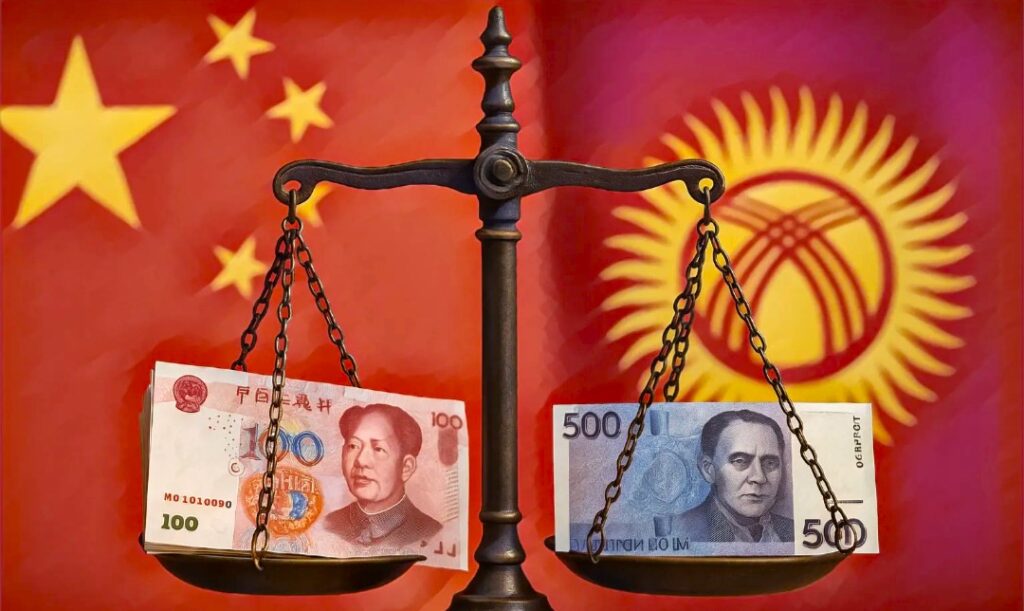
While this growing influence strengthens China’s position as a major development partner, it has also raised public concern about debt dependency. Kyrgyzstan illustrates this issue more clearly than most. In 2022, more than 40% of the country’s official external debt was owed to China. This heavy reliance has sparked debate over whether the relationship creates long-term vulnerabilities that could limit economic independence and policy flexibility.

The scale of the debt has generated several layers of concern within Kyrgyz society. Many worry that national resources are being redirected from essential public needs toward debt repayment. Others fear that financial obligations could eventually lead to asset-for-debt arrangements or serve as a tool of political influence. Kyrgyz governments have therefore explored various ways to ease their debt burden, but with limited success.

Direct Negotiations with China and Innovative Approaches

The first approach has been to negotiate directly with China for relief. However, these talks have mostly produced temporary payment deferrals rather than genuine debt reduction. In November 2020, China Eximbank agreed to postpone $35 million in loan repayments until the period between 2022 and 2024. The agreement remained purely commercial, requiring a 2% fee on the deferred amount and likely continued interest payments.

This arrangement differs from the more concessional restructuring models often offered by multilateral lenders or Paris Club members, which are designed to restore debt sustainability and support economic reform. Chinese state lenders such as the Eximbank tend to approach debt through a commercial logic, emphasizing the protection of contracts and the profitability of Belt and Road projects. As a result, debt forgiveness is considered an unattractive option from the perspective of Chinese financial institutions.

Kyrgyzstan has also experimented with more innovative ideas. The government proposed that creditors forgive part of its debt in exchange for investments in environmental and climate-related projects. These initiatives, often described as debt-for-nature swaps, would redirect funds from debt service toward renewable energy, reforestation, or carbon reduction programs. Although several European partners expressed interest, China declined to participate in 2024.

China’s reluctance reveals an important feature of its lending philosophy. Despite its growing global presence, Chinese state banks continue to prioritize financial security and measurable returns over experimental or non-monetary arrangements. Even when Beijing publicly supports global climate cooperation, its institutions remain cautious about initiatives that fall outside traditional commercial frameworks.

Kyrgyzstan’s New Debt Management Strategies

Kyrgyzstan’s approach to managing its external debt is undergoing a gradual but meaningful transformation. The government has introduced new policies and sought diversified financial partnerships in an effort to strengthen fiscal stability and reduce dependency on any single creditor.

One of the most significant steps has been the adoption of a legislative debt ceiling that prevents the government from owing more than 45% of its total external debt to any one actor. This measure responds to public concerns about the country’s exposure to Chinese lending, while also reinforcing a sense of fiscal responsibility. The debt ceiling serves a dual purpose by helping officials justify the pursuit of alternative financing and by creating an institutional safeguard against excessive concentration of debt.

In addition to legislative measures, Kyrgyzstan has begun to explore new instruments to access international capital markets. The government announced plans to raise $1.7 billion through the issuance of ten-year sovereign bonds in Hong Kong. Entry into global bond markets can provide Bishkek with greater financial independence, offering new opportunities to attract investment and diversify sources of capital. Over time, this approach may help establish a more balanced debt structure that is less reliant on bilateral lenders.

Another key component of this evolving strategy is Kyrgyzstan’s growing engagement with multilateral banks and international financial institutions. The country’s borrowing from the World Bank now stands at around $815 million, and its loans from the Asian Development Bank amount to approximately $793 million.

The Eurasian Fund for Stabilization and Development, to which Kyrgyzstan owes about $258 million, has already surpassed the International Monetary Fund, whose loans total $238 million. This shift reflects a deliberate effort to widen the country’s financial partnerships and strengthen its economic resilience.

As a result of these adjustments, the share of external debt owed to China has declined from around 40% to 36%. This change demonstrates that Kyrgyzstan’s diversification strategy is beginning to take effect.

Diversification Goals and Strategic Shifts

Kyrgyzstan’s diversification policy serves several interconnected goals. The first objective is to gradually reduce long-term dependence on Chinese financing while easing public concerns about debt exposure. By doing so, Bishkek is seeking to create the conditions for a more balanced and mutually beneficial partnership with Beijing.

The second goal reflects a qualitative shift in development priorities. Instead of focusing primarily on large infrastructure projects, the government is aiming to channel future financing toward long-term structural needs such as community development, climate resilience, and local governance capacity. The third and perhaps most strategic aim is to enhance Kyrgyzstan’s overall financial credibility, which would help the country mobilize additional resources and attract new investment in the years ahead.

Although the diversification strategy is designed to reduce dependency on Chinese loans, it does not signal an intention to end cooperation with Beijing. On the contrary, the Kyrgyz government continues to view China as an essential economic partner and is looking to shift the relationship from one dominated by debt toward one centered on productive investment and trade.

The success of this approach will depend on Bishkek’s ability to maintain constructive engagement with China while expanding partnerships with other regional and global financial actors. Achieving this balance will be critical for ensuring both fiscal sustainability and long-term development stability.

Abraham Accords Frame Kazakhstan–Israel Cooperation to Deliver Tokayev’s Reforms

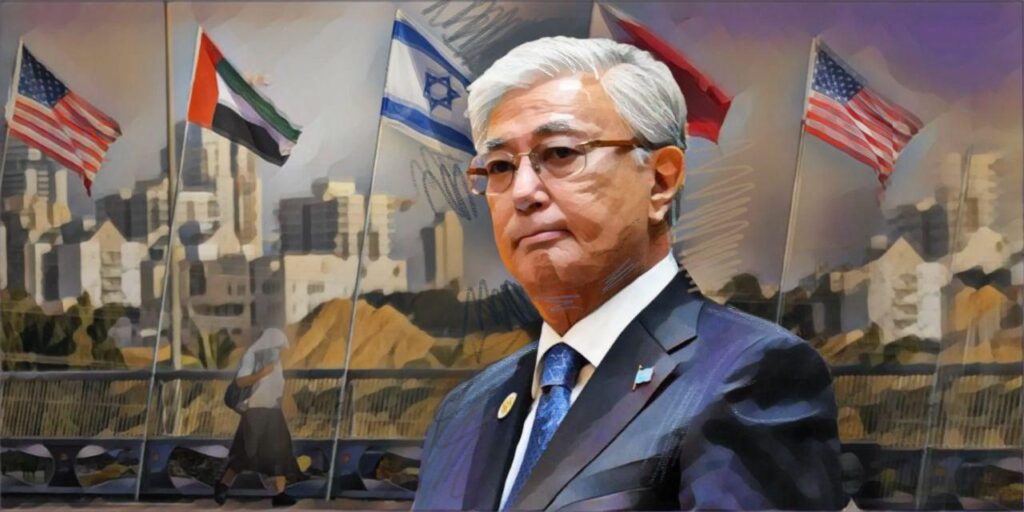
Kazakhstan’s decision to enter the Abraham Accords is a diplomacy-first move by President Kassym-Jomart Tokayev. Its aims include: 1) converting symbolic capital into policy traction in Washington, 2) arriving at workable co-financing with Gulf partners, and 3) preserving equilibrium with Moscow and Beijing. The step does not alter recognition; the two countries have had diplomatic relations for a third of a century, institutionalized through embassies. Cooperation has been steady, if modest. Entering the Abraham Accords now gives these relations a framework that U.S. agencies, funds, and implementers already use.

The timing intersects the C5+1 turn from set-piece dialogues to transactions, with new deals announced alongside the Accords move. What the framework unlocks is execution. It compresses attention cycles inside U.S. bureaucracies, normalizes trilateral packaging with Gulf financiers, and clears diligence pathways for banks and development finance institutions. Those effects matter where Israeli capabilities dovetail with Tokayev’s priorities. The premise of Tokayev’s move is straightforward: diplomacy should shorten the distance between declared policy and the implementation of projects that work.

Tokayev’s Diplomatic Architecture and the Bilateral Relationship

Kazakhstan recognized Israel in 1992 and opened embassies soon after, setting a cautious but uninterrupted channel for official contact. The institutional scaffolding is visible in public sources. Trade volumes have been modest but steady, with 2024 bilateral turnover reported by Kazakhstan’s statistics at roughly $236 million, a figure that is broadly consistent with third-party trackers such as Trading Economics and OEC profiles. Practical frictions have eased as Air Astana initiated direct air links between Almaty and Tel Aviv in 2023.

The Accords move aligns that long, incremental relationship with a framework that is transparent to Washington and to Gulf financiers. Reporting on the Washington week underscores the shift from set-piece dialogues to transactions, as the Accords announcement was paired with commerce headlines. Joining the Abraham Accords reorganizes and reframes practical bilateral activities. By placing existing ties under a known diplomatic wrapper, Astana becomes easier to route inside U.S. agencies and funds, and easier to match with Gulf co-financing for projects that fall in line with Tokayev’s domestic reforms and economic development program.

The practical test becomes whether the new wrapper accelerates cooperation, where Israel’s comparative advantages can help Kazakhstan meet the goals of that program. Examples of this are precision irrigation and basin telemetry to optimize steppe agriculture, audit-plus-retrofit toolkits that cut grid and industrial losses without new generation, reinforcing the 2060 neutrality track, and civil-service-embedded cyber training with secure data exchange that lifts administrative credibility.

The Accords thus function as additive diplomacy, widening Kazakhstan’s access to recognizable cooperation pathways without demanding a shift in alignments. In Washington, the move plugs into an existing rubric that officials already use for interagency routing and external partnerships. Regionally, it complements the C5+1’s turn toward transaction-focused engagement. Domestically, it moves Tokayev’s reform agenda forward. Internationally, it demonstrates continued leadership.

The diplomatic wrapper works because Kazakhstan can route cooperation through recognized counterparties and rules. Samruk-Kazyna and core state-owned enterprises (SOEs) represent accountable anchors consistent with OECD-provided guidance on SOE governance and in consonance with the fund’s own mandate. Partners can move faster when ministries use available templates for open contracting and multilateral procurement norms. The World Bank’s framework is already familiar to lenders and implementers, and the EBRD likewise has procurement policy guidelines.

Israel’s Agency for International Development Cooperation (MASHAV) has human-capital channels that can be adapted for capacity building in agri-water and public-sector training. Nazarbayev University can be a domestic anchor for the applied uptake of such methods into practice. The Kazakhstan Center for Industry and Export “QazIndustry” (the successor to the Kazakhstan Industry Development Institute) can interface and promote cooperation between emerging small and medium enterprises and experienced lead contractors for the development of supply channels, turning external inputs into domestic capability.

Where Israeli Capabilities Meet Tokayev’s Reform Agenda

There are, in fact, many policy issue-areas for domestic development in Tokayev’s program where Israel’s capabilities and Kazakhstan’s priorities coincide.

The easiest gains in water and agriculture efficiency come from precision irrigation, sensor-guided allocation, and basin telemetry. These raise yields while conserving scarce water in steppe farming. Israel’s drip and micro-irrigation know-how is export-ready and proven at scale. It aligns with Tokayev’s emphasized priority of water security and drought resilience. Israeli public-sector and development channels can anchor this. MASHAV, for example, administers agri-water programs for vocational training.

In addition, the Volcani Center can provide expertise in agronomy, and private implementers will furnish the kit and service. Here, practical design is what matters: robust emitters, easy-to-service filtration, and data-light soil-moisture monitoring have relatively light maintenance and can be paired with on-farm training. For policy coherence, basin telemetry and farmer-level interventions should feed Kazakhstan’s digital services stack so that subsidies, extension advice, and seasonal planning reinforce one another.

For grid and industrial productivity, a policy of “energy efficiency first” is key to quick wins in conservation. This involves reducing technical and commercial losses, applying demand-side management, and upgrading controls to deliver output without new generation. Here, Israeli audit-plus-retrofit toolkits, metering, and SCADA modules can be sequenced with utilities in Kazakhstan and SOEs to yield measurable unit-cost reductions and cleaner load profiles.

The fit with national goals is direct, as Kazakhstan prioritizes efficiency and modernization ahead of large-capex supply additions. For this, one-off gadgets should be avoided. The way to go is to start with structured energy audits, codified retrofit packages, and performance-based contracts that share verified savings. Then, technical upgrades can be paired with training cohorts for grid controllers and plant engineers. Finally, loss-reduction baselines and quarterly deltas can be published for key utilities to keep credibility high. Select Israeli partners can supply interoperable systems; the broader innovation funnel is visible via the Israel Innovation Authority.

Any credibility of reform today depends on cybersecurity and administrative modernization. These, in turn, require secure, responsive public systems. Identity and access management need hardening, networks need segmentation, and incident-response drills need to move beyond tabletop exercises. Israeli strengths lie in operational training and interoperable components. Such modules can be embedded in civil-service routines and procurement checklists.

The anchor for standards and doctrine is the Israel National Cyber Directorate’s public guidance, a transparent reference point for designing resilient government services. Kazakhstan’s priority is secure data exchange across tax, customs, licensing, utilities, and other registries that citizens and firms actually touch. To increase service reliability, it is best to start with two or three demonstration projects involving high-traffic processes, then publish continuity-of-service targets, and iterate when success is clear.

The Accords Through Kazakhstan’s Strategic Lens

Kazakhstan’s foreign policy has long relied on pragmatic multi-vector engagement, confidence-building, and institutional anchoring rather than bloc alignment. That tradition is visible in Astana’s OSCE chairmanship and the Astana Commemorative Declaration, which reaffirmed the indivisibility of security and cooperative approaches to disputes.

The Abraham Accords sit naturally in that repertoire: normalization frameworks reduce transaction costs for cross-regional cooperation and embed habits of consultation that deter miscalculation. This is why the United States frames them as a platform for broader regional stability and economic integration. For Kazakhstan, adopting a widely understood cooperation channel strengthens the state’s capacity to broker workable solutions with multiple partners while keeping the emphasis on deliverables at home rather than symbolic alignment abroad.

This approach is consistent with President Tokayev’s professional formation and political profile. He is a career diplomat who served as foreign minister, prime minister, and director-general of the United Nations Office at Geneva, roles that prize procedure, negotiation, and steady execution over gesture politics. The Accords provide a rules-literate venue in which to pair Israel’s exportable strengths with Kazakhstan’s reform aims, while remaining compatible with dialogue traditions that value de-escalation and cooperative development. In that sense, the policy is both personal and institutional: it reflects Tokayev’s method and the state’s doctrine of widening options, lowering frictions, and channeling external ties into concrete improvements in administration, productivity, and public services.

Kazakhstan Sends Aid After Another Quake in Afghanistan

Kazakhstan has sent 18 tons of humanitarian aid to Afghanistan after a deadly earthquake near the northern Afghan city of Mazar-i-Sharif earlier this month.

The aid from Kazakhstan includes medicine, medical instruments, bedding, tents and other essentials, and the Ministry of Health has also sent a team of medical workers to help affected communities in Afghanistan, the Kazakh government said on Thursday. It released photographs that show military personnel loading boxes of aid onto a military transport plane.

A 6.3 magnitude earthquake hit near Mazar-i-Sharif around 1.a.m. local time on November 3, killing more than two dozen people, injuring more than 1,000 and damaging the city’s centuries-old Blue Mosque. Mazar-i-Sharif is near the border with Uzbekistan, which exports electricity to Afghanistan. The earthquake temporarily knocked out that power supply.

Countries in Central Asia and elsewhere also responded with aid deliveries after a far more devastating earthquake in eastern Afghanistan on August 31. That disaster killed at least 2,200 people.


Uzbekistan Deepens U.S. Partnership Through New Investment Council and National AI Strategy

Uzbekistan is advancing a broad effort to strengthen its relationship with the United States through new economic, diplomatic, and technological initiatives. A presidential decree establishing the Uzbekistan–U.S. Business and Investment Council, alongside a major artificial intelligence partnership with NVIDIA, underscores the country’s strategy to draw investment and accelerate digital development.

A New Platform for Economic Engagement

The creation of the Uzbekistan–U.S. Business and Investment Council follows President Shavkat Mirziyoyev’s recent participation in the C5+1 Summit, where regional connectivity and U.S.–Central Asia cooperation were central topics. The council will be jointly led by the Head of the Presidential Administration and a representative appointed by the U.S. administration, giving both sides a formal mechanism to coordinate investment priorities and oversee major projects.

Uzbekistan expects the platform to support initiatives involving institutions such as the U.S. International Development Finance Corporation, the European Bank for Reconstruction and Development, and the Asian Development Bank. Officials have framed the council as part of a longer-term effort to expand trade, encourage U.S. private-sector engagement, and diversify the country’s investment base.

Expanding Diplomatic Reach

The government is preparing to significantly widen its diplomatic network in the United States. A new Adviser-Envoy will be assigned to the embassy in Washington beginning in 2026 to coordinate investment initiatives linked to the council. Plans are also underway to open additional consulates in Philadelphia, Chicago, Orlando, and Seattle, reflecting both the size of the Uzbek diaspora and growing interest in regional outreach.

Uzbekistan’s shift toward deeper engagement includes a visa-free regime for U.S. citizens starting January 1, 2026, which will allow 30-day stays and support increased travel for business and education. Updates on foreign policy and consular matters are regularly published by the Ministry of Foreign Affairs.

Expanding the National AI Ecosystem

Alongside diplomatic and economic reforms, Uzbekistan is pursuing ambitious plans to grow its artificial intelligence capacity. During a recent visit to the United States, Digital Technologies Minister Sherzod Shermatov held discussions with leaders at NVIDIA on infrastructure development, AI governance, and workforce training. The ministry has positioned the partnership as a key step toward integrating international expertise into Uzbekistan’s digital transformation strategy.

The cooperation includes the development of an AI Excellence Center powered by NVIDIA technology and supported by training programs from the company’s Deep Learning Institute. The center will provide training for educators and specialists, while universities begin preparing to introduce AI-focused academic programs and certification pathways.

A Nationwide Investment in Digital Infrastructure

Uzbekistan plans to deploy two national AI clusters by 2026 with a combined computing capacity of up to one megawatt. One cluster will support academic and research institutions, while the second will focus on public-sector systems and industrial projects, including automation, healthcare analytics, and digital government services. Funding is in place for NVIDIA-powered supercomputers that will be installed at leading universities, with procurement scheduled for late 2025.

The government is also creating an Industrial AI Excellence Center backed by a $3 million investment. The facility is expected to begin operating in 2026 and will concentrate on applied AI fields such as robotics, digital twins, and industrial automation, reinforcing efforts to modernize Uzbekistan’s manufacturing base.

A Coordinated Vision for Modernization

Uzbekistan’s digital ambitions were reinforced during ICT Week Uzbekistan 2025, which brought delegations from more than 50 countries and showcased initiatives designed to draw global technology partners into long-term cooperation.

Together, the new investment council and the NVIDIA partnership illustrate a coordinated national plan centered on strengthening ties with the United States while accelerating the adoption of advanced technologies. The approach combines institutional reforms, foreign investment strategy, and digital infrastructure development, positioning Uzbekistan to compete more effectively in regional and global markets.

As 2026 approaches, the alignment of visa liberalization, expanded diplomatic representation, investment-focused institutions, and large-scale AI infrastructure suggests a period of rapid transformation. Uzbekistan appears to be laying the groundwork for a more globally connected, innovation-driven economic model.