• KGS/USD = 0.01144 0%
  • KZT/USD = 0.00211 0%
  • TJS/USD = 0.10523 0%
  • UZS/USD = 0.00008 0%
  • TMT/USD = 0.28530 0%
  • KGS/USD = 0.01144 0%
  • KZT/USD = 0.00211 0%
  • TJS/USD = 0.10523 0%
  • UZS/USD = 0.00008 0%
  • TMT/USD = 0.28530 0%
  • KGS/USD = 0.01144 0%
  • KZT/USD = 0.00211 0%
  • TJS/USD = 0.10523 0%
  • UZS/USD = 0.00008 0%
  • TMT/USD = 0.28530 0%
  • KGS/USD = 0.01144 0%
  • KZT/USD = 0.00211 0%
  • TJS/USD = 0.10523 0%
  • UZS/USD = 0.00008 0%
  • TMT/USD = 0.28530 0%
  • KGS/USD = 0.01144 0%
  • KZT/USD = 0.00211 0%
  • TJS/USD = 0.10523 0%
  • UZS/USD = 0.00008 0%
  • TMT/USD = 0.28530 0%
  • KGS/USD = 0.01144 0%
  • KZT/USD = 0.00211 0%
  • TJS/USD = 0.10523 0%
  • UZS/USD = 0.00008 0%
  • TMT/USD = 0.28530 0%
  • KGS/USD = 0.01144 0%
  • KZT/USD = 0.00211 0%
  • TJS/USD = 0.10523 0%
  • UZS/USD = 0.00008 0%
  • TMT/USD = 0.28530 0%
  • KGS/USD = 0.01144 0%
  • KZT/USD = 0.00211 0%
  • TJS/USD = 0.10523 0%
  • UZS/USD = 0.00008 0%
  • TMT/USD = 0.28530 0%

Wildlife Boom Pits Nature Against Farmers in Kazakhstan

Last year, Kazakhstan experienced the worst flooding the area had seen in some 80 years. Reservoirs and creeks that had been dry for decades were suddenly filled. This year, winter was mild, and spring arrived early, creating ideal conditions for an explosion of fauna.

The Saiga

The unique-looking saiga antelope has roamed the vast steppe of the area that is now Kazakhstan for millennia. About 25 years ago, there were concerns the animal, which usually numbered in the millions, was headed toward extinction. Widespread poaching started after independence in late 1991, and by 2005 there were less than 40,000 saiga left in the country.

A ban on hunting saiga helped boost the population to some 250,000 by the mid-2010s, but then bacteria spread through the herds, greatly reducing their numbers again.

Renewed efforts to increase the saiga population proved successful, however, perhaps too successful. By 2021 their number had risen to some 842,000, and by the summer of 2022, there were more than 1.3 million saiga antelope in Kazakhstan.

Officials were warning back in 2022 that the saiga were competing with farmers’ herds for pastureland. Kazakhstan’s then-Ecology Minister Serikkali Brekeshev noted at the time that the growth rate was worrying as the saiga population was only some 110,000 in 2016. Brekeshev suggested a cull of 80,000 of the antelope was necessary.

However, Kazakhstan was receiving a lot of international praise for bringing the saiga off the endangered list. President Kassym-Jomart Tokayev reprimanded Brekeshev and ordered the ecology minister to find another way to deal with the problem. Limited culling of saiga was allowed starting in October 2023 but was again banned in February 2024.

The saiga population was back in the news at the end of May this year.

Kazakhstan’s Mazhilis, the lower house of parliament, discussed the issue on May 27. Deputy Ecology Minister Nurken Sharbiyev told a Mazhilis’ committee on agriculture that the saiga population continued to proliferate, numbering some 2.8 million in 2024 and now totaling nearly 4 million.

Herd owners in West Kazakhstan Province say the saiga are taking over pastureland in at least seven districts. There are also concerns that the saiga are mixing with cows and sheep in the fields and infected saiga might be spreading diseases among the herders’ animals.

Farmers in Akmola Province have formed groups to try to chase the saiga from agricultural fields but with mixed success. Locals complain that the large herds block roads and linger even when drivers honk their horns.

Smaller creatures than the Saiga are also thriving due to the favorable weather conditions.

The Usual Suspects

The combination of abundant water and warm weather has proven efficacious to the spread of some insects. Locusts are a perennial threat to crops across Central Asia. This year, in some parts of Kazakhstan, they are spreading so quickly that the authorities are having difficulties combating them.

Farmers in Aktobe Province say equipment for battling locusts has been breaking down and the pesticides being used are not producing the desired effect. In Atyrau Province, the “mass spread” of locusts threatens to strip grazing land and leave herds starving.

Videos posted on the internet show thousands of the creatures moving across areas in southern Kazakhstan. Authorities blame the early spring for the onslaught and say they are boosting efforts to eradicate the pests.

Less devastating, but still unpleasant, residents of the Abai Province are facing an explosion of beetles. The beetles are devouring plants in the province, but there are also large numbers of them entering homes in towns and villages. There are several types of beetles that have spread around the province, including the aptly-named “blister beetle,” whose bite, according to locals, leaves a “burn-like mark on the skin.”

Local authorities say the pesticide being used to kill mosquitos should also kill the beetles but suggest people with beetles in their homes purchase insecticides at stores.

Meanwhile, an “invasion” of caterpillars has hit the city of Karaganda and are destroying trees “by the thousands.” City officials say in just one of Karaganda’s parks, caterpillars have stripped the leaves off some 400 trees already, and there are fears up to one-third of Karaganda’s trees and bushes could fall victim to this pest. A warm winter and early spring are being blamed for the appearance of a large number of caterpillars, and there are concerns this is only the first wave with a second due in July.

Karaganda authorities are spraying trees with pesticides but “environmentalists are reminding that chemicals are not a panacea and have side-effects not only for insects, but also for birds, pets and humans themselves.”

With insects spreading around Kazakhstan in unusual numbers, there is also apprehension about an increase in the number of dreaded Karakurt spiders this year. The Karakurt is from the black widow family and has the same tell-tale look, a black body with red or orange markings. Its bite is not usually fatal to humans, but it does make people ill. A Karakurt bite can kill farm animals such as sheep, and even camels.

Eight people in the southern Shymkent Province were bitten in May, and two needed to be taken to the hospital. These incidents prompted local officials to initiate annual measures against the spiders earlier than usual. The Karakurt is usually found in western and southern Kazakhstan, but specialists warn that climate change is allowing the spiders to expand their habitat.

Climate change is also responsible for locusts, beetles, and caterpillars gradually spreading further north.

Man vs Nature

Mother Nature is out in force in Kazakhstan this year.

The devastating floods of 2024 caused widespread damage in Kazakhstan, but this was somewhat compensated for by the welcome abundance of water which, combined with mild weather and an early spring, should lead to excellent agricultural results this year.

However, it appears there will be a battle to keep the wild fauna of Kazakhstan from eating this bumper crop or taking up residence in people’s homes.


Central Asian Students Face Uncertainty at U.S. Universities Under Trump Administration Policies

The situation for students from Central Asia studying in the United States has grown increasingly precarious following a controversial move by the Trump administration to restrict foreign student admissions at Harvard University, a decision that has sparked legal and diplomatic reactions.

Administrative Ban Targets Foreign Students

On May 23, U.S. Secretary of Homeland Security Kirstjen Nielsen ordered the termination of Harvard University’s certification for its student and exchange visitor program. The Department of Homeland Security (DHS) cited Harvard’s alleged refusal to submit records on the conduct of its foreign students, requested the previous month.

“Harvard can no longer accept foreign students, and existing foreign students must transfer or lose their legal status,” the DHS said in a statement. The university is currently challenging the decision in court.

The administration attributes the crackdown to ideological concerns. Officials have cited a determination to confront anti-Semitic rhetoric amid campus protests related to the war between Israel and Hamas. They also oppose Diversity, Equity, and Inclusion (DEI) initiatives, which the administration has condemned as “illegal and immoral discrimination.”

Harvard representatives reported that 6,793 international students were enrolled in the 2024-2025 academic year, comprising 27.2% of the student body. The loss of international students, they argue, could jeopardize not only Harvard’s standing but also the broader U.S. academic landscape.

Beyond Harvard, the administration has intensified scrutiny of foreign students’ social media activity, suspended hundreds of millions of dollars in funding to universities, revoked thousands of student visas, and initiated deportations. In response, Harvard filed a lawsuit, and on May 30, a federal court in Boston temporarily blocked the enforcement of the ban, according to Bloomberg. Nonetheless, the outlook remains uncertain.

Kazakhstan Responds with Contingency Planning

According to Kazakhstan’s Ministry of Science and Higher Education, seven students are currently studying at Harvard under the state-funded Bolashak program. Additional students may be enrolled privately or through other sponsorships.

Minister of Science and Higher Education Sayasat Nurbek described the situation as “difficult” and stated that the ministry is awaiting the final court decision. In the event of an unfavorable outcome, Bolashak students would be offered transfer opportunities to other Ivy League institutions, all of which maintain partnerships with the scholarship program.

Bolashak Program: Opportunity and Criticism

Founded in 1993, the Bolashak (Future) program offers state-funded scholarships for international education in priority sectors of Kazakhstan’s economy. In return, graduates are required to work in Kazakhstan for a specified period.

Despite its aims, the program has faced criticism for alleged elitism. Critics claim it disproportionately benefits children of influential families and that many graduates fail to fulfill their service obligations or remain abroad. Among its alumni is former Minister of National Economy Kuandyk Bishimbayev, who was educated in the U.S. under Bolashak and later served as chairman of the Bolashak Association. He was subsequently convicted twice, first for corruption, and later for the murder of his common-law wife, Saltanat Nukenova, in a case that attracted international attention.

Nevertheless, official statistics indicate that more than 13,000 individuals have benefited from the program, with over 10,000 fulfilling their contractual commitments.

Central Asia’s Student Diaspora Expands

While Central Asian nations are not major contributors to the international student population in the U.S., numbers have been steadily rising. In 2024, Kazakhstan ranked ninth globally in the number of students studying abroad, with 91,200 students, most in Russia, though more than a thousand are in the U.S., the U.K., and the EU.

Uzbekistan also saw growth, with 109,000 students studying abroad in 2024. Over 1,000 Uzbekistani students were enrolled in U.S. institutions during the 2022-2023 academic year, a 72.6% increase over the previous year.

Kyrgyzstan’s Ministry of Foreign Affairs reported that as of January 2025, more than 20,000 Kyrgyz citizens were studying abroad, including 1,173 in the U.S., with most enrolled in institutions in Russia and China.

Kazakhstan Pursues New Partnerships Across Africa

Kazakhstan is strengthening its ties with Africa through strategic, long-term partnerships grounded in mutual benefit and respect, Deputy Minister of Foreign Affairs Alibek Kuantyrov stated during the panel session “Kazakhstan and Africa: New Frontiers of Cooperation” at the Astana International Forum on May 30.

The session focused on deepening collaboration in trade, industrial development, technology exchange, and sustainable growth. Attendees included Olivier Jean Patrick Nduhungirehe, Rwanda’s Minister of Foreign Affairs and International Cooperation; Denis Christel Sassou N’Guesso, Congo’s Minister of International Cooperation; and Ooni Adeyeye Enitan Ogunwusi, the traditional ruler of Ife, Nigeria.

According to Kuantyrov, trade between Kazakhstan and African countries rose by 15% in 2024, reaching $783 million. He highlighted growing interest in bilateral investment, particularly in agriculture, logistics, digital technologies, pharmaceuticals, and industrial manufacturing.

“Kazakhstan approaches its dialogue with Africa not from a donor perspective, but as an equal partner,” Kuantyrov said. “We are ready to trade, co-invest, and share experience in green energy, digital governance, agri-processing, and logistics. As Africa becomes a center of global growth, the time is right to build multidimensional partnerships based on mutual respect, pragmatism, and sustainable development.”

Sectoral Opportunities and Joint Ventures

The discussion outlined specific areas of cooperation, such as the supply of halal and organic products to African markets and the creation of joint agri-processing clusters. Kuantyrov noted that Kazakhstan, one of the world’s top flour exporters, is well positioned to contribute to food security across the continent.

Additional areas of proposed collaboration included telecommunications infrastructure, smart city solutions, and satellite technologies. Kuantyrov underscored Kazakhstan’s readiness to partner with African nations in developing advanced digital ecosystems.

One example of African investment in Kazakhstan is a $33 million full-cycle pharmaceutical plant being built by Egyptian firm EIPICO. The project signals a growing reciprocal interest in industrial collaboration.

Kazakhstan-Nigeria Roundtable Highlights Shared Priorities

On the sidelines of the forum, a Kazakhstan-Nigeria roundtable convened representatives from Kazakhstan’s agro-industrial and IT sectors and Nigerian business leaders in finance and technology. The discussion centered on expanding economic ties, with particular attention to the export of Kazakh agricultural goods and cooperation on digitalization and urban innovation.

The dialogue affirmed that both sides see strong potential in leveraging their respective strengths to drive sustainable growth and economic modernization.

Video: The Astana International Forum 2025: Shaping a Sustainable Future

The Astana International Forum 2025 brought together global leaders to tackle critical issues like energy, trade, and regional cooperation, highlighting Kazakhstan’s commitment to multilateralism. The event underscored the nation’s goal of uniting small and middle powers to shape a more inclusive and sustainable global future.

See our special coverage on the Astana International Forum here.

Russian Lawmaker Cites Historical Ties Between Siberia and Central Asian Migrants

A Russian regional lawmaker has stirred debate by suggesting that parts of Siberia may be the ancestral homeland of some Central Asian migrants, including Uzbeks. The statement was made by Khalid Tagi-Zade, a member of the Khanty-Mansi Autonomous Okrug (Yugra) regional parliament, during a discussion on birthrate trends among local and migrant populations. His remarks were broadcast via a livestream on the parliament’s official VKontakte page, according to Gazeta.ru.

Tagi-Zade emphasized the historical complexity of migration, arguing that “not all migrants are the same.” He pointed to the fact that Yugra and parts of the neighboring Tyumen region were once territories of the Siberian Khanate. He further noted that the Khanate’s last ruler, Khan Kuchum, descended from the Shaybanid dynasty, a prominent Uzbek lineage from the Bukhara Khanate. From this, he implied that some Uzbek migrants could view their presence in the region as a form of return to ancestral lands.

The speaker of the parliament, Boris Khokhryakov, quickly moved to halt the discussion, citing procedural rules that prohibit extended remarks during that segment of the session.

Tagi-Zade’s comments come at a time of heightened scrutiny over the treatment of Uzbek migrants in Russia. On May 2, Uzbekistan’s Deputy Foreign Minister Bobur Usmonov raised concerns in a meeting with Russian Ambassador Oleg Malginov in Tashkent. According to Uzbekistan’s Ministry of Foreign Affairs, Usmonov expressed alarm over a rising number of reports involving the mistreatment of Uzbek citizens in Russia and urged Moscow to safeguard their rights.

Kazakhstan and Kyrgyzstan Aim to Increase Trade to $3 Billion

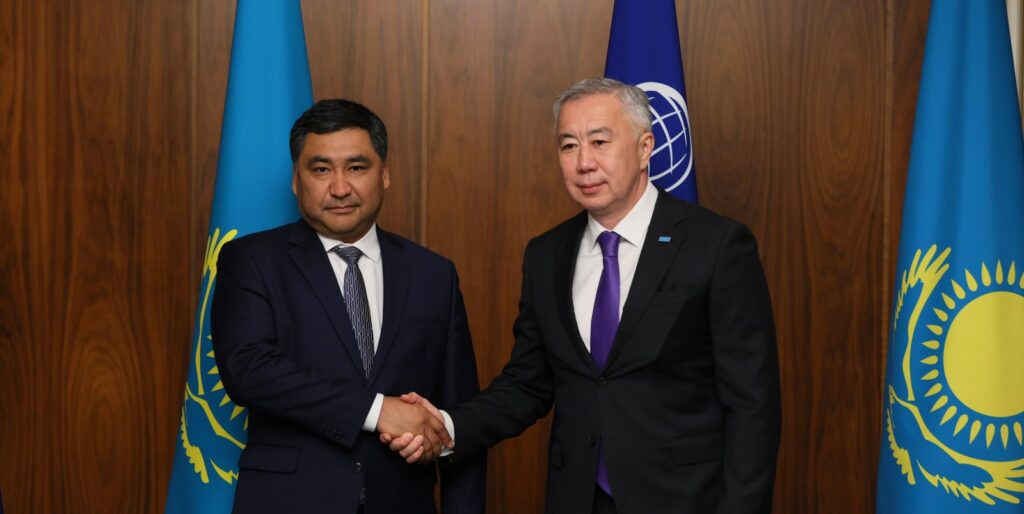
Kazakhstan and Kyrgyzstan have reaffirmed their commitment to significantly boost bilateral trade, aiming to reach $3 billion annually by 2030. The pledge was made during a meeting between Daniyar Amangeldiyev, First Deputy Chairman of Kyrgyzstan’s Cabinet of Ministers, and Serik Zhumangarin, Kazakhstan’s Deputy Prime Minister and Minister of National Economy, on the sidelines of the Astana International Forum on May 30.

In 2024, trade between the two countries totaled $1.7 billion. The new target reflects a strategic initiative set by the presidents of both nations to deepen economic integration.

Roadmap for Trade Expansion

At the meeting, officials discussed a draft roadmap to accelerate bilateral trade. Zhumangarin noted that Kazakhstan is prepared to increase its exports to Kyrgyzstan by more than $260 million, with a focus on petrochemicals, food products, and metallurgy.

In the first quarter of 2025, trade between the two countries reached $435.1 million, a 25.2% increase compared to the same period in 2024. Kazakhstan’s exports stood at $341.9 million, while imports from Kyrgyzstan totaled $93.3 million.

Agriculture: A Key Growth Sector

Agricultural products now account for 20% of bilateral trade, and this figure continues to rise. In Q1 2025, trade in agricultural goods surged by 40.7%. Kazakhstan exported 3,400 tons of grain and 10,900 tons of flour to Kyrgyzstan during this period.

In a notable development, Kazakhstan has approved Kyrgyzstan’s proposal to establish a “green-light” corridor at the border, ensuring the unhindered passage of early-season fruits and vegetables from Kyrgyzstan.

Major Logistics Hub to Boost Connectivity

A flagship joint project is the creation of an Industrial Trade and Logistics Complex at the Kazakhstan-Kyrgyzstan border. Located near the Karasu and Ak-Tilek checkpoints, the hub is poised to become one of Central Asia’s largest cargo distribution centers, supporting the consolidation, processing, and transit of goods.

Land has already been allocated for the project: 50 hectares on the Kazakh side and 40 hectares on the Kyrgyz side. An investor has been identified, and work on a master plan and feasibility study is currently underway.

To support this initiative, Kazakhstan has established the Alatau industrial zone in the Zhambyl region. The zone will host facilities for agricultural processing, as well as the production of consumer goods and building materials.

Infrastructure Connectivity: Almaty-Issyk-Kul Highway Project

The meeting also touched on the long-anticipated construction of an alternative highway linking Almaty, Kazakhstan’s largest city, with Lake Issyk-Kul, one of Kyrgyzstan’s most popular tourist destinations. The project is expected to enhance regional connectivity and stimulate tourism and trade between the two countries.