• KGS/USD = 0.01144 0%
  • KZT/USD = 0.00192 -0%
  • TJS/USD = 0.10895 -0%
  • UZS/USD = 0.00008 0%
  • TMT/USD = 0.28490 0%
  • KGS/USD = 0.01144 0%
  • KZT/USD = 0.00192 -0%
  • TJS/USD = 0.10895 -0%
  • UZS/USD = 0.00008 0%
  • TMT/USD = 0.28490 0%
  • KGS/USD = 0.01144 0%
  • KZT/USD = 0.00192 -0%
  • TJS/USD = 0.10895 -0%
  • UZS/USD = 0.00008 0%
  • TMT/USD = 0.28490 0%
  • KGS/USD = 0.01144 0%
  • KZT/USD = 0.00192 -0%
  • TJS/USD = 0.10895 -0%
  • UZS/USD = 0.00008 0%
  • TMT/USD = 0.28490 0%
  • KGS/USD = 0.01144 0%
  • KZT/USD = 0.00192 -0%
  • TJS/USD = 0.10895 -0%
  • UZS/USD = 0.00008 0%
  • TMT/USD = 0.28490 0%
  • KGS/USD = 0.01144 0%
  • KZT/USD = 0.00192 -0%
  • TJS/USD = 0.10895 -0%
  • UZS/USD = 0.00008 0%
  • TMT/USD = 0.28490 0%
  • KGS/USD = 0.01144 0%
  • KZT/USD = 0.00192 -0%
  • TJS/USD = 0.10895 -0%
  • UZS/USD = 0.00008 0%
  • TMT/USD = 0.28490 0%
  • KGS/USD = 0.01144 0%
  • KZT/USD = 0.00192 -0%
  • TJS/USD = 0.10895 -0%
  • UZS/USD = 0.00008 0%
  • TMT/USD = 0.28490 0%
15 December 2025

Kyrgyzstan’s Keremet Bank Restricts Use of Visa Cards Following U.S. Sanctions

Keremet Bank, a commercial bank in Kyrgyzstan recently subjected to U.S. sanctions, has announced new restrictions on the use of its Visa cards. The announcement was issued through the bank’s press service.

As per the official statement, Visa cards issued by Keremet Bank can now only be used at the bank’s ATMs, POS terminals, and other payment devices. To provide customers with an alternative, the bank is offering free issuance of cards under the national payment system, Elkart. The process for obtaining an Elkart card will take up to five working days in Bishkek and up to ten days in other regions.

The bank reassured its clients that their funds remain secure. Customers can withdraw money at the nearest branch by presenting a valid passport or transferring funds through the mobile application to Elkart cards or settlement accounts.

The U.S. Treasury Department imposed sanctions on Keremet Bank, citing alleged ties to Russian authorities and collaboration with Promsvyazbank, a Russian financial institution that has been under U.S. restrictions since 2022.

Russian Foreign Ministry Responds to Turkmen Displeasure Over ‘Second Turkmenbashi’ Article

The Russian Foreign Ministry has issued a statement following a controversial article in Nezavisimaya Gazeta that drew criticism from the Turkmen leadership.

On January 12, the newspaper published an article titled “Neutrality Turned Out to Be an Excuse for Strengthening the Personality Cult of the ‘Second Turkmenbashi.'” The piece compared former president Gurbanguly Berdimuhamedov to his predecessor, Saparmurat Niyazov, who was the subject of a personality cult during his rule over Turkmenistan from 1985 to his death in 2006. Niyazov often called himself “Turkmenbashi” (father of the Turkmen).

The Nezavisimaya Gazeta article quoted Arkady Dubnov, an expert on post-Soviet affairs, in relation to a meeting of the Organizing Committee for the 30th anniversary of Turkmenistan’s neutrality. During the event, Turkmen Foreign Minister Rashid Meredov reportedly referred to Berdimuhamedov as the “father of the nation.”

Dubnov, a critic of authoritarian regimes, remarked that the event symbolized “the birth of another father of the nation on the ruins of the USSR.”

The article was subsequently removed from Nezavisimaya Gazeta’s website, but not before it provoked discontent in Ashgabat. In response, the Russian Foreign Ministry issued a clarification. In a statement on its official website, the ministry emphasized that “The assessments given in the article have nothing in common with the official position of Russia and do not reflect the high status of ties between our friendly countries.”

This incident highlights a pattern in which the Russian Foreign Ministry has distanced itself from media outlets over publications that anger foreign governments. Similar cases have occurred in the past, underscoring the delicate balancing act Moscow maintains with its partners in post-Soviet space.

Uzbekistan’s Foreign Trade Turnover Grows by 3.8% in 2024

Uzbekistan’s foreign trade turnover (FTT) reached $65.9 billion in 2024, reflecting an increase of $2.4 billion, or 3.8%, compared to the previous year, according to the Statistics Agency under the President of the Republic of Uzbekistan.

Exports totaled $26.95 billion, an 8.4% increase year-on-year, while imports amounted to $38.99 billion, representing a modest rise of 0.8%.

China and Russia remain Uzbekistan’s top trading partners, with Kazakhstan emerging as a key partner in third place. Uzbekistan conducts trade with 198 countries, with China accounting for 18.9% of its FTT, followed by Russia (17.6%), Kazakhstan (6.5%), Turkey (4.5%), and South Korea (3.0%).

Trade with state members of the Eurasian Economic Union (EAEU) reached $17.5 billion in 2024. Of this, $5.83 billion came from exports, while imports amounted to $11.66 billion.

In 2024, natural gas trade played a significant role in Uzbekistan’s foreign trade activities. The country exported $628 million worth of gas but imported $1.68 billion worth, more than 2.5 times the value of its exports. Gas imports rose sharply, increasing 2.4 times compared to 2023. Purchases of natural gas from Turkmenistan and Russia surged from $694.9 million in 2023 to $1.68 billion in 2024.

Mirziyoyev Invites Trump to Visit Uzbekistan

Uzbekistan’s President Shavkat Mirziyoyev has extended his congratulations to Donald Trump on his inauguration as the 47th President of the United States by inviting him to visit Uzbekistan. Mirziyoyev’s press secretary, Sherzod Asadov, made the announcement.

Republican candidate Donald Trump won the November 2024 U.S. presidential election and was sworn into office on January 20, 2025.

In his congratulatory letter, Mirziyoyev expressed confidence that the United States, under Trump’s leadership, would continue to enhance its global influence and prestige. He commended the country’s economic strength and vital role in international affairs.

The letter also highlighted Uzbekistan’s appreciation for the United States’ consistent support of its independence, sovereignty, and territorial integrity. Mirziyoyev voiced optimism for a new era of strategic partnership between the two nations during Trump’s presidency. He stressed the importance of deepening bilateral ties and expanding collaboration through bilateral and multilateral platforms.

President Mirziyoyev also invited Trump to visit Uzbekistan, a gesture aimed at strengthening the relationship between the two countries.

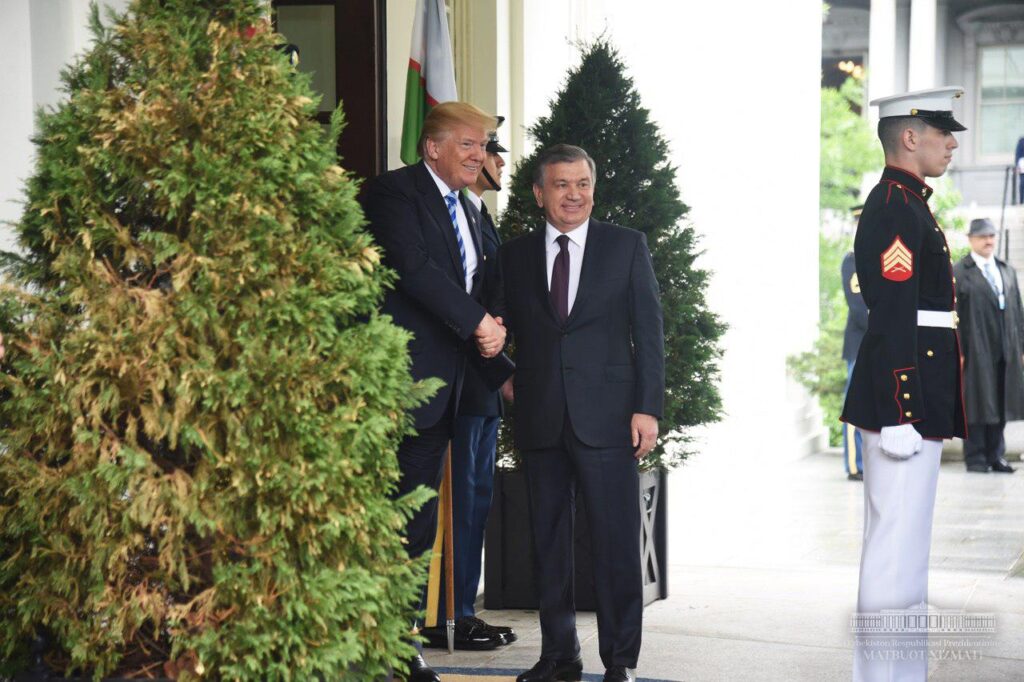
Mirziyoyev visited the United States in 2018 during Trump’s previous term as president. When the two leaders met at the White House, Trump remarked on Uzbekistan’s growing influence: “The authority of Uzbekistan is growing. It’s an honor for us to meet with you in the White House.”

In addition to Uzbekistan, other Central Asian leaders congratulated Trump on his inauguration. Kazakhstan’s President Kassym-Jomart Tokayev sent a telegram expressing confidence in the continued development of mutually beneficial cooperation between Kazakhstan and the United States, particularly concerning energy, nuclear non-proliferation, and international security.

Kazakhstan Aims to Boost Agricultural Exports to Russia

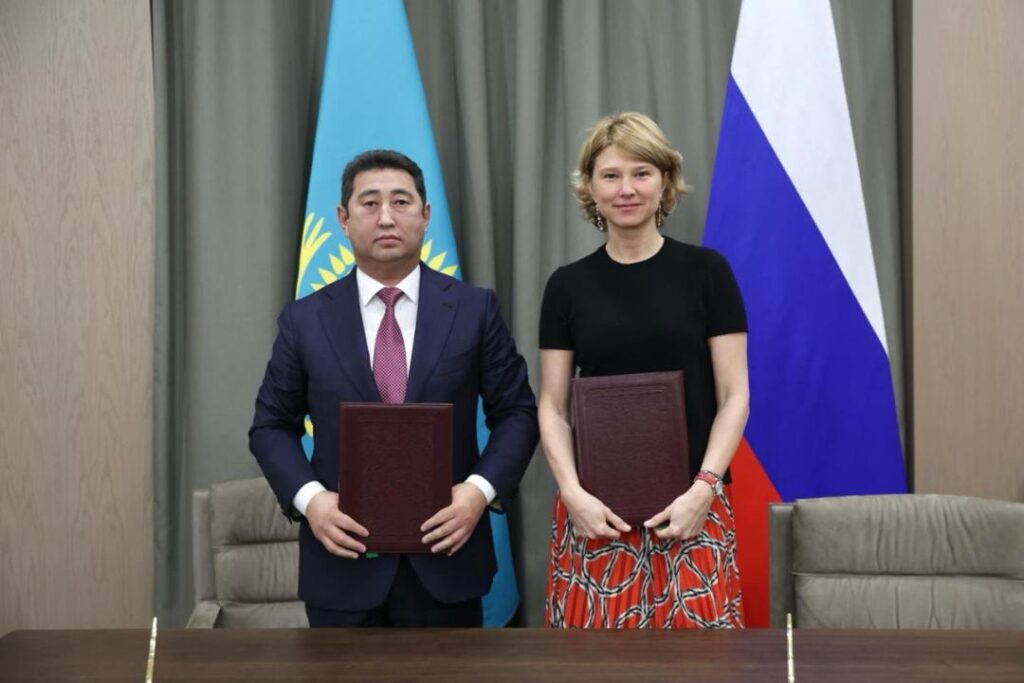
Kazakhstan is seeking to expand its agricultural exports to Russia as part of efforts to strengthen bilateral trade ties. On January 21, Minister of Agriculture Aidarbek Saparov met with his Russian counterpart Oksana Lut in Moscow to discuss lifting restrictions on the import and transit of agricultural products.

Trade turnover in agricultural goods between the two countries reached $3.4 billion from January to November 2024, marking a 4.3% increase compared to the same period in the previous year.

According to Saparov, Russia remains Kazakhstan’s largest trading partner in the agricultural sector. Over the first 11 months of 2024, Kazakhstan’s agricultural exports to Russia totaled $502.9 million. “Kazakhstan is interested in increasing the presence of its agricultural products on the Russian market,” Saparov said.

In recent months, both countries have made progress in easing trade restrictions. Kazakhstan has lifted all restrictions on Russian agricultural products, while Russia this month removed temporary bans on tomato imports from 36 Kazakh enterprises. Discussions are ongoing to further relax restrictions on the import and transit of Kazakh livestock and plant products.

The Moscow meeting concluded with the signing of an action plan to enhance Russian-Kazakh agro-industrial cooperation. Key elements of the plan include:

  • Preparing a joint project to establish an agrobiotechnopark.
  • Creating a favorable framework for mutual food supplies.
  • Finalizing the integration of veterinary and phytosanitary control information systems.

These measures are expected to strengthen agricultural trade between the two countries and support the development of new joint projects in the agro-industrial sector.

Kyrgyzstan Begins Construction of a New Solar Power Plant

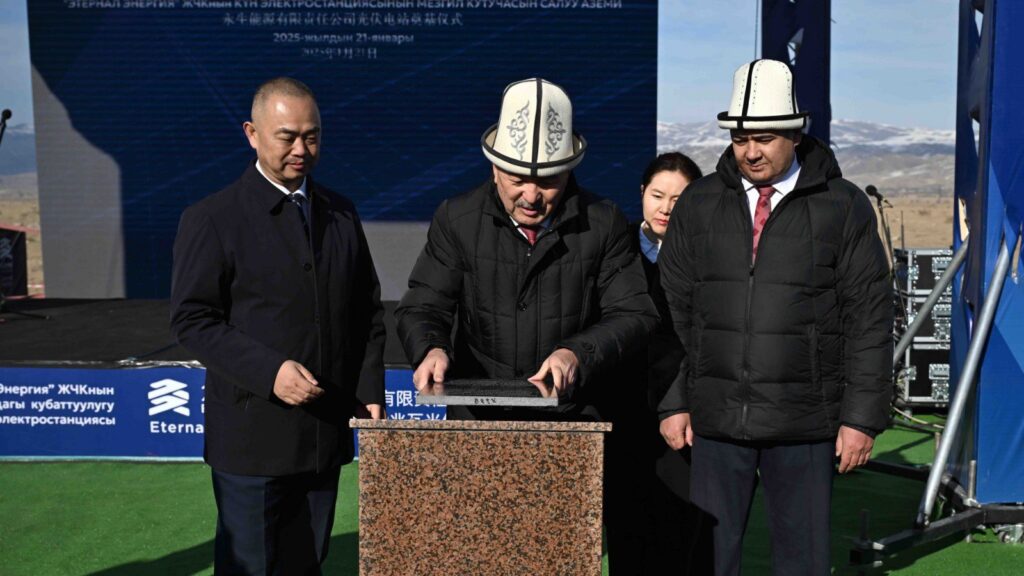
Kyrgyzstan has launched the construction of a new solar power plant in the Kemin district of the Chui region, approximately 100 kilometers east of the capital, Bishkek.

The plant will have a capacity of 100 MW and is expected to generate 155 million kWh of electricity annually. According to the government, this will help reduce carbon dioxide emissions by 140,000 tons and coal consumption by 50,000 tons per year.

At the January 21 groundbreaking ceremony, Chairman of the Cabinet of Ministers Adylbek Kasymaliev described the project as a significant step toward achieving Kyrgyzstan’s energy independence and advancing sustainable development.

Acknowledging that the country still heavily relies on its Soviet-era hydroelectric power plants for electricity generation, Kasymaliev emphasized Kyrgyzstan’s commitment to adopting modern and environmentally friendly energy solutions.

Kasymaliev also highlighted the country’s growing energy demands, noting that Kyrgyzstan’s population now exceeds 7 million and new large-scale industrial enterprises are being established. He expressed optimism that the new solar power plant would help alleviate electricity shortages, which remain a pressing issue, especially during the winter months.

The chairman extended his gratitude to Chinese partners and investors, particularly those from Shaanxi Province, for their support and contributions to the project.

Kyrgyzstan is actively addressing its energy challenges by investing in a diversified mix of renewable energy initiatives, including solar and wind farms, as well as large hydroelectric power projects.