• KGS/USD = 0.01144 0%
  • KZT/USD = 0.00212 0%
  • TJS/USD = 0.10456 0.19%
  • UZS/USD = 0.00008 0%
  • TMT/USD = 0.28490 0%
  • KGS/USD = 0.01144 0%
  • KZT/USD = 0.00212 0%
  • TJS/USD = 0.10456 0.19%
  • UZS/USD = 0.00008 0%
  • TMT/USD = 0.28490 0%
  • KGS/USD = 0.01144 0%
  • KZT/USD = 0.00212 0%
  • TJS/USD = 0.10456 0.19%
  • UZS/USD = 0.00008 0%
  • TMT/USD = 0.28490 0%
  • KGS/USD = 0.01144 0%
  • KZT/USD = 0.00212 0%
  • TJS/USD = 0.10456 0.19%
  • UZS/USD = 0.00008 0%
  • TMT/USD = 0.28490 0%
  • KGS/USD = 0.01144 0%
  • KZT/USD = 0.00212 0%
  • TJS/USD = 0.10456 0.19%
  • UZS/USD = 0.00008 0%
  • TMT/USD = 0.28490 0%
  • KGS/USD = 0.01144 0%
  • KZT/USD = 0.00212 0%
  • TJS/USD = 0.10456 0.19%
  • UZS/USD = 0.00008 0%
  • TMT/USD = 0.28490 0%
  • KGS/USD = 0.01144 0%
  • KZT/USD = 0.00212 0%
  • TJS/USD = 0.10456 0.19%
  • UZS/USD = 0.00008 0%
  • TMT/USD = 0.28490 0%
  • KGS/USD = 0.01144 0%
  • KZT/USD = 0.00212 0%
  • TJS/USD = 0.10456 0.19%
  • UZS/USD = 0.00008 0%
  • TMT/USD = 0.28490 0%

Deputy Akim of Shymkent Shot and Wounded

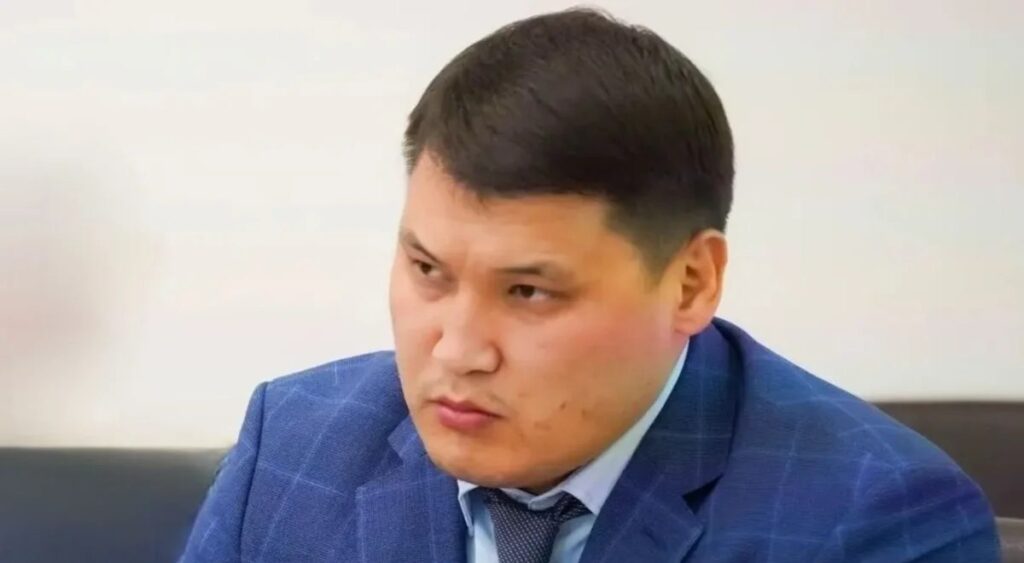
On the evening of April 21, Ruslan Berdenov, Deputy Akim of Shymkent, was shot and wounded in an apparent assassination attempt near the city hall. The incident occurred under unclear circumstances and has sparked widespread public attention and speculation.

Preliminary reports indicate that Berdenov was hit three times by a Saiga-12 shotgun. The suspect, who was detained at the scene, was confronted by Berdenov’s driver, who reportedly accelerated the vehicle to subdue the attacker.

“The assailant waited near the Akimat and shot at close range when the official exited the building. The driver intervened by striking the shooter with the car,” journalist Mikhail Kozachkov reported on Telegram.

Suspect Identified as State Employee

According to the Telegram channel Letters to the President, the suspect has been identified as 30-year-old Zhienbai Yernar Zhienbayuly, a specialist at Turgyn Shymkent LLP, which operates under the Akimat. He is reported to be a subordinate of Berdenov. A criminal investigation has been launched under charges of attempted murder.

Berdenov sustained gunshot wounds to his right thigh and shoulder. The city’s health department stated that as of the morning of April 22, he had regained consciousness and was in a stable but serious condition.

Speculation Over Motives

Following the attack, various unverified theories were circulating on social media, with one suggesting the motive was personal jealousy. However, this was publicly denied by Berdenov’s business partner, Beibit Alibekov, who described the rumors as fabrications. Alibekov suggested instead that the incident may be linked to Berdenov’s recent anti-corruption efforts in the construction sector.

The Akimat also rejected claims that the suspect’s wife had been harassed by Berdenov, stating that such allegations “do not correspond to reality.”

The Respublica Party, of which Berdenov is a member, urged caution, stating that “any premature assessments can be regarded as interference in the investigation.” The party emphasized its stance that “violence in any form is unacceptable.”

Law enforcement agencies have confirmed that the investigation is ongoing and all circumstances surrounding the attack are being examined.

Ruslan Berdenov was appointed Deputy Akim of Shymkent in February 2025. Before that, he served as a deputy in the Mazhilis, the lower house of Kazakhstan’s Parliament, where he worked on the Finance and Budget Committee. A native of Shymkent, Berdenov is 39 years old and fluent in Kazakh, Russian, English, Turkish, and Azeri.

Dr. Atakan Varol: Kazakhstan Should Play an Active Role in Shaping the Future of AI

The Times of Central Asia spoke with Dr. Hussein Atakan Varol, a professor of robotics and PhD in electrical engineering, who serves as General Director of the Institute of Smart Systems and Artificial Intelligence (ISSAI) at Nazarbayev University (NU). Dr. Varol discusses ISSAI’s research initiatives, the role of artificial intelligence (AI) in Kazakhstan, and the country’s potential to lead in AI innovation.

ISSAI’s Mission and Collaborations

TCA: What is the mission of ISSAI, and what are its key focus areas?

Varol: At ISSAI, our mission is to conduct cutting-edge AI research and develop practical, impactful solutions that benefit Kazakhstan and the broader global community. We specialize in large-scale generative AI models, speech recognition, computer vision, and AI infrastructure. Our goal is to establish sovereign AI capabilities in Kazakhstan, minimizing dependence on external technologies while maintaining a strong ethical foundation. All our research adheres to principles of “AI for Good” and “AI for Kazakhstan,” ensuring that developments remain responsible and socially beneficial.

TCA: How does ISSAI collaborate with the public sector, private companies, and international organizations?

Varol: We actively engage with government agencies, local businesses, and global AI research institutions. Our partnerships focus on AI model development, data collection, and deploying AI-driven solutions. Access to computational resources remains a key challenge, and we collaborate strategically to secure the infrastructure needed to scale AI projects in Kazakhstan.

Notable Projects and Local Impact

TCA: What are some of ISSAI’s most promising current developments?

Varol: A highlight is SoyleApp, which provides real-time speech recognition, text-to-speech, and multilingual translation. It has vast potential in education, public services, and cross-language communication.

We’ve also developed the Mangitas 01 Inference Server, a vital step for Kazakhstan’s AI ecosystem. In the absence of AI supercomputers, we built Mangitas 01 using commercial off-the-shelf components, allowing local deployment of AI models with enhanced data security. We’re now working on expanding this line to support our Oylan language-vision model, paving the way for more advanced multimodal AI applications.

TCA: Have ISSAI’s solutions been successfully implemented in Kazakhstan?

Varol: Yes. SoyleApp is being integrated into governmental and enterprise systems to improve accessibility for Kazakh-speaking users. Mangitas 01 serves as a prototype for local AI infrastructure, enabling organizations to operate AI systems within Kazakhstan, enhancing both data protection and performance.

TCA: How does the local context influence your AI development?

Varol: Kazakhstan’s linguistic and cultural diversity demands AI systems capable of understanding and producing content in Kazakh, Russian, and other regional languages. We’ve created tailored datasets and models to meet these needs. Moreover, the country’s limited AI infrastructure has led us to focus on efficient and scalable solutions like Mangitas 01.
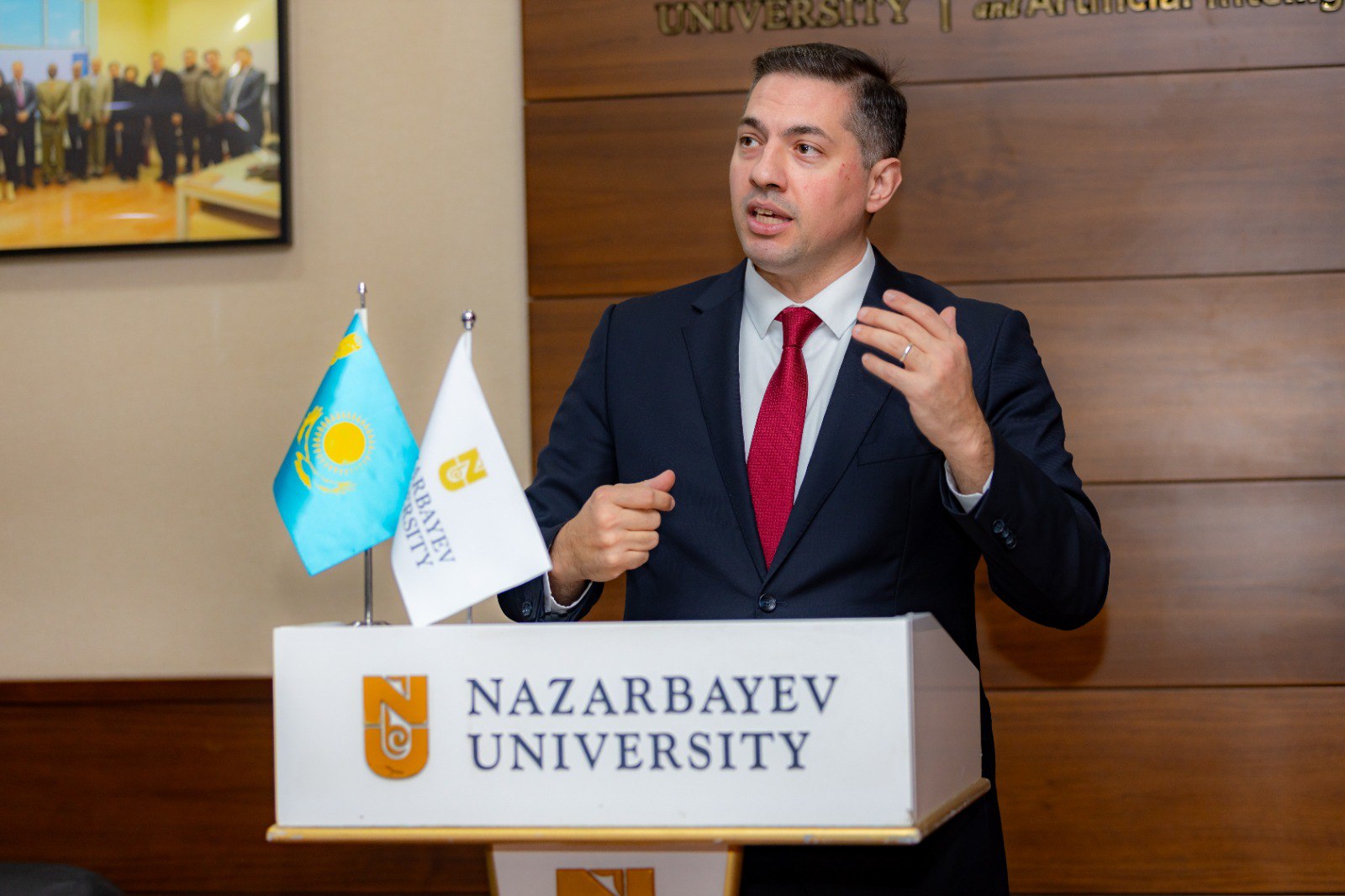
Dr. Atakan Varol; image: NU.edu

The Future of AI and Kazakhstan’s Role

TCA: How do you see AI evolving over the next 5-10 years?

Varol: The next leap is toward multimodal and sparse generative models that handle text, images, and audio simultaneously. With proper investment, Kazakhstan can contribute meaningfully to this frontier. We’re also exploring edge AI, which enables powerful AI models to run locally on devices like smartphones, improving both privacy and resilience. The emergence of humanoid robots driven by advanced AI will further transform the service and manufacturing sectors.

TCA: What are the main challenges and risks of AI adoption?

Varol: Our biggest challenge is the lack of high-performance computing infrastructure. Even if we develop leading AI models, deploying them is hindered without supercomputers. This dependency on foreign providers can be politically risky.

Automation is another concern, as AI disrupts sectors like law, journalism, and programming. That’s why workforce adaptation is critical. We must equip professionals to work alongside AI, and generative AI literacy will be essential to Kazakhstan’s technological leadership.

TCA: How is ISSAI helping to build AI talent in Kazakhstan?

Varol: We’re committed to training the next generation of AI researchers, data scientists, and engineers. Through educational programs, workshops, and internships, we provide hands-on opportunities for students. One of our flagship efforts is the ISSAI Summer Research Program (SRP), which brings together students from the University of Pennsylvania, NU, and universities across rural Kazakhstan. It fosters cross-cultural collaboration and real-world research experience.

Personal Perspective

TCA: Which AI trends excite you the most?

Varol: Multimodal AI is incredibly promising; systems that seamlessly integrate text, images, and audio will define the next era of innovation. We’re actively developing in this area with Oylan and a new sparse multimodal model.

Another breakthrough is in sparse model architectures, like DeepSeek’s mixture-of-experts approach, which activates only select model parameters, improving efficiency while maintaining performance, crucial for Kazakhstan’s limited resources.

We’re also intrigued by the move beyond token-based models, toward architectures built on latent embeddings. This could reduce data and energy needs, aligning with Green AI principles. Sustainability must be a core tenet of future AI development.

TCA: What advice do you have for aspiring AI researchers and engineers?

Varol: Focus on solving real-world problems. Kazakhstan’s unique linguistic and infrastructural challenges create fertile ground for innovation. Stay curious and adaptable, this field changes fast, and success comes from ongoing learning and experimentation.

While studying abroad is valuable, excellent education and research opportunities exist within Kazakhstan, particularly at NU. Many of our top contributors are Kazakhstani students and international collaborators working together. AI is a global discipline, and diversity is its strength.

Pope Francis Championed Central Asia’s Role in Promoting Peace in a Multicultural Region

Pope Francis was a tireless advocate for peace and dialogue on the global stage, spotlighting Central Asia not as a zone of conflict but as a unique crossroads of cultures, religions, and geopolitical influence—an embodiment of tolerance and coexistence.

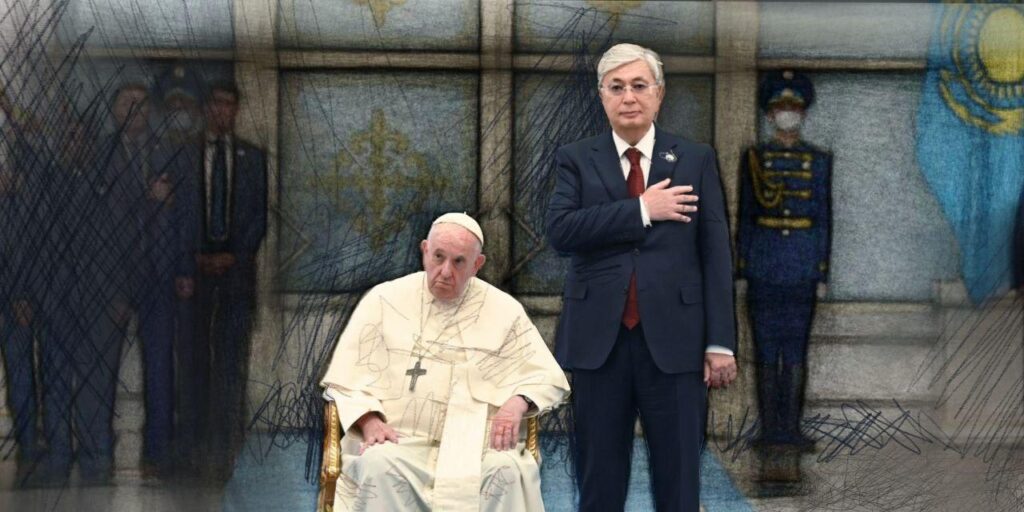
In 2022, amidst the escalating Russia-Ukraine war and rising geopolitical tensions, Pope Francis made a historic pastoral visit to Kazakhstan to attend the Congress of Leaders of World and Traditional Religions. Kazakhstan, a predominantly Muslim nation, has a Christian minority comprising 17.2% of the population, primarily Russian Orthodox, alongside Catholics and Protestants.

President Kassym-Jomart Tokayev, the event’s host, reaffirmed his country’s dedication to religious tolerance, presenting Kazakhstan as a model of “interfaith dialogue in creating a more peaceful and harmonious global society.” Notably, religiously motivated violence against minorities is virtually unheard of in Kazakhstan. Tokayev later visited the Holy See to continue discussions with Pope Francis, focusing on strengthening collaboration for global peace and interfaith understanding.

Tributes and Reflections on His Legacy

Central Asian leaders are expressing their condolences following the death of Pope Francis at age 88.

“The deceased, with his extensive activity as a great Pontiff, made a significant contribution to world affairs and gained fame throughout the world with his creative initiatives and actions,” President Emomali Rahmon of Tajikistan said in a message to Cardinal Giovanni Battista, dean of the College of Cardinals. 

Rahmon, who met Francis last year at the Vatican, said the pontiff had promoted dialogue, peace and stability. Tajikistan’s leader said he recalled the pope’s “continuous efforts to strengthen and expand the good relations between Tajikistan and the Holy See.”

President Shavkat Mirziyoyev of Uzbekistan said Francis had made “a worthy contribution to the development of relations between Uzbekistan and the Vatican, strengthening interfaith and interfaith friendship, supporting people in need around the world, and widely promoting noble ideas.”

Mirziyoyev’s message was posted on Telegram by Sherzod Asadov, Uzbekistan’s presidential press secretary. President Sadyr Japarov of Kyrgyzstan, who met the pope in the Vatican last year, has also expressed condolences. 

Tokayev offered his condolences through his X account (formerly Twitter): “I express my deepest condolences on the passing of His Holiness Pope Francis. [The Pontiff] was an extraordinary spiritual leader who spared no effort to promoting the noble ideals of humanism, justice and compassion.”

Kazakhstan will hold a nationwide prayer on Tuesday, according to the state-run Kazinform News Agency. It said the prayer will be broadcast live from the Our Mother of Perpetual Help Cathedral in Astana.

A Legacy of Peace and Dialogue

Pope Francis’ engagement with Central Asia highlighted the region’s growing geopolitical significance in a rapidly changing global order. His efforts emphasized shared responsibilities in building a more peaceful and equitable world—a mission he championed throughout his papacy.

These interactions serve as a powerful reminder that even in today’s fragmented global landscape, communities can transcend divisions to forge partnerships rooted in shared human dignity. Through his outreach, Pope Francis strengthened Central Asia’s connection to the Vatican, showcasing the potential of faith-driven diplomacy in achieving universal peace.

Kyrgyz Prime Minister Kasymaliev in Washington for IMF, World Bank Meetings

Kyrgyz Prime Minister Adylbek Kasymaliev has arrived in Washington, D.C. to participate in the Spring Meetings of the International Monetary Fund (IMF) and World Bank Group. During his visit, Kasymaliev is expected to meet with senior World Bank officials to discuss ongoing and future investment projects in Kyrgyzstan.

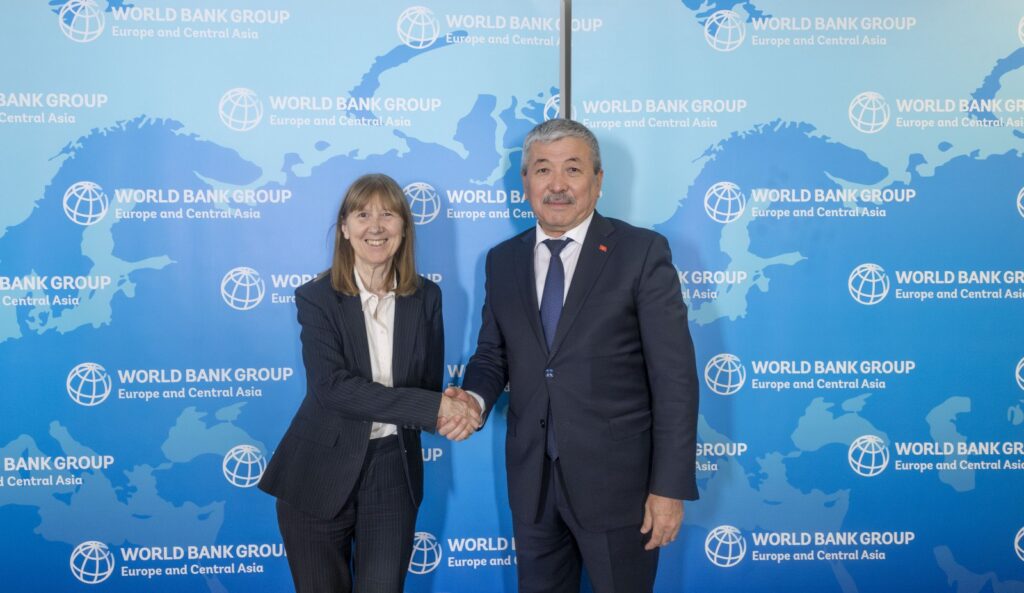
Following the IMF and World Bank sessions, Kasymaliev is scheduled to hold high-level talks with Anna Bjerde, the World Bank’s Managing Director for Operations, and Antonella Bassani, Vice President for Europe and Central Asia. A key item on the agenda will be the planned construction of the Kambarata-1 Hydropower Plant (HPP) on the Naryn River.

The Kyrgyz government hopes to secure an interest-free loan of $500 million from the World Bank to support the project, which is estimated to cost $3.6 billion in total. Kambarata-1 is seen as a strategic initiative that could make Kyrgyzstan fully self-sufficient in electricity generation.

To date, approximately 4 billion Kyrgyz soms (about $46 million) have been allocated from the state budget for preliminary construction works. These funds are being used to build vital infrastructure including roads, a transportation tunnel, a bridge over the Naryn River, power lines, and temporary housing for workers.

In addition to his meetings with international financial institutions, Kasymaliev will also engage with executives from leading U.S. corporations. These discussions will not only cover the hydropower sector but will also highlight other government-led investment opportunities in Kyrgyzstan across various industries.

The Kyrgyz leadership has intensified efforts to attract foreign partners for its infrastructure and energy projects, as part of a broader strategy to enhance economic independence and modernize the national energy grid.

Ultra-Nationalist Russian Lawmaker Sets Sights on Uzbek Community Leader

A senior Russian lawmaker has called on prosecutors to investigate Bahrom Ismailov, the former head of the Uzbek National and Cultural Autonomy Council in Moscow. Leonid Slutsky, leader of the Liberal Democratic Party of Russia (LDPR), said he will formally request an inquiry into Ismailov’s past activities and the process by which he acquired Russian citizenship. An ultra-nationalist, Slutsky has previously led anti-migrant rhetoric, including calls for a “Migrant Code“, and a bill designed to restrict the right of migrant workers to bring their families into the country.

This time, Slutsky’s demand follows an interview in which Ismailov reportedly stated, “Uzbeks want to settle in Russia,” and referred to an ongoing cultural “expansion,” citing the spread of Uzbek teahouses, traditional cuisine, and the presence of large Uzbek families across the country.

Slutsky accused Ismailov, who is ethnically Uzbek and now a Russian citizen, of promoting illegal migration and questioned his loyalty. “He got our citizenship, but his heart seems to be in another country,” Slutsky said. “We will check everything from how he entered Russia and legalized his stay, to how he received his education, built his business, and interacted with the Uzbek diaspora.”

While describing Ismailov’s remarks as naive, Slutsky argued they raise legitimate concerns about unchecked migration and its perception among the Russian public. He also alleged that Ismailov had previously pledged to facilitate the entry of more Uzbek nationals into Russia by assisting with documentation, housing, and access to social benefits.

The comments come amid heightened scrutiny of migration policy in Russia, particularly following recent security incidents and increasing nationalist sentiment. The LDPR has long advocated for stricter controls on migration and closer monitoring of ethnic and cultural organizations. Ismailov has yet to publicly responded to the allegations or the calls for investigation.

Kyrgyz-Chinese Initiative to Establish Large-Scale Tree Nursery in Bishkek

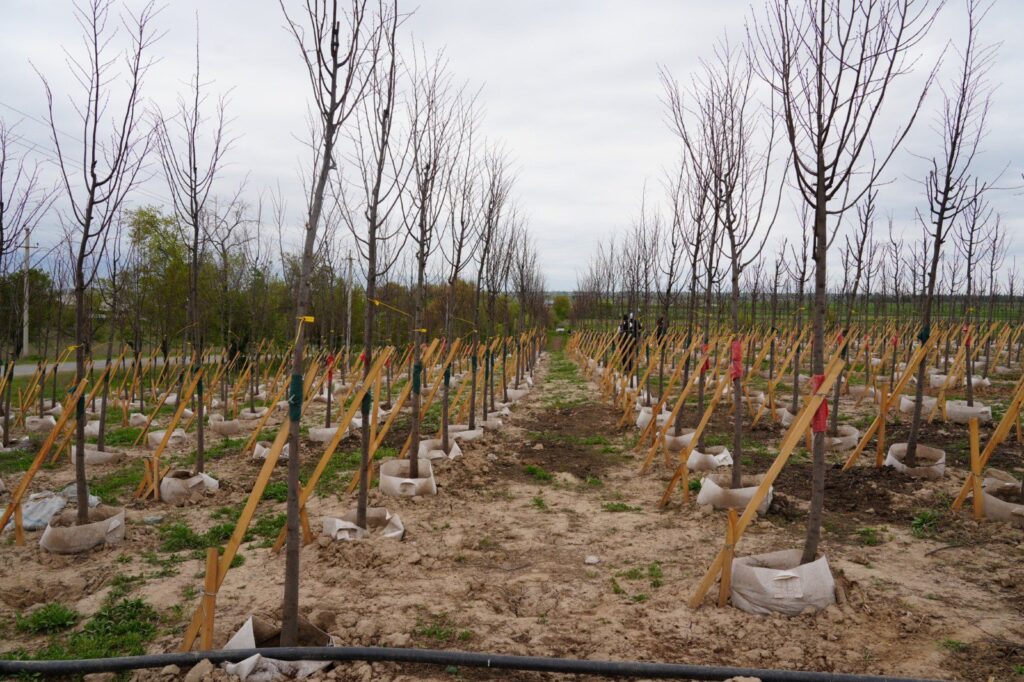
Chinese partners from the city of Qingdao are working with the Bishkek municipality to establish a major nursery for tree and shrub saplings, aimed at greening the Kyrgyz capital. The initiative is part of a broader environmental restoration effort and represents a significant step toward improving the city’s ecological conditions.

Over the weekend, Bishkek Mayor Aibek Junushaliyev visited the site of the future nursery, where more than 12,300 tree saplings and 9,000 shrubs have already been experimentally planted across five hectares. According to city officials, the total area of the nursery is expected to eventually span approximately 100 hectares.

Initial cultivation efforts have focused on tall deciduous tree species, including Norway maple, Chinese acacia, linden, poplar, and beech. Once mature, these saplings will be planted throughout Bishkek to help restore its long-lost greenery.

Historically one of the greenest cities in the former Soviet Union, Bishkek has lost much of its tree cover over the past three decades, largely due to rapid construction in and around the city center. Environmental experts have advised local authorities to shift away from the prevalent use of coniferous trees and instead prioritize tall, shade-giving deciduous trees that also offer better noise absorption.

The new nursery is expected to play a crucial role in reversing urban deforestation and improving air quality in Bishkek. It also supports Kyrgyzstan’s nationwide “Jashyl Muras” (Green Heritage) campaign, launched in March 2022 by President Sadyr Japarov. The initiative aims to plant 5-6 million saplings annually across the country.

In 2024, the Ministry of Natural Resources, Ecology and Technical Supervision reported that more than 8.1 million saplings were planted nationwide under the program.