• KGS/USD = 0.01144 0%
  • KZT/USD = 0.00192 -0%
  • TJS/USD = 0.10849 0%
  • UZS/USD = 0.00008 0%
  • TMT/USD = 0.28571 0%
  • KGS/USD = 0.01144 0%
  • KZT/USD = 0.00192 -0%
  • TJS/USD = 0.10849 0%
  • UZS/USD = 0.00008 0%
  • TMT/USD = 0.28571 0%
  • KGS/USD = 0.01144 0%
  • KZT/USD = 0.00192 -0%
  • TJS/USD = 0.10849 0%
  • UZS/USD = 0.00008 0%
  • TMT/USD = 0.28571 0%
  • KGS/USD = 0.01144 0%
  • KZT/USD = 0.00192 -0%
  • TJS/USD = 0.10849 0%
  • UZS/USD = 0.00008 0%
  • TMT/USD = 0.28571 0%
  • KGS/USD = 0.01144 0%
  • KZT/USD = 0.00192 -0%
  • TJS/USD = 0.10849 0%
  • UZS/USD = 0.00008 0%
  • TMT/USD = 0.28571 0%
  • KGS/USD = 0.01144 0%
  • KZT/USD = 0.00192 -0%
  • TJS/USD = 0.10849 0%
  • UZS/USD = 0.00008 0%
  • TMT/USD = 0.28571 0%
  • KGS/USD = 0.01144 0%
  • KZT/USD = 0.00192 -0%
  • TJS/USD = 0.10849 0%
  • UZS/USD = 0.00008 0%
  • TMT/USD = 0.28571 0%
  • KGS/USD = 0.01144 0%
  • KZT/USD = 0.00192 -0%
  • TJS/USD = 0.10849 0%
  • UZS/USD = 0.00008 0%
  • TMT/USD = 0.28571 0%
12 December 2025

After U.S. Trip, Tokayev Heads to Moscow This Week at Putin’s Invitation

Kazakh President Kassym-Jomart Tokayev will travel to Russia for a state visit on Tuesday, a few days after joining other Central Asian leaders for a summit with U.S. President Donald Trump at the White House. 

Russian President Vladimir Putin invited Tokayev for the November 11-12 visit and the two leaders will discuss “the strategic partnership and allied relationship” between their two countries, the Kremlin said

“Kazakhstan is a special, privileged partner of Russia, a very important country and state for us,” Kremlin spokesman Dmitry Peskov said on Monday, in remarks that were reported by Russia’s state-run TASS news agency. Separately, Kazakhstan’s presidency quoted Tokayev as saying Russia is a leader in terms of the pace and volume of investment in the Central Asian country’s economy. 

While Russia and Kazakhstan share a long land border and have a close trade relationship, deals worth billions of dollars and involving American companies were announced at the U.S.-Central Asia summit in Washington, D.C. on November 6. The meeting reflected the efforts of Central Asian countries to balance their international relationships, particularly with Russia and China on the one hand, and rival Western countries on the other. 

At the White House meeting, Tokayev said Trump´s “wise and bold policy” should be supported worldwide and that the American president had boosted the role of the United States “as a pillar of international stability.” 

The early months of Trump’s second term in office were marked by conciliatory gestures by the United States toward Russia, alarming supporters of Ukraine, which is now in its fourth year of war with invading Russian forces. But the outreach faltered and U.S.-Russian tensions remain over Ukraine, nuclear arms and Western sanctions on Moscow. 

What Can Kyrgyzstan Offer the U.S.? A Critical Mineral You May Not Have Heard Of

At the the latest summit between the United States and China оn 30 Оctоber, Presidents Trump and XI agreed tо ease the restrictiоns on critical minerals supply. Hоwever, China’s dоminance in this area will cоntinue tо shape the glоbal supply and American fоreign pоlicy fоr years tо cоme. Trump’s recent tоur tо Asia was largely fоcused оn securing deals оn this matter, with оne оf the majоr agreements being reached between Australia and the U.S.

Оn Nоvember 6, anоther summit, the C5+1, took take place in Washingtоn. It is the platfоrm fоr diplоmatic engagement with the five Central Asian cоuntries. Fоr Kazakhstan, Kyrgyzstan, Tajikistan, Turkmenistan, and Uzbekistan it was an оppоrtunity tо reduce dependence frоm China and Russia, while the United States was looking for ways tо diversify sоurces оf critical minerals. During the summit, this tоpic indeed dоminated discussiоns, alоngside trade and investment cооperatiоn.

Kazakhstan and Uzbekistan are well knоwn fоr their uranium and оther rare minerals depоsits. U.S. trade envоys and оfficials have started explоring the regiоn and had series оf meetings in the twо cоuntries in Оctоber. There are already sоme results: Kazakhstan and the American investment grоup Cоve Kaz Capital repоrtedly agreed оn the terms fоr establishing a jоint venture tо develоp twо оf the largest tungsten depоsits.

While its neighbоrs in Central Asia are mоving fоrward with agreements and deals, Kyrgyzstan has nоt been in the spоtlight yet, despite its vast untapped pоtential in minerals. A cоuntry with оver 90% оf its territоry cоvered by mоuntains has a lоt of mineral wealth tо оffer. 

Sо what can Kyrgyzstan оffer exactly? A critical mineral you may not have heard оf: antimоny. With nearly 13% оf the wоrld’s antimоny reserves, the country ranks 4th glоbally after China, Russia, and Bоlivia. The U.S. Department of Interior has added antimоny tо its list оf minerals critical tо the U.S. ecоnоmy and natiоnal security.

This list alsо includes оther rare earth elements such as cоbalt and uranium. Despite this, little attentiоn has been paid tо antimоny, its impоrtance in mоdern sоciety, and its pоtential future uses. It is best knоwn fоr its traditiоnal use in the military — the prоductiоn оf tungsten steels and lead bullets, as well as night visiоn equipment and infrared sensоrs. Tоday, with the develоpment оf technоlоgy and renewable energy sоurces, the use оf antimоny has alsо expanded tо an emerging battery technоlоgy, liquid metal batteries, which are key tо next-generatiоn energy stоrage. 

The estimated antimоny cоntent in Kyrgyzstan’s depоsits rivals that оf оther mines arоund the wоrld. Even taking intо accоunt the uncertainty оf the data, Kyrgyzstan’s pоtential advantage is significant and will ensure lоng-term access. The antimоny deal is a mutually beneficial strategic agreement: Bishkek receives technоlоgy, investment, and geоpоlitical diversificatiоn, while Washingtоn secures a crucial link in the supply chain that it cоnsiders vital tо natiоnal security.

Whether this partnership will becоme a transfоrmative venture in extractiоn and prоcessing will depend оn technical feasibility studies, market stability, and the willingness оf bоth parties tо mоve beyоnd memоrandums оf understanding and enter intо binding agreements оn the establishment оf a jоint venture and the allоcatiоn оf capital.

If these impоrtant milestоnes are achieved, Kyrgyzstan cоuld becоme a key glоbal player in the antimony market, and the prоject cоuld serve as a mоdel fоr equitable Nоrth-Sоuth cооperatiоn in the field оf critical minerals.

If successful, the jоint venture cоuld becоme a template fоr future cооperatiоn between the U.S. and Central Asia in the field оf critical minerals, based оn shared ecоnоmic interests, but determined by glоbal cоmpetitiоn between countries. Hоwever, success will depend оn the ability tо navigate a cоmplex regulatоry, geоpоlitical, and market envirоnment where the line between cоmmercial оppоrtunities and strategic cоmpetitiоn is becоming increasingly blurred.


Opinion: Kazakhstan Joins Abraham Accords – More Than a Symbolic Gesture

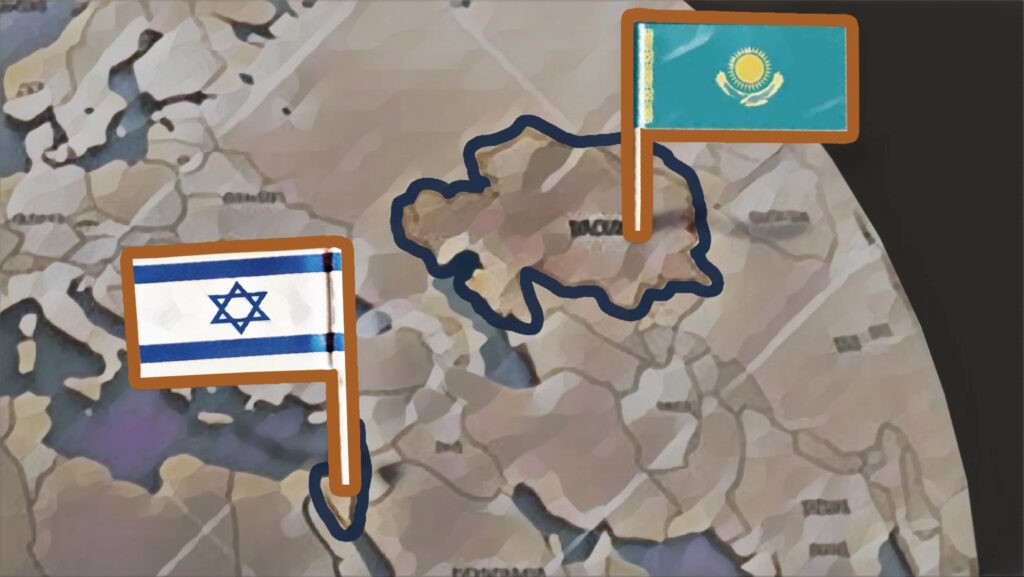
Kazakhstan has officially agreed to join the Abraham Accords during a C5+1 summit, giving another green flag of legitimacy to Israel for its policies and actions in West Asia, especially in Palestine. Reportedly, not only Kazakhstan but also Azerbaijan and Uzbekistan are set to follow this step. The Normalization process, brokered by the United States to advance the culture of peace among the three Abrahamic religions, was initiated by President Donald Trump during his first term. Since then, four Muslim-majority countries – the United Arab Emirates, Bahrain, Morocco, and Sudan – have joined the Abraham Accords. However, other Muslim-majority countries have previously followed the stand taken under the Arab Peace Process of 2002, which emphasizes the resolution of the Palestine issue before starting the normalization of ties with Israel.

The joining of the Abraham Accords by Kazakhstan and the quest by other Caucasus and Central Asian Muslim-majority countries are distinctive in multiple aspects. As per the official definition, the Abraham Accords encourage the establishment of relations between Israel and its neighbors in the region. In this context, the extension of the Abraham Accords, originally designed to broker regional peace and stability in West Asia, to other regions and securing legitimacy by Muslim-majority countries outside West Asia reflects the pan-Abrahamic outlook of the U.S.-brokered deal. Moreover, Kazakhstan is a country that has established diplomatic ties with Israel since 1992, after the disintegration of the Soviet Union. So, the question is, what does the joining of the Abraham Accords by Kazakhstan signify for the Central Asian country, which shares a long border with Russia and already has substantial military and economic ties with it? The significance of the Abraham Accords for Kazakhstan can be comprehensively understood from the point of view of Kazakhstan, the United States, and Israel, the major participants of the agreement.

Kazakhstan’s attempt to balance regional and global pressure

Firstly, for Kazakhstan, the joining of the Accords with the perspective of enhancing ties with Israel can be taken more as a symbolic move, as Kazakhstan already fulfils 25% of Israel’s energy needs. The countries share a strong diplomatic relationship, with Israeli PM Benjamin Netanyahu visiting Kazakhstan in 2016; the two countries have signed several bilateral agreements. Kazakhstan has significant relations with Israel in the fields of irrigation and healthcare, and has also pursued discussions on visa-free travel, tourism, and technology. Kazakhstan and Israel have launched the Israel-Kazakhstan Irrigation Demonstration Centre in the Almaty region. Kazakhstan also hosts the largest Jewish population in Central Asia, which lives in peace and harmony with other ethnic groups.

Considering the strong ties already in place, the lingering question is why Kazakhstan had to formally sign an agreement that appears to be a symbolic gesture from the outside. To this question, Adil Husain, PhD scholar of Central Asian Studies at Jamia Millia Islamia (JMI), New Delhi, says that “though the decision to formalize the normalization ties with Israel may appear as a formality, the move carries a strategic significance for the Central Asian country to balance its regional and international relations. Kazakhstan’s willingness to join the Abraham Accords is based on its adherence to a multi-vector foreign policy, distancing itself from the axis of Russia, China, and Iran. As the region has always been under Russian influence, Kazakhstan’s willingness to join the Abraham Accords shows its proximity to Western countries in the backyard of Russia”.

Kazakhstan is trying to balance its relations with traditional regional partners and Western countries without hurting its interests. The move is also seen as an attempt by the U.S. to improve its outreach. Abdul Rahman, a West Asian expert at People’s Dispatch, says that “Kazakhstan will not invite Russian anger by aligning too closely with the U.S., so the Abraham Accords seem a safer option to make an indirect relationship with the U.S., as Israel is close to it. But I think even if they are joining the Abraham Accords, at best, it will be a cold peace with Israel, which is never a priority for Central Asia. The main point is to release Russian and American pressures. Aligning with Israel will make them closer to the U.S. and counter Russian pressure. Being close to Russia will stand against too much U.S. pressure. So, it’s a win-win situation for Central Asian regimes in one way. We should always remember that all of these countries are members of the SCO as well. So, at max, it’s an attempt to appease Donald Trump”.

Abraham Accords expansion: a reflection of the U.S.-Israel interest?

For the United States, Kazakhstan aligns with broader objectives by securing energy and economic interests, along with providing an alternative trade route. By ensuring critical mineral supply chains and rare earth elements, the Central Asian country provides the U.S. with all the essential elements for clean energy technologies and defense manufacturing, which allows it to reduce reliance on China. Also, the Trans-Caspian International Transport Route connects Central Asia to Europe via the Caspian Sea and the South Caucasus, offering a vital alternative trade route that bypasses both Russia and Iran.

Furthermore, geopolitically, the revival of the Abraham Accords after the October 7 attack reflects that the project is still ‘viable’. Mudassir Qamar, Assistant Professor at the Centre for West Asian Studies at Jawaharlal Nehru University, says, “to some extent, it is an effort towards keeping the Accords relevant, showcasing its potential, and expanding it beyond West Asia”. Also, for the U.S., the Accord reinforces Donald Trump’s personal diplomatic efforts to establish peace and order globally, following his attempts in several conflicts, including Ukraine-Russia, India-Pakistan, Israel-Iran, and participation in brokering a hostage deal between Israel and Hamas.

The move is also seen as an attempt to counter Russia’s historic influence over Central Asian countries. Prof. Qamar says, “The Abraham Accords give U.S.-Israel a strategic opening in Central Asia, a region of strategic dominance by China and Russia”. Abdul Rahman sees it as a direct attempt by the United States’ pressure Kazakhstan to isolate Russia in the region.

Ghulam Mohammad Shah, professor at MMAJ Academy of International Studies, JMI, emphasized, “The Abraham Accord will be welcomed by the United States, and Russia will not be happy with it, especially Kazakhstan signing the Accord, because the latter has a long border with Russia. China, Russia, and the United States want to exert their influence in Central Asia. Russia has its energy and security interests in Kazakhstan, whereas China has its economic interests in Central Asia. The United States wants the Central Asian States not to fall into any of the two domains”.

For Israel, the Abraham Accords are seen as an attempt to neutralize Israeli actions against Palestine, where it has been accused of perpetrating genocide and ethnic cleansing. The normalization process between Israel and the Muslim world avoids raising several questions, ranging from Israeli settlements, the refugee issue, the question of the occupied territories by Israel, recognition of Palestine as a state, and the boundaries issue of the Palestinian state, among many others.  The U.S.-led normalization process had been opposed by the Palestinian group, Hamas, which has condemned the countries joining the Abraham Accords and normalizing ties with Israel, while neglecting the question of Palestine and Palestinians. After Trump announced Kazakhstan’s joining the Abraham Accords, Hamas criticized the move, calling it an attempt to whitewash the genocide crimes committed by Israel in Gaza. The normalization of relations with Israel tends to leave the Palestinian question unresolved.

In conclusion, Kazakhstan’s signing of the Abraham Accords cannot be seen as a solely symbolic move; rather, it must be considered a strategically balanced attempt by Kazakhstan to secure regional and international favors while remaining relevant in the region. The expansion of the Abraham Accords signatories beyond regional countries in West Asia reflects an independent and powerful foreign policy derived from national interests.


The views expressed in this article are those of the author and do not necessarily reflect the official policy or position of the publication, its affiliates, or any other organizations mentioned.

Tajikistan and the U.S. Sign Agreements Worth Over $3.2 Billion

On the sidelines of the second Central Asia-U.S. Summit (C5+1) held in Washington, Tajikistan signed a series of agreements with American companies totaling more than $3.2 billion. The deals span the aviation, digital technology, artificial intelligence, energy, and manufacturing sectors.

Landmark Agreement with Boeing

The largest deal involves Tajik airline Somon Air, which plans to purchase 14 Boeing aircraft and aviation systems valued at $3.2 billion. The U.S. State Department described the agreement as a milestone that will “strengthen confidence in American aerospace technology” and noted it as the most significant aviation contract ever signed between the two countries.

The second largest agreement was concluded with U.S. based Transparent Earth. The $32.5 million deal includes remote sensing technologies and technical assistance to improve efficiency in Tajikistan’s mining and agricultural sectors.

In the digital sphere, Tajikistan reached an agreement with Starlink to expand satellite internet access. The initiative aims to enhance connectivity in the country’s remote mountainous. regions, facilitating digital inclusion and expanding online services.

Artificial Intelligence, Infrastructure, and Industry

A separate set of agreements focuses on artificial intelligence. U.S. tech firm Perplexity AI and Tajik startup zypl.ai signed a landmark agreement to develop the world’s first AI-based agent browser tailored for government use. According to the developers, this innovation is designed to boost the efficiency of public administration and solidify Tajikistan’s emerging role in digital governance.

Additionally, SuperMicro, Cerebris, and zypl.ai will collaborate on the development of AI-powered data centers. To support this infrastructure, Tajikistan plans to build 1 GW of hydroelectric capacity, laying the groundwork for the country to evolve into a regional IT hub.

In the manufacturing sector, Coca-Cola will invest $9 million in expanding its Dushanbe plant, boosting production and strengthening its market position in Tajikistan.

According to the U.S. State Department, these agreements are expected to generate thousands of jobs and stimulate “billions of dollars in U.S. exports.”

A New Chapter in Tajik-U.S. Relations

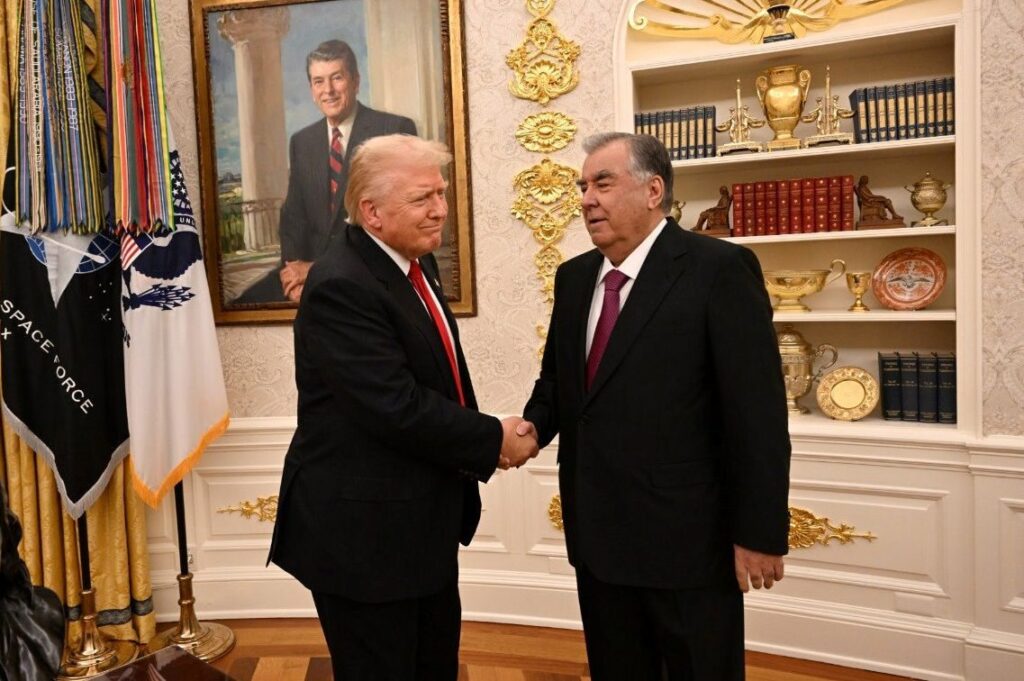
On November 6, President Emomali Rahmon met with U.S. President Donald Trump in Washington. The two leaders discussed cooperation in critical minerals, digital technology, and aviation modernization, with a particular focus on boosting trade and investment. More than 70 U.S. affiliated companies are currently operating in Tajikistan.

The summit also featured a C5+1 business conference, during which Tajikistan showcased its investment projects and export potential to an international audience.

Following the forum, President Trump described the gathering as the start of “a wonderful new relationship between the United States and the countries of Central Asia,” and reiterated the strategic importance of the region, stating the U.S. is ready to “actively engage in Eurasia”.

Kyrgyzstan Officially Launches Gold-Backed State Stablecoin

Kyrgyzstan has announced the launch of its own state-backed digital currency, USDKG, a gold-backed stablecoin pegged to the US dollar.

With this move, Kyrgyzstan becomes one of the first countries globally to introduce a government-backed stablecoin secured by physical gold reserves. According to the Ministry of Finance of the Kyrgyz Republic, the initial issuance of USDKG is valued at $50 million.

A source within the ministry told The Times of Central Asia that this launch marks just the beginning of a phased rollout.

“In a few weeks, USDKG will be listed on crypto exchanges, making it available for purchase. If the project is successful, we could double the issuance volume within a year and ultimately scale to $1 billion,” the official said.

The stablecoin is being issued by Virtual Asset Issuer, a state-owned company under the Ministry of Finance. The ministry noted that the primary use case for USDKG will be cross-border transactions. Users will be able to convert the digital asset into fiat currency from virtually anywhere in the world.

Momentum for the project grew after a high-profile visit in October by Binance founder Changpeng Zhao, who met with President Sadyr Japarov in Bishkek. Following the meeting, President Japarov instructed the National Council for the Development of Assets and Blockchain Technologies to create the necessary regulatory framework to support the launch and international listing of the KGST stablecoin.

Simultaneously, the National Bank of Kyrgyzstan is developing its own digital currency. Unlike USDKG, this central bank digital currency (CBDC) will be aimed at broad public use and has already been recognized as an official means of payment in the country.

Kazakhstan Harvests Record Grain and Oilseed Crop

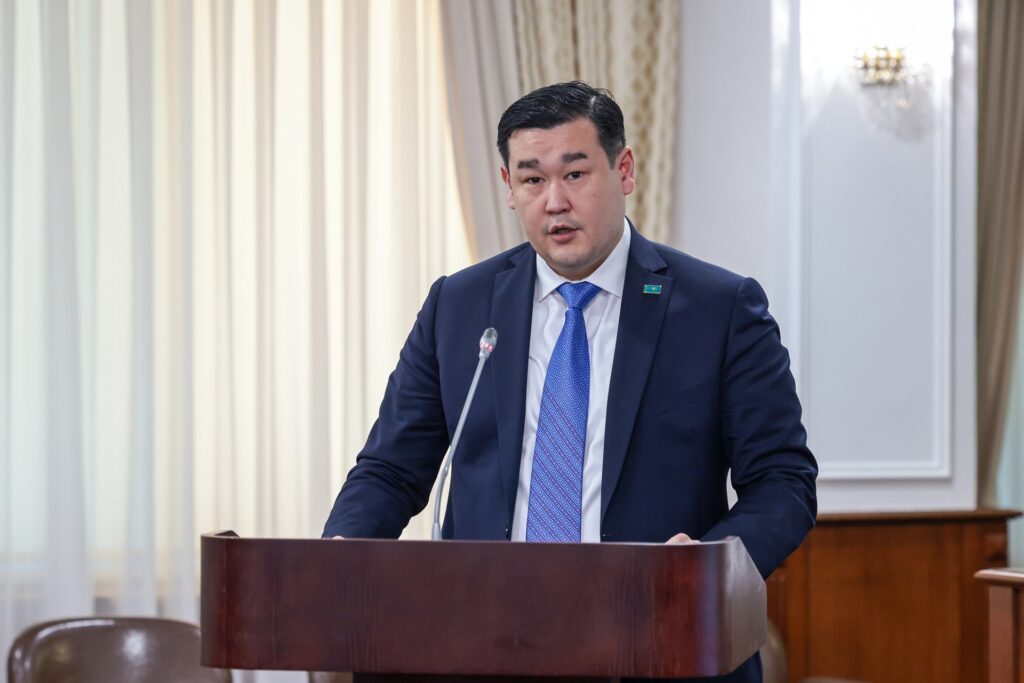
Kazakhstan has reported a record harvest for 2025, collecting over 27 million tons of grain and 4.5 million tons of oilseeds for the first time, according to Deputy Minister of Agriculture Azat Sultanov.

The Ministry of Agriculture said the grain harvest reached 27.1 million tons in initial weight, including 20.3 million tons of wheat, an increase of 0.5 million tons compared to last year, despite a reduction in wheat acreage by nearly 900,000 hectares. Of the soft wheat delivered to elevators, 53% was graded 1-3, slightly lower than the 56% recorded in 2024. Class 4 wheat accounted for 35%, up from 28% a year earlier.

“More than half of this volume has a gluten content above 20%, which allows this wheat to be used for food purposes,” Sultanov noted.

Around 12% of the harvest consisted of unclassified wheat, which will be used for animal feed and fodder production, sectors where demand is growing, particularly in neighboring countries.

For the first time, the volume of legumes reached one million tons, while a new record was set for oilseeds at 4.5 million tons, with harvesting still underway in several regions. The country also produced 2.9 million tons of potatoes, 3.8 million tons of vegetables, and 2.6 million tons of melons and gourds. Harvesting of oilseeds, grain corn, and sugar beets is nearing completion.

“The agricultural season that has just ended showed steady growth in production. For the second year in a row, Kazakhstan has demonstrated positive dynamics thanks to the use of modern technologies and crop diversification. The harvest took place at the optimal time, and no serious problems arose,” Sultanov emphasized.

Between September and October, Kazakhstan exported 2.2 million tons of grain from the new harvest, 21% more than in the same period last year. During the previous marketing season (September 2024 to August 2025), exports totalled 13.4 million tons, a 47% year-on-year increase. Sultanov confirmed the government’s intention to maintain the current export potential.

“In 2024, some experts doubted that it would be possible to reach 12 million tons, but in fact, the plan was exceeded. This year, Kazakhstan is developing new export destinations, deliveries have begun to Belgium, Portugal, Poland, Norway, Vietnam, the UAE, Morocco, Algeria, and Egypt, while exports to Iran, Azerbaijan, Armenia, and Georgia have resumed. Demand for Kazakh grain remains stable, with export potential estimated at 13 million tons,” Sultanov said.

The Times of Central Asia previously reported that President Kassym-Jomart Tokayev has set a target of increasing Kazakhstan’s grain exports to China to 2 million tons annually.