• KGS/USD = 0.01144 0%
  • KZT/USD = 0.00196 -0%
  • TJS/USD = 0.10899 -0%
  • UZS/USD = 0.00008 -0%
  • TMT/USD = 0.28490 0%
  • KGS/USD = 0.01144 0%
  • KZT/USD = 0.00196 -0%
  • TJS/USD = 0.10899 -0%
  • UZS/USD = 0.00008 -0%
  • TMT/USD = 0.28490 0%
  • KGS/USD = 0.01144 0%
  • KZT/USD = 0.00196 -0%
  • TJS/USD = 0.10899 -0%
  • UZS/USD = 0.00008 -0%
  • TMT/USD = 0.28490 0%
  • KGS/USD = 0.01144 0%
  • KZT/USD = 0.00196 -0%
  • TJS/USD = 0.10899 -0%
  • UZS/USD = 0.00008 -0%
  • TMT/USD = 0.28490 0%
  • KGS/USD = 0.01144 0%
  • KZT/USD = 0.00196 -0%
  • TJS/USD = 0.10899 -0%
  • UZS/USD = 0.00008 -0%
  • TMT/USD = 0.28490 0%
  • KGS/USD = 0.01144 0%
  • KZT/USD = 0.00196 -0%
  • TJS/USD = 0.10899 -0%
  • UZS/USD = 0.00008 -0%
  • TMT/USD = 0.28490 0%
  • KGS/USD = 0.01144 0%
  • KZT/USD = 0.00196 -0%
  • TJS/USD = 0.10899 -0%
  • UZS/USD = 0.00008 -0%
  • TMT/USD = 0.28490 0%
  • KGS/USD = 0.01144 0%
  • KZT/USD = 0.00196 -0%
  • TJS/USD = 0.10899 -0%
  • UZS/USD = 0.00008 -0%
  • TMT/USD = 0.28490 0%
08 December 2025

Uzbekistan Sets Sights on $1.5 Billion AI Industry by 2030

Uzbekistan’s Permanent Mission to the United Nations has hosted a presentation at the UN headquarters in New York, unveiling the country’s strategy for developing artificial intelligence (AI) technologies by 2030.

The event, organized in collaboration with the UN Counter-Terrorism Office and Interpol, drew attendance from UN officials, experts, and members of the diplomatic corps accredited in New York.

Ambitious AI Goals

Participants were introduced to the key directions outlined in Uzbekistan’s AI Strategy, along with the country’s ongoing reforms and achievements in the field. Emphasis was placed on President Shavkat Mirziyoyev’s commitment to advancing information technologies and fostering innovation.

The presentation highlighted Uzbekistan’s plans to grow its AI-based software products and services sector to $1.5 billion by 2030. This strategy also includes establishing ten scientific laboratories specializing in AI and strengthening the regulatory framework to support technological advancements.

Leadership in Responsible AI

As previously reported by The Times of Central Asia, Uzbekistan leads Central Asia in responsibly adopting AI, according to the Global Center on AI Governance. The nation’s AI initiatives prioritize cultural and linguistic diversity, foster international partnerships, enhance public sector skills, and promote transparency.

Capital Over Confinement in Sentencing of Raimbek “Millions” Matraimov

Raimbek Matraimov, infamously known as “Millions” for his tremendous wealth, once wielded immense power in Kyrgyzstan. Rising to prominence as deputy chairman of Kyrgyzstan’s Customs Service from 2015 to 2017, Matraimov’s tenure became synonymous with corruption and organized crime. His activities, alleged to have funneled monumental sums of money through shadowy operations, fashioned him not only as a dominant figure within the Customs Service but also as a key player in Kyrgyzstan’s criminal underworld.


The Rise of Raimbek Matraimov

During his time in the Customs Service, Matraimov amassed an extraordinary fortune. His influence extended beyond bureaucratic corridors, infiltrating the political landscape of Kyrgyzstan. Whispers of his role as an organized crime leader were persistent, yet his wealth and connections left him virtually untouchable in those years.

Speculation about his political influence peaked after the dramatic rise of Sadyr Japarov to Kyrgyzstan’s presidency in October 2020. Japarov’s elevation, from prison to the highest office amidst a tide of civil unrest, prompted many to suspect that Matraimov’s financial backing played a decisive role in the ascent. However, despite Japarov-appointed head of Kyrgyzstan’s State National Security Committee (GKNB), Kamchybek Tashiyev once describing him as a “good guy,” if Matraimov hoped to shelter under Japarov’s influence, his expectations were soon dashed.


The Turning Point

Japarov’s administration showed no hesitation in targeting Kyrgyzstan’s entrenched criminal networks. With Matraimov having bounced in and out of jail since October 2020, by October 2023, the GKNB had escalated their crackdown on organized crime, culminating in the death of Kamchybek Kolbayev, the country’s top crime kingpin – a member of the “Bratva” linked to heroin trafficking – during a security operation in Bishkek.

Sensing the shifting winds, Matraimov fled Kyrgyzstan shortly after Kolbayev’s death. However, his flight only seemed to intensify the resolve of the government in his homeland, where the authorities began seizing Matraimov’s assets and investigating his allies. Among those implicated was Matraimov’s brother, Iskender, a parliamentary deputy with significant political connections.


Extradition and Arrest

In late March 2024, Kyrgyzstan’s crackdown on Matraimov escalated when the GKNB detained five Azerbaijani nationals in Bishkek. These individuals, suspected members of a transnational organized crime group, were allegedly dispatched by Matraimov from Azerbaijan to assassinate top Kyrgyz government officials. This accusation  – one of countless similar claims regarding assassination attempts made by the Kyrgyz authorities this year alone – led to diplomatic action, and March 26, 2024, Matraimov along with three of his brothers were extradited from Baku to Kyrgyzstan.

Upon his arrival, Matraimov was immediately taken into custody. The legal net tightened further as the case against him unfolded, with allegations of illegal border crossings, hooliganism involving weapons, money laundering, and broader accusations regarding his criminal empire.


Asset Seizures and Financial Settlements

Prior to his sentencing, Matraimov had reportedly returned $200 million to the state budget, equivalent to over 17 billion Kyrgyz som, to be released from custody to house arrest pending his trial. Authorities also confiscated significant assets, including a 14-story business center in Bishkek valued at $53 million, which was repurposed into a hospital for law enforcement. Apartment buildings in the city of Osh, built under a partnership with the Ihlas company, were also seized and sold at a discounted rate for state use. In total, Matraimov is alleged to have laundered “at least $700 million“.


Plea Agreement and Sentencing

Despite this, on December 6, 2024, the Pervomaisky District Court of Bishkek handed down its judgment in a legal resolution as remarkable as Matraimov’s rise to power. Found guilty under charges including illegal border crossings and hooliganism involving dangerous weapons, having entered a plea agreement admitting his guilt, Matraimov was ordered to pay a fine of just 100,000 Kyrgyz som ($1,150), a remarkably lenient sentence given the extent of his crimes.

The plea agreement, approved by the Prosecutor General’s Office, was tied to Matraimov’s financial restitution and asset forfeiture. Under the terms of Kyrgyzstan’s criminal code, the court mitigated his punishment, favoring monetary penalties over imprisonment.


A Power Diminished

The legacy of Raimbek “Millions” Matraimov is both a tale of unchecked power and systemic corruption, as well as a reflection of Kyrgyzstan’s recent efforts to confront its network of dark influences. Though his plea agreement signaled a partial reckoning, the true accounting of Matraimov’s impact on Kyrgyzstan’s political and economic systems remains a subject of far-reaching national reflection.

UK Supports €12.6M Deal to Boost Exports to Uzbekistan’s Copper Producer

UK Export Finance (UKEF) has guaranteed a €12.6 million ($13.25 million) loan to the Almalyk Mining and Metallurgical Complex (AMMC) in Uzbekistan. The loan will refinance the purchase of fully automated vehicles from the Scottish multinational company Weir and marks UKEF’s first agreement in Uzbekistan.

The loan, provided by the International Bank, aims to support Weir’s exports to AMMC, one of Central Asia’s largest copper production facilities.

“UK businesses are increasingly keen to bring their goods and services to this dynamic market – and UKEF is here to help buyers in Uzbekistan seize this opportunity,” said Tim Reid, CEO of UKEF.

Strategic Importance of Copper

The UK Department of Business and Trade reports that nearly 90% of UK imports from Uzbekistan consist of non-ferrous metals, metal ores, and slag. Copper, a vital material for construction and green technologies such as solar panels and electric vehicles, is in increasing demand. Global copper requirements are projected to grow by an additional one million tons annually until 2035.

The UKEF-backed deal reflects the UK’s commitment to enhancing machinery exports and supporting the global supply chain. In 2023, total trade between the UK and Uzbekistan reached £381 million, with specialized machinery ranking as the fourth most-traded category.

Sustaining Production at Almalyk

UKEF’s financial backing is crucial for sustaining production at AMMC by ensuring access to capital from a trusted supplier. The partnership highlights UKEF’s broader role in facilitating growth opportunities for UK businesses in Central Asia’s dynamic market.

Kyrgyzstan Eyes Digital Currency to Modernize Financial System

The National Bank of the Kyrgyz Republic (NBKR) has announced plans to launch a digital national currency, the digital som. The financial regulator expects the initiative to bolster the country’s financial sector and enhance public administration.

New Opportunities

The NBKR envisions the digital som transforming Kyrgyzstan’s financial landscape and increasing cashless transactions. One major advantage is improved control over budget spending. Additionally, the digital currency will allow payments even in areas without Internet access – crucial for remote regions with limited connectivity. Using simple technologies such as QR codes and mobile applications, citizens will be able to make quick and convenient payments for goods and services.

“The monopoly of central banks to issue money is already ending. Anyone with a computer can create cryptocurrencies and various coins. We are keeping pace with this trend,” noted Akylbek Japarov, Chairman of the Cabinet of Ministers. He added that the Ministry of Finance plans to issue digital currency by 2025, allocating up to 27 billion KGS ($314 million) for digital bonds, treasury bills, and gold-backed coins.

Under the government’s plan, the digital som will coexist with traditional cash and non-cash currencies. Authorities have devised mechanisms to facilitate its integration into the financial market. Commercial banks connected to the system will receive digital soms in their digital wallets, while equivalent amounts will be debited from their accounts with the National Bank. Transfers of digital soms between individuals will occur via existing banking infrastructure.

Digital Stability

The NBKR aims to integrate the digital som into the financial system by the end of 2026, with prototype testing scheduled for early 2025.

Experts highlight the potential benefits despite some challenges. Economist Nurgul Akimova explained to Times of Central Asia that the Central Bank’s digital currency will feature robust security measures, including advanced cryptography to prevent fraud and ensure confidentiality. State control over issuance will ensure stability and reliability, distinguishing it from electronic money, which can be vulnerable to bank bankruptcies.

Digital currency also offers new opportunities for public administration, particularly in taxation. Akimova noted that programmable features could automate tax deductions and other payments to the state, fostering trust and simplifying interactions between citizens and the government.

“For the digital som to succeed, it must be widely accessible and easy to use, complementing existing financial instruments,” Akimova added. “Drawing on global experience and our unique national context, digital currency could become a universal means of payment for everyone. This marks a step toward a more modern, inclusive, and sustainable financial system in Kyrgyzstan.”

Challenges Ahead

However, certain hurdles remain. Akimova pointed out that introducing the digital som to international markets could pose difficulties, as cross-border payments in digital currencies will require the approval of other states.

Young Uzbek Men Dominate Russia’s Migrant Workforce in 2024

A recent analysis by the “Migrant Service” platform has outlined the profile of the average migrant worker in Russia for 2024. According to the study, the typical migrant is a 28-year-old married man from Uzbekistan, residing in or near Moscow.

The survey, which included approximately 63,000 participants, revealed key demographic trends among migrant workers in Russia. Most respondents identified as Muslim men aged 28, though the age range spanned from 18 to 37 years.

Uzbekistan Leads Migration Statistics

The majority of migrant workers in Russia come from Uzbekistan, accounting for 55.4% of the total. Tajikistan follows with 39.89%, while Armenia, Kyrgyzstan, Belarus, and Kazakhstan collectively contribute 4.82% of the migrant population.

“For migrants, family and children are the highest priorities,” the analysts noted. This focus is reflected in remittance patterns: 67% of respondents send money to their families once a quarter, and 41% remit more than 50% of their income.

Growing Demand for Migrant Labor

The survey also highlights the increasing reliance on Central Asian migrants to address labor shortages in Russia. This trend, as previously reported by the Times of Central Asia, has been exacerbated by Russia’s ongoing war in Ukraine, which has intensified the demand for additional workers.

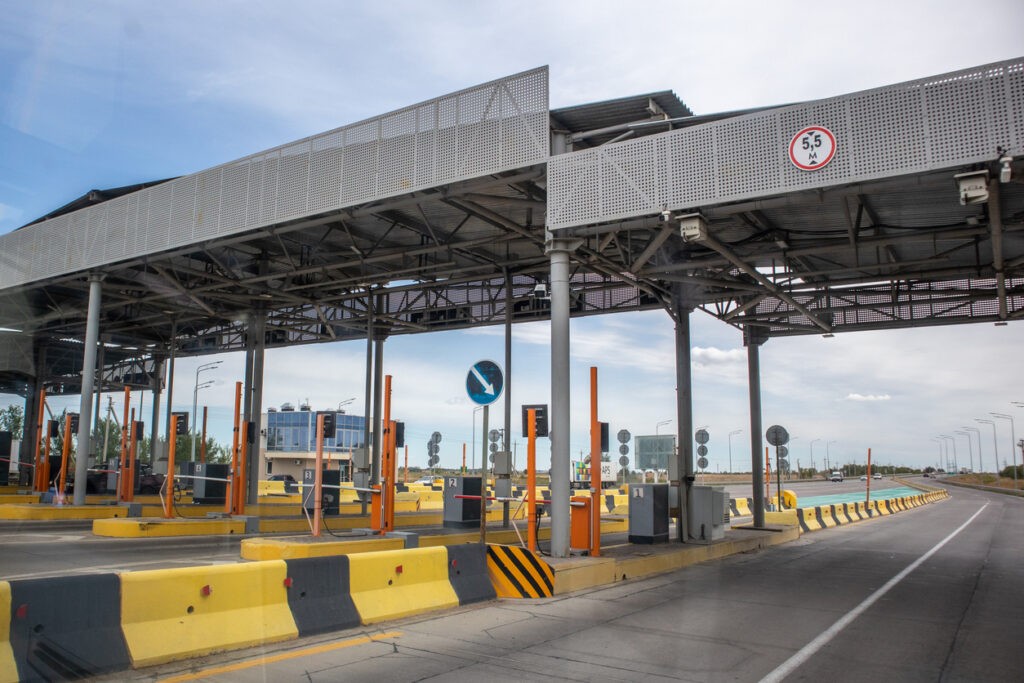
Kazakhstan Building Five Cross-Border Trade Hubs

Kazakhstan is advancing plans to establish five cross-border trade and economic hubs, aiming to position the country as a key global transport and logistics center. The initiative was reviewed at a government meeting on December 10.

Strategic Hub Development

Minister of Trade and Integration Arman Shakkaliyev reported that significant progress has been made on the hubs, with rail and road links already in place. The planned hubs are:

  • The Khorgos Hub: Located on the border with China.
  • The Caspian Hub: Situated along the Trans-Caspian International Transport Route (TITR).
  • The Eurasia Center for Cross-Border Trade: Positioned at the border with Russia.
  • The “Central Asia” International Center for Industrial Cooperation: At the border with Uzbekistan.
  • The Industrial Trade and Logistics Complex: At the border with Kyrgyzstan.

Additionally, container hubs are planned for the ports of Aktau and Kuryk in the Mangistau region. Multimodal air hubs are also under development at airports in the cities of Astana, Almaty, Shymkent, and Aktobe.

Broader Economic Goals

Prime Minister Olzhas Bektenov underscored the strategic importance of these projects, emphasizing their potential to reduce transit times, boost industrial production, increase tax revenues, and create new jobs.

Bektenov highlighted that the network of hubs will form a unified trade and transport space with Kazakhstan’s key trading partners. “This will significantly increase trade turnover between the countries and strengthen strategic relations with neighboring states,” he said.

The prime minister also stressed the importance of leveraging major transport corridors such as the East-West, North-South, and Trans-Caspian International Transport Route corridors to enhance access to the markets of China, the Persian Gulf, the Caucasus, and Europe.