• KGS/USD = 0.01144 0%
  • KZT/USD = 0.00214 0%
  • TJS/USD = 0.10508 0.48%
  • UZS/USD = 0.00008 0%
  • TMT/USD = 0.28571 0%
  • KGS/USD = 0.01144 0%
  • KZT/USD = 0.00214 0%
  • TJS/USD = 0.10508 0.48%
  • UZS/USD = 0.00008 0%
  • TMT/USD = 0.28571 0%
  • KGS/USD = 0.01144 0%
  • KZT/USD = 0.00214 0%
  • TJS/USD = 0.10508 0.48%
  • UZS/USD = 0.00008 0%
  • TMT/USD = 0.28571 0%
  • KGS/USD = 0.01144 0%
  • KZT/USD = 0.00214 0%
  • TJS/USD = 0.10508 0.48%
  • UZS/USD = 0.00008 0%
  • TMT/USD = 0.28571 0%
  • KGS/USD = 0.01144 0%
  • KZT/USD = 0.00214 0%
  • TJS/USD = 0.10508 0.48%
  • UZS/USD = 0.00008 0%
  • TMT/USD = 0.28571 0%
  • KGS/USD = 0.01144 0%
  • KZT/USD = 0.00214 0%
  • TJS/USD = 0.10508 0.48%
  • UZS/USD = 0.00008 0%
  • TMT/USD = 0.28571 0%
  • KGS/USD = 0.01144 0%
  • KZT/USD = 0.00214 0%
  • TJS/USD = 0.10508 0.48%
  • UZS/USD = 0.00008 0%
  • TMT/USD = 0.28571 0%
  • KGS/USD = 0.01144 0%
  • KZT/USD = 0.00214 0%
  • TJS/USD = 0.10508 0.48%
  • UZS/USD = 0.00008 0%
  • TMT/USD = 0.28571 0%

Emboldened Russia? Russian FM Lavrov Disputes Tokayev Comments

Russia’s top diplomat has said that he disagrees with old comments by Kazakh President Kassym-Jomart Tokayev about territorial integrity, leading some analysts to debate whether Russia is growing more emboldened as the United States appears to align with its positions on the war in Ukraine.  

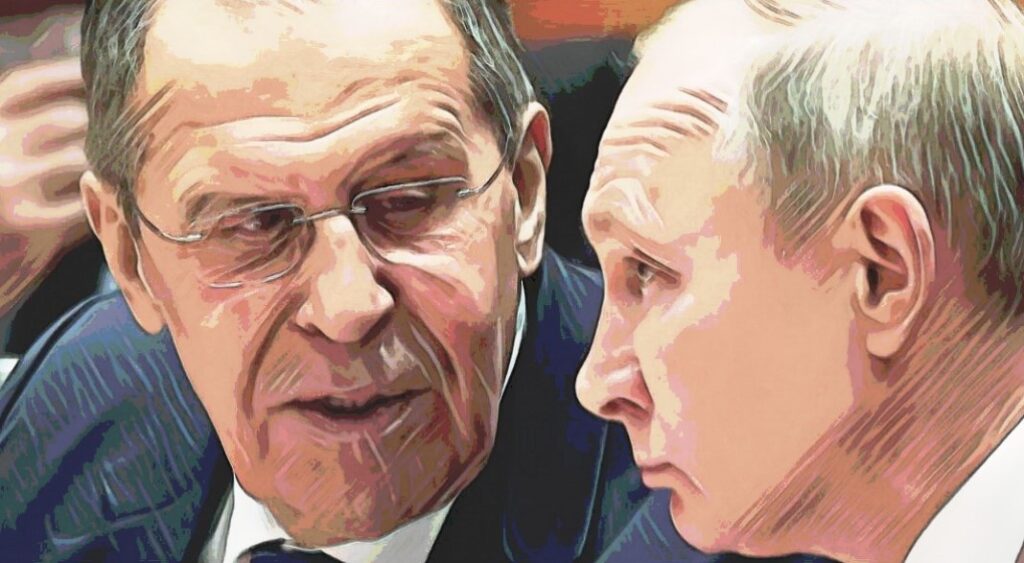
The remarks by Russian Foreign Minister Sergey Lavrov in an interview published on Monday in the Russian newspaper Kommersant were unusual because Russia and Kazakhstan rarely deviate from the official narrative that they are allies, even if Central Asian countries try to balance relationships with other big powers. Also, while Tokayev and Russian President Vladimir Putin enjoy the same status as state leaders, Lavrov occupies a lower level of authority and challenging the Kazakh president could be viewed in some diplomatic circles as out of line.

The source of the disagreement goes back to 2022, as war raged between Russian invasion forces and Ukrainian troops. Tokayev warned about the contradiction between the United Nations principles of territorial integrity and the right to self-determination, saying the latter principle could lead to “chaos” if more and more states are allowed to emerge. He indicated that Luhansk and Donetsk, Russia-backed regions of eastern Ukraine that declared themselves republics, appeared to exemplify the problem. 

Putin did not respond publicly to Tokayev’s comments at the time. But Lavrov, asked about them by Kommersant, said they were wrong and cited the example of European colonial powers that didn’t represent people in territories they controlled. 

“I remember this speech by the President of Kazakhstan Kassym-Jomart Tokayev. I do not agree with him,” Lavrov said. “We later explained our position to our Kazakh friends. For him, there is only the right to territorial integrity. But I say again: if you are members of the U.N., you must respect the Charter in its entirety. I gave the example of decolonization, which is exactly what was written in the Declaration on Principles Governing Relations between States.”

Russia itself has faced criticism that the war in Ukraine is a neo-colonial adventure designed to restore some of the reach it had as the center of the Soviet Union and the Russian empire prior to that. These arguments aside, Lavrov’s blunt remarks to a major Russian media outlet got some attention in Kazakhstan. 

“What surprised us was that he was not very diplomatic toward President Tokayev,” said Nargis Kassenova, a senior fellow and director of the Central Asia program at Harvard University’s Davis Center. She spoke on Wednesday in a Zoom conference on Central Asian perspectives on the Russo-Ukraine war that was organized by the Center for the National Interest, a public policy group based in Washington DC.

Kassenova said Lavrov’s comments were an example of the “more assertive rhetoric” coming from Russia, which she said could relate to growing signs of a rapprochement between Russia and the United States. The Trump administration has appeared to align with some Russian viewpoints as it pushes for a ceasefire in Ukraine, while becoming more antagonistic toward traditional European allies.  

Medet Tiulegenov is a senior research fellow affiliated with the Graduate School of Development at the University of Central Asia in Bishkek, Kyrgyzstan. He also spoke in the Zoom conference, saying Russia could become more “demanding” in its relations with other countries if it achieves a favorable peace deal in Ukraine. 

Uzbekistan Moves to Regulate AI and Protect Personal Data

Uzbekistan’s Legislative Chamber of the Oliy Majlis (Parliament) has approved a new bill in its first reading that seeks to regulate the use of artificial intelligence, and introduce legal accountability for the misuse of personal data involving AI technologies.

The bill was reviewed during a parliamentary session on April 15 and is designed to safeguard personal privacy in the face of rapidly advancing AI capabilities. It proposes penalties for the unauthorized processing and dissemination of personal data, particularly through online platforms and the media, when artificial intelligence is involved.

Balancing Innovation and Risk

Lawmakers noted that global investment in AI reached $154 billion in 2023 and was expected to double in 2024, with projections of a tenfold increase by 2030. Uzbekistan is actively working to integrate AI across various sectors, including industry, public administration, crime prevention, and environmental management.

However, the government has also raised alarms about the risks posed by unregulated AI use. In particular, concerns have grown over privacy violations stemming from deepfake content and manipulated media. In 2024 alone, incidents involving fake AI-generated images and videos of public figures increased fiftyfold. The number of reported cases involving illegal use of AI-generated content rose from 1,129 in 2023 to 3,553 in 2024.

Key Provisions of the Bill

The proposed legislation formally defines “artificial intelligence” and sets out the government’s policy approach toward its development and application. It includes requirements for labeling AI-generated content and bans uses of AI that could undermine human dignity, personal freedoms, health, or individual rights.

If adopted into law, the bill would mark a significant step toward establishing ethical and legal norms for AI deployment in Uzbekistan, amid growing global concern over the unchecked use of emerging technologies.

Japanese Company to Build Tunnel on Kyrgyzstan’s Strategic Bishkek-Osh Highway

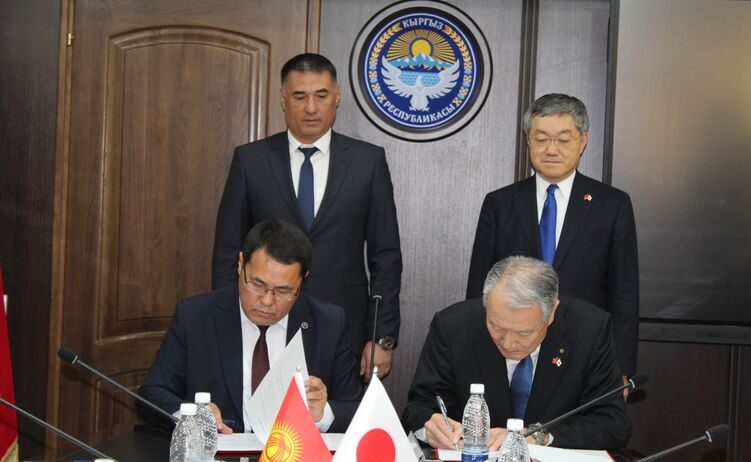
Kyrgyzstan’s Ministry of Transport and Communications has signed a contract with Japan’s Takenaka Civil Engineering Co. for the construction of a 750-meter tunnel along the critical Bishkek-Osh highway. The project will be carried out at the highway’s 400-kilometer mark and is scheduled to begin in June 2025.

The signing ceremony on April 15 was attended by Kyrgyz Transport and Communications Minister Absattar Syrgabayev, Japanese Ambassador to Kyrgyzstan Hideki Goda, and Kawamoto Hiroyuki, Permanent Representative of the Japan International Cooperation Agency (JICA) in Kyrgyzstan.

Minister Syrgabayev expressed gratitude to the Japanese government and JICA for their ongoing support in developing Kyrgyzstan’s transport infrastructure.

Strategic Significance

The Bishkek-Osh highway is the only overland route linking Kyrgyzstan’s north and south, making it vital to the country’s economic, social, and political cohesion. The 655-kilometer artery cuts through four western regions, Chui, Talas, Jalal-Abad, and Osh, connecting the capital Bishkek with Osh, the country’s second-largest city.

In addition to its domestic role, the Bishkek-Osh highway is a key part of several international transport corridors, linking Kyrgyzstan to Kazakhstan, Uzbekistan, Tajikistan, and China. Enhancing the reliability and safety of this route is a top infrastructure priority for the Kyrgyz government.

Delays to Alternative Route

As reported by The Times of Central Asia, Kyrgyz authorities have postponed the opening of the long-anticipated North-South alternative highway to 2026. Originally set for completion in May 2025, the 433-kilometer project has been delayed to allow for additional infrastructure development.

China and Russia Remain Kyrgyzstan’s Largest Foreign Investors

The National Statistical Committee of Kyrgyzstan has released updated figures on foreign direct investment (FDI), revealing that China and Russia remained the country’s largest investors in 2024.

According to the data published on April 15, Kyrgyzstan received $872.6 million in FDI in 2024, marking an increase from $844.9 million in 2023.

China accounted for 23.9% of total FDI, followed by Russia with 22.7%, Turkey (10.2%), Luxembourg (8.8%), Kazakhstan (5.7%), the Netherlands (4.9%), and Azerbaijan (3.4%). The remaining 20.4% came from a mix of other countries.

Compared to the previous year, Kyrgyzstan saw increased investment from Azerbaijan, Luxembourg, Germany, Turkey, the Netherlands, and Russia, while inflows from the UK, UAE, Kazakhstan, and China declined.

Sector Breakdown

The manufacturing sector attracted the largest share of foreign investment, receiving 33.2% of total FDI. This was followed by the financial sector (20.6%), wholesale and retail trade (18.7%), the mining industry (11.3%), and geological exploration (8.3%).

Sharp Rise in Overall Investment

The total volume of investments in fixed assets from all sources in the first quarter of 2025 reached 56.8 billion Kyrgyz som, reflecting a 90.6% increase year-on-year. This marks a significant acceleration compared to the 63.9% growth recorded during the same period in 2024.

Officials attribute the sharp rise primarily to a 2.1-fold increase in domestic financing, while the volume of foreign investment in fixed assets during the same period decreased by 1.5 times compared to the first quarter of 2024.

U.S. Cancels $2.5 Million Civic Engagement Grant for Uzbekistan

The U.S. State Department has canceled a $2.5 million grant intended to support civic engagement programs in Uzbekistan. The decision comes as part of a broader review of foreign aid expenditures initiated by U.S. Senator Marco Rubio and the Department of Government Efficiency.

The Uzbekistan program was one of 139 foreign aid grants, totaling $215 million, that were recently scrapped. Other canceled initiatives include $5.2 million for a media diversity project in the United Kingdom, $2 million for newsroom sustainability efforts in Moldova, and nearly $1 million for women’s organizations in Mauritania. Additional cuts affected projects focused on disinformation, media freedom, and gender equity in Europe, Brazil, and North Africa.

Continued U.S.-Uzbekistan Engagement

Despite the funding cut, bilateral ties between the United States and Uzbekistan continue to strengthen. A draft of Uzbekistan’s 2025 government program, currently open for public discussion, outlines plans to deepen cooperation with Washington. These include a proposed high-level visit to the U.S. and the inaugural round of the Enhanced Strategic Partnership Dialogue, scheduled to take place in Tashkent. In March 2025, Uzbekistan’s Ambassador to the U.S., Furkat Sidikov, also hosted a Congressional Breakfast, which focused on trade, investment, and U.S.-Uzbekistan relations. Over 300 American companies are currently operating in Uzbekistan

Uzbekistan recently hosted the first EU-Central Asia summit in Samarkand, though the prospects of a U.S.-Central Asia C5+1 summit in 2025 remain uncertain.

Daniel Runde, a senior official at the Center for Strategic and International Studies, has emphasized the importance of a strong U.S.-Uzbek partnership. Runde noted that Uzbekistan plays a critical role in maintaining stability in Central Asia and in balancing the regional influence of Russia and China.

U.S. Commission Again Cites Turkmenistan for Religious Freedom Violations

The U.S. Commission on International Religious Freedom (USCIRF) has once again designated Turkmenistan as a “Country of Particular Concern” (CPC), citing ongoing and systematic violations of religious freedom in its 2024 annual report.

Persistent State Control and Persecution

The USCIRF report emphasizes that religious freedoms in Turkmenistan remain severely restricted, with the state maintaining tight control over religious life and prosecuting individuals whose beliefs deviate from officially sanctioned interpretations. Notably, the commission highlighted the imprisonment of ten Muslims for participating in peaceful religious activities, a case that underscores the regime’s repressive stance toward nonconforming Islamic practices.

Turkmenistan’s legal framework continues to draw criticism. The 2016 Religion Law prohibits unregistered religious groups and heavily restricts the distribution of religious literature, instruction, and rituals. The 2015 Law on Combating Extremism also remains a concern, as its vague provisions allow for the prosecution of peaceful religious activity.

Harassment of Religious Minorities

The report also documents the continued harassment of Protestant Christians and Jehovah’s Witnesses. In one case, a mosque official in Lebap province reportedly threatened to “shut down” a pastor of an unregistered Protestant church, prompting a visit from the Ministry of National Security. The pastor’s relatives later received anonymous threats.

In January, law enforcement officers raided a Jehovah’s Witnesses’ home in the village of Sakara, detaining five individuals who were subjected to eight hours of interrogation.

Restrictions on Religious Travel

The Turkmen authorities also restrict international travel on religious grounds. In January 2024, Pygamberdy Allaberdyev, a lawyer and activist from Balkanabat, was barred from traveling to Iran to attend a relative’s funeral. According to USCIRF, he was informed by Department of Homeland Security officials that he was under surveillance and would be prohibited from leaving the country for five years.

Religion and the Cult of Personality

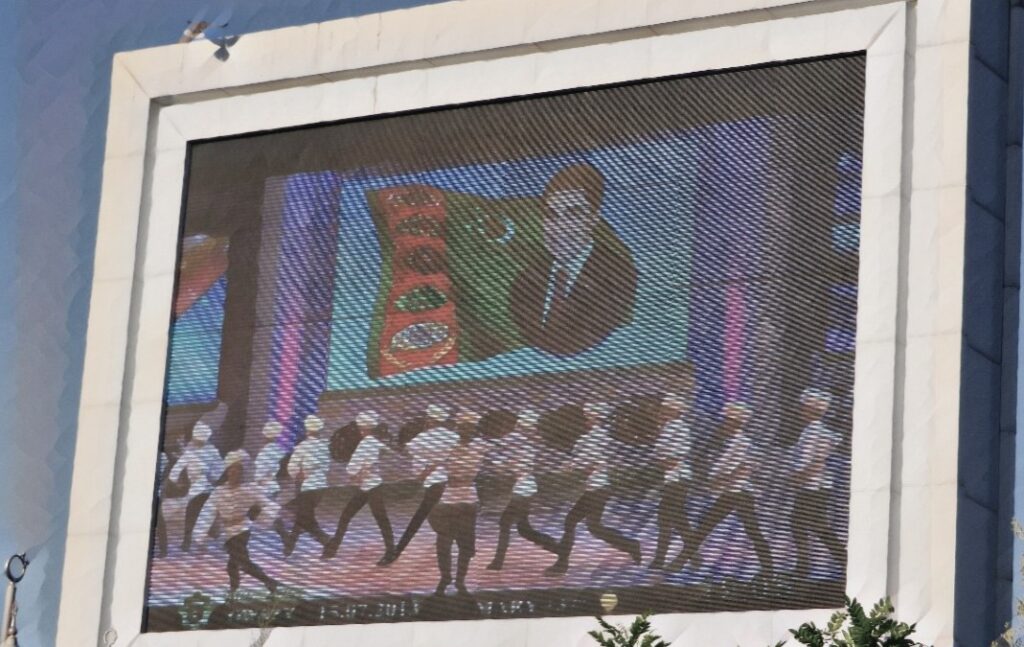
The commission’s report also criticizes the use of religion to reinforce the cult of personality surrounding former president Gurbanguly Berdimuhamedov. Although he currently serves as chairman of the Khalk Maslahaty, his influence remains widespread. Officials in Balkanabat and Turkmenbashi reportedly interfered with wedding ceremonies, mandating the exclusive use of Turkmen music, including songs from the former president’s personal repertoire.

Authorities have also targeted religious expression among civil servants. Men have been forced to shave their beards, and women have been ordered to remove their hijabs. Ahead of the Berdimuhamedov family’s vacation in Avaza, police carried out raids targeting religious symbols. In October, women in Ashgabat wearing hijabs were reportedly detained, had their belongings confiscated, and were banned from traveling abroad. They were also lectured about the secular nature of the state.

Policy Recommendations

In its conclusions, USCIRF recommends targeted sanctions against officials and agencies responsible for egregious violations of religious freedom, including asset freezes and visa bans. The commission also urged the U.S. Congress to take a more active role in addressing these issues through hearings and delegations to the region.

Turkmenistan has consistently appeared on USCIRF’s CPC list since 2000, reflecting its entrenched policies of religious control, suppression of non-state-approved faiths, and ongoing violations against believers. The 2024 report reaffirms the country’s status as one of the world’s most restrictive environments for religious freedom.