• KGS/USD = 0.01144 0%
  • KZT/USD = 0.00212 0%
  • TJS/USD = 0.10456 0.19%
  • UZS/USD = 0.00008 0%
  • TMT/USD = 0.28490 0%
  • KGS/USD = 0.01144 0%
  • KZT/USD = 0.00212 0%
  • TJS/USD = 0.10456 0.19%
  • UZS/USD = 0.00008 0%
  • TMT/USD = 0.28490 0%
  • KGS/USD = 0.01144 0%
  • KZT/USD = 0.00212 0%
  • TJS/USD = 0.10456 0.19%
  • UZS/USD = 0.00008 0%
  • TMT/USD = 0.28490 0%
  • KGS/USD = 0.01144 0%
  • KZT/USD = 0.00212 0%
  • TJS/USD = 0.10456 0.19%
  • UZS/USD = 0.00008 0%
  • TMT/USD = 0.28490 0%
  • KGS/USD = 0.01144 0%
  • KZT/USD = 0.00212 0%
  • TJS/USD = 0.10456 0.19%
  • UZS/USD = 0.00008 0%
  • TMT/USD = 0.28490 0%
  • KGS/USD = 0.01144 0%
  • KZT/USD = 0.00212 0%
  • TJS/USD = 0.10456 0.19%
  • UZS/USD = 0.00008 0%
  • TMT/USD = 0.28490 0%
  • KGS/USD = 0.01144 0%
  • KZT/USD = 0.00212 0%
  • TJS/USD = 0.10456 0.19%
  • UZS/USD = 0.00008 0%
  • TMT/USD = 0.28490 0%
  • KGS/USD = 0.01144 0%
  • KZT/USD = 0.00212 0%
  • TJS/USD = 0.10456 0.19%
  • UZS/USD = 0.00008 0%
  • TMT/USD = 0.28490 0%

American AI Company to Help Kazakhstan Develop University Admissions Exam

Kazakhstan’s Ministry of Science and Higher Education and the AI-based education company ETS say they are developing a new university admissions exam, the Admissions Insight Test (AIT), as part of a partnership launched in November 2025 to modernize the country’s national admissions system.

Officials say the test is also meant to support the international recognition of results in future.

“The Admissions Insight Test represents a decisive step forward for Kazakhstan’s higher education system,” said Sayasat Nurbek, Kazakhstan’s Minister of Science and Higher Education. “By building this new admissions exam in partnership with ETS, we are strengthening trust, fairness, and global alignment in how students enter our universities. This work positions Kazakhstan to lead in education innovation while ensuring our students are prepared for success in a rapidly changing, international, and AI-driven world.”

ETS, which is headquartered in Princeton, New Jersey with offices worldwide, said the AIT would be modular. “Subject Modules” would align with the school curriculum and a student’s intended field of study. Separate “Skills Based Tests” would measure critical thinking, academic writing and research skills, communication, quantitative and digital literacy, and creative or design thinking. 

The ETS Research Institute is expected to work alongside Kazakhstan’s education leaders and National Testing Center specialists, using AI and advanced analytics to streamline development and deepen the insights universities get from results.

Kazakhstan already uses nationwide testing as a central gateway into university, and policymakers have linked admissions changes to a broader push to become a regional education hub.

“Around the world, governments are rethinking how education systems measure readiness for the future and they are turning to ETS because trust, rigor, and global expertise matter,” said Kadriye Ercikan, Senior Vice President of Global Research at ETS. “Our work with Kazakhstan reflects the same responsibility we bring to partnerships with education systems worldwide: applying the strongest measurement science, responsible innovation, and AI-enabled approaches to help countries build assessment systems that are fair, credible, and internationally respected.”

The project sits alongside Kazakhstan’s higher education transformation and its decision to join OpenAI’s Education for Countries program as officials look to prepare students for an AI-shaped economy.


Environmental Damage Assessed at Ritz-Carlton Tashkent Construction Site

More than a dozen valuable trees have been cut down at the construction site of the Ritz-Carlton Tashkent in central Tashkent, according to Rasul Kusherbayev, adviser to the chairman of Uzbekistan’s Ecology and Climate Change Committee.

Kusherbayev stated that the trees were removed from an area adjacent to the National Park in Tashkent. According to preliminary information, the felling was carried out in violation of the existing moratorium on cutting valuable tree species. He added that authorities are still determining whether additional trees were cut at the site.

The land plot was reportedly allocated to Azerbaijani investors for the project. Kusherbayev also said that representatives of the construction company opposed attempts to film the tree cutting at the location.

The project is being implemented by PD Estates, a joint venture linked to Azerbaijan’s Pasha Holding. The company is constructing a five-star, 150-room hotel under the The Ritz-Carlton Hotel Company brand, with an estimated investment of $200 million.

In connection with the case, official documentation has been completed, and environmental damage has been assessed at 351,230,000 Uzbek sum (approximately $29,000).

According to Uzbekistan’s Unified State Register of Enterprises and Organizations, PD Estates was registered in November 2023. The company has an authorized capital of 251.3 billion Uzbek sum (approximately $20.6 million) and specializes in construction project development. Its founders are Pasha Development, which holds a 99% stake, and Pasha Holding, which owns the remaining 1%. The company is headed by Baris Battal.

The Ritz-Carlton is a luxury hospitality brand and a subsidiary of Marriott International, headquartered in Maryland, United States. It operates more than 90 hotels worldwide.

According to the publication Uzdiplomat, in August 2024 Uzbekistan and Azerbaijan agreed to implement seven joint projects worth a total of $520 million. Under that framework, Pasha Development planned to build a $200 million Ritz-Carlton hotel and premium residential complex in Tashkent’s Chilanzar district.

On February 29, 2024, President Shavkat Mirziyoyev signed a law strengthening penalties for illegal tree cutting. The amendments significantly increased fines for unlawful felling, introduced a mandatory requirement to plant new saplings in areas where trees have been removed, and extended financial liability to legal entities. Previously, only individuals and officials were subject to penalties.

Under the new provisions, companies found guilty of illegally cutting valuable tree and shrub species face fines ranging from 100 to 300 times the base calculation amount, equivalent to approximately 34 million to 102 million Uzbek sum (about $2,800 to $8,400).

Kazakhstan Moves to Export Its Legendary Aport Apples

Kazakhstan is preparing to introduce its iconic Almaty aport apples to international markets after the variety attracted strong interest from European partners at Grune Woche 2026 in Germany.

During the exhibition, QazTrade and the Association of Almaty Aport Producers signed a memorandum aimed at promoting aport apples and their processed products abroad, according to the Ministry of Trade and Integration of Kazakhstan.

The aport is one of Kazakhstan’s most distinctive apple varieties and is closely associated with the natural and cultural heritage of Almaty, widely regarded as the ancestral home of apples. Known for their large size, rich aroma, and juiciness, aport apples are also highly demanding to cultivate.

High-quality aport can only be grown at elevations between 850 and 1,250 meters above sea level, primarily in the foothills surrounding Almaty. Unlike commercial apple varieties that begin bearing fruit within four to six years, aport trees typically require eight to nine years before producing their first harvest. Despite the longer maturation period, the apple’s distinctive qualities and heritage value position it as a premium niche product.

“The main advantage of aport is its uniqueness. Unlike mass-produced varieties designed for volume and long storage, aport stands out for its vivid taste, rich aroma, and large fruit size. Our orchards are located above 850 meters above sea level, which affects the firmness of the pulp and depth of flavor. In Germany, we presented not only fresh apples but also processed products such as fruit pastilles and apple chips. We also produce aport-based juice, vinegar, and dried fruit,” said Roman Safarov, president of the Association.

According to QazTrade, participation in Grüne Woche confirmed strong export potential, particularly for processed aport products.

“The Almaty aport is registered as a geographical indication. This status confirms its unique characteristics shaped by the natural conditions of the Almaty foothills, special soils, clean water, and temperature fluctuations. The geographical indication protects the brand and allows it to be promoted as a premium product in international markets,” said QazTrade CEO Aitmuhammed Aldazharov.

Horticulture is increasingly viewed as a strategic growth area within Kazakhstan’s agro-industrial sector. According to Yerbol Taszhurekov, apple orchards in Kazakhstan now cover nearly 29,000 hectares, concentrated mainly in the southern regions of Almaty, Turkestan, Zhambyl, and Zhetisu. In the Almaty and Zhetisu regions alone, orchards span more than 2,400 hectares and include over 416,000 trees.

Kazakhstan is also working to revive the aport variety, which had previously faced near extinction. Under a targeted 2024-2028 program involving private investors and specialized nurseries, authorities aim to produce certified saplings and expand commercial cultivation. By 2027, plans call for planting at least 110 hectares of new aport orchards.

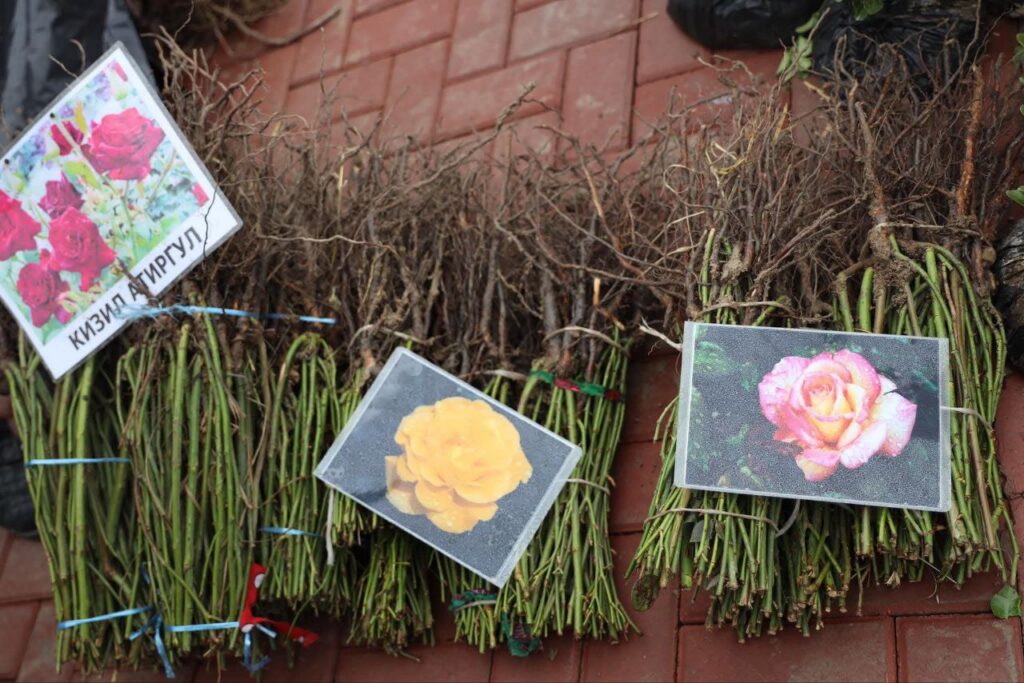
Kyrgyzstan Temporarily Bans Import of Fruit and Berry Seedlings from Non-EAEU Countries

From March 1, Kyrgyzstan will introduce a temporary ban on the import of fruit and berry seedlings from countries outside the Eurasian Economic Union (EAEU). The restriction will remain in effect for six months and will not apply to re-export or transit operations, according to a resolution adopted by the Cabinet of Ministers.

The government states that the measure is intended to ensure food security, improve the efficiency of agricultural production, and strengthen quality control over imported planting materials. The Ministry of Agriculture of Kyrgyzstan notes that the range of fruit and berry crops cultivated in the country has expanded significantly in recent years, necessitating clearer market regulation and the development of modern varieties that meet export standards as well as domestic demand.

Officials expect the temporary ban to reduce import dependence and stimulate the development of domestic nurseries. According to government estimates, the measure will improve farmers’ access to high-quality locally produced seedlings and support the long-term development of the sector.

Ahead of the announcement, Prime Minister Adylbek Kasymaliev stated that funding for the agricultural sector in 2026 will increase to $468.6 million, representing a $114 million rise compared to the previous year. Priority areas include product processing, value-added production, and food security.

The authorities emphasize that temporary restrictions on the import and export of agricultural products are viewed as policy instruments to advance these strategic objectives.

Tokayev’s U.S. Visit Advances Kazakhstan’s Economic Agenda

The visit of Kazakh President Kassym-Jomart Tokayev to the United States provided an opportunity for targeted negotiations with major international corporations and financial institutions, centered on long-term investment, production localization, and Kazakhstan’s integration into global value chains.

One of the key outcomes was the signing of an investment agreement worth approximately $180 million between Kazakhstan’s Ministry of Agriculture and Mars, Incorporated. The company plans to build a pet food production plant in the city of Alatau. The project will focus on the deep processing of agricultural raw materials and the production of high-value-added goods.

Mars CEO Poul Weihrauch noted that the Kazakhstan facility will serve as a base for expanding the company’s presence in Central Asia and neighboring regions.

A separate round of negotiations focused on healthcare. During talks with Ashmore Group, discussions centered on a proposal to build an international clinic in partnership with Ashmore Healthcare International and Samruk-Kazyna Invest, with the involvement of the Mount Sinai Health System as the operator.

The initiative aligns with Kazakhstan’s strategy to develop medical infrastructure and medical tourism, as well as the Open Investment Partnership program targeting high-tech sectors of the economy.

Aviation was another major component of the visit. At a meeting with Boeing executives, Tokayev confirmed the interest of Kazakh carriers Air Astana, SCAT Airlines, and VietJet Qazaqstan in expanding cooperation.

Air Astana expects to receive Boeing 787 Dreamliner aircraft in the second half of 2026, which could pave the way for the launch of direct flights between Kazakhstan and the U.S. SCAT, meanwhile, is considering both the acquisition of additional aircraft and the establishment of its first maintenance and repair center at Shymkent Airport in partnership with an American company.

The visit concluded with negotiations involving the U.S. International Development Finance Corporation (DFC). Its CEO, Ben Black, said Washington views Kazakhstan as a key partner in Eurasia. The discussions focused on projects in the mining sector and the development of transport and transit infrastructure critical for regional and interregional trade.

According to the World Investment Report 2025 (UNCTAD), Kazakhstan overwhelmingly dominates foreign direct investment (FDI) in Central Asia. In 2024, Kazakhstan’s inward FDI stock stood at about $151 billion, far exceeding Turkmenistan (about $45 billion), Uzbekistan (about $17 billion), and Kyrgyzstan and Tajikistan (around $4 billion each).

The negotiations in Washington point to Kazakhstan’s focus on building long-term institutional partnerships rather than pursuing isolated investment deals, a signal intended to reassure international investors about the stability and openness of the market.

As previously reported by The Times of Central Asia, Tokayev also took part in the inaugural meeting of the Board of Peace in Washington, where Kazakhstan signaled its willingness to contribute to Gaza’s reconstruction and broader stabilization efforts, including potential financial support and participation in peacekeeping initiatives.

Kazakhstan Doubles Honey Exports in 2025

Kazakhstan’s beekeepers nearly doubled their honey exports in 2025, with neighboring Uzbekistan emerging as the primary destination, according to the Ministry of Agriculture.

Official data show that Kazakhstan exported 1,477 tons of honey in 2025, compared to 603 tons in 2024. The majority of shipments, 1,264 tons, or 85.6% of total exports, were delivered to Uzbekistan. Kazakh honey was also exported to Canada, China, Saudi Arabia, Russia, and the United States. A trial shipment was sent to Oman for the first time.

Amid rising exports, imports declined sharply. In 2025, honey imports totaled 262.4 tons, down from 1,663 tons in 2024. The Ministry of Agriculture attributes this decrease to increased domestic production and the strengthening position of local producers.

Kazakhstan produces approximately 5,000 tons of honey annually. Nearly half of this volume, 2,300 tons, comes from private subsidiary farms, while 2,700 tons are produced by large enterprises. Beekeeping is most developed in the East Kazakhstan, Pavlodar, Almaty, and Turkestan regions, as well as in the Abai and Zhetisu regions. These regions account for around 241,000 bee colonies, more than 90,000 of which have breeding status.

State support measures include production subsidies. The Ministry of Agriculture emphasizes that the sector’s development is being pursued systematically. In 2024, a roadmap for the industry’s development for 2025-2027 was approved, and amendments to the laws “On Beekeeping” and “On Breeding Livestock” were drafted. In April 2025, the proposed amendments were submitted to parliament.

According to the ministry, the legislative changes are intended to increase transparency in the sector, strengthen breeding programs, and enhance the competitiveness of Kazakh honey in foreign markets, thereby creating a foundation for further export growth and rural development.

As previously reported by The Times of Central Asia, the Hungarian company Aranynektár Kft announced in 2024 plans to build a honey processing plant in Kazakhstan to facilitate exports to European Union countries.