• KGS/USD = 0.01144 0%
  • KZT/USD = 0.00192 -0%
  • TJS/USD = 0.10849 0%
  • UZS/USD = 0.00008 0%
  • TMT/USD = 0.28571 0%
  • KGS/USD = 0.01144 0%
  • KZT/USD = 0.00192 -0%
  • TJS/USD = 0.10849 0%
  • UZS/USD = 0.00008 0%
  • TMT/USD = 0.28571 0%
  • KGS/USD = 0.01144 0%
  • KZT/USD = 0.00192 -0%
  • TJS/USD = 0.10849 0%
  • UZS/USD = 0.00008 0%
  • TMT/USD = 0.28571 0%
  • KGS/USD = 0.01144 0%
  • KZT/USD = 0.00192 -0%
  • TJS/USD = 0.10849 0%
  • UZS/USD = 0.00008 0%
  • TMT/USD = 0.28571 0%
  • KGS/USD = 0.01144 0%
  • KZT/USD = 0.00192 -0%
  • TJS/USD = 0.10849 0%
  • UZS/USD = 0.00008 0%
  • TMT/USD = 0.28571 0%
  • KGS/USD = 0.01144 0%
  • KZT/USD = 0.00192 -0%
  • TJS/USD = 0.10849 0%
  • UZS/USD = 0.00008 0%
  • TMT/USD = 0.28571 0%
  • KGS/USD = 0.01144 0%
  • KZT/USD = 0.00192 -0%
  • TJS/USD = 0.10849 0%
  • UZS/USD = 0.00008 0%
  • TMT/USD = 0.28571 0%
  • KGS/USD = 0.01144 0%
  • KZT/USD = 0.00192 -0%
  • TJS/USD = 0.10849 0%
  • UZS/USD = 0.00008 0%
  • TMT/USD = 0.28571 0%
12 December 2025

Uzbekistan’s Debt Reaches $37 billion

According to Kun.uz, based on data issued by the Ministry of Economy and Finance of Uzbekistan, as of July 1, 2024, the state debt of Uzbekistan –  $30.9 billion foreign and $6.1 billion domestic – exceeded $37 billion for the first time.

For comparison, as of July 1, 2023, the state debt amounted to $31 billion 628 million, indicating an increase of $5.4 billion or 17% in just one year.

As stated in the report, the growth rate of Uzbekistan’s foreign debt has increased sharply in recent years. In particular, at the end of 2017, the state debt amounted to $11.6 billion, and by the end of 2023,  reached $34.9 billion, a threefold increase.

By the end of the first half of the year, 42% of the total state external debt ($13 billion) was allocated to budget support, 19% ($5.7 billion) to the fuel and energy sector, 9% ($2.7 billion) to transport and transport infrastructure, and 9 % to agriculture and water management ($2.7 billion.)

Russia’s FM: U.S. Interest in Central Asia’s Economy Could Harm Russia’s Development

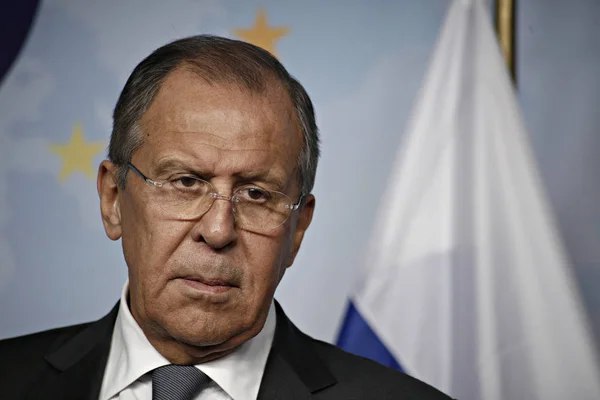
Russia’s Foreign Minister Sergei Lavrov, during a question-and-answer session with students at Moscow’s MGIMO University in early September, noted that “a growing number of extra-regional actors,” including the United States, have taken an interest in fostering trade via the so-called Middle Corridor — a route connecting Asia to Europe via Central Asia, bypassing Russia.

Lavrov’s speech suggests that the U.S. interest in the economic future of Central Asia will negatively impact Russia’s development.

Lavrov noted that Russia maintains “warm and allied” relations with Central Asian nations, which are bound to Russia economically and strategically via several agreements, including the Collective Security Treaty Organization, the Eurasian Economic Union, and the Commonwealth of Independent States. He added that Russia “cannot prevent anyone from establishing deeper ties with other partners.”

Lavrov couldn’t resist lashing out at the United States, saying the motives of American officials in Central Asia aren’t magnanimous. “When our partners and allies in Central Asia expand their relations with the West, I do not have the slightest doubt that they understand perfectly well that apart from pursuing its noble and transparent objectives, the West also seeks to undermine the Russian Federation’s influence there,” he said.

The U.S. engages with Central Asia through the B5+1 process, which promotes Western investment by encouraging reforms to reduce trade barriers and streamline customs. Recently, Central Asian countries have signed agreements to improve trade regulation, and the U.S. has helped some countries upgrade their infrastructure.

U.S. Ambassador to Kazakhstan Daniel Rosenblum has said in a statement: “In August … the United States provided Kazakhstan’s Customs Service with advanced Dell Technologies Inc. servers to help make border procedures more efficient. “Adopting innovative technologies will streamline processes, enhance accuracy, improve transparency, and foster a business-friendly environment, attracting more investors and boosting economic growth,”

Russia’s war in Ukraine has weakened the Kremlin’s ability to pressure Central Asian states to follow its wishes. Russia depends on covert trade through Central Asia to bypass sanctions and get goods for its war. Meanwhile, China is supplying dual-use technologies to Russia and has overtaken Russia as the leading trade partner for Central Asian countries. In his remarks, Lavrov called China “a reliable partner” but didn’t mention it in the context of Central Asia’s growing trade dynamics.

Restoration of Kyrgyzstan’s Largest Hydropower Plant Nears Completion

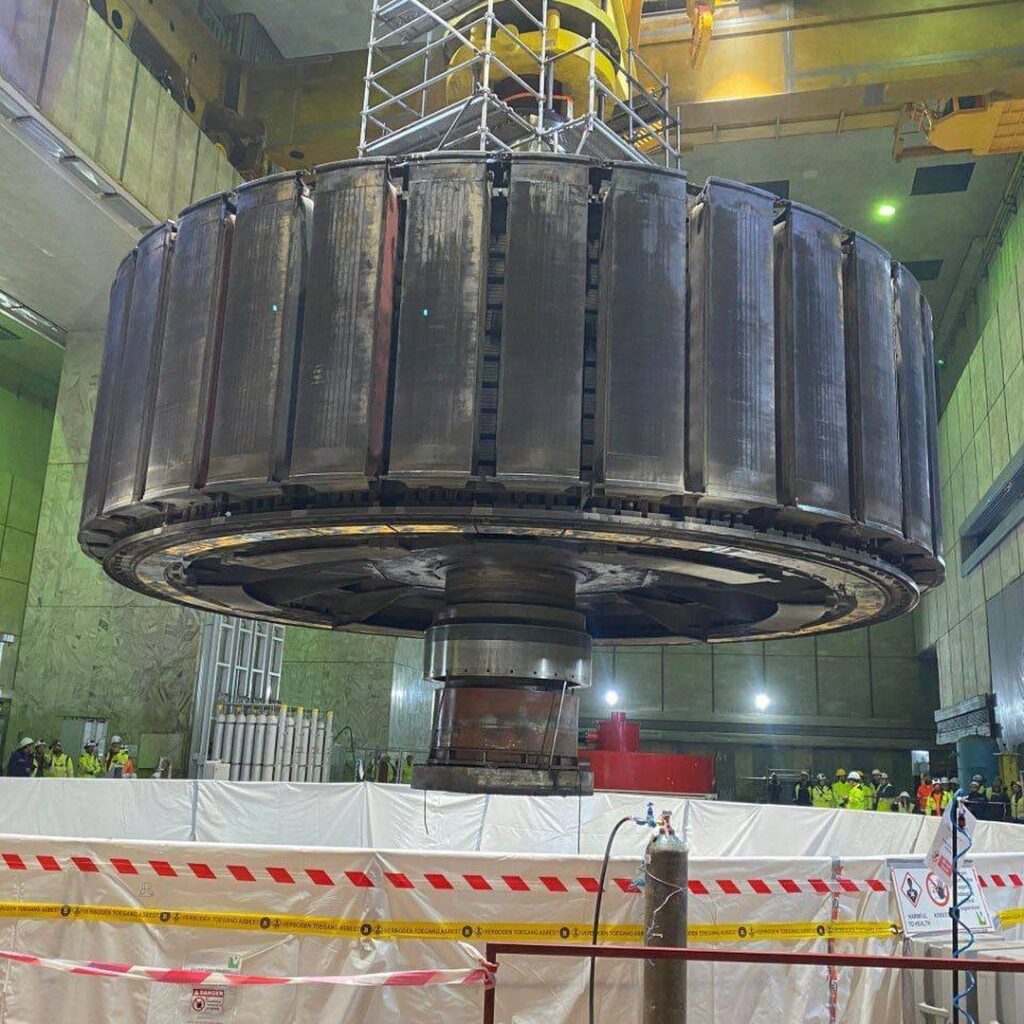
According to Kyrgyzstan’s Ministry of Energy, the modernization of the country’s largest hydropower plant, Toktogul HPP, which began in March, is now 80% complete.

Located on the Naryn River, the Toktogul HPP comprises four hydroelectric units and with a total generating capacity of 1320 MW, provides about 40% of the country’s electricity.

The rotor at the hydro unit No. 1 has been assembled and installed and when fully modernized later in 2024, the service life of the Toktogul HPP will increase by 25-30 years, ensuring a reliable and uninterrupted power supply in autumn-winter and increase the power plant’s generating capacity by 60 MW to 1380 MW.

In recent years, since Kyrgyzstan has been unable to produce enough electricity to meet the growing demand, electricity has been imported from neighboring countries. In 2023, the volume of imported electricity  amounted to 3.2 billion kWh. and  Kyrgyz Minister of Energy Taalaibek Ibrayev reported that in the first half of 2024, Kyrgyzstan imported 2.02 billion kWh of electricity, including 909.8 million kWh from Russia and Kazakhstan, 837.5 million kWh from Turkmenistan, and 275.3 million kWh from Uzbekistan.

During the first half of this year, Kyrgyzstan produced 7.07 billion kWh of electricity, including 6.2 billion kWh generated by hydroelectric power plants and 870 million kWh by thermal (coal-fired) power plants.

In addition to updating its current facilities, the Ministry of Energy has committed to the construction of the Kambarata-1 HPP which destined to become Central Asia’s largest hydroelectric power plant, aims to end Kyrgyzstan’s power shortages.

Confident in the success of such measures, Chairman of the Kyrgyz Cabinet of Ministers, Akylbek Japarov, has announced that Kyrgyzstan will become both energy-sufficient and in a position to begin exporting electricity by 2026.

Three Hydraulic Units at Tajikistan’s Kairakkum Hydropower Plant Launched After Modernization

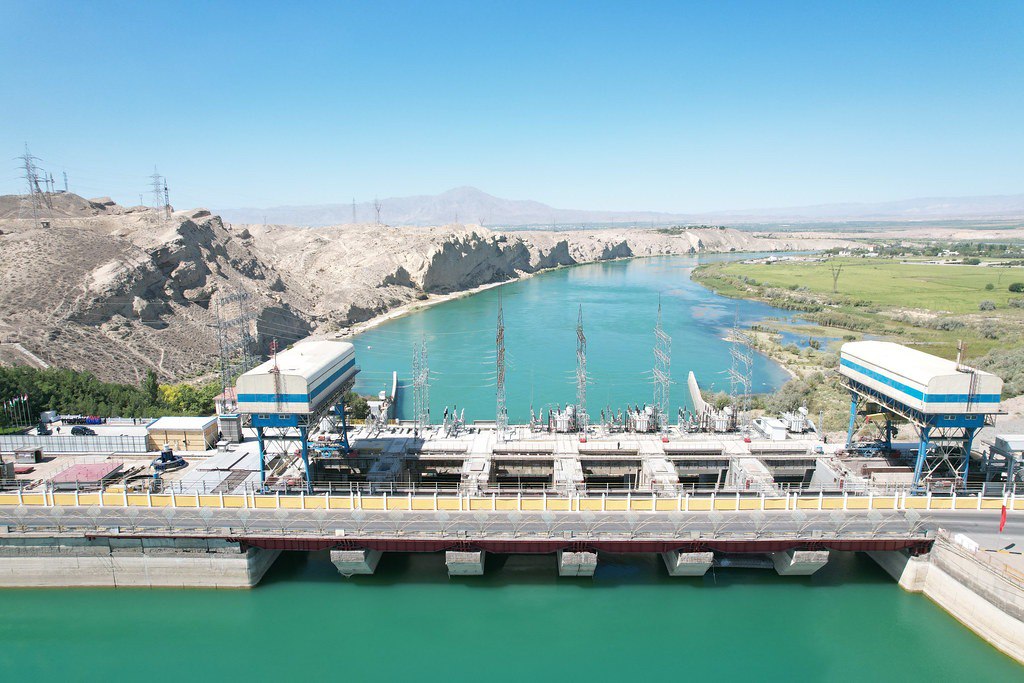
On September 7, three of the six power-generating units were put into operation after modernization at the Kairakkum hydropower plant (HPP) in the city of Guliston in Tajikistan’s northern Sughd region.

Located on the Syr-Darya River, the Kairakkum HPP consists of six hydropower units, the last of which was commissioned in 1957 and has a design capacity of 21 MW.

A project to modernize the aging plant was launched in August 2019. Over the past five years, hydro units Nos. 4, 5, and 6 have been completely renovated, and their capacity has increased from 19 to 29 MW.

The power plant’s dam has been reinforced as part of the project. Currently, work is ongoing on rehabilitating hydro units No. 2 and 3.

After the complete modernization planned for 2026, the average annual electricity production at the Kairakkum HPP will increase from 580 million kWh to 850 million kWh.

It was earlier reported that the Kairakkum HPP rehabilitation project received $196 million in financing from the European Bank for Reconstruction and Development (EBRD), Green Climate Fund (GCF), Climate Investment Funds, and European Investment Bank (EIB). The financing comprised a $88 million EBRD loan, a $37 million EIB loan, a $50 million GCF loan and grant, and a $21 million Climate Investment Funds loan.

In recent years, Tajikistan, which has abundant hydroenergy resources, has focused on hydropower generation projects — the largest of which is the construction of the giant Rogun dam — to solve the problem of chronic power shortages and begin electricity exports to neighbors in the region.

inDrive Poised to Open University in Kazakhstan and Environmental Project in Almaty

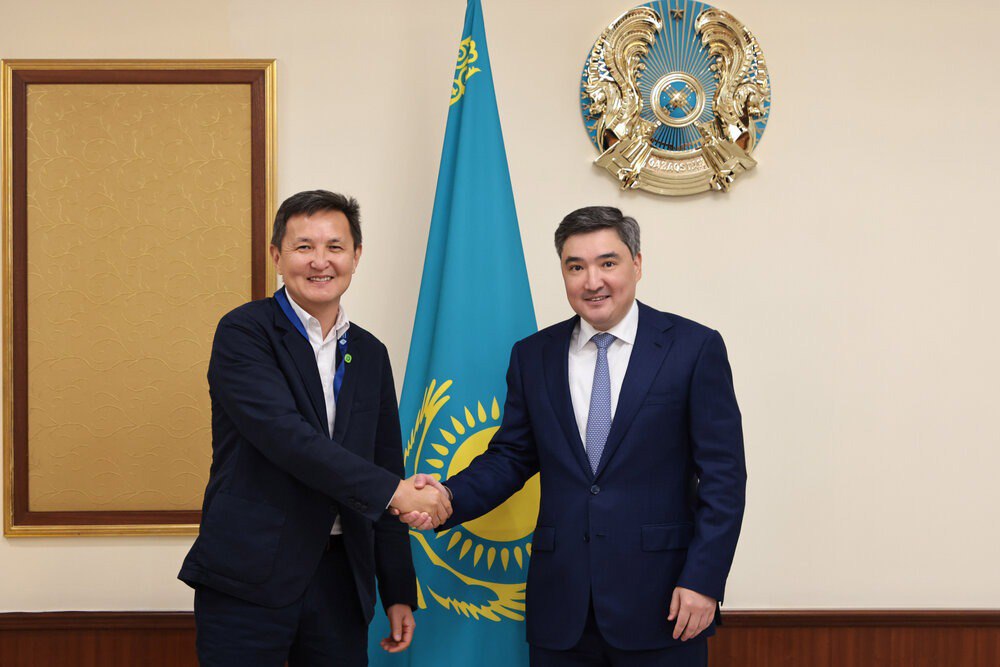
At a meeting on September 5 between Kazakhstan’s Prime Minister Olzhas Bektenov and Arsen Tomsky, Founder and CEO of inDrive, a California-based global transport and urban services platform, a proposal was mooted to open an “inVision U University” in Kazakhstan, providing training for 400 qualified specialists in IT, education, science, and art.

The Prime Minister also pledged support for the company’s plans to implement several environmental initiatives to improve air quality in megacities; the first of which will be implemented in Almaty.

Last year, in collaboration with Astana Hub and regional IT hubs, inDrive launched “Beginit”, a free international social leadership program across six regions in Kazakhstan to enable 10th-grade students to implement social projects from concept to realization.

Founded in 2013 in Yakutia, Russia, and incorporated in the U.S. in 2018, inDrive is now available in 749 cities in 46 countries. In 2021, its market value was estimated at $1.2 billion. In 2022, the company pulled out of Russia, and relocated to Almaty, Kazakhstan. In 2022 and again in 2023, inDrive was the second most downloaded ride-hailing app worldwide based on Google Play and App Store data. In addition to rides, inDrive offers a growing list of urban services, including intercity and freight transportation, handyman calls and courier delivery.

In December 2023, Kazakh media reported that Arsen Tomsky had obtained Kazakhstani citizenship.

Video Highlights: World Nomad Games Day One – Ethnoaul and Horseback Archery

On September 8, TCA was across events at the 5th World Nomad Games in Astana, themed as the “Gathering of the Great Steppe.” Whilst with much pageantry, the Astana Arena hosted the opening ceremony, further south in the capital, the Ethnoaul saw the first competition of the Games take place, the Hungarian Style Horseback Archery. TCA was in attendance as France’s Raphael Malet. took gold, silver went to Mongolia’s Altankhuyag Nergui, and bronze to France’s Gaëtan Blot.