• KGS/USD = 0.01144 0%
  • KZT/USD = 0.00214 0%
  • TJS/USD = 0.10508 0.48%
  • UZS/USD = 0.00008 0%
  • TMT/USD = 0.28571 0%
  • KGS/USD = 0.01144 0%
  • KZT/USD = 0.00214 0%
  • TJS/USD = 0.10508 0.48%
  • UZS/USD = 0.00008 0%
  • TMT/USD = 0.28571 0%
  • KGS/USD = 0.01144 0%
  • KZT/USD = 0.00214 0%
  • TJS/USD = 0.10508 0.48%
  • UZS/USD = 0.00008 0%
  • TMT/USD = 0.28571 0%
  • KGS/USD = 0.01144 0%
  • KZT/USD = 0.00214 0%
  • TJS/USD = 0.10508 0.48%
  • UZS/USD = 0.00008 0%
  • TMT/USD = 0.28571 0%
  • KGS/USD = 0.01144 0%
  • KZT/USD = 0.00214 0%
  • TJS/USD = 0.10508 0.48%
  • UZS/USD = 0.00008 0%
  • TMT/USD = 0.28571 0%
  • KGS/USD = 0.01144 0%
  • KZT/USD = 0.00214 0%
  • TJS/USD = 0.10508 0.48%
  • UZS/USD = 0.00008 0%
  • TMT/USD = 0.28571 0%
  • KGS/USD = 0.01144 0%
  • KZT/USD = 0.00214 0%
  • TJS/USD = 0.10508 0.48%
  • UZS/USD = 0.00008 0%
  • TMT/USD = 0.28571 0%
  • KGS/USD = 0.01144 0%
  • KZT/USD = 0.00214 0%
  • TJS/USD = 0.10508 0.48%
  • UZS/USD = 0.00008 0%
  • TMT/USD = 0.28571 0%

Kazakhstan Considers Body Cameras for Ambulance Workers Amid Rising Violence

Kazakhstan’s Health Minister, Akmaral Alnazarova, has announced that her ministry is exploring the possibility of equipping ambulance doctors and paramedics with body-mounted video cameras to address the increasing aggression against medical workers. Over the past four years, more than 150 incidents of attacks on ambulance personnel have been reported in the country.

“We are considering equipping our employees with video tags, similar to the devices used by law enforcement agencies. This issue will be regulated normatively, and I believe it is not so difficult to implement,” Alnazarova told reporters during a parliamentary session.

Kazakhstani patrol officers have used body-mounted video recorders since 2017 to ensure accountability in law enforcement and to prevent corruption. For ambulance workers, the cameras aim to protect employees and document incidents of violence. According to the Ministry of Health, 158 medical workers were injured while performing their duties between 2019 and 2023.

The urgency of this measure was highlighted by a recent incident in the town of Kostanay, where a paramedic was assaulted by relatives of a deceased patient. The assailants, against whom a criminal case has been opened, allegedly obstructed resuscitation efforts. The paramedic suffered a concussion and required hospitalization.

Alnazarova previously stated on her Instagram page that her ministry, with the support of lawmakers, has initiated measures to introduce criminal liability for acts of violence against medical workers. “Such crimes must be met with fair punishment, including restrictions on freedom and condemnation by society. We must send a clear message: violence against medical workers is unacceptable and will not go unpunished.”
Kazakhstan Plans to Accelerate Construction of First Nuclear Power Plant

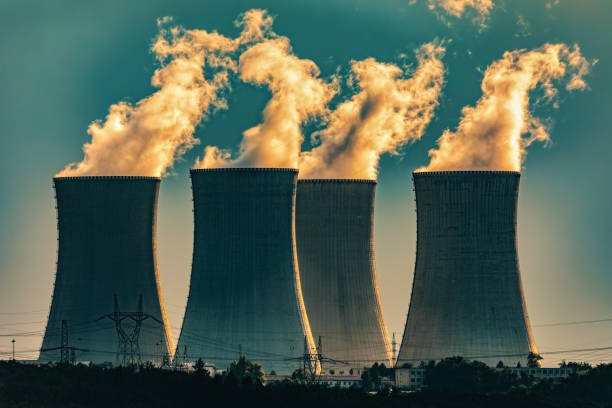
Kazakhstan’s Energy Minister, Almasadam Satkaliyev, has announced that the selection of a contractor for the country’s first nuclear power plant (NPP) will be finalized in the first half of 2025. The government is awaiting proposals from bidders that focus on shortening construction timelines and reducing project costs.

This follows President Kassym-Jomart Tokayev’s directive to expedite the implementation of the nuclear power plant project. “The commission will do everything possible to advance this process and make a decision on the contractor in the first half of 2025,” Satkaliyev told reporters.

The shortlist for the potential builders includes four companies: China’s CNNC, Russia’s Rosatom, South Korea’s KHNP, and France’s EDF. Kazakh authorities have also indicated that a consortium involving multiple countries might be formed to leverage diverse technological solutions. Deputy Prime Minister Roman Sklyar highlighted the benefits of such collaboration, where different countries could contribute specific components, such as nuclear islands, turbines, or distribution systems.

Satkaliyev emphasized the need for faster construction solutions, citing a precedent where China’s national nuclear company built a power unit in Pakistan in six years. “In today’s world, there are possibilities for expedited solutions,” he stated.

Kazakhstan previously projected a 10-year timeline for constructing the NPP. However, the country is expected to face a 2.4 gigawatt energy deficit by 2035, underscoring the urgency of completing the project. The energy minister noted that the process from construction to the launch of the first unit could take up to 14 years, making accelerated timelines crucial.

The Times of Central Asia previously reported on the results of a referendum held on October 6, which showed that 71.12% of voters approved the construction of a nuclear power plant in the Almaty region. The accelerated development of the NPP reflects Kazakhstan’s commitment to addressing its future energy needs while integrating advanced international technologies and solutions.

Kyrgyzstan Invests Over $356 Million in Women’s Entrepreneurship

The development of women’s entrepreneurship in Kyrgyzstan has received significant financial backing, with more than $356 million directed to supporting women-led businesses since the establishment of the OJSC (Guarantee Fund).

According to the OJSC, in the first ten months of 2024 alone, 1,088 guarantees were issued to women, accounting for 40% of the total guarantees provided by the Fund during this period. To date, the Fund has issued 4,071 guarantees totaling 3.166 billion soms ($356 million), empowering women across all regions of Kyrgyzstan to launch and expand businesses in various sectors.

Women’s entrepreneurship is becoming an increasingly vital component of Kyrgyzstan’s economy. According to the United Nations Development Programme (UNDP), women currently lead 29% of the country’s small and medium-sized enterprises.

Bishkek recently hosted Expo 2024 “Women’s Entrepreneurship,” which showcased the accomplishments of women entrepreneurs while highlighting their growing role in driving innovation and economic growth. Furthermore, the Women’s Entrepreneurship 2024 program reported that 48% of all loans issued this year were granted to women, reflecting the expanding support for women-led businesses across the country.

This upward trend highlights the growing recognition of women entrepreneurs as key players in Kyrgyzstan’s innovation ecosystem and economic development.

Kyrgyzstan to Build Major Customs and Logistics Center

Construction has commenced on a state-of-the-art customs and logistics center, Global Hub, in the Alamudun district of Kyrgyzstan’s northern Chui region, near the capital, Bishkek.

The center will cover more than 136,000 square meters, including 120,000 square meters of modern warehouses. These facilities will feature temperature-controlled environments, refrigeration systems for perishable goods, and dedicated storage for medicines. Additionally, the complex will include dry and bonded warehouses to support various logistical needs.

The $21 million project is being implemented by Alkanov Group LLC, a local company.

On December 26 the new Chairman of Kyrgyzstan’s Cabinet of Ministers, Adylbek Kasymaliyev, highlighted the strategic importance of the project. He noted that Kyrgyzstan’s warehousing sector is still in its infancy and lacks facilities that meet international standards.

“This strategic project addresses current challenges and holds great importance for the state. If the construction of the China-Kyrgyzstan-Uzbekistan railway is completed by 2030 and the Bedel checkpoint on the Kyrgyz-Chinese border begins operating at full capacity, Kyrgyzstan’s warehousing market will expand significantly,” Kasymaliyev said.

He emphasized the necessity of preparing for growing import and export demands, adding, “Millions of tons of cargo are processed and transported globally every day. The construction of large warehouses, logistics centers, and hubs will drive economic development in Kyrgyzstan.”

Uzbekistan Moves to Penalize Financing of Mass Disturbances

Uzbekistan’s Parliament, the Oliy Majlis, is taking decisive steps to address the organization and financing of public disturbances. On December 11, the Legislative Chamber approved a draft law amending Article 244 of the Criminal Code. Passed in its first reading, the amendments aim to strengthen the country’s legal framework for tackling mass disturbances.

During a parliamentary session on December 24, the draft law advanced further, reaching its third reading and gaining adoption. The updated Article 244 introduces several significant changes:

  • A new third section establishes specific liability for individuals undergoing training with the intent to participate in mass disturbances.
  • A fourth section introduces fines for financing such activities.
  • A fifth section provides an exemption from criminal liability for individuals who voluntarily report to law enforcement after undergoing such training.

These amendments are designed to deter organized disturbances while promoting cooperation with authorities.

Uzbekistan Set to Join the Eurasian Development Bank in 2025

Uzbekistan is set to complete the procedures for joining the Eurasian Development Bank (EDB) by early 2025. The announcement was made during an expanded meeting of the Supreme Eurasian Economic Council (EAEC).

Uzbekistan has held observer status in the Eurasian Economic Union (EAEU) since 2020, and is preparing to deepen its engagement in regional economic projects.

The country is already participating in several sectoral programs between the EAEU member states. These programs focus on areas such as the digitalization of trade, cargo transportation, e-commerce development, and combating climate change.

The Eurasian Development Bank was founded in 2006 by Russia and Kazakhstan. Its current members are Armenia, Belarus, Kyrgyzstan, and Tajikistan. The EDB’s primary mission is to promote economic growth and strengthen integration among its member states by financing major investment projects across various sectors.

As of June 30, 2024, the EDB’s investment portfolio stood at USD 4.8 billion, comprising 78 projects throughout the member states. The Bank prioritizes projects with integration effects, including cross-country infrastructure development, enhanced trade and economic ties, and the creation of common markets. It also supports “green” financing initiatives to promote sustainable development and environmental safety across the region.

Experts view Uzbekistan’s plans to join the EDB as a strategic move to bolster its economic cooperation with neighboring countries. Membership in the Bank would provide Tashkent with access to new financial opportunities, facilitating the implementation of joint initiatives and strengthening its role in regional economic integration.