• KGS/USD = 0.01144 0%
  • KZT/USD = 0.00197 -0%
  • TJS/USD = 0.10904 0%
  • UZS/USD = 0.00008 0%
  • TMT/USD = 0.28490 0%
  • KGS/USD = 0.01144 0%
  • KZT/USD = 0.00197 -0%
  • TJS/USD = 0.10904 0%
  • UZS/USD = 0.00008 0%
  • TMT/USD = 0.28490 0%
  • KGS/USD = 0.01144 0%
  • KZT/USD = 0.00197 -0%
  • TJS/USD = 0.10904 0%
  • UZS/USD = 0.00008 0%
  • TMT/USD = 0.28490 0%
  • KGS/USD = 0.01144 0%
  • KZT/USD = 0.00197 -0%
  • TJS/USD = 0.10904 0%
  • UZS/USD = 0.00008 0%
  • TMT/USD = 0.28490 0%
  • KGS/USD = 0.01144 0%
  • KZT/USD = 0.00197 -0%
  • TJS/USD = 0.10904 0%
  • UZS/USD = 0.00008 0%
  • TMT/USD = 0.28490 0%
  • KGS/USD = 0.01144 0%
  • KZT/USD = 0.00197 -0%
  • TJS/USD = 0.10904 0%
  • UZS/USD = 0.00008 0%
  • TMT/USD = 0.28490 0%
  • KGS/USD = 0.01144 0%
  • KZT/USD = 0.00197 -0%
  • TJS/USD = 0.10904 0%
  • UZS/USD = 0.00008 0%
  • TMT/USD = 0.28490 0%
  • KGS/USD = 0.01144 0%
  • KZT/USD = 0.00197 -0%
  • TJS/USD = 0.10904 0%
  • UZS/USD = 0.00008 0%
  • TMT/USD = 0.28490 0%
08 December 2025

Open for Business: New Reforms Accelerate Investment in Uzbek Companies

Uzbekistan’s business sector is in a period of rapid transformation. The catalyst for this is the government’s newest set of economic reforms, through which it is seeking to attract long-term investment. New legislation, targeted incentives for enterprises, and an influx of international partnerships are changing the way that companies operate and invest.

A key part of this transformation is the government’s effort to create a more predictable and transparent regulatory environment. The World Bank has noted that Uzbekistan’s reform strategy is centered on expanding trade integration and accelerating the long-planned privatization of state assets. The country’s priorities include accession to the World Trade Organization, which has brought about legal adjustments designed to align Uzbek standards with global norms.

Investor confidence has been encouraged by new policies that now make it easier to live and work in Uzbekistan. A five-year “golden visa” now makes it possible for foreign nationals who invest at least $250,000 to receive residency. This simplifies procedures for those developing long-term projects.

Another focus for the government is financial liberalization. The International Monetary Fund recently noted that state ownership of banks is expected to fall to around 40 percent next year, which creates space for potential private lenders and foreign capital.

Recent data suggests that these reforms are beginning to bear fruit. In the first quarter of 2025, Uzbekistan attracted about $8.7 billion in new foreign investment, according to figures published by UzDaily, with the total inflow this year projected to reach $42 billion. The Times of Central Asia has reported that over the past eight years, the country has absorbed more than $113 billion in foreign capital. These numbers highlight the nation’s growing appeal to international investors.

Alongside the surge in foreign activity, the authorities are developing policies to encourage domestic entrepreneurs. There are now more than 370,000 registered small and medium-sized businesses in Uzbekistan, which now receive more support from the government through simpler registration rules and targeted tax incentives. Private industrial parks in Tashkent and Samarkand are driving innovation in the textiles, IT and construction sectors, and creating prospective local jobs.

The business community has taken notice of these reforms. At the Tashkent International Investment Forum in June, European delegates described Uzbekistan as a country “undergoing large-scale transformation”, with a growing array of opportunities for international investors. Guests in Tashkent praised efforts to increase transparency in business and cut back on beaurocracy. At the same time, they stressed the need to be consistent in their implementation across regions.

Despite tangible progress, challenges remain. Inflation has remained high, and analysts continue to point to structural issues hampering growth. These include an underdeveloped financial system and a large informal economy. Foreign businesses operating in Uzbekistan are also advised to pay close attention to compliance and labor law as the legal environment evolves.

Two of the government’s priorities stand out in the short term. The first is the privatization of major state assets in the energy, transport and telecommunications industries — part of the 2025 national economic program outlined by Invexi. The second is diversification beyond commodities, with policymakers encouraging investment in lesser sectors such as manufacturing, agricultural technologies, and digital services, to strengthen the country’s export resilience.

Uzbekistan’s reforms are ambitious but becoming more and more coherent. If the current trends continue over the next decade, the country could consolidate its position as one of Eurasia’s most competitive and investment-friendly economies.
Beyond Infrastructure: China’s New Environmental Footprint in Central Asia

Uzbekistan’s economy is expanding at one of the fastest rates in Central Asia, creating new opportunities for businesses and citizens alike. Yet this rapid growth also brings challenges that the country must learn to manage. Among them, one of the most pressing issues is the growing problem of waste management, which has become an unfortunate consequence of economic progress.

Over the past decade, the volume of municipal solid waste in Uzbekistan has increased steadily. It rose from about 6.1 million tons in 2010 to 7 million tons in 2017, and current projections suggest that annual waste generation could reach as high as 16 million tons by 2028.

Currently, the country generates around 14 million tons of waste annually, but only a small portion of this – approximately 5% – is recycled. Landfills now release more than seven million tons of greenhouse gases every year, and more than forty thousand tons of toxic waste seep into the soil, threatening both the environment and public health.

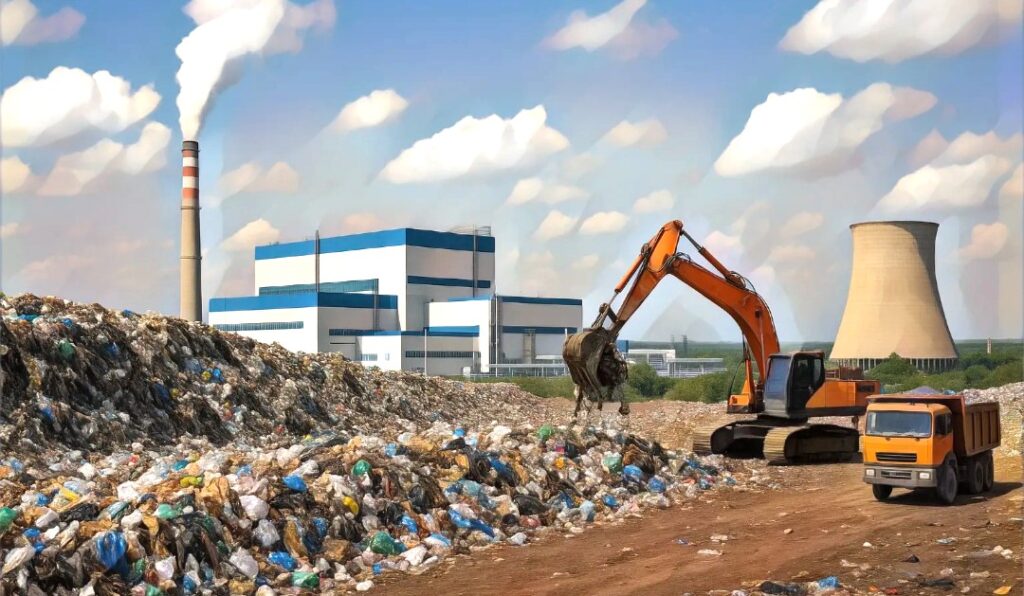
The government of Uzbekistan has recognized the urgency of the issue and placed waste management at the heart of its green development agenda. Alongside the promotion of renewable energy and electric vehicles, the authorities are investing in waste-to-energy projects that can help convert solid waste into electricity. This approach can reduce the amount of waste going to landfills while providing a cleaner source of energy.

China’s Role in Uzbekistan’s Waste-to-Energy Development

To implement these projects, Uzbekistan is actively cooperating with foreign partners who can bring technology, investment, and experience. Among these partners, China has emerged as a leading player. Chinese companies, facing a saturated domestic market, are increasingly looking abroad for new opportunities. Uzbekistan’s ambitious targets in waste management perfectly align with this interest, creating a partnership that benefits both sides.

Several large-scale projects have already been launched. China’s CAMC Engineering is investing about $350 million to build two waste-to-energy plants in the Andijan and Tashkent regions. Another Chinese company, Shanghai SUS Environment, has signed an agreement with Uzbekistan’s Waste Management Agency to develop projects using advanced green technology.

In addition, China Everbright Environment Group has announced the creation of joint ventures with Uzbek partners Maxsus and CR No.17 Second Engineering. These partnerships will result in two new plants in Namangan and Ferghana, each with an estimated cost of $283 million.

Opportunities and Risks

These initiatives promise significant benefits. For China, they open the door to exporting green technologies, generating new revenue, and deepening economic ties in Central Asia. The growing demand for waste-to-energy projects across the region also creates opportunities for China to share its proven technological model, helping partner countries build capacity while integrating more closely into China’s expanding technological ecosystem.

Beyond the economic gains, this cooperation is shaping China’s broader image. Through such environmentally focused projects, Beijing is gradually being seen not only as a builder of physical infrastructure but also as a provider of innovative and sustainable solutions. This transformation strengthens China’s soft power and adds new depth to its Belt and Road cooperation with Central Asian countries.

For Uzbekistan, waste-to-energy projects offer a valuable solution to the country’s growing waste challenge. The projects implemented by China Everbright Environment are expected to process more than one million tons of waste each year. Similarly, Shanghai SUS Environment’s projects in Uzbekistan will handle up to 1,500 tons of waste per day while generating an estimated 240 million kilowatt-hours of electricity annually.

These initiatives not only reduce the burden on landfills but also diversify Uzbekistan’s energy sources. Together with the expansion of renewable energy and the gradual increase in electric vehicle use, waste-to-energy plants can play an important role in strengthening the country’s overall energy resilience.

However, alongside these benefits come a number of potential risks. Waste-to-energy plants are often controversial due to concerns about environmental and health impacts, particularly the emission of pollutants such as dioxins and furans. If such projects are carried out with limited environmental oversight, they can cause serious harm to public health and the surrounding ecosystem.

There is also a risk that Chinese companies, driven by the goal of reducing costs, may implement less stringent standards. Such an approach could undermine the environmental credibility of these projects and raise public concerns about China’s growing economic footprint in Uzbekistan. In the long term, this could weaken the positive image that Beijing seeks to project through its cooperation in green development.

Navigating Opportunity and Responsibility

Uzbekistan’s growing engagement with Chinese companies in the waste-to-energy sector reflects both opportunity and caution. On one hand, these projects offer practical solutions to one of the country’s most pressing environmental challenges while contributing to energy diversification and green development. On the other hand, the success of this partnership will depend on ensuring that environmental and safety standards remain uncompromised. By prioritizing transparency, sustainability, and long-term public benefit, Uzbekistan can turn its waste problem into a cornerstone of its clean energy transition.

For China, maintaining high environmental standards will be equally crucial, as it can reinforce Beijing’s image as a responsible partner and enhance its soft power in the region. If managed wisely, the cooperation between the two countries can serve as a model for economic growth and environmental responsibility.

Kazakhstan to Maintain Grain Exports in 2025 to 2026 Season

Kazakhstan plans to maintain grain exports above 12 million tons in the 2025–2026 marketing season, Deputy Minister of Agriculture Azat Sultanov said at a recent briefing.

Grain exports for the current 2024–2025 season reached a record 13.4 million tons, according to Sultanov. “Taking into account this year’s harvest, we forecast that next year’s exports will not fall below last year’s level, that is, more than 12 million tons,” he said.

To date, 15.6 million hectares, 88.6% of the total planted area, have been harvested, yielding an average of 16.9 centners per hectare and producing 26.6 million tons of grain. This output will fully meet domestic needs for food, fodder, and seeds, while reinforcing Kazakhstan’s position in its traditional export markets.

Wheat has been harvested from 12 million hectares, 99% of the cultivated area, at a yield of 16.5 centners per hectare, resulting in approximately 20 million tons. Barley and oats produced 2.4 million tons, and corn yielded 852,000 tons.

Sultanov also noted that Kazakhstan has re-entered several previously lost markets, including Kyrgyzstan, Azerbaijan, and Armenia, where demand for Kazakh wheat is on the rise. As previously reported by The Times of Central Asia, Kyrgyzstan has increased its imports of Kazakh wheat eightfold.

Licensed grain receiving enterprises have already received 6.7 million tons from the new harvest, twice the volume recorded at the same time last year.

As part of efforts to diversify crop production, special attention has been given to legumes and oilseeds. This year’s legume harvest reached 1 million tons, and the country expects a record oilseed yield of about 4 million tons, of which 3.3 million tons have already been collected.

Potatoes have been harvested from 99 percent of the planted area, totaling 130,000 hectares and producing 2.9 million tons. Sultanov said this volume should prevent the shortages and price surges experienced earlier this year. The vegetable harvest totaled 3.9 million tons, while melon crops reached 2.6 million tons.

Explosion of Unknown Drone Reported in Western Kazakhstan

Debris believed to be from an unmanned aerial vehicle (UAV) has been discovered in the Burlin district of West Kazakhstan region. Preliminary information indicates that the explosion occurred early in the morning near the village of Kyzyltal.

According to Uralskaya Nedelya, representatives from the district akimat (local government), emergency services, and local police are currently investigating the scene. The military prosecutor’s office has also been dispatched and has opened a criminal case.

“This morning, a drone of unknown origin exploded near Kyzyltal village in the Burlin district. The roofs of houses in the village were nearly blown off,” eyewitnesses told local media.

The incident coincides with an air threat alert declared in Russia’s neighboring Orenburg region, where authorities reported a potential UAV incursion. The “Kover” plan, a protocol enacted during airspace threats, was implemented at the airports in Orenburg and Orsk.

Police in West Kazakhstan confirmed the incident and stated that a full investigation is underway.

“The police department, in cooperation with authorized agencies, is conducting an investigation into the discovery of what appears to be UAV debris in the Burlin district. All circumstances are being reviewed,” the department’s press service said.

Kazakhstan’s Ministry of Defense also responded, noting that no casualties or material damage had been reported.

“In cooperation with relevant state bodies, verification efforts are underway to determine the circumstances and origin of the object. The Ministry of Defense of the Republic of Kazakhstan has implemented additional measures to enhance airspace control and prevent unauthorized aerial border crossings. Consultations are ongoing with foreign partners who may potentially be linked to the UAV,” the ministry said in a statement.

This incident follows a similar discovery on June 19, when suspected UAV fragments were found in the Karakiyan district of the Mangistau region, near the Bolashak border station. As The Times of Central Asia previously reported, in March 2025 there were three drone-related events in West Kazakhstan in one month, raising concerns about airspace security near the country’s border with Russia.

Kyrgyzstan Expands Mineral Reserves Amid New Exploration Drive

Kyrgyzstan now boasts over 1,000 deposits of 51 different types of minerals, including precious, base, and rare earth metals, as well as coal and hydrocarbons, according to the Ministry of Natural Resources, Ecology, and Technical Supervision.

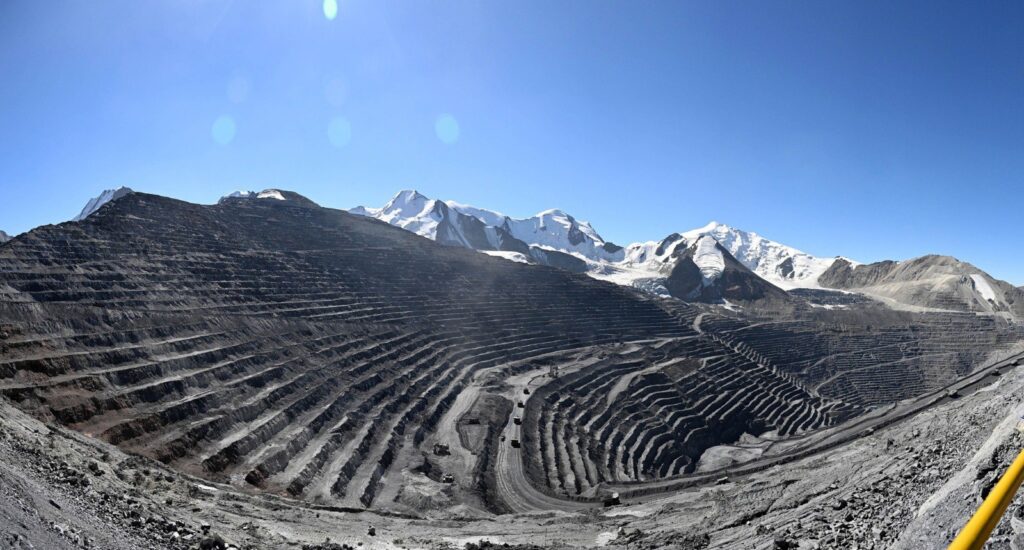
Among the most prominent is the Kumtor gold mine, situated at an altitude of 4,000 meters in the Issyk-Kul region. Kumtor ranks among the world’s ten largest gold deposits and remains a cornerstone of the national mining sector.

Approximately 400 deposits across the country are currently under development or active exploration, while operations at around 600 sites have been suspended pending reserve reassessments and upgrades to mining technologies.

The mining sector is considered a strategic priority for Kyrgyzstan’s economy. After years of limited geological activity, the government allocated 1 billion soms in 2024 to Kyrgyzgeology for equipment modernization and intensified exploration of polymetals and rare earth elements.

Between January and September 2025, the industry recorded stable growth in both output and reserves. As of January 1, 2025, Kyrgyzstan’s confirmed reserves included 973 tons of gold, 1,100 tons of silver, and 960,400 tons of copper, along with significant quantities of other minerals.

Recent exploration efforts yielded an additional 5.8 tons of gold, 3.7 tons of silver, and substantial volumes of non-ferrous metals, coal, and construction materials.

In the first nine months of 2025, Kyrgyzstan produced 17 tons of gold, 198,000 tons of oil, 18.9 million cubic meters of gas, and 2.3 million tons of coal.

To support industry growth, the government conducted 26 auctions for subsoil use rights, generating $1.6 million in revenue. As of September 2025, a total of 2,005 mining licenses had been issued, including 103 granted to state-owned enterprises.

Uzbekistan Expands Nuclear Energy Cooperation with Italy’s Ansaldo Energia

Uzbekistan and Italy are deepening their cooperation in the field of nuclear energy, according to a statement from the press service of the Uzatom Agency. A delegation led by Uzatom Director Azim Akhmedkhadjaev has just returned from a working visit to Genoa, Italy, where talks focused on advancing Uzbekistan’s first nuclear power plant project.

The visit included meetings with representatives of the regional government, the Genoa Chamber of Commerce, leading universities, and major Italian energy firms. A key session was held with Ansaldo Energia and its nuclear subsidiary, Ansaldo Nucleare, one of Europe’s leading providers of power generation technologies.

Discussions focused on integrating Italian technical solutions into Uzbekistan’s planned nuclear facility, with particular emphasis on adapting auxiliary systems to local climatic and geological conditions. The Italian side shared its experience in safety system design, nuclear software development, and fuel management, expertise gained through projects in China, Belgium, Slovenia, Hungary, and Ukraine.

Both sides explored the potential role of Italian companies as technical consultants during construction, ensuring the project aligns with international safety standards. Cooperation in radioactive waste management and deployment of advanced Italian fuel-handling technologies was also discussed.

Italy also expressed readiness to support Uzbekistan in developing a national regulatory framework for nuclear energy and licensing procedures. Further, the two parties considered launching joint research and engineering initiatives to train Uzbek nuclear specialists, part of a broader effort to build local capacity and ensure the safe, long-term operation of the country’s future nuclear infrastructure.

The talks come as Uzbekistan diversifies its energy portfolio. Energy Minister Jurabek Mirzamahmudov recently announced that Saudi-based Pemco will begin constructing a 200-megawatt gas-piston power plant in Samarkand. Meanwhile, Uzbekistan continues to expand its solar and wind capacity through ongoing projects with ACWA Power.