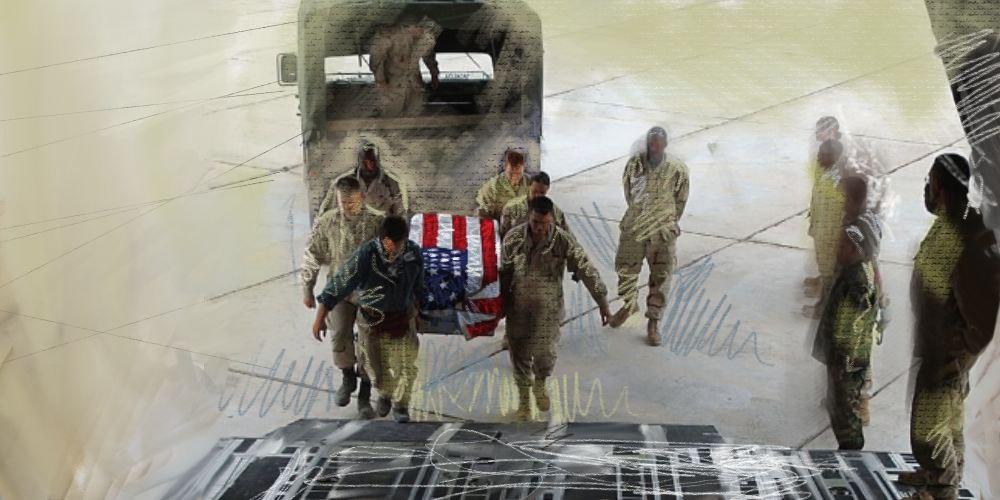
Thousands of American veterans who served at Uzbekistan’s K2 airbase have reported rare cancers and diseases – but only now, more than two decades later, is the U.S. government taking steps to address their dire situation.
The U.S. Department of Veterans Affairs (VA) has announced plans to include bladder, urinary tract, and genitourinary cancers as conditions presumed to be linked to service at Uzbekistan’s Karshi-Khanabad airbase, known as K2.
In 2001, the U.S. military moved into K2, a former Soviet airbase, to support a series of operations named “Enduring Freedom” which were purportedly aimed at tackling terrorism and Al-Qaeda in the wake of 9/11. However, in addition to the threat of terrorism, the troops faced another danger: the toxic environment. Reports from the base describe exposure to chemicals and radioactive materials. Soldiers recalled an underground “black bubble,” glowing lakes, and a chemical odor lingering in the air.
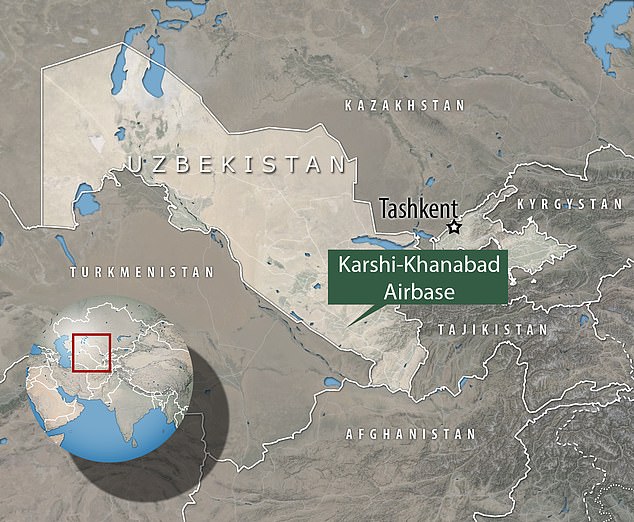
Image: Stronghold Freedom Foundation
The Karshi-Khanabad airbase was heavily used by the Soviet military during its operations in Afghanistan from 1979 to 1989, when it served as a site for producing, storing, and testing various weapons, including chemical weapons. The base also stored fuel, solvents, and other harmful substances. Additionally, it became a dumping ground for toxic waste, asbestos, enriched uranium, and other hazardous materials. Spills of these substances were frequent, leaving lasting environmental damage.
Before the U.S. occupied K2, the destruction of Soviet-era missiles left some soil contaminated with low-level radioactive depleted uranium. The destruction of Soviet missiles was part of disarmament obligations under the 1987 Intermediate-Range Nuclear Forces (INF) Treaty.
A 2001 survey found traces that could be harmful if inhaled, and a 2002 assessment confirmed small amounts of uranium, identified as non-U.S. depleted uranium, outside Camp Stronghold Freedom’s perimeter. The affected area was covered with clean soil, fenced off, and marked as off-limits in November 2001. Furthermore, approximately 392 chemical compounds were found at the K2 Air Base.
Thousands of military personnel who served in K2 suffered from severe illnesses, including rare forms of cancer, associated with their time at the base. However, over the years, the U.S. government and the VA have delayed recognition of the link between service in K2 and these health issues, leaving many veterans without adequate support.
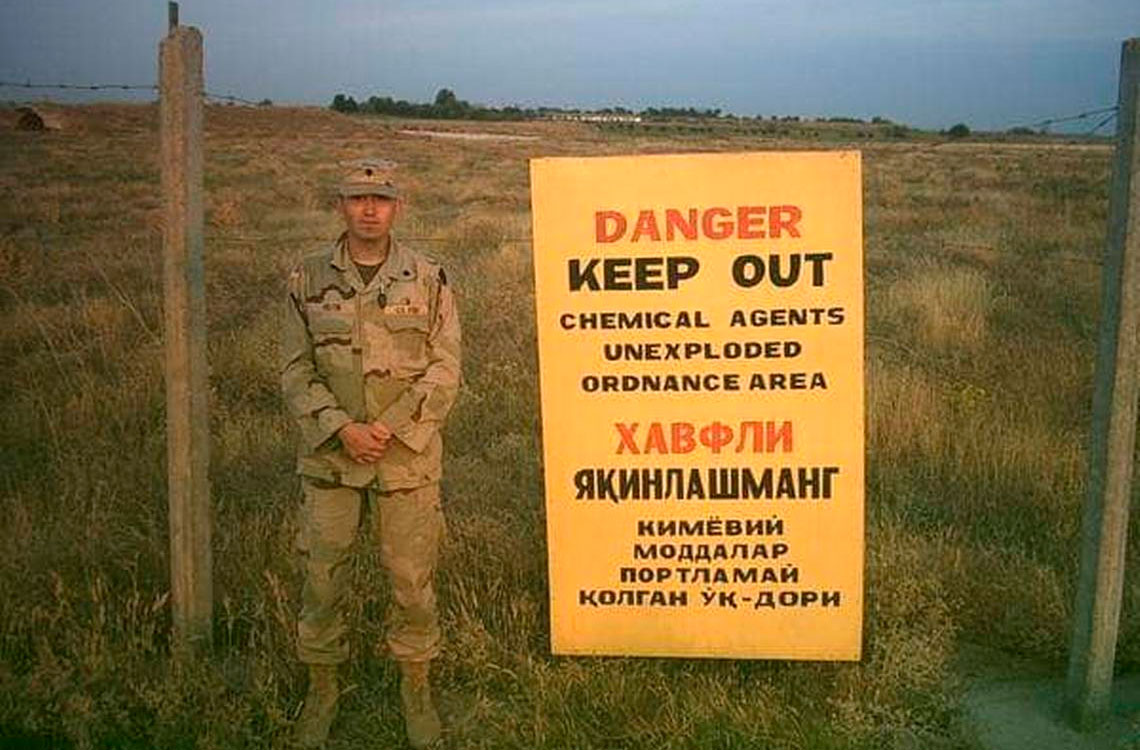
Image: Stronghold Freedom Foundation
According to the Stronghold Freedom Foundation, K2 veterans are 500% more likely to get cancer than other veterans – 75% of U.S. service members deployed to Uzbekistan alone have developed at least one type of K2-related illness.
On November 11, President Joe Biden announced an expansion of the PACT Act (Promise to Address Comprehensive Toxics Act), a law he signed in August 2022 to improve healthcare for veterans exposed to toxins. President Biden stated that the act has already helped over a million veterans and their families access benefits. Under new efforts, the VA will add bladder cancer, ureter cancer, multiple myeloma, and certain types of leukemia to the list of presumptive conditions. This expansion applies to all veterans who served at K2 and in other parts of Southwest Asia.
How President-elect Donald Trump will approach this issue remains unclear.
The VA has also conducted an accelerated review to recognize additional rare conditions related to toxic exposure for veterans deployed to the Gulf War region, including K2. The base, often described as a “toxic soup of exposures,” contained numerous hazardous contaminants.
Karshi-Khanabad Air Base, also called Camp Stronghold Freedom, was a one-square-mile base in southeastern Uzbekistan near the border with Tajikistan. From 2001 to 2005, it was used by the U.S. Army, Air Force, and Marines for operations in Afghanistan. It is now home to the Uzbek Air Force’s 60th Separate Mixed Aviation Brigade.
A Department of Defense (DOD) study found higher risks of certain cancers among K2 veterans, including malignant melanoma and lymphatic or hematopoietic neoplasms. Despite this, the military was not informed of these toxic hazards. Declassified Pentagon documents from 2001-2002 revealed that K2 was a toxic zone due to remnants from its Soviet-era use.
VA Secretary Denis McDonough described K2 as “a place that jeopardized immediate and long-term health.” Army Col. Gordon Peters, who served there, recalled a chemical odor so intense it felt as if the entire area could ignite if a match were struck.
Veterans can file compensation claims with the VA for illnesses linked to their service. For those with presumptive conditions, claims are processed more quickly as they do not need to prove their illness is service-related. Of the 16,000 veterans who served in K2, 13,002 were included in the VA’s healthcare system, and about 12,000 received a disability rating for service-related conditions.
Three years ago, a VOA journalist interviewed locals living around the Karshi-Khanabad base and Uzbeks serving at the base. According to the local population that have been living in the area for a long time and grazing livestock, they have had no problems with their health.
However, Zabikhulla Saipov, a candidate of Political Science and independent researcher, stated that after Uzbek workers who participated in preparing for the arrival of U.S. forces fell ill one by one, the U.S. Central Command conducted its inspection to assess risks at the base. They noted that “contamination of the ground where the airfield is located poses a threat to the health of the U.S. forces deployed there.”
Veterans like Mark Jackson fondly recall their time in Uzbekistan, but have expressed dissatisfaction with the U.S. government and the Pentagon. While they completed their mission, they were left unaware of the base’s toxic dangers. After returning, Jackson and others experienced respiratory problems.
In 2021, Islombek Bakijonov, the deputy chairman of the State Ecology Commission of Uzbekistan, presented some of his theories. During the Soviet-era, chemical substances and herbicides were sprayed on cotton fields. Bakijonov stated that although 33 sites where chemicals from the Soviet period were stored had been closed, 17 remained. He mentioned that one of these sites might be located in the K2 base area.
Following reports of cancer and radiation cases among U.S. soldiers who were stationed at K2, in 2021, Uzbekistan’s Ministry of Defense arranged a press tour of the airfield. Military officials denied any concerns about radiation. Journalists were shown equipment used to measure radiation and air pollution at the base.
According to Maruf Musayev, a serviceman who has been stationed at the base for eight years, the equipment that detects radiation and chemical poisoning has not detected any signs of danger. It is reported that these devices operate in real time. “For eight years, no cases of radiation were detected. My health is good, thank God,” stated Musaev. Meanwhile, Ruiddin Fayzullayev, a 52-year-old electrician working in the military unit since 1994, noted that no cases of cancer have been recorded among military personnel or residents.